
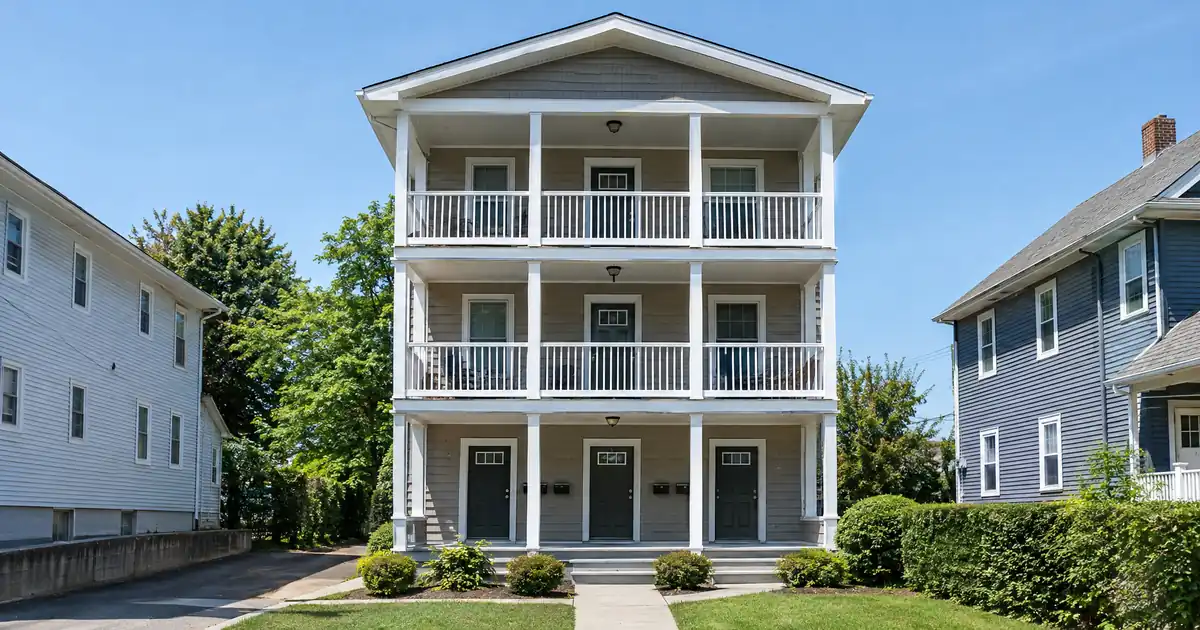
The Quick Read: Usually, yes. An heir who lives in one unit of an inherited duplex, triplex, or fourplex can often get an FHA cash-out refinance without waiting the standard 12 months of ownership and occupancy. The catch is that the exception is lost if the property was treated as an investment after the inheritance. Title must be in the heir’s name, the heir must live in the home, and the loan tops out at 80% of the appraised value. Qualification remains subject to lender guidelines and full file review.
How Does the Inheritance Exception Work?
Normally, FHA cash-out is only for a home you have owned and occupied as your principal residence for 12 months before the case number is assigned. Inheritance is the carve-out. Under HUD’s Handbook 4000.1, an heir does not need a minimum occupancy period before applying. There is one condition: the borrower never treated the property as an investment property since inheriting it.
Two things follow from that. First, the exception saves roughly a year of waiting. Second, the order of events matters. Rent the home out after inheriting, and the heir is not eligible until they have lived in it as a principal residence for 12 months.
Across the wholesale programs Lendmire places FHA files with, this is the question that surprises heirs most. They assume the 12-month wait is universal. It isn’t. They also assume the exception is unconditional. It isn’t that either.
The current handbook is the authority here. HUD’s older reference guidance was stricter, requiring that an inherited property be occupied as a primary residence since the inheritance and that the lender document the inheritance. The archived HUD reference guide is superseded, so treat it as background, not as the rule.
What Does FHA Mean by Occupancy on a 2-4 Unit?
FHA cash-out is for principal residences only. Investment properties and second homes are not eligible. For a 2-4 unit, that means the heir must live in one of the units. A building where the heir lives in one unit and others are rented can still be owner-occupied under FHA. A pure rental cannot.
The inheritance exception has no unit-count carve-out. The rest of the 2-4 unit rules still apply. Nothing in this exception turns a building you don’t live in into an eligible cash-out.
If the heir has not moved in, FHA cash-out is not the right tool. A non-occupant heir is looking at a different product, and occupancy is the line that decides it.
What Counts as “Treating It as an Investment” in a Multi-Unit Home?
This is the gray zone, and it is the most important point for a 2-4 unit. The handbook language says the borrower must not have treated the property as an investment since inheriting it. It does not clearly define what that means when the heir lives in one unit and tenants occupy the others.
Here is what is settled and what isn’t:
- Living in one unit while renting the others is normal owner-occupancy under FHA for a 2-4 unit.
- The handbook text does not define “investment property” for a multi-unit where the heir lives in one unit.
- HUD does not appear to treat a multi-unit differently under the exception, so how a lender reads it can vary.
So the practical question is how a given lender reads it. If tenants were already in the other units when the heir inherited, expect questions about leases and rental income. If the heir moved in and kept collecting rent from the other units, many files go forward. If the heir rented the unit they were supposed to occupy, or never lived there at all, the exception is likely gone.
Don’t assume. Ask the lender how they treat tenant-occupied units before paying for an appraisal.
Title and Probate: When Can the Heir Actually Apply?
Title is the real gating item. Inheriting a home is not the same as being on title. The heir needs to be the recorded, insurable owner, and anyone signing the new note should be on title at closing.
Open probate usually means title hasn’t moved. Some files proceed if the court has authorized the representative and the title company will insure, but that is practitioner territory, and the title company has the final word. Typical documents include:
- The death certificate
- Estate or probate papers
- The executor’s deed or a recorded deed
- Proof the heir lives in the home, such as utility bills or employment records showing the address
Think of the sequence like this: death, then probate or trust transfer, then deed recorded in the heir’s name, then move-in, then case number, then application. FHA counts back from case number assignment, not from the date a deed was signed. A deed date does not start or restart a clock by itself.
| Stage | What the heir can usually do |
|---|---|
| Probate open, title unmoved | Gather documents; talk to the title company |
| Deed recorded, heir lives in a unit | Strongest position to apply |
| Deed recorded, heir rented after inheriting | Not eligible until 12 months of occupancy |
| Deed recorded, heir never moved in | FHA cash-out does not fit |
What If There’s Still a Mortgage on the Home?
If the decedent’s loan is still in place, the lender looks at payment history. The handbook generally requires documentation that payments were made within the month due, for the previous 12 months or since the loan began if shorter. Commentary on the rule also points to a six-payment minimum. Because an inherited home may have no payment history under the heir, it’s worth asking the lender up front whether those requirements apply the same way and checking the answer against the current handbook.
If the home is owned free and clear, it can generally be refinanced as a cash-out. The HUD reference guide says so, though it is archived.
One more point trips people up. Federal law protects certain heirs from having a loan called due just because they inherited the home. The CFPB’s Regulation X definitions define a “successor in interest,” and a confirmed successor is treated as a borrower for servicing purposes. Those are servicing rights. They do not qualify anyone for cash-out. A new loan needs full underwriting.
If the inherited home carries an FHA reverse mortgage (HECM), different rules apply. That loan generally comes due after the borrower’s death, and HUD publishes a separate handout for HECM heirs.
Multiple Heirs and Co-Heir Buyouts
When several heirs share a property, title and signatures get complicated. Everyone signing the new note should be on title. Only occupants’ income counts toward qualifying on a cash-out, since a non-occupant co-borrower’s income cannot be used to qualify.
Buying out co-heirs is generally handled as a refinance, with the appraised value setting the loan-to-value, not the amount paid to the other heirs.
Picture a family with three siblings who inherit a fourplex. One sibling lives in a unit and wants to keep the building. The other two want out. That sibling would need to be the borrower, be on title, and qualify on their own income and credit. Cash-out proceeds are not limited to specific purposes, so they can fund a buyout, but the 80% cap still governs how much is available.
How Much Cash Can an Heir Take Out?
The ceiling is 80% of the appraised value. HUD Mortgagee Letter 2019-11 reduced the maximum from 85% to 80% for case numbers assigned on or after September 1, 2019. Subordinate liens count toward the combined cap.
That means a large share of equity stays in the home. Compare that with the other FHA paths the wholesale programs offer:
| FHA refinance type | Maximum financing | Cash back? |
|---|---|---|
| Cash-out | 80% LTV | Yes |
| Rate-and-term (appraisal) | 97.75% on a principal residence occupied the prior 12 months | No |
| Streamline | No appraisal; net tangible benefit required | No |
The rate-and-term and Streamline options are for existing FHA borrowers and owner-occupants with a different goal. They aren’t cash-out, but an heir who simply wants to restructure a loan may find them a better fit. Program details are subject to lender guidelines and full file review.
Mortgage insurance applies. FHA charges an upfront premium of 1.75% of the base loan, which can be financed, plus an annual premium that depends on term, loan amount, and LTV. On a thirty-year loan above 90% LTV the annual premium lasts the life of the loan. At or below 90% it ends after eleven years. Because cash-out is capped at 80%, the lower-LTV treatment generally comes into play.
What About Three- and Four-Unit Homes?
Duplexes follow the standard rules. Three- and four-unit homes add a property-level test called the self-sufficiency test. In plain terms, the net rental income from the building must cover the full housing payment. The calculation uses the appraiser’s fair market rent for all units, including the owner’s, and subtracts a vacancy and maintenance allowance.
The older HUD guide also noted that 3-4 unit properties needed reserves after closing. That was archived guidance, so don’t treat the old reserve figure as current. Ask the lender what applies today.
The practical effect: a 3-4 unit can fail on the building’s own numbers even when the heir’s personal income is strong. A fourplex with low rents or high expenses may be capped by the test regardless of what the heir earns.
How Does the Heir Qualify Personally?
Income, credit, and debt-to-income are assessed as for any cash-out. For the programs Lendmire works with, the base ratio pair is 31/43 (housing to total debt) with no compensating factors. Documented compensating factors can reach 40/50 at the top tier, and the automated finding governs most files. Wholesale programs generally start at a 580 decision score, and each lender’s own overlays can be stricter. County loan limits apply and change yearly. If ratios are the sticking point, Lendmire’s article on a 2-4 unit primary home with a high DTI covers how those files are handled.
Lenders also review whether the heir’s story holds together. Expect questions on when they moved in, who lives in the other units, and whether leases changed at transfer. Clean documentation answers most of them before they’re asked.
When FHA Cash-Out Isn’t the Right Fit
FHA cash-out works best for an heir who lives in the home and needs more cash than an 80% LTV limit would deliver. It may be the wrong tool in a few situations:
- The heir never moved in. The product is for principal residences only.
- The heir rented the home after inheriting. The 12-month occupancy clock applies.
- The building fails the self-sufficiency test. A 3-4 unit can be limited by its own rents.
- No cash is needed. A rate-and-term or Streamline refinance may be simpler.
- Title can’t be cleared. Nothing moves until it is.
Other programs have their own rules, and FHA’s rules shouldn’t be assumed to carry over. A conventional cash-out, for instance, follows separate guidelines. Tax treatment can depend on your situation; borrowers should speak with a qualified tax professional before relying on any deduction or credit.
Documents to Gather Before You Call
- Death certificate and probate or trust documents
- Recorded deed in the heir’s name
- Proof of occupancy: utility bills or employment records at the property address
- Any leases for the other units, with start dates
- Mortgage statements showing payment history, if a loan exists
- Homeowners insurance in the heir’s name
- Recent income and credit documents
The mechanics of the FHA cash-out refinance program are the same for heirs as for anyone else once the exception clears the waiting period: appraisal, 80% cap, mortgage insurance, full underwriting.
Key Terms Defined
- Principal residence: the home where you actually live as your main address.
- Seasoning: the required time you must own and occupy a home before certain loans are allowed.
- Investment property: a property held to produce rent or profit rather than to live in.
- Case number: the FHA identifier assigned to a loan file; the 12-month look-back counts from it.
- Probate: the court process that settles an estate and transfers property.
- Successor in interest: an heir or relative who takes ownership of a home with an existing mortgage.
Frequently Asked Questions
Do I have to wait 12 months before applying for FHA cash-out on an inherited home?
Not if you qualify for the inheritance exception. HUD’s handbook waives the minimum occupancy period for an heir, as long as the property was never treated as an investment since inheriting it. You still must live in the home as your principal residence.
Can I rent out the other units and still use the exception?
Living in one unit and renting the others is normal owner-occupancy for a 2-4 unit under FHA. What the handbook doesn’t spell out is how “investment property” is read in that setup. Ask the lender how they treat tenant-occupied units before you apply.
What if the estate is still in probate?
Title is usually the gating item. The heir generally needs to be the recorded, insurable owner. Some files proceed once the court has authorized the representative and the title company agrees to insure, but the title company decides.
Does the self-sufficiency test apply to my duplex?
No. It applies to three- and four-unit homes, where net rent from the building must cover the full housing payment. A duplex follows the standard rules.
Can I use a family member’s income who doesn’t live in the home?
Not on a cash-out. A non-occupant co-borrower’s income cannot be used to qualify, so the occupying borrower needs to carry the file.
If you are weighing a cash-out refinance against keeping the loan you have, Lendmire can help you compare the programs and the equity each one reaches. Call 828-256-2183 or request a quote. Program figures are subject to lender guidelines and full file review; nothing here is a commitment to lend.
An inherited fourplex can be a real source of equity, but the heir who protects the occupancy story from the first day after probate keeps the most options open.
For current guidelines and terms, see Lendmire’s FHA loan programs page.
About Lendmire
Lendmire (NMLS# 2371349) is a mortgage broker licensed for consumer lending in 16 states. Lendmire arranges FHA, VA, conventional and jumbo purchase and refinance loans through wholesale lenders; every file is underwritten by the lender under the applicable program guidelines. Scotsman Guide named Lendmire a Top Mortgage Workplace in both 2025 and 2026.
Get Started
Ready to find the right loan for you?
In about 30 seconds you can review financing options available for your home or investment property. No commitment required.
Informational only. Not a Loan Estimate, approval, or commitment to lend. Program availability and eligibility are subject to lender guidelines, credit approval, property review, and underwriting.
References
1. HUD – FHA Single Family Housing Policy Handbook 4000.1
2. HUD Archives – HOC Reference Guide, Refinances p. 2-19
3. CFPB – 12 CFR 1024.31 (Regulation X definitions)
5. HUD – Mortgagee Letter 2019-11
This article is part of Lendmire’s FHA Loan series — every loan program’s qualification details, guidelines, and scenarios live on the loan options page.
Related reading: How to Move a 2-4 Unit Primary Home From FHA to Conventional Cash-Out · How Much FHA Cash-Out Costs vs Conventional on a 2-4 Unit Primary Home · Can You Get an FHA Cash-Out on a Rural Home With Acreage?
Brandon Miller
Founder & CEO, Mortgage Loan Originator, Lendmire LLC
- Mortgage Loan Originator · NMLS# 1129696 · Verify on NMLS Consumer Access
- North Carolina Real Estate Broker · License# 343312 · Verify on NCREC
- North Carolina Insurance Producer · License# 19053198 · Property, Casualty, Life, Health · Verify on NAIC SBS
- Lendmire LLC · Firm NMLS# 2371349 · Verify firm licensure
Required disclosures. Lendmire (NMLS# 2371349) operates as a licensed mortgage broker, not a direct lender or depository. The discussion in this article is general in nature and should not be relied upon as financial, legal, or tax advice — every investment scenario is unique and should be reviewed by a qualified professional. Any loan inquiry is subject to lender underwriting, and this article is not a commitment to lend or a guarantee of approval. Mortgage rates, loan terms, and program guidelines vary by borrower, property, and state, and may change without notice. Equal Housing Opportunity. Verify licensure at NMLS Consumer Access.