
The Quick Read: The saving comes from mortgage insurance, not from a cheaper loan. FHA charges an upfront premium plus an annual premium that often lasts the whole term. Conventional charges private mortgage insurance (PMI) that can be dropped as equity builds. No single dollar figure fits every buyer, because credit score, down payment and hold time decide the outcome.
Key Takeaways
- A house hacker is a buyer who lives in one unit of a 2-4 unit property and rents out the others.
- Conventional usually costs less over a long hold. FHA often wins on a thin down payment or a lower credit score.
- Across the wholesale programs Lendmire places FHA files with, FHA’s annual premium can stay for the full term. PMI has a legal exit.
- On 3-4 units, FHA tests the building’s rent against its payment. Conventional does not use that same property-level test.
- The honest comparison needs a loan-level quote, not a rule of thumb.
What Is Actually Being Compared?
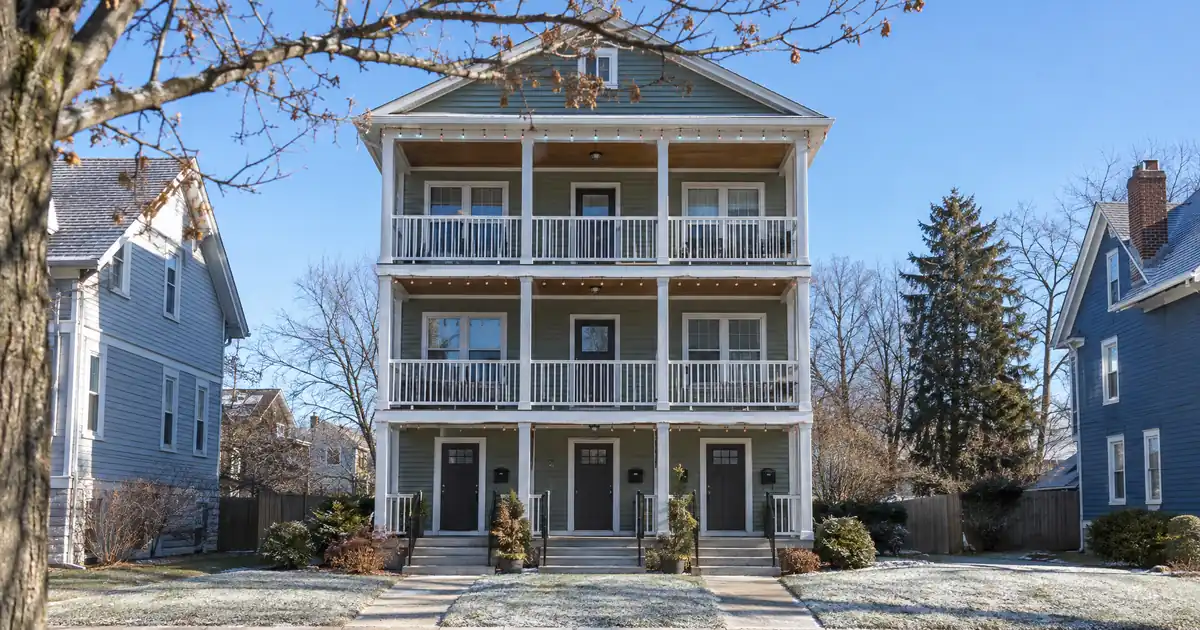
You are comparing two ways to buy a duplex, triplex or fourplex while living in it. Both treat the home as your principal residence. Both let you count some of the rent from the other units.
FHA payment estimate
Starting assumptions reflect an example price and the FHA minimum investment. Replace them with your own figures.
Editable benchmark: 7.32% as of October 22, 2026 · Freddie Mac 30-year average via FRED®. A conventional market reference, not an FHA loan quote.
Illustrative starting assumptions: a $350,000 price, the FHA minimum investment as the down payment, a thirty-year term at the current Freddie Mac benchmark, and property taxes and insurance estimated at typical national rates. Every field is editable.
Illustrative estimate only — not a Loan Estimate, approval, quote, or commitment to lend. The rate field carries the weekly Freddie Mac thirty-year conventional benchmark, a market reference and not an FHA loan quote; your rate is set by the lender at lock. FHA mortgage insurance follows HUD’s published schedule for the term, leverage and loan size entered; taxes, insurance and dues are editable estimates; closing costs are not included; county loan limits are not checked here. Licensed in sixteen states for consumer mortgages. Lendmire is not affiliated with or acting on behalf of FHA, HUD, or the federal government.
The real differences sit in three places: the mortgage insurance, the credit and down-payment entry point, and how the rent is counted. Everything else is close.
Lendmire’s FHA loan programs are the baseline here. Across the wholesale programs we place FHA files with, the starting point is 96.5% maximum financing. That means a 3.5% minimum investment at a decision score of 580 or higher. Program figures are subject to lender guidelines and full file review.
Conventional loans ask for a higher credit floor. In exchange, they price the insurance on your actual risk instead of a flat schedule.
Where Do the Savings Come From?
There are four levers. Each one moves the answer in a different direction.
1. The upfront premium. FHA adds a one-time premium of 1.75% of the base loan, and it is usually financed. Financing it means the loan balance starts higher, and you pay interest on that premium for as long as you hold the loan. Conventional has no upfront insurance charge.
2. The annual premium. FHA’s annual premium runs between 0.15% and 0.75% of the balance. Term, loan amount and LTV (loan-to-value, the loan as a percentage of the home’s value) decide where you land. PMI is priced on credit score and LTV. A strong score can make PMI noticeably cheaper than FHA’s premium. A weak score can flip that.
3. How long the insurance lasts. This lever grows the longer you stay. On a thirty-year FHA loan above 90% LTV, the annual premium lasts for the term. At or below 90% LTV, it ends after eleven years. PMI, by contrast, can be removed.
4. Interest on the financed premium. It is a small effect each month. Over a decade it adds up.
Lendmire’s piece How Much a Conventional Loan Saves Over FHA Insurance on a 2-4 Unit goes deeper on the insurance side alone.
Side-by-Side: FHA vs. Conventional on a 2-4 Unit
| Factor | FHA | Conventional |
|---|---|---|
| Minimum investment | 3.5% at a 580+ score | Higher credit floor applies |
| Upfront insurance | 1.75% of base loan, financed | None |
| Ongoing insurance | 0.15%-0.75% annual premium | Risk-priced PMI if LTV is above 80% |
| How insurance ends | Term above 90% LTV; 11 years at or below | Request at 80%; automatic at 78% |
| 3-4 unit rent test | Yes, property-level | No separate property test |
The row that matters most is the fourth one. A buyer who plans to stay ten years or more feels that difference every month.
How the Insurance Ends: The Legal Difference
PMI has legal exits. Under federal rules, you can ask your servicer to cancel PMI once your balance is scheduled to reach 80% of the home’s original value. If you are current on payments, PMI must end automatically at 78% on the original schedule.
FHA works differently. HUD’s Mortgagee Letter 2023-05 sets the upfront premium and the annual premium schedule. The annual premium was cut for most new borrowers when that letter took effect. Duration still depends on the original LTV and term.
A 3.5% minimum investment on an FHA loan puts you well above 90% LTV from day one. That is the case where the annual premium generally lasts the term. Getting out usually means refinancing.
How Is Your Loan Underwritten, Step by Step?
Underwriting is how a lender decides whether the file fits the program. For a house hacker, it runs in five steps.
Step 1: Occupancy. You must live in one unit as your principal residence. FHA allows one to four units, owner-occupied only. A non-occupant co-borrower is allowed on FHA, and seller or interested-party contributions are allowed up to 6% of the price.
Step 2: Credit and ratios. The lender checks your credit and your debt-to-income ratios. Those are your housing payment and your total monthly debts as percentages of income. On FHA, the base pair is 31/43 with no compensating factors. Documented factors, such as reserves or a strong payment history, can reach 40/50 at the top tier. The automated finding governs most files.
Step 3: Appraisal and rent schedule. The appraiser values the property and estimates market rent for each unit. That rent estimate matters on both loan types.
Step 4: Counting the rent. Here the two loans split in an important way. On a conventional loan, Fannie Mae’s rental income rules add a portion of the other units’ rent as income. The full housing payment stays in your obligations. The rent is not netted against it. The unit you live in does not produce qualifying income.
Step 5: The FHA property test. On 3-4 units, FHA also asks whether the building supports itself. A share of the appraiser’s market rent must cover the full monthly housing payment. HUD’s Handbook 4000.1 is the governing rulebook for FHA loans.
This test is separate from your income. A high-priced fourplex with modest rents can fail it even if your paycheck is strong.
How Unit Count Changes the Picture
A duplex is the simplest case. Both loans work, and the savings story is mostly about insurance.
A triplex or fourplex adds the FHA rent test. The test becomes a gate, not just a cost. Buyers sometimes find conventional is the only route that fits, because the property test does not apply the same way.
On a conventional loan, the question shifts to your income and your reserves. Rent helps your ratios, but it does not erase the payment.
Where the General Rule Breaks
“Conventional saves money” holds in many files. Here are the named cases where it does not.
Lower credit scores. FHA programs start at a 580 decision score through the wholesale channels we use. Conventional sets a higher floor. If your score sits below that floor, conventional is not an option, and the savings question is moot.
Thin cash. A 3.5% minimum investment is hard to match. If putting more down would drain your reserves, the cheaper loan on paper can be the riskier one in practice.
Weak credit above the floor. PMI is risk-priced. A borrower just over the conventional line can see PMI cost about as much as FHA’s premium, or more. Then the upfront premium and the lifetime term decide it. Only a loan-level quote settles it.
Old advice about 25% down. Older articles say conventional 3-4 unit purchases need 25% down. That advice is stale. Owner-occupied 2-4 unit purchases can go well beyond 80% LTV today. Check current terms before ruling conventional out. Exact terms depend on the lender’s guidelines, property type, leverage, and a full review of the borrower’s file.
High-balance and manually underwritten files. When conventional limits on 2-4 units were raised, the change did not extend to high-balance or manually underwritten loans, per HousingWire. A pricey property can land in a different bucket. County loan limits apply on both programs.
Cash-out refinances. Conventional cash-out on a 2-4 unit allows far lower leverage than a purchase. If you plan to pull equity later, that ceiling matters.
Can You Start With FHA and Refinance Out Later?
Yes, and many house hackers do. The trade-off is that you pay the upfront premium first and carry the annual premium until the refinance.
Two FHA refinance paths exist. The FHA Streamline refinances an existing FHA loan with no appraisal and a limited credit review. It requires a net tangible benefit, and the premium continues. It does not remove mortgage insurance.
The FHA rate-and-term refinance uses an appraisal and reaches 97.75% on a principal residence occupied for the previous twelve months. The FHA cash-out reaches 80% LTV on a home owned and occupied for twelve months before the case number. Every figure here varies by lender and program — guidelines, property type, leverage, and credit profile all apply.
Leaving FHA for a conventional loan is a different test. You need enough equity and a credit profile that conventional will take. Refinancing also has costs of its own. Lendmire’s walkthrough of what a house hacker pays monthly on a conventional 2-4 unit covers how those costs show up in the budget.
Who Saves the Most, and Who Should Stay With FHA?
Picture three buyers, each at the same price.
The strong-credit buyer with room to put more down. Conventional tends to win. PMI is priced low, it can be removed, and there is no upfront premium to finance. This buyer saves the most, and the gap grows with every year of ownership.
The mid-credit buyer with a modest down payment. This one is a genuine toss-up. FHA’s flat schedule and PMI’s risk pricing can land close together. The deciding variable is how long the buyer plans to stay. A short hold favors FHA’s lower entry cost. A long hold favors conventional.
The buyer near the credit floor, with little cash. FHA is usually the only route, and it is a good one. The 3.5% minimum investment and the lower score threshold are exactly what the program was built for. Saving on insurance means little if you cannot close.
One more filter for 3-4 units: run the rent test early. If the building does not pass on FHA, conventional may be the only workable path.
Common Mistakes
- Assuming all the rent counts. Only a portion of the other units’ rent counts, and the payment stays in full.
- Comparing sticker costs, not total costs. The upfront premium, its interest and the insurance duration all belong in the math.
- Treating FHA insurance as removable like PMI. The exit rules are different.
- Skipping the rent test on a fourplex. Check it before you fall in love with a property.
- Ignoring reserves. A lower down payment still leaves repairs, vacancies and a landlord’s surprises.
- Not asking for both loan estimates. The brokerage can arrange both. Compare the Loan Estimates side by side.
Key Terms Defined
House hacker: A buyer who lives in one unit of a 2-4 unit property and rents out the rest to offset housing costs.
Mortgage insurance premium (MIP): FHA’s insurance on the loan. It includes an upfront charge and an annual charge.
Private mortgage insurance (PMI): Insurance on a conventional loan when the down payment is under 20%. It protects the lender and can be removed.
LTV (loan-to-value): The loan balance as a percentage of the home’s value.
Self-sufficiency test: FHA’s check on 3-4 unit properties, asking whether the building’s rent covers its own payment.
Decision score: The credit score a lender uses to decide whether a file fits the program.
Frequently Asked Questions
Is conventional always cheaper than FHA on a 2-4 unit?
No. It is often cheaper for borrowers with strong credit and a larger down payment. For borrowers near the credit floor, PMI can match or exceed FHA’s premium. A loan-level quote is the only reliable comparison.
Does FHA mortgage insurance ever go away?
Sometimes. On a thirty-year loan at or below 90% LTV, the annual premium ends after eleven years. Above 90% LTV, it lasts for the term. Many buyers exit by refinancing, subject to equity and lender guidelines. Final terms depend on lender guidelines, property type, leverage, and the borrower’s complete credit picture.
Can I count all the rent from the other units?
No. A conventional lender counts a portion of the other units’ rent as income, and your own unit produces none. The full housing payment stays in your debt-to-income math.
Does FHA’s rent test apply to a duplex?
No. The self-sufficiency test applies to 3-4 unit properties. A duplex is qualified on your income and credit, with rent from the second unit factored in per program rules.
How long do I have to live in the property?
You must occupy it as your principal residence. Occupancy requirements vary by program and lender, so confirm the exact terms before you apply.
If you are buying a home and want to see whether an FHA loan fits your file, Lendmire can help you compare the options and what each one asks of the file. Lendmire arranges FHA, VA, conventional and jumbo loans through wholesale lenders in 16 states. Every parameter here is subject to lender guidelines and full file review, and nothing here is a commitment to lend.
For your own numbers, request a scenario review with Lendmire.
About Lendmire
Lendmire, NMLS# 2371349, is a mortgage brokerage with consumer lending licenses in 16 states. FHA, VA, conventional and jumbo purchase and refinance loans are arranged through wholesale lending partners, and each application is reviewed individually by the lender. Scotsman Guide named Lendmire a Top Mortgage Workplace in both 2025 and 2026.
Get Started
Ready to find the right loan for you?
In about 30 seconds you can review financing options available for your home or investment property. No commitment required.
Informational only. Not a Loan Estimate, approval, or commitment to lend. Program availability and eligibility are subject to lender guidelines, credit approval, property review, and underwriting.
References
1. CFPB: When can I remove PMI
2. HelpWithMyBank.gov: PMI removal
3. HUD Mortgagee Letter 2023-05
4. Fannie Mae Selling Guide: Rental Income
5. HUD Single Family Housing Policy Handbook 4000.1
6. HousingWire
This article is part of Lendmire’s FHA loan program — full qualification details, guidelines, and scenarios live on the program page.
Related reading: House Hacker FHA Loan Refinance Requirements to Conventional · How Much a Conventional Loan Saves Over FHA With Strong Credit · Conventional Loan vs FHA With a Co-Borrower on a 2-4 Unit Purchase
Brandon Miller
Founder & CEO, Mortgage Loan Originator, Lendmire LLC
- Mortgage Loan Originator · NMLS# 1129696 · Verify on NMLS Consumer Access
- North Carolina Real Estate Broker · License# 343312 · Verify on NCREC
- North Carolina Insurance Producer · License# 19053198 · Property, Casualty, Life, Health · Verify on NAIC SBS
- Lendmire LLC · Firm NMLS# 2371349 · Verify firm licensure
Disclosure information. Lendmire is a state-licensed mortgage brokerage under NMLS# 2371349. Lendmire is not a depository institution, direct lender, or financial advisor — all loans referenced are placed through wholesale lender partners and are subject to each lender's underwriting standards. This article is provided for general informational purposes and is not a commitment to lend, nor does it constitute financial, legal, or tax advice. Loan programs, terms, rates, and qualification standards change without notice and depend on borrower profile, property type, and the state in which the subject property is located. Equal Housing Opportunity provider. NMLS Consumer Access: nmlsconsumeraccess.org.