
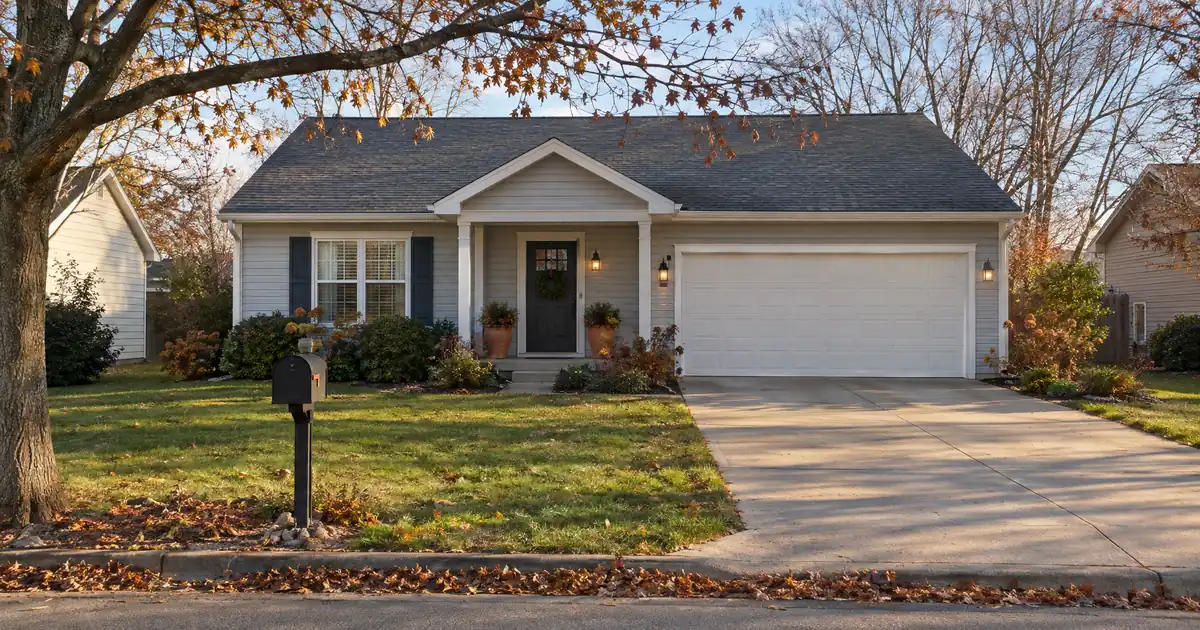
The Quick Read: Most borrowers get out of FHA mortgage insurance by replacing the loan with a new one, and the appraisal on that new loan decides whether it works. A low appraisal raises your loan-to-value ratio. That can leave some mortgage insurance in place, or shrink the savings until the refinance no longer pays for itself. You still have moves: dispute the value, pay the balance down, accept cancellable insurance, or wait.
Key Takeaways
- Equity does not cancel FHA mortgage insurance on most current loans. A new loan does.
- The appraisal sets the new loan’s loan-to-value ratio, which sets whether insurance stays.
- An FHA Streamline skips the appraisal but keeps FHA mortgage insurance.
- A low appraisal can be challenged, but a challenge is a request, not a right to a higher number.
- A refinance has to clear a break-even test. Closing costs can outweigh the insurance savings.
Key Terms Defined
Loan-to-value ratio (LTV): the new loan amount divided by the home’s appraised value. A lower appraisal pushes it up.
Annual mortgage insurance premium: the monthly insurance charge FHA loans carry. On the programs Lendmire places, it runs between 0.15% and 0.75% of the balance, depending on term, loan amount, and LTV.
Upfront premium: a one-time charge of 1.75% of the base loan, usually financed into the balance.
Private mortgage insurance (PMI): the insurance on conventional loans with thin equity. Unlike FHA’s version, it can be cancelled once you build enough equity.
Net tangible benefit: a measurable gain the borrower must get from an FHA Streamline. A lower payment from a longer term alone does not count.
Reconsideration of value: a formal request asking the lender to take a second look at an appraisal, with new facts attached.
Case number: the ID assigned to your FHA loan when it was set up. Its date decides which mortgage insurance rules apply to you.
Refinance savings and break-even estimate
The starting figures are an example value with a balance in proportion and a placeholder for costs. Replace them with yours, and enter the current rate from your statement.
Editable benchmark: 7.32% as of October 22, 2026 · Freddie Mac 30-year average via FRED®. A conventional market reference, not a refinance quote.
Illustrative starting assumptions: a $350,000 home value, a $245,000 current balance, a current rate you enter and a remaining term seeded at twenty-five years, closing costs seeded at $5,000 as an editable placeholder (not a fee quote) and rolled into the new loan, a thirty-year term at the current Freddie Mac benchmark, and property taxes and insurance estimated at typical national rates. Every field is editable.
Illustrative estimate only — not a Loan Estimate, approval, quote, or commitment to lend. The new rate field carries the weekly Freddie Mac thirty-year conventional benchmark, a market reference and not a refinance quote; a refinance is priced by the lender at lock, and the current rate, the remaining term and the closing costs are figures you enter. The current payment is estimated from the balance, the current rate and the remaining term; the break-even divides the closing costs by the monthly saving and ignores the interest effect of a longer term. On the VA IRRRL the funding fee is added to the loan unless the veteran is exempt. Taxes and insurance are editable estimates. Licensed in sixteen states for consumer mortgages; Lendmire is a broker, never the lender.
Why the Appraisal Decides Everything
Leaving FHA insurance means paying off the FHA loan with a different loan. The lender on that new loan needs to know what your home is worth. The appraisal answers that question, and the answer drives everything else.
Here is the logic. The new loan amount divided by value gives your LTV. A conventional lender will charge no mortgage insurance only when that LTV sits at or below a threshold your lender names. Land above it and you get PMI. Land far above it and the refinance may not make sense at all.
Picture a homeowner who has been paying down an FHA loan for a few years and expects the home to appraise well. The hoped-for value puts the new loan at 78% of value. The appraiser finds weaker comparable sales and the value comes in about 8% lower. Now the same loan sits near 85% of value. Same loan, same balance, different outcome. That gap is why this topic needs its own plan.
If you want the program basics before the exit strategy, Lendmire's overview of FHA loan programs covers the entry side. Across the wholesale programs Lendmire places FHA files with, the minimum investment is 3.5% down at a 580 decision score, maximum financing is 96.5%, and the ratios run from 31/43 up to 40/50 with documented compensating factors. Those thin starting cushions are exactly why so many FHA loans carry insurance for a long time. Every figure here varies by lender and program — guidelines, property type, leverage, and credit profile all apply.
The Clock on FHA Mortgage Insurance
Your case number date decides how long the insurance lasts, and your original LTV matters more than today's value. For loans with case numbers assigned on or after the June 3 cutoff, HUD's Mortgagee Letter on premium duration says FHA collects the annual premium for the longest period the statute allows.
In practice, on a thirty-year loan that means two tracks:
- Original LTV above 90%: the annual premium lasts for the full loan term.
- Original LTV at or below 90%: the annual premium ends after eleven years.
So check the clock before you shop. A loan that drops its premium in a few years may not need a refinance at all.
Older loans followed a different rule. For case numbers before that cutoff, HUD's answers page explains that insurance was cancelled once the balance fell to a set share of the original value. HUD did not use new appraised values for that test. Either way, a fresh appraisal cannot cancel mortgage insurance on the loan you already have. A new appraisal only matters for a replacement loan.
One more distinction. Federal PMI cancellation rights cover private mortgage insurance, not FHA's premium. Questions about FHA insurance go to your servicer.
The Self-Check Before You Pay for an Appraisal
Run the numbers first, because an appraisal fee is paid up front. Five steps give you a realistic picture:
1. Pull your balance. Use the payoff figure, not the original loan amount.
2. Estimate value honestly. Look at recent sales of similar homes nearby, not at listings or asking prices.
3. Stress the value. Cut your estimate by a few percent and see what happens to the LTV. If the refinance only works at your best-case value, it is fragile.
4. Account for costs. If closing costs are rolled into the new balance, the LTV rises further.
5. Check credit and income. A conventional refinance uses full underwriting, so your score and your debt load matter.
Some conventional refinances can skip a full appraisal. Fannie Mae's value acceptance lets its automated system accept a lender-submitted value on eligible loans. Eligibility can change if your loan terms change during processing, and it is not an underwriting waiver. The other rules on the file still apply.
(Skipping the appraisal also means skipping the chance to learn your value early. If you are close to a threshold, a full appraisal may serve you better than a data-only report.)
What Happens at Each Appraisal Result
Each result points to a different best move. This table covers the common ones.
| Appraisal result | Effect on the new loan | Typical options |
|---|---|---|
| Higher than expected | LTV drops, less or no insurance | Proceed, or shorten term |
| On target | LTV matches plan | Proceed, run break-even |
| Slightly short | LTV above your target | Pay down balance, accept PMI |
| Well short | LTV far above target | Dispute value, wait, stay FHA |
Treat the middle rows with care. A small miss often leaves the refinance workable but with PMI instead of no insurance. PMI is not the same as FHA's premium, since it can be cancelled later. Whether it still saves money depends on the numbers, which is why the break-even test comes next.
If the Appraisal Comes In Low
Don't accept the number until you have read the report. Work through it in order.
Step 1: Get a copy. Ask your lender for the full written appraisal. Lenders generally provide one on a home loan.
Step 2: Read it like a skeptic. Check the square footage, bedroom and bath counts, lot details, and recent upgrades. Factual errors are fixable.
Step 3: Check the comparable sales. Appraisers pick recent nearby sales that resemble your home. Look for sales that are far away, much older, or quite different from your property.
Step 4: Request a reconsideration. Federal agencies issued interagency guidance on reconsiderations of value that encourages lenders to let borrowers submit information a valuation may have missed. Send better comparable sales, documentation of upgrades, and any errors you found. It is guidance, not a promise of a higher number. Sometimes the original value stands.
Step 5: Decide with the new LTV in hand. If the value holds, you have four moves:
- Pay the balance down to reach your target LTV.
- Accept PMI on the new conventional loan.
- Switch to an FHA option that does not need the same equity.
- Wait and re-evaluate later.
Honestly, waiting is the underrated option. If the miss is large, a refinance that needs a pile of cash or leaves you with PMI and fresh closing costs may simply be a bad trade.
Compare the Paths
Not every path removes the insurance. Here is how the main routes stack up for a borrower who has an FHA loan on the home they live in.
| Path | Removes FHA insurance? | Needs full appraisal? |
|---|---|---|
| Conventional refinance | Yes, or swaps to PMI | Often, unless value accepted |
| FHA Streamline | No | No |
| FHA rate-and-term | No | Yes |
| FHA cash-out | No | Yes |
| Wait and pay down | Only when the clock ends | No |
The FHA routes matter even though they keep insurance. The FHA rate-and-term refinance reaches 96.5% on a principal residence you have occupied for the previous twelve months. The FHA cash-out reaches 80% LTV on a home you have owned and occupied for twelve months before the case number. Both are subject to lender guidelines and full file review. Lendmire has also written about how mortgage insurance rules change when a cash-out refinance leaves FHA if cash is part of your goal.
Where the General Rule Breaks
The standard advice is simple: refinance to conventional and drop the insurance. These edge cases bend it.
The FHA Streamline avoids the low-appraisal problem. HUD's Streamline page says the existing loan must already be FHA-insured and current, and the refinance must show a net tangible benefit. No appraisal is involved, so a weak value cannot block it. But the mortgage insurance stays. A Streamline can lower your combined cost, but it does not remove the premium.
Streamline benefit tests are not loose. HUD says the definition varies by loan type and by the new rate and term. A lower payment from stretching the term does not pass on its own. The same page says lenders may not roll closing costs into the new Streamline loan amount.
Older loans may have a shorter road. A loan with a case number from before the cutoff may follow the older cancellation rule. Check with your servicer before spending money on a refinance.
High-LTV conventional options are narrow. The most generous conventional refinance programs come with extra conditions, such as who owns the existing loan and what type of loan it is. A typical FHA loan does not meet them. Don't assume a high-LTV conventional path is open to you.
Occupancy changes the math. Conventional programs limit leverage more tightly on second homes and on multi-unit properties. FHA financing here is for the home you live in.
A discriminatory appraisal is a separate problem. If you believe bias affected your value, a reconsideration request is the place to start. Anything beyond that is a legal question, not a mortgage one.
Does the Refinance Pay for Itself?
Do the break-even math before you apply. The test is plain: divide your total closing costs by your monthly savings. The result is the number of months before the refinance breaks even.
Three things move that number:
- Insurance saved. Dropping FHA's premium or swapping it for cancellable PMI is the main savings.
- Rate and term changes. A new interest rate and a new term can erase savings. A longer term lowers the payment but adds months of interest.
- The appraisal outcome. A low value can add PMI, which shrinks the monthly savings and pushes break-even later.
Say you plan to sell in a couple of years. A long break-even period means you leave before you earn the savings back. Say you plan to stay a decade. The same period looks fine. Your time horizon matters as much as the math.
A broker should run this for you using your own numbers on the Loan Estimate. Compare the full terms line by line, not just the monthly figure.
Myths That Cost Homeowners Money
"I can cancel FHA insurance at 20% equity like PMI." That rule applies to private insurance. FHA works differently, and for most current loans the clock depends on original LTV.
"A new appraisal at a higher value cancels my insurance." It does not. Value only matters on the replacement loan.
"A Streamline gets rid of mortgage insurance." It keeps it.
"A low appraisal is final." You can ask for reconsideration, though there is no guaranteed outcome.
"A conventional refinance always beats FHA." It does not when the new LTV stays high and the closing costs never pay back.
"No appraisal means no rules." Streamlines still carry seasoning, payment-history, and benefit tests. And value acceptance on a conventional loan means the automated system took a value, not that underwriting was waived.
When to Wait
Hold off if any of these fit your situation:
- The refinance only works at your best-case value.
- Your break-even period is longer than you plan to own the home.
- Your credit or income has dipped since your original loan.
- Your FHA insurance is close to ending on its own.
- Recent sales nearby have been soft, and comparables are thin.
Waiting is not failure. Each month of payments builds equity, and equity is what a future appraisal rewards.
Next Step
If you are weighing a refinance and want the break-even run on your own numbers, Lendmire can help you compare the programs on the same home. Bring your payoff statement, your best guess at value, and your timeline. A broker can show you what each appraisal outcome would do to the loan before you pay for one. Program figures are subject to lender guidelines and full file review, and nothing here is a commitment to lend.
Frequently Asked Questions
Can a low appraisal stop me from getting rid of FHA mortgage insurance?
It can block the cleanest version of the exit. A low value raises the new loan's LTV, and a higher LTV may leave you with PMI or no workable refinance. You can still ask for reconsideration, bring cash to lower the loan, or wait.
Does an FHA Streamline get rid of my mortgage insurance?
No. It skips the appraisal and requires a net tangible benefit, but the premium continues. It helps when you want a lower combined cost and your value is uncertain.
Can I challenge a low appraisal?
Yes, you can ask the lender for a reconsideration of value. Strong requests include factual errors, better comparable sales, and documented improvements. The lender decides, and a higher number is not guaranteed.
Is PMI better than FHA mortgage insurance?
Often, because PMI can be cancelled as equity builds, while FHA's premium may last for the full term on higher-LTV loans. But it depends on your credit, your LTV, and the closing costs. Run the break-even before you decide.
How do I know whether my FHA insurance will ever end on its own?
Check your case number date and your original LTV. On a thirty-year loan with an original LTV at or below 90%, the annual premium ends after eleven years. Above 90%, it lasts the term. Your servicer can confirm which rules cover your loan.
For your own numbers, request a scenario review with Lendmire.
About Lendmire
Lendmire, NMLS# 2371349, is a mortgage brokerage with consumer lending licenses in 16 states. FHA, VA, conventional and jumbo purchase and refinance loans are arranged through wholesale lending partners, and each application is reviewed individually by the lender. Scotsman Guide named Lendmire a Top Mortgage Workplace in both 2025 and 2026.
Get Started
Ready to find the right loan for you?
In about 30 seconds you can review financing options available for your home or investment property. No commitment required.
Informational only. Not a Loan Estimate, approval, or commitment to lend. Program availability and eligibility are subject to lender guidelines, credit approval, property review, and underwriting.
References
1. HUD Mortgagee Letter on annual premium duration (FHFA-hosted copy)
2. HUD Answers: premium duration for older loans
3. Fannie Mae value acceptance
4. Interagency guidance on reconsiderations of value
5. HUD FHA Streamline Refinance page
This article is part of Lendmire’s FHA loan program — full qualification details, guidelines, and scenarios live on the program page.
Related reading: Is an FHA Streamline Cheaper If You Can Drop Mortgage Insurance? · FHA Streamline Rules for Borrowers Who Can Drop Mortgage Insurance · How to Do an FHA Streamline Refinance as a First-Time Buyer
Brandon Miller
Founder & CEO, Mortgage Loan Originator, Lendmire LLC
- Mortgage Loan Originator · NMLS# 1129696 · Verify on NMLS Consumer Access
- North Carolina Real Estate Broker · License# 343312 · Verify on NCREC
- North Carolina Insurance Producer · License# 19053198 · Property, Casualty, Life, Health · Verify on NAIC SBS
- Lendmire LLC · Firm NMLS# 2371349 · Verify firm licensure
Disclosure information. Lendmire is a state-licensed mortgage brokerage under NMLS# 2371349. Lendmire is not a depository institution, direct lender, or financial advisor — all loans referenced are placed through wholesale lender partners and are subject to each lender's underwriting standards. This article is provided for general informational purposes and is not a commitment to lend, nor does it constitute financial, legal, or tax advice. Loan programs, terms, rates, and qualification standards change without notice and depend on borrower profile, property type, and the state in which the subject property is located. Equal Housing Opportunity provider. NMLS Consumer Access: nmlsconsumeraccess.org.