
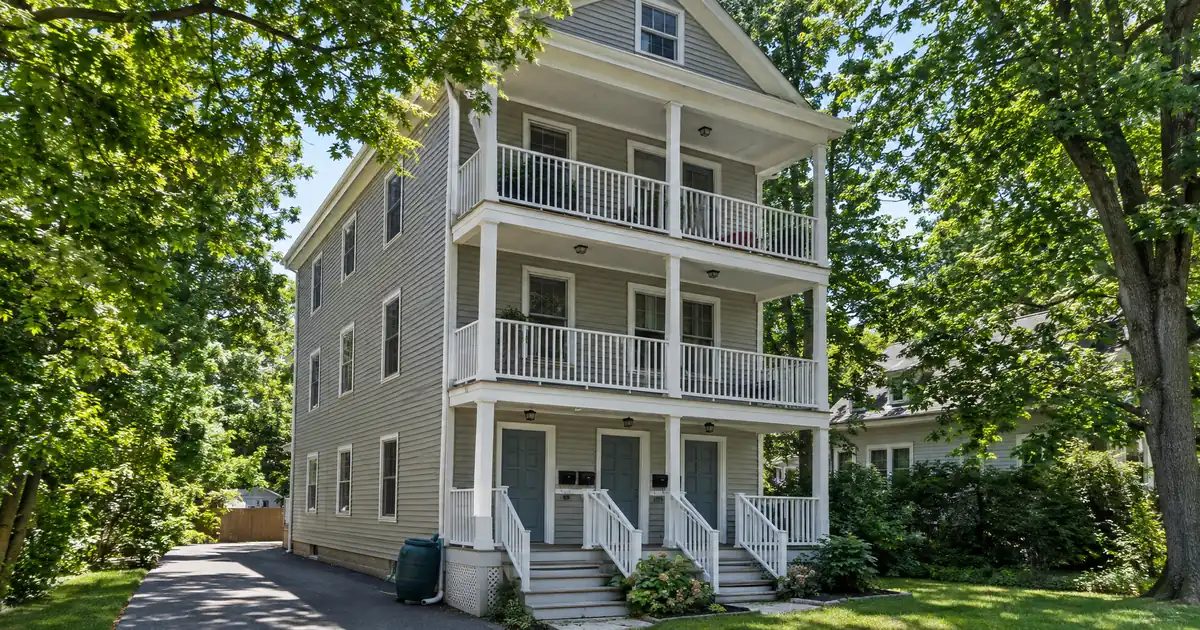
The Quick Read: The assistance can often cover the entire FHA minimum investment, so the cash you bring is mostly reserves, costs the assistance skips, and any gap if you pick the smaller grant. On a duplex, three assistance shapes may fit. On a three- or four-unit building, only the grant option fits, and the reserve requirement grows. Every file is underwritten individually, through wholesale lenders and subject to program guidelines.
Key Takeaways
- The minimum is a percentage, not a unit-count surcharge. FHA’s minimum investment is 3.5% of the lesser of price or appraised value. A fourplex does not raise it.
- Unit count changes the extras. Three- and four-unit buildings add a rent test and a bigger reserve requirement.
- Assistance shape limits the unit count. The forgivable and repayable seconds cover 1-2 units. The grant covers 1-4.
- DPA is not zero cash. Reserves, prepaid items, inspections and appraisals still need money.
- You do not have to be a first-time buyer. Repeat and move-up buyers qualify. Exact terms depend on the lender’s guidelines, property type, leverage, and a full review of the borrower’s file.
What Counts as “Own Funds” Here?
Own funds are money that belongs to you and is not a loan. Savings, earnest money, and proceeds from selling something you own all qualify. So does money you move from another account, as long as the lender can trace it.
Assistance is a different bucket. A grant is nothing to repay. A forgivable or repayable second is a loan secured against the home. A lender treats that second as financing, not as your money.
Gifts sit in between. A gift from a relative, employer or similar donor can cover part of the minimum investment, and HUD’s FHA consumer FAQ says FHA allows 2- to 4-family purchases. The donor signs a letter saying nothing is owed back, and the lender documents it.
So “own funds” on a 2-4 unit DPA purchase is really three questions. How much of the minimum investment does the assistance cover? What is left over? And what do you need on top of the minimum?
How the Two Loans Get Underwritten, Step by Step
The first mortgage and the assistance are reviewed together, but they follow different rules. Here is how the deal works.
1. You pick the first lien. The grant pairs with FHA first liens only. The forgivable and repayable seconds also pair with USDA and HUD-184 first liens. For a multi-unit building, FHA is the usual home.
2. The lender checks the first-lien basics. FHA allows a 3.5% minimum investment and 96.5% first-lien leverage. It adds an upfront mortgage insurance premium, which can be financed into the loan, plus an annual premium that varies by tier. A qualified local professional can confirm the current insurance details for your file.
3. The assistance option gets its own screen. Credit floors differ by shape: 620 for the grant, 640 for the forgivable second, 660 for the repayable second. Each floor is the minimum representative credit score a borrower must have to qualify for that option.
4. Occupancy is confirmed. You must live in one of the units as your primary residence. Assistance is never available on a second home or rental.
5. The appraisal prices the building and its rents. On a 2-4 unit, the appraiser estimates market rent for every unit. That number matters for qualifying, not just value.
6. The file gets an automated underwriting finding. The assistance options follow that finding. FHA manual underwriting uses 31/43 ratios, and the repayable second does not allow manual underwriting at all.
7. Required extras get done. The grant requires a homebuyer education course. You pay up front, and the cost is credited back at closing. The repayable second carries its own loan disclosures, including a balloon disclosure.
Step 5 is where multi-unit deals can shift. A strong price with thin appraised rents can change what a lender will approve.
Which Assistance Shape Fits Which Unit Count?
For a duplex, you can choose among the grant, the forgivable second and the repayable second. For three or four units, the grant is the assistance option in this lineup. A buyer can be fully FHA-eligible for a fourplex and still not fit a particular assistance product.
| Option | Units | What it covers | Credit floor |
|---|---|---|---|
| Grant | 1-4 | 2% or 3.5% of price; nothing to repay | 620 |
| Forgivable second | 1-2 | 3.5% of lesser of price or value | 640 |
| Repayable second | 1-2 | 3.5% or 5% of lesser of price or value | 660 |
| Refinance-cost second | 1-4 (refinance) | 1% to 3.5% of balance | 660 |
The refinance-cost second is for an existing FHA owner, not a purchase. It is listed so you can see the full range.
Many public programs outside this lineup limit which building types they accept. Some state programs allow one to four units, and others restrict buyers to single-family homes. Check the assistance product’s unit rule before you fall in love with a fourplex.
What Each Shape Does to Your Cash Number
The grant at 3.5% of price matches FHA’s 3.5% minimum investment. Nothing to repay, no lien, no payment. If you take the 2% version, the assistance covers 2%, and the other 1.5% of price comes from you or a documented gift.
The forgivable second works the same way on size: 3.5% of the lesser of price or value. It is a loan, but with no interest and no monthly payment. It is forgiven after the first 36 or 60 on-time first-lien payments, depending on the version you choose. Miss that stretch and the balance stays on the books.
The repayable second at 3.5% covers the minimum investment. At 5%, it covers the 3.5% minimum plus 1.5% toward closing costs and prepaid items. It is a real second loan. It carries interest, a monthly payment, a 30-year amortization and a balloon due in year 10. That payment counts in your qualifying picture, which matters on a building where rent is already being discounted.
Assistance is a percentage of price or value, not a dollar promise. Your actual figure depends on the final price, the appraisal and the option.
Where the General Rule Breaks
“The assistance covers the minimum investment” holds in the clean case. These edge cases are where it stops holding.
Three- and four-unit buildings
FHA does not raise the minimum investment for extra units. What changes is reserves and the rent test. Per HUD Handbook 4000.1, lenders must document reserves equal to three months of the full housing payment after closing on three- and four-unit properties. Assistance is released at closing, so it does not fund that cushion.
The same Handbook also adds a self-sufficiency test for three- and four-unit buildings. The housing payment cannot exceed 100% of net rental income from all units, including yours. Net income takes the appraiser’s market rent and subtracts a vacancy and maintenance allowance, so you never get credit for all of it. A high price with thin rents can fail here no matter how much assistance you have.
Rent that does not count
Lenders do not count every dollar of rent on a purchase with no rental history. They count a portion of the lesser of the appraiser’s market rent or the lease. Income from commercial space inside the building does not count at all.
The grant gap
If you choose the 2% grant, the 1.5% shortfall is your own money or a documented gift. The 3.5% version removes that gap. The smaller one is a choice, not a default, so ask what each version does to your cash.
High-balance first liens
Multi-unit buildings in expensive counties can push the first loan into high-balance territory. The grant does not allow a high-balance first lien. The repayable second does, though only on 1-2 units. FHA’s one-unit limits range from $541,287 to $1,249,125 by county, and multi-unit limits run higher.
Washington State
The grant option is not offered in Washington. Lendmire’s consumer lending is licensed in 16 states, so confirm your state before planning around any option.
USDA
USDA can guarantee a single-family purchase up to 100% of appraised value, per USDA’s appraisal and property Q&A. One unit of a duplex may be eligible, while buying both units counts as income-producing property. For a true 2-4 unit purchase, USDA mostly does not fit.
HUD-184
The HUD-184 loan has its own minimum investment, different from FHA’s. The program itself does not hand out assistance, so the help has to come from a second lien, a tribe or a gift.
Gifts and assistance together
Nothing stacks with another assistance program. A gift from a family member is not an assistance program, but the lender must still document it. Whether a gift can sit next to a particular option is decided file by file.
Own Funds vs. Reserves vs. Other Costs
Think of three buckets. The assistance mostly feeds the first.
| Bucket | What it is | Can assistance cover it? |
|---|---|---|
| Minimum investment | 3.5% of lesser of price or value | Yes, in most cases |
| Closing costs and prepaids | Fees, insurance, interest due at closing | Only the repayable second at 5% |
| Reserves | Cash left after closing | No |
Inspection and appraisal fees are often paid before closing, outside the loan. Those come from you. If a buyer’s total savings is thin, these early costs are where a plan most often stalls.
Key Terms Defined
Minimum required investment (MRI): The cash contribution FHA requires from the borrower. HUD’s Handbook glossary defines it as at least 3.5% of the adjusted value of the property.
Combined loan-to-value (CLTV): The first loan plus all second loans, divided by the home’s adjusted value, per the same glossary. It shows how much of the building is financed in total.
Secondary financing: Any second loan secured against the home. Lenders treat it as debt, not as a gift, even if it carries forgiveness.
Reserves: Money you still hold after closing. For 3-4 units, FHA expects three months of housing payments documented.
Self-sufficiency test: The rent test for 3-4 unit buildings. Net rent from all units must cover the full housing payment.
Balloon: A lump-sum balance due at a set date. On the repayable second, it comes due in year 10.
What the Decision Looks Like in Practice
Picture a repeat buyer who sold a condo and wants a duplex to live in and rent out the second unit. The price is at the high end of what the buyer can carry. Neither the grant nor the seconds require a first-time buyer, so the buyer’s history does not block anything.
Credit is at 650. That clears the grant (620) and the forgivable second (640) but misses the repayable second (660). The forgivable second then covers the whole 3.5% minimum with no monthly payment, and the buyer’s cash goes to inspection, appraisal, prepaids and savings after closing.
Now run a fourplex at the same price. The forgivable and repayable seconds are out, since they cover only 1-2 units. The grant is the option left, and the buyer must be at or under 140% of area median income or fall into a qualifying category, such as an educator, a first responder or a purchase in an underserved census tract. The buyer also needs three months of housing payments in reserves, and the rent test has to clear.
The practical decision is a short sequence. Start with unit count, then which assistance shape fits it. Next confirm the credit floor, then add up reserves and costs the assistance skips. Last, check that the appraised rents support the rent test.
Mistakes That Put a Closing at Risk
- Assuming the minimum grows with unit count. It does not. The reserves and the rent test do.
- Moving savings late. A deposit with no paper trail can stall a file. Keep statements ahead of time.
- Treating the second as a gift. A forgivable second is still a loan until it is forgiven.
- Picking a product by headline percentage. Compare what each option covers, its credit floor, and its unit limit.
- Ignoring reserves. They are on top of closing costs and cannot come from the assistance.
Lendmire also lays out the grant, forgivable and repayable structures on its down payment assistance programs page.
Frequently Asked Questions
Can I buy a duplex with down payment assistance and put nothing of my own into the minimum?
Often, yes. The grant at 3.5%, the forgivable second at 3.5% and the repayable second at 3.5% each match FHA’s 3.5% minimum investment. You still need funds for reserves, inspections, appraisal fees and any costs the assistance does not cover. Approval is subject to lender guidelines and full underwriting.
Does a triplex or fourplex need more of my own money than a duplex?
Not for the minimum investment itself, which stays at 3.5%. The extra comes from reserves, which FHA sets at three months of housing payments on 3-4 units, and from the rent test. Only the grant option fits 3-4 units in this lineup, so your assistance choices also narrow.
Do I have to be a first-time buyer?
No. None of these options requires you to be a first-time buyer, so repeat and move-up buyers can qualify for all of them. The grant uses an income test of 140% of area median income unless a category applies, such as educators and first responders, and it also calls for a 620 credit score, an FHA first lien and homebuyer education.
Can a family gift cover my own-funds share?
A documented gift can often cover part of the minimum investment. HUD’s FHA FAQ says it can come from a family member, employer or charitable organization. The lender needs a donor letter confirming nothing is owed back. Nothing stacks with another assistance program, so the lender confirms how a gift sits beside your chosen option.
Can I use any of this on a rental or second home?
No. Assistance is for an owner-occupied primary residence only. In a 2-4 unit building, you live in one unit and may rent the others.
Next Step
If you are buying a primary home and want to see whether a down payment assistance option fits your file, Lendmire can help you compare the grant, forgivable and repayable structures alongside an FHA, USDA or HUD-184 first mortgage.
Investors who want the broader program framework can review how DSCR loans work.
About Lendmire
Lendmire (NMLS# 2371349) is a mortgage brokerage serving home buyers in 16 states. Down payment assistance programs are arranged with FHA, USDA and HUD-184 first liens through wholesale lending channels; Lendmire brokers the financing and the lender underwrites each application. Scotsman Guide named Lendmire a Top Mortgage Workplace in both 2025 and 2026.
Get Started
Ready to find the right loan for you?
In about 30 seconds you can review financing options available for your home or investment property. No commitment required.
Informational only. Not a Loan Estimate, approval, or commitment to lend. Program availability and eligibility are subject to lender guidelines, credit approval, property review, and underwriting.
References
1. HUD FHA consumer FAQ: How can FHA help me buy a home?
2. USDA
This article is part of Lendmire’s First Time Home Buyer series — every loan program’s qualification details, guidelines, and scenarios live on the loan options page.
Related reading: Can You Use Down Payment Assistance on a Condo or Townhome Purchase? · Can You Use a Family Gift and DPA on a 2-4 Unit Home? · Does DPA Have to Be Repaid When You Refinance the First?
Brandon Miller
Founder & CEO, Mortgage Loan Originator, Lendmire LLC
- Mortgage Loan Originator · NMLS# 1129696 · Verify on NMLS Consumer Access
- North Carolina Real Estate Broker · License# 343312 · Verify on NCREC
- North Carolina Insurance Producer · License# 19053198 · Property, Casualty, Life, Health · Verify on NAIC SBS
- Lendmire LLC · Firm NMLS# 2371349 · Verify firm licensure
Compliance and disclosures. Lendmire (NMLS# 2371349) is a licensed mortgage broker and is not a direct lender, depository institution, financial advisor, or tax professional. Content in this article is general market analysis and educational information — not financial, legal, or tax advice for any specific situation. Lendmire does not guarantee loan approval; every transaction is subject to underwriting by the funding lender. Mortgage pricing and loan program guidelines are subject to change at any time without notice and vary by borrower characteristics, property type, and state regulations. Lendmire complies with Equal Housing Opportunity. Licensure verification: NMLS Consumer Access.