
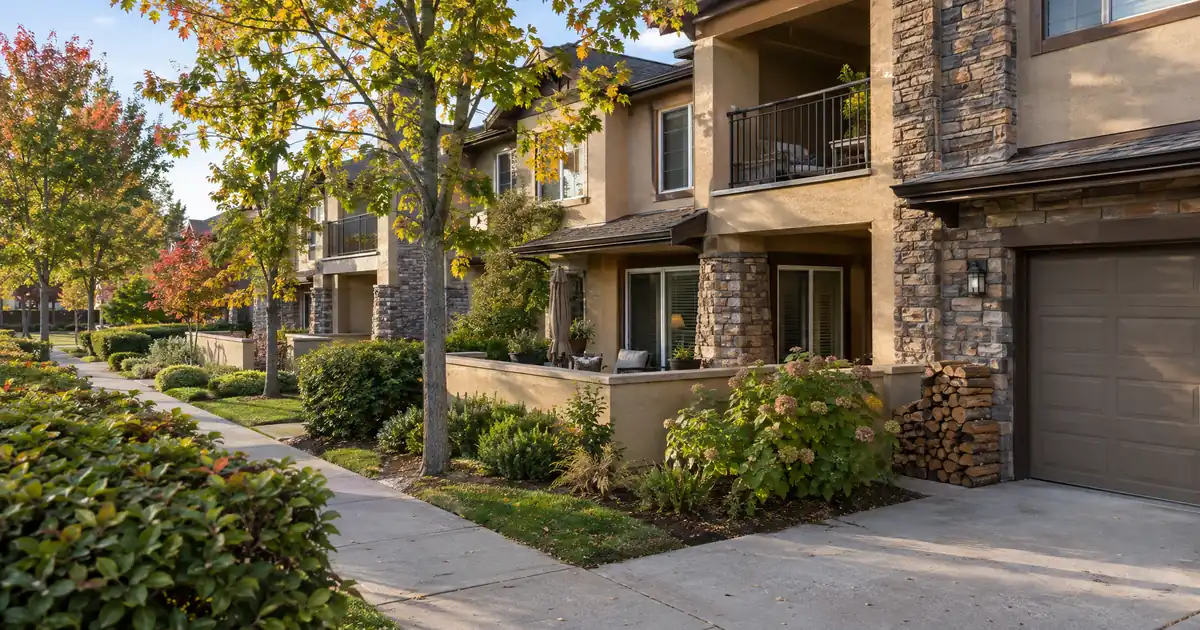
The Quick Read: VA approves condo projects, not individual units, and a condo must be on VA’s approved list before a VA loan can buy a unit in it. Your lender checks the project’s status first. If the building is not approved, the lender or the project’s sponsor can submit it for review, but you and the seller cannot. PUDs (planned unit developments) do not need this approval.
Key Takeaways
- Approval attaches to the whole building or project. Your unit does not get its own approval.
- Check the project’s status before you make an offer and again before the appraisal.
- FHA approval does not carry over to VA.
- Even in an approved project, your unit still needs a VA appraisal that meets VA’s property standards.
- Your own credit, residual income and eligibility are judged separately from the building.
Why Does VA Approve the Building Instead of Your Unit?
A condo is a shared structure. You own your unit, but the roof, the insurance, the reserves and the budget belong to everyone. VA wants the guaranty protected against a building that could fail financially or legally.
VA payment estimate
Starting assumptions reflect an example price with no down payment and a first-use funding fee. Replace them with your own figures.
Editable benchmark: 7.32% as of October 22, 2026 · Freddie Mac 30-year average via FRED®. A conventional market reference, not a VA loan quote.
Illustrative starting assumptions: a $350,000 price, no down payment with full entitlement, a first-use funding fee financed into the loan, a thirty-year term at the current Freddie Mac benchmark, and property taxes and insurance estimated at typical national rates. Every field is editable.
Illustrative estimate only — not a Loan Estimate, approval, quote, or commitment to lend. The rate field carries the weekly Freddie Mac thirty-year conventional benchmark, a market reference and not a VA loan quote; your rate is set by the lender at lock. The funding fee follows VA’s published table for the use and down payment entered; the residual-income figure is VA’s guideline for the region and family size, and the rough residual shown subtracts only the housing payment and the debts entered, while VA also deducts taxes, maintenance and utilities. Taxes, insurance and dues are editable estimates; closing costs are not included. Licensed in sixteen states for consumer mortgages. Lendmire is not affiliated with or acting on behalf of the Department of Veterans Affairs.
VA’s Lenders Handbook, Chapter 16 states that condominiums, but not PUDs, must be approved by VA before any lots or units in the project are eligible for a VA guaranty. The same chapter makes the lender responsible for confirming that title and lien requirements are met.
That distinction trips people up. A townhouse in a PUD and a townhouse-style condo can look identical from the street. The legal structure decides which rules apply, so ask your lender which one you are buying.
The loan itself is the same VA loan either way. Across the wholesale programs Lendmire places files with, a VA purchase with full entitlement offers 100% financing with no down payment (as long as the price is not above the appraised value), no mortgage insurance and no VA loan limit. If you are comparing options, Lendmire’s VA loan programs page covers the full picture. Everything here is subject to lender guidelines and full file review.
How Do You Check Whether a Condo Is Approved?
Start with VA’s own lookup. VA’s Loan Guaranty Hub runs an official Condo Report where you can search by state, city, project name or condo ID.
Here is the practical sequence:
1. Search the project name first. Try variations if nothing comes up, since a project may be listed under a slightly different name than the marketing name.
2. Search by city or condo ID if the name fails.
3. Read the status. Only a status that says the project is accepted, with or without conditions, means it is currently approved. Confirm the exact labels against the live tool, because they can change.
4. Hand the result to your lender. The lender confirms the project’s current standing.
Do this before you write an offer. Do it again before the appraisal is ordered. A status you checked weeks ago may not be the status today.
One caution: some older listings in the database show a “HUD Accepted” label. That label does not make the project VA-approved today. More on that below.
What Happens If the Project Is Not on the List?
You have three realistic paths: ask the lender to submit the project, wait for the sponsor or HOA to do it, or walk away.
The submission is not something you or the seller can do yourselves. Per the Lenders Handbook (section 16-A.02), the lender or sponsor sends a written request and the project’s organizational documents to VA’s Office of Jurisdiction. The Handbook encourages an attorney’s opinion with the package, which narrows what VA has to review.
VA then reviews the legal and financial paperwork. That typically includes:
- The declaration and bylaws
- The HOA budget
- Management and service contracts
- Financial and reserve information
- For new projects, the developer’s phasing plans
Expandable projects get extra scrutiny. Under 38 CFR 36.4364, later phases of an expandable condo can be added without fresh approval only if they follow a previously approved general plan. The developer must also carry at least $1 million of general liability insurance per occurrence.
The real bottleneck is usually the HOA. It owns the documents, and it has to cooperate. If you are serious about the unit, ask your agent to contact the management company early, and ask your lender what document package the HOA needs to supply.
Approval of a new project can take a long time. VA does not publish a review timeline, and anyone quoting you a firm number is guessing. Plan your contract around that uncertainty.
Who Does What in the Approval Process?
| Step | Who handles it | What it involves |
|---|---|---|
| Check status | You and your lender | Search VA’s Condo Report |
| Submit project | Lender or sponsor | Written request plus legal documents |
| Supply documents | HOA or management company | Declaration, bylaws, budget, contracts |
| Review | VA | Checks documents against regulation |
| Appraise | VA-assigned appraiser | Values the unit and the project |
| Underwrite | Your lender | Judges your credit and income |
Notice that the buyer appears only in the first step. That is why your lender’s willingness to handle condo submissions matters. Ask upfront whether yours does, because not every lender wants the work.
What Does the Appraisal Add on Top of Project Approval?
Project approval does not mean your unit passes automatically. Under 38 CFR 36.4365, once the local office accepts the organizational documents, the project and units are appraised to make sure they meet VA’s minimum property requirements and are safe, sanitary and structurally sound. For existing resale condos, water, heating, cooling and sewer service may come from a central source.
The appraisal produces a Notice of Value (NOV), which carries any conditions on the property. VA’s Buyer’s Guide describes the appraisal as mandatory on purchase loans.
Two property-specific wrinkles show up in the Handbook’s Chapter 12 overview:
- Termites in townhouse-style condos. For side-by-side villa and townhome condos in very heavy or moderate-to-heavy termite zones, the NOV must require a termite inspection unless the HOA provides evidence of treatment.
- Private streets. If the organizational documents or state law cover private-street maintenance, the NOV may be issued without further documentation.
Where the General Rule Breaks
Approval rules have a few named exceptions and a few widely believed myths.
FHA approval does not substitute
Many buyers assume an FHA-approved building is fine for VA. It is not. VA Circular 26-09-19 rescinded VA’s acceptance of HUD/FHA condo approvals back in 2009. Some older “HUD Accepted” entries may still sit in the database, so have the lender confirm the project’s current VA standing.
The single-unit approval question
You will see lender marketing pages claiming VA offers a one-unit approval path for buildings that are not on the list. Those pages contradict each other, and none points to a VA document that creates the path. The Handbook and the regulations describe project-level approval only.
The safe approach: assume VA approves projects. If a lender tells you there is an alternative route for your building, ask for it in writing, with the VA authority behind it, before you pay for an appraisal or lock yourself into a contract.
Site condominiums and new construction
Some site-condo structures follow a named exception. VA directed certain Michigan site condominiums toward single-family-style processing in Circular 26-20-36. If your purchase is a detached home in a “site condo,” ask your lender how it will be processed.
New or under-construction projects face presale and developer-control rules in the 38 CFR 36.4360 through 36.4365 range. In plain terms, a project generally has to show a minimum level of presales before VA accepts it, with VA discretion on a case-by-case basis. Ask the lender what the project has to demonstrate.
Occupancy
A VA loan finances your primary residence. If the condo is meant as a rental or a second home, occupancy decides the leverage, and a VA purchase is not built for that use.
What Do the Status Labels Mean for Your Next Move?
Treat the status as a go or no-go signal, then confirm against the live tool.
| What you see | What it generally means | Your next move |
|---|---|---|
| Accepted, with or without conditions | Currently approved | Proceed; lender reads any conditions |
| Not listed | No approval on record | Ask lender about submission |
| Older “HUD Accepted” label | Not VA approval | Have lender confirm VA standing |
| Withdrawn, expired or rejected | Not currently approved | Pause; ask lender what can be cured |
I would not trust a screenshot or an agent’s memory over the live tool. Statuses change, and a stale one is how closings fall apart.
How Do You Protect Your Contract?
Build the delay risk into the offer. Condo approval is the one VA-specific item that can sit outside your control.
- Check status first. A building already on the approved list removes the biggest unknown.
- Write the contract around the unknown. If the building is not approved, talk with your agent about a contingency tied to project approval and a closing date that leaves room for VA’s review.
- Know your exposure. Ask your agent what happens to your earnest money if approval does not come through by the deadline.
- Expect seller hesitation. Some sellers and agents shy away from VA offers on condos because of this extra step. A listing that is already approved is an easier sell.
This is the decision most buyers underestimate. A great price on an unapproved building can cost you the deal, or tie up your deposit while you wait.
What Else Affects Your Qualification?
The building is half the file. You are the other half.
Your own side runs on the same VA rules as any purchase. VA sets no minimum credit score, and the wholesale programs Lendmire places VA loans with start at a 580 decision score, subject to lender guidelines. Residual income, the money left after your major obligations and living costs, is the controlling test. The 41% debt-to-income figure is a guideline, not a cap, though a higher ratio needs residual income well above the table. Your certificate of eligibility from VA decides whether you qualify for the benefit in the first place.
HOA dues also count in your monthly obligations, so they affect how the lender sees your budget. Special assessments can too.
The VA funding fee applies as it does on any purchase. It is reviewable and runs from 1.25% to 3.3% depending on use and down payment, and it is waived for veterans receiving compensation for a service-connected disability and the other exempt groups. Specifically, first use is 2.15% with less than five percent down, 1.5% with five to under ten percent down, and 1.25% with ten percent or more down.
One more practical point. A project’s status affects whoever buys from you next, and it can matter if you refinance later. A building that falls off the approved list becomes harder to sell to another VA buyer.
If you want a deeper look, Lendmire has written about VA loan condo approval rules for a veteran buying a primary home and about getting a condo project approved for a VA loan.
Key Terms Defined
Project approval: VA’s acceptance of an entire condo building or community for VA loan guaranty.
PUD (planned unit development): A community where you own the home and lot, and share common land. PUDs do not need VA project approval.
Notice of Value (NOV): The document VA issues after the appraisal, stating the value and any property conditions.
Minimum property requirements: VA’s standards that a home must be safe, sanitary and structurally sound.
Residual income: The money left each month after major obligations and taxes, which VA uses as the controlling test of affordability.
Certificate of eligibility (COE): The VA document confirming you qualify for the VA loan benefit.
Frequently Asked Questions
Can a VA loan buy a condo that is not on VA’s approved list?
Not unless the project gets approved first. The lender or the project’s sponsor can submit it to VA for review, but you and the seller cannot. Ask your lender up front whether it handles submissions, and get any claimed alternative in writing.
Does the FHA approving a building make it VA-approved?
No. VA stopped accepting HUD/FHA condo approvals years ago. A building can be on one list and off the other, so check VA’s own Condo Report and have the lender confirm the current status.
Do PUDs need VA approval like condos do?
No. VA project approval applies to condominiums, not PUDs. Title and lien requirements still apply, and the lender is responsible for confirming them. Ask which legal structure your property has, since the two can look alike.
If the project is approved, does my unit pass automatically?
No. The unit still needs a VA appraisal that meets the minimum property requirements, and the NOV can carry conditions. Your credit, residual income and eligibility are underwritten separately from the building.
How long does approving a new project take?
VA does not publish a firm timeline, and it depends on the HOA’s documents and the lender. Plan your contract with room for delay rather than trusting a number from a marketing page.
Your Decision in Practice
Check the list, read the status, and let that decide your next step. An approved building keeps things simple. An unapproved one means asking whether the lender, the sponsor and the HOA will do the work, and whether your contract can survive the wait.
If you are buying a home and want to see whether a VA loan fits your file, Lendmire can help you compare the options and what each one asks of the file. Program figures are subject to lender guidelines and full file review, and nothing here is a commitment to lend.
For your own numbers, request a scenario review with Lendmire.
About Lendmire
Lendmire is a mortgage brokerage (NMLS# 2371349) licensed for consumer mortgage lending in 16 states, arranging FHA, VA, conventional and jumbo purchase and refinance loans through a wholesale lending network. Eligibility is determined by the lender on each file. Scotsman Guide named Lendmire a Top Mortgage Workplace in both 2025 and 2026.
Get Started
Ready to find the right loan for you?
In about two minutes you can review financing options available for your home or investment property. No commitment required.
Informational only. Not a Loan Estimate, approval, or commitment to lend. Program availability and eligibility are subject to lender guidelines, credit approval, property review, and underwriting.
References
1. VA Lenders Handbook, Chapter 16
This article is part of Lendmire’s VA loan program — full qualification details, guidelines, and scenarios live on the program page.
Related reading: VA Loan Purchase vs Renting Through the First Tour at a New Station · 15-Year vs. 30-Year VA Loan for a Veteran Who Can Afford More · VA Loan Appraisal Requirements a Condo Must Pass for a Notice of Value
Brandon Miller
Founder & CEO, Mortgage Loan Originator, Lendmire LLC
- Mortgage Loan Originator · NMLS# 1129696 · Verify on NMLS Consumer Access
- North Carolina Real Estate Broker · License# 343312 · Verify on NCREC
- North Carolina Insurance Producer · License# 19053198 · Property, Casualty, Life, Health · Verify on NAIC SBS
- Lendmire LLC · Firm NMLS# 2371349 · Verify firm licensure
Legal disclosures. Lendmire (NMLS# 2371349) is a state-licensed mortgage brokerage that arranges financing through wholesale lender relationships. Lendmire is not a direct lender, depository institution, or registered financial advisor. The discussion above is general informational content about real estate financing — it is not financial, legal, or tax advice, and readers should consult licensed professionals for guidance on their individual circumstances. Loan inquiries are subject to lender underwriting; this article does not represent a commitment to lend. Loan terms, rates, and qualification standards vary by borrower, property, and state, and are subject to change at any time. Equal Housing Opportunity. NMLS Consumer Access: nmlsconsumeraccess.org.