
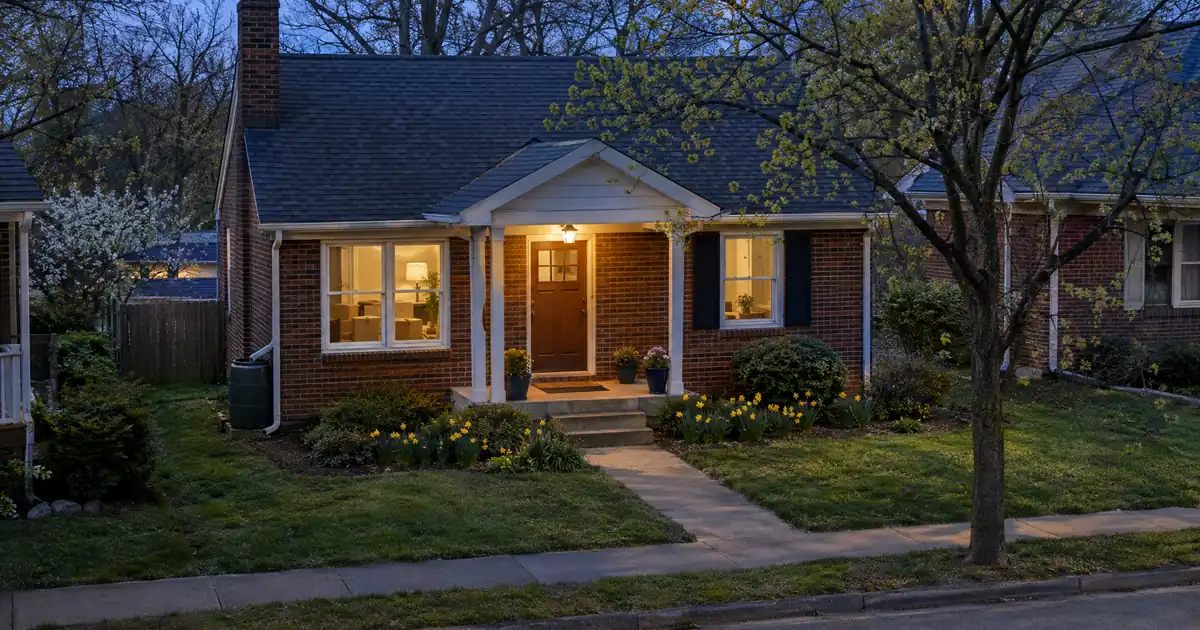
The Quick Read: Buying with a VA loan fits a service member who expects to stay long enough to absorb the cost of owning and who has the cash cushion for repairs and a possible move. Renting fits a member with an uncertain tour, thin savings, or an unfamiliar market. Neither choice is wrong in general. The deciding variables are how long you will realistically be there, how firm your orders are, and whether you could keep the home as a rental if orders change.
Side-by-Side
| Factor | Buy with a VA loan | Rent at the station |
|---|---|---|
| Leverage | No down payment if price is at or below appraised value | None needed; deposit only |
| Credit floor | VA sets none; wholesale programs start at a 580 decision score | Set by the landlord |
| Mortgage insurance | None on a VA loan | Not applicable |
| Occupancy | You certify intent to live there | Live there by lease |
| Documentation | COE, income, residual income review | Application, orders, income proof |
| Exit | Sell, or rent it out | Lease-break rights under SCRA |
| Upkeep | Yours: repairs, utilities, maintenance | Mostly the landlord’s |
Program figures here are subject to lender guidelines and full file review, and nothing here is a commitment to lend.
VA payment estimate
Starting assumptions reflect an example price with no down payment and a first-use funding fee. Replace them with your own figures.
Editable benchmark: 7.32% as of October 22, 2026 · Freddie Mac 30-year average via FRED®. A conventional market reference, not a VA loan quote.
Illustrative starting assumptions: a $350,000 price, no down payment with full entitlement, a first-use funding fee financed into the loan, a thirty-year term at the current Freddie Mac benchmark, and property taxes and insurance estimated at typical national rates. Every field is editable.
Illustrative estimate only — not a Loan Estimate, approval, quote, or commitment to lend. The rate field carries the weekly Freddie Mac thirty-year conventional benchmark, a market reference and not a VA loan quote; your rate is set by the lender at lock. The funding fee follows VA’s published table for the use and down payment entered; the residual-income figure is VA’s guideline for the region and family size, and the rough residual shown subtracts only the housing payment and the debts entered, while VA also deducts taxes, maintenance and utilities. Taxes, insurance and dues are editable estimates; closing costs are not included. Licensed in sixteen states for consumer mortgages. Lendmire is not affiliated with or acting on behalf of the Department of Veterans Affairs.
Who Each Option Is Really For
Buying is for the member with a stable horizon. Maybe the tour is long, the family is settled, or the area is somewhere you would happily own long term. Renting is for the member who is early in a career, short on reserves, or can’t say where the next orders will land.
Many first-tour members land in between. The honest answer is often to rent for a stretch, learn the area, and decide with better information. The VA loan will still be there. The trade-off is that you give up early equity in exchange for flexibility.
What a VA Purchase Actually Asks of You
The VA loan removes the two biggest civilian barriers. Across the wholesale programs Lendmire places files with, a purchase can be financed with no down payment, as long as the price is not above the appraised value. There is no mortgage insurance of any kind. With full entitlement there is no VA loan limit. If you have only remaining entitlement, a down payment may be required, and that is a conversation to have with a loan officer rather than a number to guess at.
Credit works differently from what many expect. VA itself sets no minimum score. The wholesale programs Lendmire works with start at a 580 decision score, and some lenders set a higher floor. Your Certificate of Eligibility (COE) decides eligibility, and service requirements are VA’s rules.
Underwriting leans on residual income, which is what is left each month after debts and living costs. A 41% debt-to-income figure is a guideline, not a cap. A higher ratio needs residual income well above the table.
There is also a funding fee. For a first-use purchase it is 2.15% with less than five percent down, 1.5% with five to under ten percent down, and 1.25% with ten percent or more down. Subsequent use is 3.3% with less than five percent down, with the same lower tiers above that. The fee can be financed, and it is waived for veterans receiving compensation for a service-connected disability and the other exempt groups.
Two more mechanics matter on a PCS clock. A VA appraisal is required on a purchase. The VA Buyer’s Guide says lenders should request it early to avoid delays, and it produces a Notice of Value that lists the estimated value and any repairs needed to meet minimum property requirements. If you want a deeper look at how these programs work, Lendmire’s page on VA loan programs covers eligibility and structure.
The Occupancy Rule Is Where First-Tour Buyers Trip
The law requires you to certify that you intend to live in the home. Per the VA Lenders Handbook, Chapter 3, you either already live there or plan to move in within a reasonable time after closing. Sixty days is treated as the standard reasonable time. Going longer can be reasonable only if you certify a specific move-in date and a particular future event makes it possible. Occupancy more than 12 months after closing generally can’t be considered reasonable.
An active-duty member who can’t occupy in time may satisfy the rule through a spouse or dependent child. For a dependent child, the attorney-in-fact or legal guardian makes the certification and signs VA Form 26-1820. The handbook also says the cost of maintaining separate living arrangements should be considered in underwriting.
One common myth is worth clearing up. People repeat that VA requires you to stay 12 months. The handbook text addresses when you move in, not a minimum stay afterward. The 12-month idea is a lender or industry rule of thumb, so ask any lender what its own expectation is.
When Buying Is the Better Fit
Buying tends to win in these situations:
- A longer or fairly certain stay. The longer you hold, the more the closing and exit costs spread out.
- Reserves in the bank. Owners need income and savings for utilities, maintenance and repairs, as the CFPB’s servicemember tool points out.
- Housing allowance that clearly covers ownership costs. You want room left after taxes, insurance and upkeep, not just the loan payment.
- A plan for the exit. Owning is much easier when you have decided in advance whether you would sell or rent the home out.
- Interest in building equity and stable costs. The CFPB describes these as the usual owner motivations.
Consider a member with a firm multi-year assignment, a spouse employed locally, and a healthy emergency fund. For that person, a purchase with no down payment (when the price is at or below the appraised value) and no mortgage insurance can make ownership practical. The same loan for a member with orders likely to change in a year is a different bet.
Buying also carries closing costs. The CFPB tool cites an expert estimate of 2–5% of the purchase price, which can be paid at closing or rolled into the loan in some cases.
When Renting Is the Better Fit
Renting tends to win in these situations:
- A short or uncertain tour. Exit costs on a purchase can outweigh any equity gained.
- Thin savings. A VA loan removes the down payment, but it does not remove the repair bill when a water heater fails.
- An unfamiliar market. Renting first lets you learn neighborhoods, commutes and schools before committing.
- Unaccompanied or changing family arrangements. Flexibility has real value when plans can shift.
Renters also have federal protection. Under the Servicemembers Civil Relief Act, the Department of Justice explains that a servicemember gives written notice plus a copy of orders or a commanding officer’s letter. For monthly rent, the lease ends 30 days after the next rent payment is due. Military OneSource adds that termination rights apply on PCS orders or deployment orders over 90 days, for leases signed after entering active duty. Voluntary separation isn’t covered.
That protection is the quiet advantage of renting. The CFPB tool does note that renters may owe penalties for breaking a lease early, so the SCRA’s coverage matters most when your move is covered by orders, and it does not help when your move is not.
If Orders Change After You Buy
This is the question that decides the whole comparison for a first-tour member. A PCS does not force a sale. The VA handbook’s own example is a veteran living in a VA-purchased home who is transferred and rents it out.
Keeping the home creates two underwriting effects. First, if you buy again while keeping the old home, the VA Lenders Handbook, Chapter 4 says prospective rent from the home you occupied before can only offset the payment on that home. It can’t be counted as effective income, and rent above the payment can’t be used as income. If the rent can’t be used, the full mortgage payment counts as a debt. VA’s lender training slides are older, but they point the same direction: a rental of the prior residence needs documentation, and rent collected before the new purchase doesn’t become effective income.
Second, entitlement stays tied up. If you keep the first home with its VA loan outstanding, only your remaining entitlement is available for the next purchase, and that is where a possible down payment comes in. The Buyer’s Guide lists three ways to restore entitlement: sell the home and repay the loan, have another qualified veteran assume the loan and substitute their entitlement, or repay the loan in full while keeping the home, which is a one-time option. Restoration is something you request through the COE process. It does not happen automatically.
Worth knowing: a streamline refinance of an existing VA loan only needs prior occupancy, so a member who rented out the home can still streamline it later.
A Rent-First, Buy-Later Path
Many first-tour members get the best of both by splitting the decision. Rent through the first months, learn which areas fit your commute and family, then buy once you know the horizon. Your entitlement stays untouched while you rent, so the VA benefit is intact when you are ready.
The cost of waiting is real. You are exposed to rent changes and you build no equity in the meantime. But for a member with limited savings, the flexibility is often worth that price. Reserves matter more than speed here. A buyer who arrives with a cushion handles surprises better than one who stretched to buy early.
Mistakes to Avoid on Both Sides
Buying: treating zero down as zero risk, skipping the budget for upkeep, and assuming the old home’s rent will count as income. Also assuming entitlement comes back on its own.
Renting: signing without checking whether the lease reflects SCRA rights, and assuming that renting is automatically the safer money choice. The CFPB frames the decision as personal and tied to income, credit, debt and how long you expect to stay. It is neither always right nor always wrong.
Both: mixing up a VA appraisal with a home inspection. The appraisal sets value and checks minimum property requirements. A separate inspection is optional but worth considering.
A Quick Self-Check
Run through these questions before deciding:
1. How long will I realistically be here, and how firm are my orders?
2. Would I rent the home out if I had to leave early, and could I handle that from a distance?
3. Do I have savings for repairs and moving costs beyond the loan itself?
4. Is my housing allowance enough to cover ownership costs with room to spare?
5. Do I know this market well enough to buy in it?
Mostly yes: buying deserves a serious look. Mostly no or unsure: rent first and revisit.
Key Terms Defined
PCS: a permanent change of station, meaning orders that move you to a new duty location.
Certificate of Eligibility (COE): the VA document that confirms you qualify for a VA loan and shows your entitlement.
Entitlement: the amount of VA guaranty available to you, which can be partly or fully tied up by an outstanding VA loan.
Residual income: what remains each month after debts and living expenses, the controlling test in VA underwriting.
Funding fee: a one-time VA charge on the loan that can be financed and is waived for exempt veterans.
The Balanced Verdict
Buying works when your horizon is firm, your reserves are real, and you have a plan for the home if orders change. Renting works when the horizon is unclear or the cash cushion is thin. The VA loan benefit does not expire because you rented first. The cost of waiting is equity, and the cost of rushing is exposure to a move you did not plan for.
If you are buying a home and want to see whether a VA loan fits your file, Lendmire can help you compare the options and what each one asks of the file.
Frequently Asked Questions
Do I have to live in a VA-financed home for 12 months?
No minimum stay appears in the handbook text. The rule addresses when you move in, which is generally within a reasonable time after closing. A 12-month expectation is a lender or industry guideline, so ask any lender about its own policy.
Can my spouse satisfy the occupancy requirement if I can’t move in right away?
Yes, for an active-duty veteran who can’t occupy in time, spouse or dependent child occupancy can satisfy it. For a dependent child, the attorney-in-fact or legal guardian signs VA Form 26-1820. VA may need to confirm certain situations, so raise it with your loan officer early.
Will rent from my old home count as income on my next VA loan?
Only as an offset. Rent from the home you occupied before can offset the payment on that home but can’t count as effective income, and rent above the payment can’t be used as income. If rent can’t be used, the full payment counts as a debt.
Can I break a lease if I get PCS orders?
Generally yes, under the SCRA, with written notice and a copy of orders or a commanding officer’s letter. It covers PCS and deployments over 90 days, not voluntary separation.
Does renting use up my VA entitlement?
No. Renting leaves entitlement untouched. Buying commits it, and a VA loan you keep outstanding keeps that entitlement in use until restored through the COE process.
For your own numbers, request a scenario review with Lendmire.
About Lendmire
Lendmire (NMLS# 2371349) is a mortgage brokerage serving homeowners and home buyers in 16 states. FHA, VA, conventional and jumbo purchase and refinance loans are arranged through wholesale lending channels; Lendmire brokers the financing and the lender underwrites each application. Scotsman Guide named Lendmire a Top Mortgage Workplace in both 2025 and 2026.
Get Started
Ready to find the right loan for you?
In about 30 seconds you can review financing options available for your home or investment property. No commitment required.
Informational only. Not a Loan Estimate, approval, or commitment to lend. Program availability and eligibility are subject to lender guidelines, credit approval, property review, and underwriting.
References
1. VA Home Loan Guaranty Buyer’s Guide
2. VA Lenders Handbook, Chapter 3
3. CFPB servicemember tool “Buying or renting a home?”
4. Department of Justice, SCRA housing rights
6. VA Lenders Handbook, Chapter 4
This article is part of Lendmire’s VA loan program — full qualification details, guidelines, and scenarios live on the program page.
Related reading: Does a VA Loan Fall Through More for a First-Time Active-Duty Buyer? · Does an Existing VA Loan Allow a Refinance in the First Year? · Does a Repair Condition Kill a VA Loan on New Construction?
Brandon Miller
Founder & CEO, Mortgage Loan Originator, Lendmire LLC
- Mortgage Loan Originator · NMLS# 1129696 · Verify on NMLS Consumer Access
- North Carolina Real Estate Broker · License# 343312 · Verify on NCREC
- North Carolina Insurance Producer · License# 19053198 · Property, Casualty, Life, Health · Verify on NAIC SBS
- Lendmire LLC · Firm NMLS# 2371349 · Verify firm licensure
Disclosures. The information presented in this article is general market commentary, not financial, legal, or tax advice. Lendmire is a mortgage brokerage (NMLS# 2371349) — not a direct lender or depository institution — and loan placement is subject to lender underwriting. Nothing in this content represents a commitment to lend. Loan terms, pricing, and program availability vary based on borrower qualifications, property characteristics, and state of subject property, and are subject to change at any time. Lendmire complies with Equal Housing Opportunity requirements. Consumer access: nmlsconsumeraccess.org.