
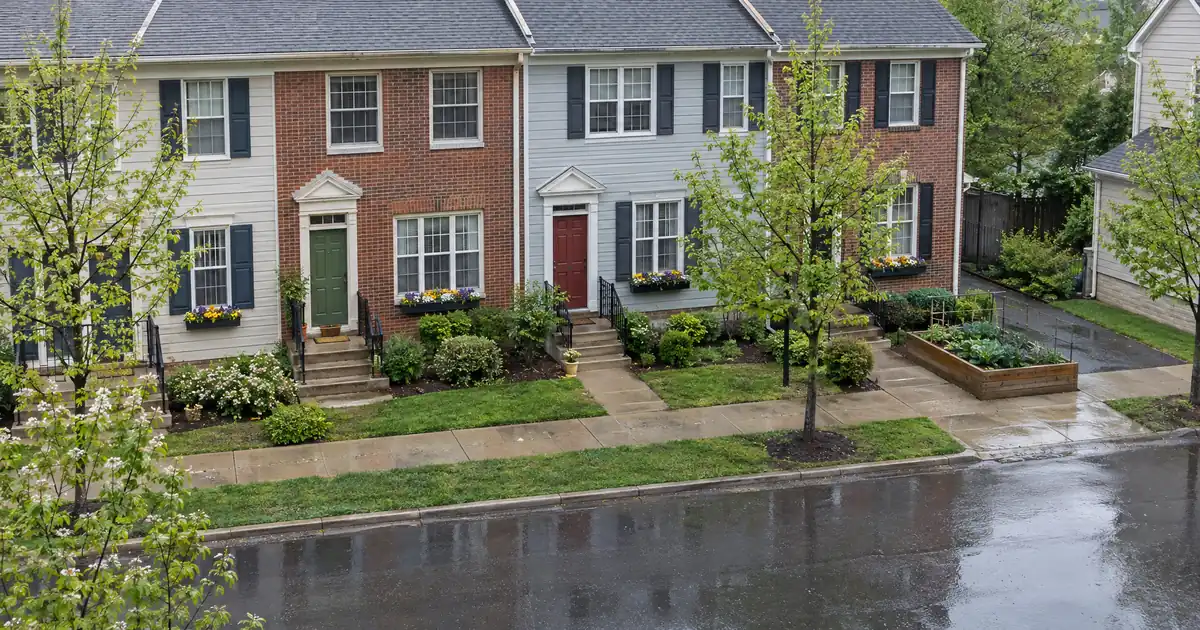
The Quick Read: The VA benefit is reusable, so you can keep a VA-financed home as a rental and use remaining entitlement on your next primary residence, or buy a 2-4 unit property, live in one unit, and rent out the others. Both paths depend on occupancy, entitlement, reserves in your own funds, and how the lender counts rent. Lendmire arranges these loans through wholesale lenders, and every figure here is subject to lender guidelines and full file review.
Key Takeaways
- A VA loan is for a home you live in. Rentals are the byproduct, never the purpose.
- Keeping the first home works through remaining entitlement or a one-time restoration.
- Rent from a 2-4 unit counts at purchase only with landlord capability and verified reserves, and only part of it counts.
- Reserves must be your own cash. Equity, gifts, and cash-out proceeds don’t qualify.
- The funding fee runs higher on repeat use with little down, and it’s waived for exempt veterans.
Key Terms Defined
Entitlement: The amount of your VA benefit that backs a loan, shown on your certificate of eligibility (COE).
Residual income: The money left each month after housing, debts, and living costs, which is the controlling VA underwriting test.
Rental offset: Using lease income to cancel out the payment on a home you’re moving out of.
PITI: Principal, interest, taxes, and insurance, the full monthly housing obligation.
Funding fee: A one-time VA charge that can be financed into the loan and is waived for exempt borrowers.
VA payment estimate
Starting assumptions reflect an example price with no down payment and a first-use funding fee. Replace them with your own figures.
Editable benchmark: 7.32% as of October 22, 2026 · Freddie Mac 30-year average via FRED®. A conventional market reference, not a VA loan quote.
Illustrative starting assumptions: a $350,000 price, no down payment with full entitlement, a first-use funding fee financed into the loan, a thirty-year term at the current Freddie Mac benchmark, and property taxes and insurance estimated at typical national rates. Every field is editable.
Illustrative estimate only — not a Loan Estimate, approval, quote, or commitment to lend. The rate field carries the weekly Freddie Mac thirty-year conventional benchmark, a market reference and not a VA loan quote; your rate is set by the lender at lock. The funding fee follows VA’s published table for the use and down payment entered; the residual-income figure is VA’s guideline for the region and family size, and the rough residual shown subtracts only the housing payment and the debts entered, while VA also deducts taxes, maintenance and utilities. Taxes, insurance and dues are editable estimates; closing costs are not included. Licensed in sixteen states for consumer mortgages. Lendmire is not affiliated with or acting on behalf of the Department of Veterans Affairs.
What Does “Keeping Your First Home” Actually Mean?
You keep the home, rent it out, and buy again with the VA benefit. The benefit has no lifetime cap. What matters is how much entitlement is still available when you buy the next place, and whether the lender can count both payments.
Most buyers do this one of two ways. In the first, you finish your occupancy period in the first home, move to a new primary residence, and rent the old one. In the second, you buy a multi-unit first, live in one unit, and later move out and keep the whole building. Many veterans stack the two: house hack first, then keep it while buying again.
Across the wholesale programs Lendmire places VA files with, the buyers who succeed plan the sequence before they list or move. They check entitlement, build reserves, and keep clean rental records from the first lease. The ones who struggle decide to keep the house after they’ve already made an offer on the next one.
If you want the program basics first, Lendmire’s VA loan programs page covers the envelope: 100% financing on a purchase with no mortgage insurance, and no VA loan limit when you have full entitlement. With remaining entitlement, a down payment may be required, so speak with a loan officer about your specific situation.
How Does the Occupancy Rule Make This Work?
The occupancy rule is the foundation. You certify that the home will be your principal residence, and you generally need to move in within 60 days of closing. According to a VA occupancy training deck, an unmarried active-duty service member has 12 months to occupy, and a spouse can usually satisfy the requirement. That deck is older, so lenders confirm the current handbook language on your file.
Here’s the point most buyers miss. Occupancy is a certification of intent at the time you buy. Life changes: orders arrive, a job moves, a family grows. A genuine change of plans is different from buying with the plan to rent from day one. The second is a misrepresentation that can cost you benefits.
You’ll often hear a “12-month rule.” Treat it as a typical expectation that you’ll live in the home for about a year, and let your loan officer confirm how the current handbook and the lender’s overlay treat your timeline. Exceptions such as deployment or major repairs are generally documented before closing.
Which House Hack Format Fits You?
You can rent rooms in a single-family home or buy a multi-unit. The right format depends on your finances and tolerance for landlording. Eligible property is generally up to four residential units, and you live in one.
| Format | Best fit | Upside | Main catch |
|---|---|---|---|
| Rooms in a single-family | First-timer, tight reserves | Lowest complexity | Boarder income rules apply |
| Duplex | Moderate reserves | One neighbor-tenant | Needs reserves if rent counts |
| Triplex or fourplex | Strong reserves, landlord experience | Most rent offset | Highest reserve and experience bar |
| Condo or accessory unit | Limited budget | Smaller footprint | Property rules and project approval |
Boarder income has its own rules. Per the VA Lenders Handbook credit underwriting chapter, the rental can’t impair the home’s residential character and can’t exceed 25% of the total floor area. In that case PITI reserves aren’t required, and the income can be used.
A mixed-use building can work if it still meets VA’s minimum property requirements, but buildings with five or more units are outside the program. Two eligible veterans buying together may be able to stretch the unit count, though that’s a lender-by-lender question.
How Does Rent Count at Purchase?
Rent from the other units counts only when you show landlord capability and verify reserves. That’s the rule at purchase on a 2-4 unit. It is not automatic, and only part of projected rent is credited, which builds in a cushion for vacancy.
Under the same VA handbook chapter, the lender verifies at least 6 months of PITI in reserves and documents either your prior experience managing rentals or a property management company overseeing the building. If each unit is separate and not under one mortgage, the six months must be verified for each unit. The appraiser also gives an opinion of market rent for the rented units, and that figure feeds the calculation.
You can also skip rental income entirely and qualify on your own income. In that case, reserves tied to rent aren’t needed. Many first-time house hackers choose this route because it removes the largest hurdle.
Two things to remember. The coverage ratio a lender calculates and your real cash flow are different things. Once you own the building, actual rent collected is yours, and you’ll budget for vacancies, repairs, and turnover. And reserves must be in your account before closing, in your own funds. Equity can’t count as reserves, gift funds can’t meet the requirement, and cash-out proceeds can’t stand in for the required PITI.
What Is Entitlement, in Plain English?
Entitlement is the slice of your benefit that backs a particular loan. Full entitlement means no VA loan limit. If a prior VA loan is still outstanding, you have remaining entitlement, and a down payment may be required on the next purchase. Your certificate of eligibility shows what is available, and VA’s rules decide eligibility.
Think of three paths for the first home:
1. Sell and repay in full. Your entitlement comes back.
2. Have an eligible veteran assume the loan and substitute their entitlement. A civilian can assume the loan too, but your entitlement stays tied up.
3. Keep the home and use the one-time restoration. This generally requires the prior VA loan to be paid in full, and you request it from VA. Confirm the conditions at va.gov.
Refinancing out of the VA loan doesn’t restore entitlement by itself. And keeping the house uses up entitlement, which can affect how much you can borrow on the next purchase and which funding fee tier you pay. A foreclosure or short sale in the past can complicate the picture too, so raise it early.
Can the Second VA Loan Also Be a House Hack?
Often, yes, if the next purchase is a primary residence and the numbers hold. Lendmire’s piece Can a Veteran House Hack a 2-4 Unit With a Second VA Loan? goes deeper on that exact setup.
The sequence matters. You underwrite both housing payments, and the rental history from your first house hack becomes your proof of landlord experience. Keep leases, rent receipts, and tax records organized from the first month. That record is the asset that makes the next file easier.
Moving Out: What Happens to the Old Payment?
When you move to a new primary residence and rent out the old home, the lender can offset the old payment with the lease. Per the VA handbook, a rental offset doesn’t require extra reserves. The offset is limited to the old PITI, though. If the rent exceeds the old payment, the excess doesn’t count as income at that stage.
Excess rent only becomes usable income after you have two years of rental history on your signed traditional personal-income documentation with all schedules, plus 3 months of PITI in reserves. Depreciation claimed on the returns may be added back to effective income. Each property needs its own two-year history itemized on the return.
Without a lease, a very strong local rental market may allow the lender to consider prospective rent for the offset, with justification in the loan analysis. Tax treatment can depend on your situation; borrowers should speak with a qualified tax professional before relying on any deduction or credit.
Keep, Sell, or Restore: How Do You Decide?
| Your situation | Typical lean | Why |
|---|---|---|
| Strong equity, reserves, landlord comfort | Keep | Rental income and long-term hold |
| Thin reserves, distant move | Sell | Remote landlording strains cash |
| Want full entitlement back, still own home | Restoration path | One-time use, loan paid in full |
| Buying again soon with remaining entitlement | Keep, check down payment | Remaining entitlement may require money down |
The flip point is reserves. If you can’t verify them in your own funds and the new loan needs them, selling is often the cleaner move. And if the next purchase is large, remaining entitlement may mean a down payment, which changes the math.
Where Does the General Rule Break?
Some edge cases catch borrowers off guard.
- Funding fee tiers. On a purchase, first use runs 2.15% with less than 5% down, 1.5% with 5% to under 10% down, and 1.25% with 10% or more. Subsequent use is 3.3% with less than 5% down, with the same 1.5% and 1.25% tiers above that. Veterans receiving compensation for a service-connected disability, and other exempt groups, don’t pay it. Per VA Circular 26-23-06, the fee can change, so confirm the current schedule. It can be financed into the loan.
- Lender overlays. Wholesale lenders often add rules on top of VA’s: stricter reserves, landlord documentation, or higher credit floors. The programs Lendmire places VA loans with start at a 580 decision score, while some lenders set a higher floor.
- Residual income. It’s the controlling test. The 41% debt-to-income figure is a guideline, not a cap, but a higher ratio needs residual income well above the table.
- Fixer-uppers. All units generally need to meet VA minimum property requirements at appraisal, so a rough building can stall the file.
Who Shouldn’t Do This?
Skip it if you can’t live in the property. Skip it if reserves are thin and you’d depend on projected rent to qualify. Skip it if you’d rather not manage tenants and have no plan for a property manager.
It’s a genuine toss-up for buyers with strong income but modest cash. Qualifying on your own income and renting rooms later may beat chasing the multi-unit reserve requirement. Final terms depend on the lender’s guidelines, the property type, and the borrower’s complete credit picture.
Your Lifecycle Roadmap
1. Before buying: pull your COE, check remaining entitlement, and build verified reserves.
2. At purchase: choose a format, certify occupancy intent, and decide whether rent counts.
3. While living there: keep leases, receipts, and records.
4. When you move: document the reason, secure a lease, and plan the offset.
5. After two years of rental history: the income may count more fully, with reserves.
6. Before the next purchase: map entitlement, fee tier, and whether restoration makes sense.
If you’re buying a home and want to see whether a VA loan fits your file, Lendmire can help you compare the options and what each one asks of the file. Reach the team at 828-256-2183 or request a quote.
Frequently Asked Questions
Can I buy a 2-4 unit with a VA loan if I plan to rent the other units?
Yes, if you live in one unit and the building has no more than four residential units. Rent counts toward qualifying only with documented landlord capability and 6 months of PITI in reserves, and only part of it is credited. You can also qualify on your own income alone.
Do I have to wait before I can rent out my first VA home?
Typically you’re expected to live there for about a year. Occupancy generally begins within 60 days of closing. Lender overlays and the handbook language on your file decide how it applies.
Does rent from my old house help me qualify for the next one?
Only up to the old payment at first. The VA handbook allows an offset of the old PITI using a lease, without extra reserves. Excess rent counts as income only after a two-year history on your traditional personal-income documentation and 3 months of PITI reserves.
Can I use gift funds or home equity for my reserves?
No. Reserves must be your own funds in your account before the new VA loan closes. Equity, gifts, and cash-out refinance proceeds don’t meet the requirement.
Will I pay a higher funding fee on a second VA loan?
Possibly. Subsequent use with less than 5% down carries 3.3%, compared with 2.15% for first use. At 5% down the fee drops to 1.5%, and at 10% down to 1.25%. Veterans who are exempt don’t pay it. Each figure is subject to lender guidelines and a complete review of property type, leverage, and credit.
About Lendmire
As a mortgage broker (NMLS# 2371349), Lendmire helps homeowners and home buyers in 16 states with FHA, VA, conventional and jumbo purchase and refinance loans arranged through wholesale lenders. Lendmire is never the lender; program terms are set by the lender and the agency guidelines. Scotsman Guide named Lendmire a Top Mortgage Workplace in both 2025 and 2026.
Get Started
Ready to find the right loan for you?
In about 30 seconds you can review financing options available for your home or investment property. No commitment required.
Informational only. Not a Loan Estimate, approval, or commitment to lend. Program availability and eligibility are subject to lender guidelines, credit approval, property review, and underwriting.
References
1. VA Chapter 3 occupancy training deck (VBA)
2. VA Lenders Handbook, Chapter 4: Credit Underwriting
3. VA Circular 26-23-06, Exhibit B: Funding Fee
This article is part of Lendmire’s VA loan program — full qualification details, guidelines, and scenarios live on the program page.
Related reading: How to Buy Another Home on a Second VA Loan After Prior Use · VA Jumbo Loan vs Conventional Jumbo Loan for a High-Cost Home · How Much a VA Jumbo Loan Lends on a High-Cost Home
Brandon Miller
Founder & CEO, Mortgage Loan Originator, Lendmire LLC
- Mortgage Loan Originator · NMLS# 1129696 · Verify on NMLS Consumer Access
- North Carolina Real Estate Broker · License# 343312 · Verify on NCREC
- North Carolina Insurance Producer · License# 19053198 · Property, Casualty, Life, Health · Verify on NAIC SBS
- Lendmire LLC · Firm NMLS# 2371349 · Verify firm licensure
Required disclosures. Lendmire (NMLS# 2371349) operates as a licensed mortgage broker, not a direct lender or depository. The discussion in this article is general in nature and should not be relied upon as financial, legal, or tax advice — every investment scenario is unique and should be reviewed by a qualified professional. Any loan inquiry is subject to lender underwriting, and this article is not a commitment to lend or a guarantee of approval. Mortgage rates, loan terms, and program guidelines vary by borrower, property, and state, and may change without notice. Equal Housing Opportunity. Verify licensure at NMLS Consumer Access.