
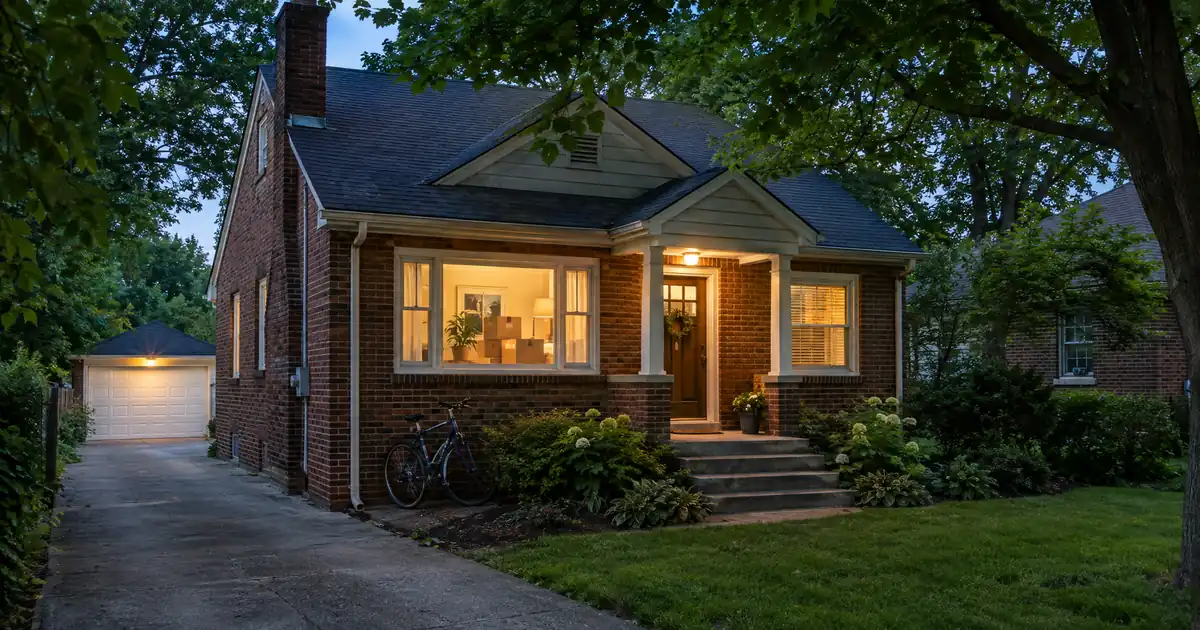
The Quick Read: Qualifying comes down to four things: your decision score, your down payment, your debt load, and the lender’s own rules. Across the wholesale programs Lendmire places FHA loans with, a decision score of 580 or higher is the starting point. At that score, financing reaches 96.5% of the value, with a 3.5% minimum investment. Subject to lender guidelines and full file review, the rest of the file can offset a modest score.
Key Takeaways
- A 580 decision score unlocks maximum financing: 96.5% LTV, or a 3.5% minimum investment.
- HUD’s own rules reach below 580, but the wholesale programs Lendmire works with start at 580.
- With more than one borrower, the lowest borrower-level score sets the tier.
- Ratios start at 31/43 and can stretch to 40/50 with documented compensating factors.
- FHA is for the home you live in. Occupancy decides everything else. Final terms depend on the lender’s guidelines, the property type, and the borrower’s complete credit picture.
What Does FHA Do, and What Doesn’t It Do?
FHA insures a mortgage. It does not make the loan. A private lender funds the loan, and the government insurance protects that lender if the borrower defaults. That protection is why lenders accept lower scores and smaller down payments than they would on a loan with no insurance behind it.
FHA payment estimate
Starting assumptions reflect an example price and the FHA minimum investment. Replace them with your own figures.
Editable benchmark: 7.32% as of October 22, 2026 · Freddie Mac 30-year average via FRED®. A conventional market reference, not an FHA loan quote.
Illustrative starting assumptions: a $350,000 price, the FHA minimum investment as the down payment, a thirty-year term at the current Freddie Mac benchmark, and property taxes and insurance estimated at typical national rates. Every field is editable.
Illustrative estimate only — not a Loan Estimate, approval, quote, or commitment to lend. The rate field carries the weekly Freddie Mac thirty-year conventional benchmark, a market reference and not an FHA loan quote; your rate is set by the lender at lock. FHA mortgage insurance follows HUD’s published schedule for the term, leverage and loan size entered; taxes, insurance and dues are editable estimates; closing costs are not included; county loan limits are not checked here. Licensed in sixteen states for consumer mortgages. Lendmire is not affiliated with or acting on behalf of FHA, HUD, or the federal government.
Lendmire is a mortgage broker. It arranges FHA loan programs through wholesale lenders and does not lend the money itself. Lendmire is licensed for consumer lending in 16 states: Alabama, California, Colorado, Florida, Georgia, Indiana, Michigan, Montana, New Mexico, North Carolina, Ohio, Pennsylvania, Tennessee, Texas, Virginia, and Washington.
The rules for every FHA single-family loan live in HUD’s Handbook 4000.1. Think of it as the rulebook. Individual lenders can add stricter rules on top, and that gap matters more than most borrowers expect.
How Does Your Credit Score Set the Terms?
Your score sets the leverage you can reach. The number the program uses is called the minimum decision credit score. According to HUD’s FHA answers page, the lender determines it, and the page points to the Handbook sections that explain how.
Here is how the tiers work in practice:
| Decision score | What it means for a purchase |
|---|---|
| 580 or higher | Up to 96.5% LTV, 3.5% minimum investment |
| 500-579 (HUD rule) | Lower leverage, at least 10% investment |
| Below 500 | Not eligible under HUD’s rules |
The 500-579 row is a HUD rule. The wholesale programs Lendmire places FHA loans with do not reach below 580. So if your score sits at 560, HUD may allow the loan on paper while the lenders in this network do not. Lenders may set their own minimums, and some set them higher than 580.
LTV, or loan-to-value, is the loan amount as a percentage of the home’s price or appraised value. A 96.5% LTV means you put 3.5% into the deal. The minimum investment is measured against the lesser of the price or the appraised value. Each figure is subject to lender guidelines and a complete review of property type, leverage, and credit.
The 580 Line Is a Cliff
The step from 579 to 580 changes the required cash a lot. At 580 or above, the minimum is 3.5%. Under HUD’s rule, one tier lower means at least 10%. Your score gets checked again before closing. A drop of a few points between application and closing can change the cash you need.
Which Score Does the Lender Actually Use?
It is not always the score you pulled from an app. HUD’s Mortgagee Letter 2026-11 says the decision score is the lowest borrower-level score among all borrowers on the loan.
Each borrower first gets one score. The usual picking rules are:
1. With three scores from the bureaus, the lender uses the middle one.
2. With two different scores, it uses the lower one.
3. With one score, it uses that one.
Then the lowest of those borrower-level scores controls the loan. Say you have a 640 and a co-borrower has a 575. The loan is underwritten at 575. If one of you has a much stronger score, think carefully about whether adding the other borrower helps or hurts.
The same letter also opens the door to alternative credit score models. Lenders must follow the existing credit-report rules until HUD issues full implementation guidance, so do not assume a different scoring model will help your file yet.
Also note that consumer score apps often show a different model than the one mortgage lenders pull. A gap between your app and the lender’s pull is common. Ask what score the lender pulls before you assume anything.
How Is the File Underwritten, Step by Step?
Underwriting is the lender’s review of whether you can repay and whether the home qualifies. Here is the sequence on a typical FHA purchase.
1. Credit report. The lender pulls a merged report from the three bureaus and determines your decision score.
2. Automated review. The file runs through FHA’s automated underwriting system. An “Accept” generally lets the lender proceed without a full manual review. A “Refer” sends it to a human underwriter.
3. Manual review, if needed. The underwriter looks at the file line by line. Lower scores and thin credit files land here more often.
4. Appraisal. An FHA-approved appraiser values the home. It must also meet FHA’s property standards.
5. Mortgage insurance. The premium is set and built into the loan.
6. Final check. The lender confirms nothing changed in your credit, income, or debts before closing.
Step two is where a lower score tends to hurt. A “Refer” is not a denial. It means a person decides, and that person weighs your whole file.
What Do Underwriters Check Besides the Score?
A score of 580 gets you in the door. Everything else decides whether the file clears. Lenders look at these items.
| Factor | What the lender looks for |
|---|---|
| Debt-to-income | Housing cost and total debts against your income |
| Income and job history | Steady, documented income |
| Payment history | Recent late payments carry more weight than old ones |
| Cash and reserves | Funds for the investment and money left afterward |
| Compensating factors | Strengths that offset a weaker area |
Debt-to-income, or DTI, is your monthly debts as a share of your gross monthly income. FHA pairs two numbers: a housing ratio and a total-debt ratio. The base pair is 31/43 with no compensating factors. Documented compensating factors can stretch the ratios to 40/50 at the top tier. The automated finding governs most files.
HUD’s manual underwriting notice shows how score and ratios work together. It treated borrowers with scores of 500-579, or with thin credit, more tightly, capping them at 31/43. It is an older document, so the current Handbook controls the details. The takeaway holds: a lower score leaves less room on debt.
Compensating factors are real strengths. Examples include cash reserves, a long and steady job history, a small increase in housing cost over what you pay now, and little other debt. A good file does not need a perfect score. It needs enough strength in other places to balance a weaker one.
Why Might a Lender Say No When FHA Says Yes?
Because HUD sets a floor, not a promise. Lenders can add their own minimums, called overlays. A lender may decline a score that HUD would insure. Some lenders set a higher floor than others, so a no from one lender is not a no from all of them.
That is the practical reason to compare more than one lender. When you talk to a loan officer, ask:
- What decision score do you require on FHA purchases?
- Do you have overlays beyond HUD’s rules?
- Will you manually underwrite a file the automated system refers?
- Which score model do you pull?
- How do you treat recent late payments or collections?
A broker works with several wholesale lenders, so one conversation can test a file against more than one set of overlays. Nothing is guaranteed. Every parameter here is subject to lender guidelines and full file review, and none of it is a commitment to lend.
What About Thin Credit or No Score?
You can still have a path. If you have little or no traditional credit, HUD’s rules allow the lender to build a history from other sources, such as rent, utilities, and similar recurring payments. HUD’s glossary defines a non-traditional mortgage credit report for this purpose. These loans are manually underwritten, which takes more documentation.
HUD’s manual underwriting notice, cited above, treated borrowers with non-traditional credit much like those with scores of 579 or lower. Expect the same tighter ratios.
One more route helps first-time buyers. HUD allows rental payment history to count in some automated submissions, but only with a strong enough score and a documented rent record. Ask your lender whether your file fits.
Where Does the General Rule Break?
Here are the named edge cases.
Co-borrowers with different scores. The lowest borrower-level score sets the tier, as covered above.
A non-occupant co-borrower. The wholesale programs Lendmire works with allow one. A relative who does not live in the home can sign with you. Their credit and income are reviewed, and the lowest score still controls.
Credit events. HUD sets waiting periods: two years from a Chapter 7 discharge and three years from a foreclosure. These are HUD’s rules, not a network promise. Lenders can ask for more, and they will want to see re-established credit since the event.
Recent late payments. A late payment from last month hurts more than one from four years ago. Underwriters often review the last 12 to 24 months closely, and a short written explanation can help.
Collections. They do not automatically sink a file. How a lender treats an open collection depends on its size, its age, and that lender’s own rules. Do not pay one off blindly. Ask the loan officer first, because the right move depends on the file.
Multi-unit homes. Buyers can finance one to four units when they live in one of them. Occupancy decides the leverage. A rental or second home belongs to a different loan type.
Loan size. County loan limits apply and change every year. Check the limit for your county before you pick a price range.
What Does Mortgage Insurance Do to the Loan?
Every FHA loan carries mortgage insurance. There are two parts. The upfront premium is 1.75% of the base loan amount, and most borrowers finance it into the loan. The annual premium runs between 0.15% and 0.75% of the balance, depending on term, loan amount, and LTV.
Duration matters too. At or below 90% LTV, it ends after eleven years. A borrower at 96.5% LTV should plan on the premium staying for the full term. Refinancing out of it later is one common exit. Leverage, reserves, and pricing vary by lender and program; the final terms follow the full file review.
FHA’s mortgage insurance does not move with your credit score. A lender’s own pricing can. So a lower score may cost more through the lender’s pricing, even though the insurance itself is the same. HUD reduced the annual premium for many new borrowers in Mortgagee Letter 2023-05, and the current schedule now sits in the Handbook. Treat the figures above as the program’s mechanics, never as a quoted price. Your Loan Estimate shows what applies to your file.
Three Borrower Pictures
These are illustrations, not promises.
The borderline score. Say you sit at 578. Under HUD’s rules, that lands in the lower tier. The wholesale programs here start at 580. A couple of points matter. Paying down a card balance before the lender pulls credit, and correcting any errors on your reports, may move you over the line. Do not open new accounts while you work on it.
The mid-580s with a heavy debt load. Your score clears the floor. But your ratios sit above 31/43. The file may still work if compensating factors are documented, such as reserves and steady employment. Expect a manual review.
The joint file. One borrower has a score in the 700s. The other is at 570. The loan is underwritten at 570. Taking the second borrower off the loan, if income allows, may put you in a better tier.
Should You Apply Now or Wait?
This one is a genuine judgment call. Apply now if your score is at or above 580, your ratios fit, and your documents are in order. Waiting costs you time in a market where prices and terms can move.
Work on credit first if you are within a few points of 580, if a recent late payment is still fresh, or if a co-borrower’s score is dragging the file. A short, focused effort can change your tier. Ranked by impact, the usual steps are these:
1. Pay every account on time, every month.
2. Pay down revolving balances so your utilization drops.
3. Dispute errors with the bureaus and keep the paperwork.
4. Avoid new credit applications before your mortgage pull.
5. Save the cash you will need, plus some reserves.
Some common myths waste effort. Closing old cards usually does not help and can hurt. Paying off an old collection does not always raise a score the way people expect. Ask before you act.
What If You Are Turned Down?
A decline comes with a notice that lists the reasons. Read it. If the problem is a score or an error, fix it and reapply. If it is a lender overlay, ask another lender whether it has the same one. If the automated system said “Refer” and the first lender would not manually underwrite, a different lender may. A denial is information about one lender’s rules, not a verdict on you.
Key Terms Defined
Decision score: the single credit score the lender uses to place your loan in an FHA tier, set by the lowest borrower-level score on the file.
LTV (loan-to-value): the loan amount as a percentage of the home’s price or appraised value.
Overlay: a lender’s own rule that is stricter than HUD’s minimum.
Compensating factor: a documented strength, such as cash reserves or steady income, that offsets a weaker part of your file.
Manual underwriting: a review by a person, rather than the automated system, used when the file is referred or credit is thin.
Mortgage insurance premium: the FHA charge paid upfront and annually, which protects the lender.
Frequently Asked Questions
What is the lowest credit score that can work for an FHA purchase?
It depends on the lender. HUD’s rules reach below 580, with a 10% minimum investment for the 500-579 tier. The wholesale programs Lendmire places FHA loans with start at 580. Lenders set their own floors, and some are higher.
Does a co-borrower with better credit help my score?
No. The lowest borrower-level score controls the tier, so a stronger co-borrower does not lift a weaker one. A non-occupant co-borrower can help with income, but their score is reviewed too.
Can I get an FHA loan with no credit score?
Possibly. HUD allows lenders to build a history from alternative payment records. The file is manually underwritten and needs more documentation, and ratios tend to be tighter.
How long after a bankruptcy or foreclosure do I have to wait?
HUD’s waiting periods are two years from a Chapter 7 discharge and three years from a foreclosure. Lenders can ask for more. Recovery since the event matters as much as the calendar.
Will I pay mortgage insurance the whole time I have the loan?
On a thirty-year loan above 90% LTV, the annual premium lasts for the term. Many borrowers refinance later once their equity grows. Terms vary by lender guidelines, property type, leverage, credit profile, and full file review.
If you are buying a home and want to see whether an FHA loan fits your file, Lendmire can help you compare the options and what each one asks of the file. A related read is Lendmire’s piece FHA and Conventional Cash-Out Credit Requirements for a Lower Score Tier.
For your own numbers, request a scenario review with Lendmire.
About Lendmire
As a mortgage broker (NMLS# 2371349), Lendmire helps homeowners and home buyers in 16 states with FHA, VA, conventional and jumbo purchase and refinance loans arranged through wholesale lenders. Lendmire is never the lender; program terms are set by the lender and the agency guidelines. Scotsman Guide named Lendmire a Top Mortgage Workplace in both 2025 and 2026.
Get Started
Ready to find the right loan for you?
In about two minutes you can review financing options available for your home or investment property. No commitment required.
Informational only. Not a Loan Estimate, approval, or commitment to lend. Program availability and eligibility are subject to lender guidelines, credit approval, property review, and underwriting.
References
2. HUD answers: minimum credit score and how determined
3. HUD Mortgagee Letter 2026-11
4. HUD manual underwriting notice (regulations.gov)
5. HUD Mortgagee Letter 2023-05
This article is part of Lendmire’s FHA loan program — full qualification details, guidelines, and scenarios live on the program page.
Related reading: How to Qualify for an FHA Loan Under FHA Mortgage Requirements · How an FHA Loan Lender Weighs Credit and Debt on a Borrower · VA Loan vs FHA Loan for a Buyer Not Moving In Yet
Brandon Miller
Founder & CEO, Mortgage Loan Originator, Lendmire LLC
- Mortgage Loan Originator · NMLS# 1129696 · Verify on NMLS Consumer Access
- North Carolina Real Estate Broker · License# 343312 · Verify on NCREC
- North Carolina Insurance Producer · License# 19053198 · Property, Casualty, Life, Health · Verify on NAIC SBS
- Lendmire LLC · Firm NMLS# 2371349 · Verify firm licensure
Important disclosures. Lendmire (NMLS# 2371349) is a licensed mortgage brokerage. Lendmire is not a direct lender, depository institution, or financial advisor. All loan inquiries are subject to lender underwriting; this article does not constitute a commitment to lend. Rates, terms, and program guidelines are subject to change without notice and vary by borrower profile, property type, and state. Information in this article is general in nature and is not financial, legal, or tax advice. Equal Housing Opportunity. NMLS Consumer Access: nmlsconsumeraccess.org.