
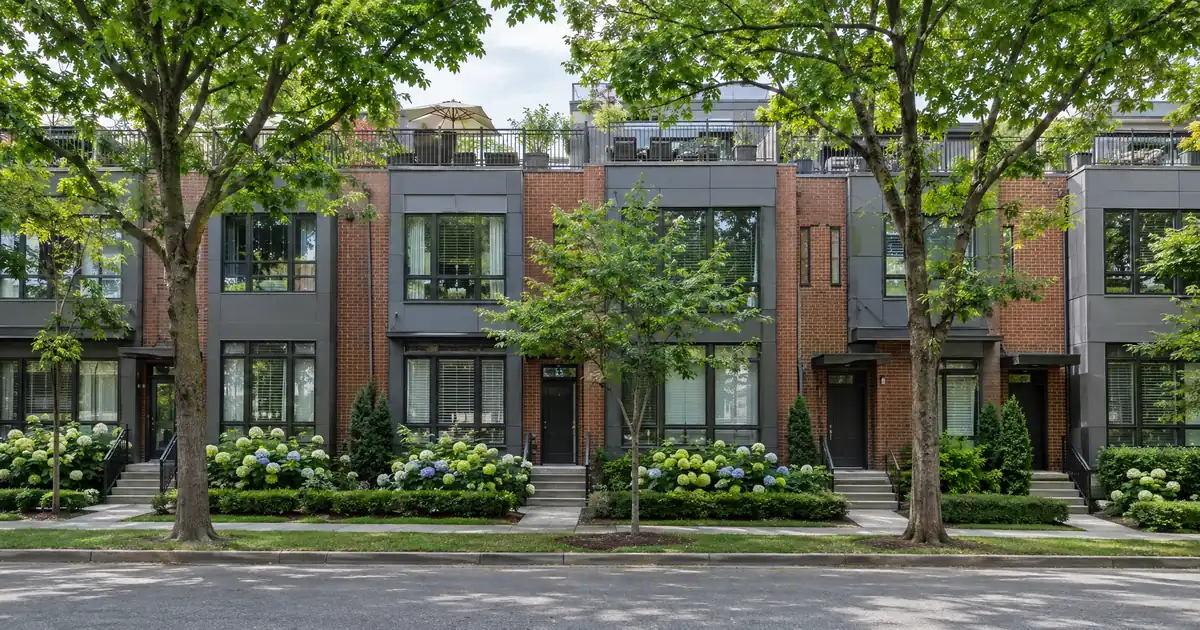
The Quick Read: A VA loan can buy a condo, but only when the whole building is approved by VA, not just your unit. A townhouse or detached home in a planned unit development (PUD) skips that project review. Everything else still applies: your eligibility certificate, your income and credit, and a VA appraisal on the unit. Check the building’s status before you write an offer.
Key Takeaways
- Condos need VA project approval. PUDs do not.
- VA approves the project, never the individual unit. Your unit still needs its own appraisal.
- The lender or the HOA sponsor submits an unapproved project, not you.
- Residual income is the controlling test on your side of the file. HOA dues count against it.
- Status can change, so confirm it again when you go under contract.
Condo or House: What Changes on a VA Loan?
A condo changes the approval path and the monthly budget. The loan terms stay the same. Across the wholesale programs Lendmire places VA files with, purchase financing runs up to 100% of the price with no down payment, as long as the price is not above the appraised value. There is no mortgage insurance. There is no VA loan limit when you have full entitlement. Those terms apply to a condo the same way they apply to a house, subject to lender guidelines and full file review.
VA payment estimate
Starting assumptions reflect an example price with no down payment and a first-use funding fee. Replace them with your own figures.
Editable benchmark: 7.32% as of October 22, 2026 · Freddie Mac 30-year average via FRED®. A conventional market reference, not a VA loan quote.
Illustrative starting assumptions: a $350,000 price, no down payment with full entitlement, a first-use funding fee financed into the loan, a thirty-year term at the current Freddie Mac benchmark, and property taxes and insurance estimated at typical national rates. Every field is editable.
Illustrative estimate only — not a Loan Estimate, approval, quote, or commitment to lend. The rate field carries the weekly Freddie Mac thirty-year conventional benchmark, a market reference and not a VA loan quote; your rate is set by the lender at lock. The funding fee follows VA’s published table for the use and down payment entered; the residual-income figure is VA’s guideline for the region and family size, and the rough residual shown subtracts only the housing payment and the debts entered, while VA also deducts taxes, maintenance and utilities. Taxes, insurance and dues are editable estimates; closing costs are not included. Licensed in sixteen states for consumer mortgages. Lendmire is not affiliated with or acting on behalf of the Department of Veterans Affairs.
What differs is the stack of extra questions. A house has one owner and one set of problems. A condo has an association, a budget, a master insurance policy, and a pool of neighbors whose bills affect your building’s standing.
| Factor | House | Condo |
|---|---|---|
| Project approval | Not needed | Required before the loan is guaranteed |
| Appraisal | Value and property standards | Same, plus project conditions |
| Monthly costs | Taxes, insurance, upkeep | Same, plus HOA dues |
| Main risk | Condition of the home | Status and finances of the building |
| Who handles approval | Nobody | Lender or sponsor submits the project |
The honest tradeoff: a condo often costs less to enter and asks less of you on upkeep. But you give up some control. You depend on the HOA’s finances and on whether your building holds approval when you buy.
What Does “VA-Approved Condo” Actually Mean?
It means VA has reviewed the condominium project as a whole and placed it on its approved list. It does not mean VA looked at your unit. VA Pamphlet 26-7, Chapter 16 says condominiums, but not PUDs, must be approved by VA before any unit in the project is eligible for VA loan guaranty.
The rule behind it is 38 CFR § 36.4360. It makes a loan for a one-family unit in a condominium project eligible for guaranty on the same terms as other VA loans, subject to the rule’s conditions. Note the phrase “one-family unit.” The guaranty covers a single residential unit, not a commercial space in the building.
Two layers get checked, and people mix them up:
1. The project. Is the building acceptable to VA?
2. The unit and you. Does your unit pass the VA appraisal, and do you qualify on income, credit and assets?
Passing one layer does not pass the other. A fully approved building can still hold a unit that appraises low. A great unit in a rejected building cannot be financed with VA.
How Do You Check a Building Before You Make an Offer?
Ask your loan officer to look up the project in VA’s condo list, called the VA Condo Report in VA’s lender system. Do this before you offer, not after. The result tells you whether you are shopping a clean building, a building with conditions, or one that needs work first.
Here is the order that saves the most grief:
1. Get the building’s name and legal address from the listing agent, not just the street number.
2. Ask your lender to run the project status. Borrowers do not see the lender-side report directly, so this step goes through your loan officer.
3. Read the status. More on what each one means below.
4. Confirm the structure. A listing that says “condo” can be a true condominium or a PUD. The recorded declaration tells you which. This matters because a PUD needs no project approval.
5. Recheck at contract. Do not assume a status you saw months ago still holds. Standing can change, and the lender must confirm it before guaranty.
Picture a veteran who finds a unit she loves in a mid-size building. She asks her loan officer to run the project before touring a second time. The result comes back as not on the list. She now knows to ask the listing agent whether the HOA would cooperate with a submission. She learned that before spending money on an appraisal.
What Do the Approval Statuses Mean?
Lenders usually describe a project as accepted without conditions, accepted with conditions, accepted through older HUD standing, or rejected, pending or suspended. These labels come from lender-side practice, so treat the exact wording as a guide and let your loan officer read the actual result.
| Status | What it generally means | What you do |
|---|---|---|
| Accepted, no conditions | Project is on the list | Proceed with normal underwriting |
| Accepted, with conditions | Project is on the list with items to clear | Ask the lender what must be cleared |
| HUD standing | May help, but VA standing must be confirmed | Have the lender verify before you rely on it |
| Rejected, pending or suspended | Not currently usable | Do not count on VA financing until this changes |
HUD or USDA standing may help, but it does not settle VA eligibility on its own. Your lender has to confirm where the building stands with VA, so do not buy on a guess.
What Does the VA Look at in a Project?
VA looks at whether the building is a sound place to put a government-guaranteed loan. The numeric tests vary by source and by lender, so this section covers the categories, not cutoffs.
- Owner-occupancy. Buildings heavy with investors worry reviewers. Owner-occupancy limits apply.
- HOA delinquency. If too many owners are behind on dues, the association’s finances are shaky. Delinquency limits apply.
- Investor concentration. One entity owning a big share of the units is a flag.
- Financial health. Budget, reserves and any special assessments matter.
- Insurance and legal. Coverage, litigation and the governing documents all get read.
- Prohibited terms. Some document clauses can block approval. Lenders commonly name a right of first refusal, a super-lien feature and excessive transfer fees.
- New or converted projects. Presale and completion requirements may apply by phase.
One more point from my own desk: lenders may add standards stricter than VA’s. A building can meet VA’s rules and still run into a lender’s overlay. Ask your loan officer up front whether the lender you are working with has its own project limits. That one question can save a deal from dying late.
Short-term rental buildings and investor-heavy buildings deserve extra suspicion. They tend to trip the occupancy and concentration tests. You can often spot them early by asking how many units are owner-occupied.
What If the Condo Is Not Approved?
Then the lender or the project sponsor can submit it for review, and the outcome depends mostly on HOA cooperation. You, the buyer, do not file the request. The handbook calls for a written request for VA approval plus the project’s organizational documents, sent to the VA office that handles the area.
The documents VA may need to review run long. Expect the declaration, bylaws, the budget, financials and reserves, and recent meeting minutes. An HOA that responds slowly or says no ends the path.
Two things speed it up:
- An attorney’s opinion. VA says an attorney’s opinion on the documents can expedite approval by reducing how much VA has to review. The letter goes on firm letterhead, signed, and covers the project, the documents reviewed, the attorney’s qualifications, and the opinion.
- A prepared HOA. A board that already has its documents together moves faster than one starting from scratch.
Timing varies. Plan for several weeks, depending on how fast the HOA answers, and do not set a firm date in your contract on a guess.
About single-unit approval. You may read that VA will approve one unit in an otherwise unapproved building, the way FHA does. The best-supported answer is no. VA approves projects. That FHA feature is the usual source of the confusion. If someone tells you a single-unit route exists, ask your lender to point to the VA rule.
If you want a deeper walkthrough of this exact situation, Lendmire’s piece Can a Veteran Use a VA Loan on a Condo Not Yet VA Approved? picks it up from here.
How Do HOA Dues Affect Your Numbers?
Dues are a recurring housing cost, so they count in your monthly obligations and press on the budget. Lenders add them to the housing expense they weigh against your income.
On a VA loan, the controlling test is residual income. That is the money left each month after your major obligations and living costs, measured against a VA table based on family size and region. Debt-to-income still gets looked at. The 41% figure is a guideline, not a cap. A ratio above it needs residual income well above the table.
Here is how that plays out in plain terms. Say you compare a house and a condo at the same price. The condo has no yard work and a lower maintenance burden, but it carries monthly dues. The house has no dues but carries bigger repair risk. On paper the dues push the condo’s monthly obligation up. If your residual income is thin, those dues can be the line that tips it.
That is why you should get the dues amount early, along with what the dues cover. Ask whether they include master insurance, water, trash, or reserves. Ask whether a special assessment is planned or pending. A low dues figure with an underfunded reserve is not a bargain. It is a bill waiting to arrive.
Which Pre-Offer Questions Should You Ask?
Ask for the HOA’s financial picture before you write the offer. A building’s health shows up in its paperwork, and the same paperwork drives approval risk.
- Is the project on VA’s list right now?
- What are the dues, and what do they cover?
- Is there a reserve fund, and is it funded?
- Are any special assessments planned or pending?
- Is the HOA in any litigation?
- What share of units are owner-occupied?
- Does the declaration contain a right of first refusal or other restrictive terms?
- Is any commercial space in the building?
Any of these can mean trouble at the project level, and it is far cheaper to find out before you are under contract.
How Should You Write the Offer?
Write the offer to protect you if the building fails review. The fix is contract language, not optimism.
- Financing contingency. Tie your obligation to the loan, including the project being acceptable to the lender and VA.
- Appraisal contingency. The appraisal on the unit still has to meet value and VA’s minimum property requirements.
- A realistic timeline. If the building is not on the list, say so in your planning and give the HOA time to respond.
- A clear message to the listing agent. Some sellers and agents get nervous about VA offers. A short, factual note that the building is already approved settles that fast. If it is not yet approved, you may be at a disadvantage against other offers.
The appraisal comes into play in one more way. For an unapproved project, the value notice from VA is conditioned on the lender confirming the project is acceptable before guaranty. The notice also requires that HOA assessments sit behind the VA-guaranteed mortgage in priority. The lender has to clear these conditions before closing. If you are in a competing-offer situation, an approved building makes your offer stronger.
Lendmire’s team can sort out which of these steps matter on your file through its VA loan programs, working with wholesale lenders.
What About Townhomes, PUDs and Other Look-Alikes?
A townhouse or detached home in a PUD does not need VA project approval. Title and lien rules still apply to every condo and PUD. The lender is responsible for making sure the unit meets them.
| Property type | Project approval? | Notes |
|---|---|---|
| Condominium | Yes | Project must be on VA’s list |
| Townhouse in a PUD | No | Title and lien rules still apply |
| Detached home in a PUD | No | Same as above |
| “Site condo” or other label | Check the declaration | Legal structure decides |
The listing label is not the legal answer. Ask for the recorded declaration. It tells you whether you are in a condominium or a PUD, and that settles whether the extra review applies.
What Does the Funding Fee Do on a Condo?
It works the same as on a house. VA charges a one-time funding fee, not monthly mortgage insurance. VA says the fee is one-time and varies with loan type, down payment and first-time versus later use. It is waived for veterans receiving compensation for a service-connected disability and for the other exempt groups.
Across the wholesale programs we use for purchases, the fee for a first-time user is 2.15% with less than five percent down, 1.5% with five to under ten percent down, and 1.25% with ten percent or more down. For later use it is 3.3% with less than five percent down, with the same 1.5% and 1.25% tiers above that. You can finance the fee into the loan. Subject to lender guidelines and full file review.
Tax treatment can depend on your situation; borrowers should speak with a qualified tax professional before relying on any deduction or credit.
On credit, VA sets no minimum score. The wholesale programs Lendmire places VA loans with start at a 580 decision score. Some lenders set a higher floor.
Planning Ahead: Moving, Renting and Reselling
Think about your exit before you buy. A VA loan is for a home you live in. If you later move, you may keep the condo and use remaining entitlement on a second purchase. With remaining entitlement, a down payment may be required, so speak with a loan officer about your situation.
Resale matters too. Your building’s standing affects the next buyer. If a future buyer wants VA financing, an unapproved building shrinks your buyer pool. That is a real cost of buying in a building that never earned approval.
Active-duty buyers face timing pressure. A transfer date does not move for a slow HOA. If you are under orders, favor buildings that are already approved, or build extra time around any submission.
If the building cannot be approved and you still want the home, talk with a loan officer about other loan types for that property. Do that conversation early.
Key Terms Defined
Project approval: VA’s review of the whole condominium building, which must pass before any unit can carry a VA loan.
PUD (planned unit development): A community where owners hold their own lot or home and share common areas through an association. It needs no VA project approval.
Notice of Value: The VA appraisal result. For an unapproved condo it carries conditions the lender must clear.
Residual income: The money left each month after major obligations and living costs, compared against a VA table. It is the controlling test.
Entitlement: The amount of VA guaranty you have available. Full entitlement means no VA loan limit.
Funding fee: The one-time VA fee on most loans. It is waived for exempt veterans.
Frequently Asked Questions
Can I use a VA loan on any condo I like?
No. The building has to be on VA’s approved list, or be approved before closing. Your lender can check the status for you before you make an offer. A unit in a rejected building cannot be financed with VA, no matter how good the unit is.
Does VA approve my unit or the whole building?
The whole project. VA does not approve single units. Your unit still needs its own appraisal, and you still need to qualify on income, credit and assets. Be skeptical of anyone describing a unit-by-unit approval route.
Who submits an unapproved condo for approval?
The lender or the project sponsor does, not you. The HOA has to supply its organizational documents, so its cooperation decides the outcome. An attorney’s opinion can reduce the amount VA has to review and may help the review move along.
Do townhomes need project approval too?
Not if they sit in a PUD. A townhouse in a PUD skips the project approval step, though title and lien rules still apply. Check the recorded declaration, because a “condo” label on a listing can mean either structure.
Do HOA dues hurt my chances of qualifying?
They count as a housing cost, so they press on your monthly budget and on residual income. Higher dues do not rule you out. They do mean less room if your residual income is thin. Get the dues figure early and ask what it covers.
If you are buying a home and want to see whether a VA loan fits your file, Lendmire can help you compare the options and what each one asks of the file. Qualification is subject to lender guidelines and full file review, and nothing here is a commitment to lend.
For your own numbers, request a scenario review with Lendmire.
About Lendmire
As a mortgage broker (NMLS# 2371349), Lendmire helps homeowners and home buyers in 16 states with FHA, VA, conventional and jumbo purchase and refinance loans arranged through wholesale lenders. Lendmire is never the lender; program terms are set by the lender and the agency guidelines. Scotsman Guide named Lendmire a Top Mortgage Workplace in both 2025 and 2026.
Get Started
Ready to find the right loan for you?
In about two minutes you can review financing options available for your home or investment property. No commitment required.
Informational only. Not a Loan Estimate, approval, or commitment to lend. Program availability and eligibility are subject to lender guidelines, credit approval, property review, and underwriting.
References
1. VA Pamphlet 26-7, Chapter 16: Common Interest Communities
This article is part of Lendmire’s VA loan program — full qualification details, guidelines, and scenarios live on the program page.
Related reading: VA Cash-Out Refinance Full-Value Requirements for Veterans · Can a VA Cash-Out Refinance Pull Out All Your Equity? · Can You Use a VA Loan to Buy a Condo Without VA Approval?
Brandon Miller
Founder & CEO, Mortgage Loan Originator, Lendmire LLC
- Mortgage Loan Originator · NMLS# 1129696 · Verify on NMLS Consumer Access
- North Carolina Real Estate Broker · License# 343312 · Verify on NCREC
- North Carolina Insurance Producer · License# 19053198 · Property, Casualty, Life, Health · Verify on NAIC SBS
- Lendmire LLC · Firm NMLS# 2371349 · Verify firm licensure
Compliance and disclosures. Lendmire (NMLS# 2371349) is a licensed mortgage broker and is not a direct lender, depository institution, financial advisor, or tax professional. Content in this article is general market analysis and educational information — not financial, legal, or tax advice for any specific situation. Lendmire does not guarantee loan approval; every transaction is subject to underwriting by the funding lender. Mortgage pricing and loan program guidelines are subject to change at any time without notice and vary by borrower characteristics, property type, and state regulations. Lendmire complies with Equal Housing Opportunity. Licensure verification: NMLS Consumer Access.