
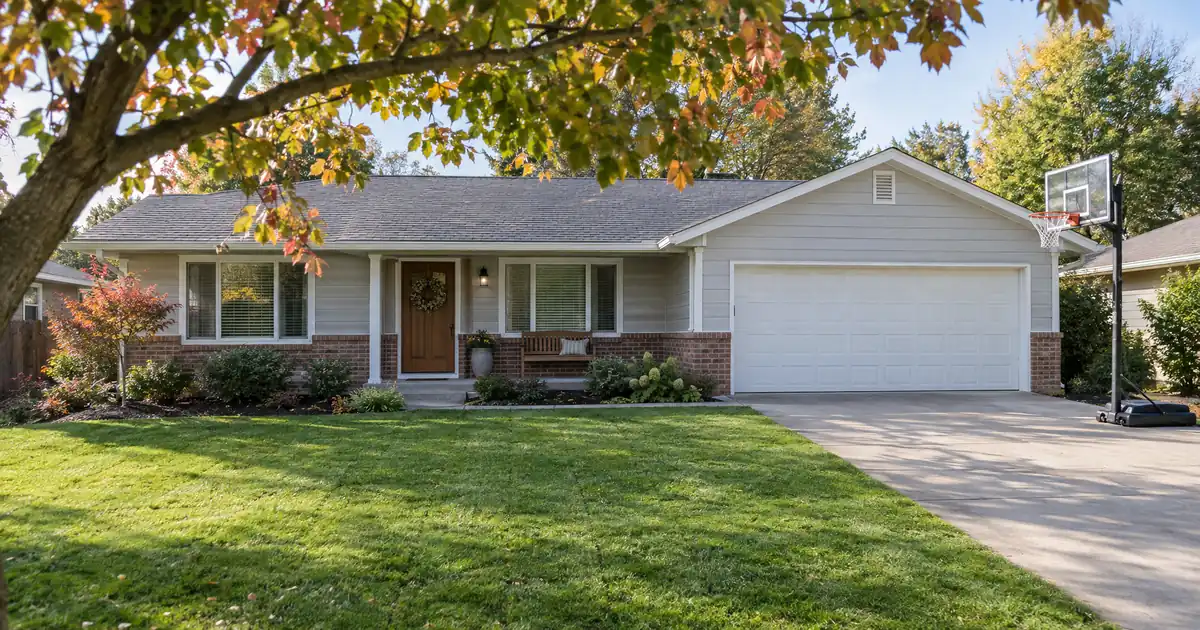
The Quick Read: An appraiser does not add up what you spent. The appraiser estimates what the home would sell for in its current condition, or “subject to” repairs if something needs fixing. Repairs and upgrades enter that number in three ways: the condition and quality ratings, market-supported adjustments against comparable sales, and whether any defect stops the loan from being sold to the investor. Receipts help the appraiser see the work, but they do not set the value.
Repairs and Upgrades Are Two Different Things
A repair restores condition. An upgrade raises quality or adds features. Appraisers treat them separately, and so do lenders.
Refinance savings and break-even estimate
The starting figures are an example value with a balance in proportion and a placeholder for costs. Replace them with yours, and enter the current rate from your statement.
Editable benchmark: 7.32% as of October 22, 2026 · Freddie Mac 30-year average via FRED®. A conventional market reference, not a refinance quote.
Illustrative starting assumptions: a $350,000 home value, a $245,000 current balance, a current rate you enter and a remaining term seeded at twenty-five years, closing costs seeded at $5,000 as an editable placeholder (not a fee quote) and rolled into the new loan, a thirty-year term at the current Freddie Mac benchmark, and property taxes and insurance estimated at typical national rates. Every field is editable.
Illustrative estimate only — not a Loan Estimate, approval, quote, or commitment to lend. The new rate field carries the weekly Freddie Mac thirty-year conventional benchmark, a market reference and not a refinance quote; a refinance is priced by the lender at lock, and the current rate, the remaining term and the closing costs are figures you enter. The current payment is estimated from the balance, the current rate and the remaining term; the break-even divides the closing costs by the monthly saving and ignores the interest effect of a longer term. On the VA IRRRL the funding fee is added to the loan unless the veteran is exempt. Taxes and insurance are editable estimates. Licensed in sixteen states for consumer mortgages; Lendmire is a broker, never the lender.
A leaking roof, a failed furnace, or peeling paint is a repair issue. It pulls the condition rating down and may become a condition of the loan. A new kitchen, a finished basement, or a remodeled bath is an upgrade. It shows up in the quality rating, the update status, and the adjustments made against comparable sales.
Here is the catch. A repair can cost you value or block the loan. An upgrade can only add value to the extent buyers in your market pay for it. Spending on a repair does not earn you a bonus. Spending on an upgrade does not earn you your cost back.
Key Terms Defined
As is: The value of the home in its current condition, with minor wear noted but not cured.
Subject to: The value assumes specific repairs or inspections will be completed before the loan is sold.
Condition rating (C1–C6): A scale describing the physical state of the home, where C1 is the best and C6 is the worst.
Quality rating (Q1–Q6): A scale describing the materials and finish level of the construction.
Contributory value: The amount the market actually pays for a feature, shown by comparable sales rather than by what the feature cost.
Form 1004D: The appraisal update and completion report that documents repairs were finished.
How Condition and Quality Ratings Steer the Comparables
The appraiser rates overall condition, interior, and exterior from C1 to C6, and construction quality from Q1 to Q6. The Fannie Mae Selling Guide requires these to be reported in specific, factual terms. It also asks the appraiser to describe whether kitchens, baths, and similar components are "not updated," "updated," or "remodeled." That is the door through which upgrades enter the report.
Ratings are described on an absolute basis. A C3 home is a C3 home even if every neighbor is a C2. That matters because the rating helps decide which comparable sales the appraiser picks. Move one tier up or down and the comp set can change.
| Rating area | What it describes | Why it matters on a refinance |
|---|---|---|
| Condition (C1–C6) | Physical state and deferred maintenance | Lower tiers pull value and can trigger repair conditions |
| Quality (Q1–Q6) | Materials and finish level | Higher quality supports adjustments against lesser comps |
| Update status | Not updated, updated, or remodeled | Shows how kitchens and baths compare to the market |
How Each Item Becomes a Number
The appraiser works through each item in order. Nothing in the process uses your invoice as the starting point.
1. Observe. The appraiser inspects the home and notes the item, its condition, and its update status.
2. Verify. The appraiser confirms what is visible and documented. Unseen work and unverified claims do not count.
3. Compare. The appraiser selects comparable sales and looks at how they differ from your home in condition, updates, and features.
4. Adjust. Differences become market-supported adjustments. The Selling Guide on adjustments says they must reflect how the market reacts, sets no numeric limit, and rejects rule-of-thumb figures.
5. Conclude. The appraiser reaches a value, either "as is" or "subject to" completion of required work.
Run the logic on a hypothetical. Say your home has a remodeled kitchen and the three best comps have original kitchens. The appraiser looks for evidence that buyers paid more for the remodeled version, and adjusts by that evidence. If nearby sales show a modest premium, the adjustment is modest, even if the remodel was expensive. If the comps show no premium, the adjustment may be small. The reasoning follows the sales, not the contractor.
Fannie Mae's guidance also says appraisal comments must be fact-based and objective. That gives you something to check when you read the report.
What Counts, What Partly Counts, What Doesn't
Most items fall into one of three groups. This is the triage a good processor runs before the appraiser ever arrives.
| Treatment | Typical items | Why |
|---|---|---|
| Counts | Permitted, permanent, visible work: remodeled baths, new roof, added living area | Appraiser can see it and compare it |
| Partly counts | Cosmetic updates, energy features, personal taste finishes | Value depends on market reaction |
| Does not count | Removable items, unseen or undocumented work, unpermitted additions | Cannot be verified or supported |
Energy improvements deserve a note. Fannie Mae guidance says appraisers may consider them, but cannot adjust dollar for dollar from equipment cost or projected savings. Same rule as every other upgrade. Market evidence sets the number.
Unpermitted work is a quiet problem on these files. It may not be counted, and depending on what it is, it can raise a safety or legality question the appraiser flags. Pull permits for finished work before the appraisal if you have them.
Repairs the Appraiser Flags, and What the Lender Does With Them
The appraiser documents. The lender enforces. That split explains most of the confusion borrowers have.
Minor deferred maintenance can be appraised "as is." Think worn carpet, a small plumbing leak, torn screens, or a missing handrail. Under Fannie Mae's completion rules, the lender does not have to make sure those are fixed before the loan is sold. If the borrower plans fixes after closing, the lender may escrow funds at its discretion, as long as safety, soundness, and structure are unaffected.
Items that affect safety, soundness, or structural integrity are different. Those generally must be complete when the loan is sold, and the lender needs evidence of completion, such as a Form 1004D. The appraisal is then "subject to" the repairs.
The two big conventional investors draw the line in slightly different places. Fannie Mae's hard stop is a C6 home. Under Freddie Mac's Guide, if any part of the improvements has deficiencies consistent with C5 or C6, the "as is" rating must be C5 or C6, and that collateral is not acceptable unless every issue is cured before delivery. Freddie Mac is the stricter of the two. Across the wholesale programs placed through Lendmire, the lender's own review sits on top of both, so a file can face a condition the agency rule alone would not require.
Two practical consequences follow:
- A repair that merely lowers value shows up as an adjustment.
- A repair that affects safety or soundness shows up as a loan condition. Value and eligibility are separate questions.
Why Spending Doesn't Equal Value
Cost and value are different measurements. A $60,000 remodel does not mean $60,000 of added value. Contributory value comes from what buyers in your market pay.
Two limits show up repeatedly. The first is the neighborhood ceiling. If your home is already at the top of the local price range, more upgrades have less to compare against. The second is over-improvement. A Fannie Mae FAQ says an over-improved home is still eligible, but the lender must check that the appraiser adjusted only to the extent the improvement contributes value. The FAQ is older, so treat it as direction, not a current rule table.
This is where owners get surprised. They finish a project, assume the appraisal will reflect the bill, and the report comes back with a smaller adjustment. The appraiser did not ignore the work. The market just did not pay for all of it.
Which Refinance Type Changes the Picture?
The loan program decides whether an appraisal happens at all, and how much the work matters.
| Refinance type | Appraisal | Effect of repairs and upgrades |
|---|---|---|
| Rate-and-term (limited cash-out) | Usually yes | Value and condition affect LTV and eligibility |
| Conventional cash-out | Yes | Value drives how much equity is available |
| FHA Streamline | Not required | Upgrades earn no value credit |
| VA IRRRL | Generally not required | Upgrades earn no value credit unless a lender orders one |
| Renovation loan | Yes, "as completed" | Value reflects the finished project |
On a rate-and-term refinance, the appraised value sets your loan-to-value ratio. The wholesale programs reach 95% LTV on a one-unit principal residence, with mortgage insurance above 80%. A value that comes in lower than expected pushes the ratio up. That can change pricing and mortgage insurance, or put the loan out of reach, subject to lender guidelines and full file review.
Rate-and-term is not a remodel fund. The category exists to limit cash back to incidental amounts. If you want equity for renovation, that points toward a cash-out refinance or a renovation product.
For an existing FHA loan, the FHA Streamline needs no appraisal, so nothing you upgraded gets counted. The VA IRRRL works the same way. The VA Lenders Handbook says an IRRRL generally needs no appraisal, though a lender may order one for its own requirements. A VA cash-out refinance does require one. If you are on a government loan and your goal is a lower payment, skipping the appraisal removes the value question entirely.
For renovation financing, the picture flips. Under Fannie Mae's HomeStyle Renovation FAQ, improvements do not have to add value, and the "as completed" appraised value reflects whatever contributory value the work has. Work has to be finished within a set period after closing, and tear-downs are not allowed.
Mid-Project and Unfinished Work
Unfinished work is one of the harder files. If the project is half done at appraisal, the appraiser can only rate what exists. A torn-out kitchen is a condition problem today, not an upgrade tomorrow.
If the missing pieces are minor, the report can stand "as is." If they affect safety, soundness, or structure, the appraisal goes "subject to" completion, and you need the 1004D to close the loop. Finishing before the inspection, or choosing a renovation product built for incomplete work, is cleaner than asking an appraiser to value a plan.
How to Make Sure Everything Gets Counted
Documentation does not set value, but it keeps the appraiser from missing things. The practical checklist:
- A dated list of improvements since purchase, with the approximate completion date for each.
- Permits and final inspection sign-offs for structural, electrical, plumbing, and additions.
- Before-and-after photos for work that is hidden once finished.
- Receipts as supporting evidence, not as a value claim.
- A short note on features that are not obvious from the curb, such as a new roof or updated systems.
If you attend the inspection, point things out and stay out of the way. Hand over the list. Do not argue value. The appraiser's job is to compare, not to negotiate.
Think about whether to fix things first. Minor, cheap items that drag the condition rating, like a cracked window or a missing handrail, are often worth fixing. Large cosmetic projects rarely pay back through the appraisal alone. Lendmire's piece Should You Make Repairs Before a Refinance Appraisal? walks through that decision.
If Something Was Missed or the Value Comes in Low
You have a right to read the report. Under the ECOA Valuations Rule, lenders must give applicants a free copy of the appraisal and notify them of that right, per the CFPB factsheet. The CFPB rule announcement says the lender must deliver the report promptly, with exact timing depending on the file and the lender. The lender may still charge a reasonable fee for the appraisal itself.
Read it for facts first. Check bedroom and bath count, square footage, and permitted upgrades that were left out. Then look at the comps. If the work was missed, a reconsideration request with documentation is the right tool. Include recent sales that support your case and the proof of the missed item. Evidence moves a value. Pressure does not.
If the value is accurate and simply lower than hoped, the options are practical ones: a smaller loan, a different program, or waiting until the improvements are better supported by sales.
If you are weighing a refinance and want the break-even run on your own numbers, Lendmire can help you compare the refinance programs on the same home.
Frequently Asked Questions
Does the appraiser add the cost of my renovation to the value?
No. The appraiser measures what the market pays for the result, using comparable sales. Fannie Mae's guidance calls for market-based adjustments and rejects rule-of-thumb figures. A renovation can add less than it cost, and sometimes more, depending on the neighborhood.
Can an appraiser force me to make repairs?
The appraiser documents the problem, and the lender decides what happens. Minor deferred maintenance can often be appraised "as is." Safety, soundness, or structural issues generally must be fixed before the loan is sold, with proof such as a 1004D.
Do I need an appraisal on an FHA Streamline or VA IRRRL?
Generally not. Neither program requires one, so upgrades earn no value credit. A lender can still order an appraisal under its own policy, and a VA cash-out refinance does require one.
Can I use a rate-and-term refinance to pay for a remodel?
No. That category limits cash back to incidental amounts. Funding renovation means looking at a cash-out refinance or a renovation loan, which has its own appraisal on an "as completed" basis.
Will a new kitchen automatically raise my appraisal?
Not automatically. The appraiser rates its update status and compares it to sales. If buyers nearby pay more for remodeled kitchens, the adjustment follows. If they do not, it will be small.
For your own numbers, request a scenario review with Lendmire.
About Lendmire
Lendmire — NMLS# 2371349 — is a mortgage broker that arranges FHA, VA, conventional and jumbo home purchase and refinance financing in 16 states through wholesale lenders. Every option is subject to the lender's guidelines and full underwriting. Scotsman Guide named Lendmire a Top Mortgage Workplace in both 2025 and 2026.
Get Started
Ready to find the right loan for you?
In about two minutes you can review financing options available for your home or investment property. No commitment required.
Informational only. Not a Loan Estimate, approval, or commitment to lend. Program availability and eligibility are subject to lender guidelines, credit approval, property review, and underwriting.
References
1. Fannie Mae Selling Guide B4-1.3-06: Property Condition and Quality
2. Fannie Mae Selling Guide B4-1.3-09: Adjustments to Comparable Sales
3. Fannie Mae appraiser update Dec 2024
5. Fannie Mae Selling Guide B4-1.2-05: Verifying Completion and Postponed Improvements
6. Freddie Mac Guide Section 5605.5
9. Fannie Mae's HomeStyle Renovation FAQ
10. CFPB ECOA Valuations Factsheet
This article is part of Lendmire’s Refinance series — every loan program’s qualification details, guidelines, and scenarios live on the loan options page.
Related reading: Is a Cash-Out Refinance Better Than a No-Appraisal Home Equity Loan? · Does Your Escrow Account Carry Over When You Refinance? · Should You Make Repairs Before a Refinance Appraisal?
Brandon Miller
Founder & CEO, Mortgage Loan Originator, Lendmire LLC
- Mortgage Loan Originator · NMLS# 1129696 · Verify on NMLS Consumer Access
- North Carolina Real Estate Broker · License# 343312 · Verify on NCREC
- North Carolina Insurance Producer · License# 19053198 · Property, Casualty, Life, Health · Verify on NAIC SBS
- Lendmire LLC · Firm NMLS# 2371349 · Verify firm licensure
Compliance and disclosures. Lendmire (NMLS# 2371349) is a licensed mortgage broker and is not a direct lender, depository institution, financial advisor, or tax professional. Content in this article is general market analysis and educational information — not financial, legal, or tax advice for any specific situation. Lendmire does not guarantee loan approval; every transaction is subject to underwriting by the funding lender. Mortgage pricing and loan program guidelines are subject to change at any time without notice and vary by borrower characteristics, property type, and state regulations. Lendmire complies with Equal Housing Opportunity. Licensure verification: NMLS Consumer Access.