
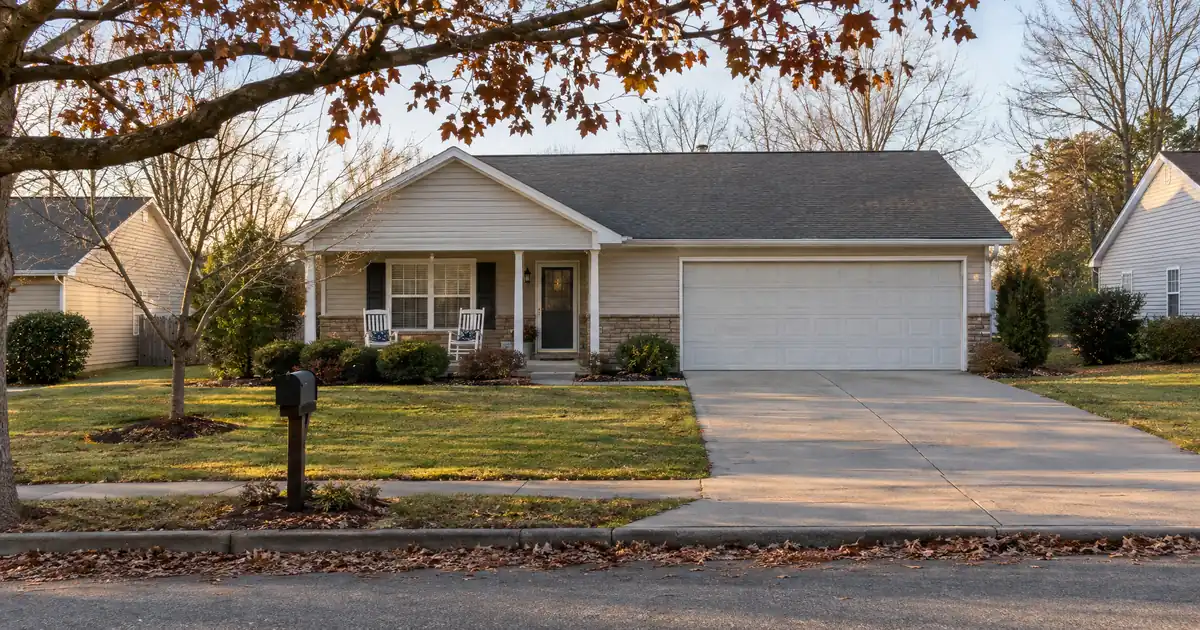
The Quick Read: Start by finding out whether your loan needs a visit at all, because several refinance paths skip the appraisal or swap it for a data-collector walk-through. If a visit is coming, fix safety and structural items first, put your upgrade records in a folder second, and clean up last. Cleaning helps the appraiser do the job. It does not add value by itself, because value comes from comparable sales and adjustments.
Will Your Refinance Even Need an Appraisal?
Not always. The loan program and the automated underwriting result decide, and a borrower cannot simply ask for a waiver. Check this before you spend a weekend on prep.
Refinance savings and break-even estimate
The starting figures are an example value with a balance in proportion and a placeholder for costs. Replace them with yours, and enter the current rate from your statement.
Editable benchmark: 7.32% as of October 22, 2026 · Freddie Mac 30-year average via FRED®. A conventional market reference, not a refinance quote.
Illustrative starting assumptions: a $350,000 home value, a $245,000 current balance, a current rate you enter and a remaining term seeded at twenty-five years, closing costs seeded at $5,000 as an editable placeholder (not a fee quote) and rolled into the new loan, a thirty-year term at the current Freddie Mac benchmark, and property taxes and insurance estimated at typical national rates. Every field is editable.
Illustrative estimate only — not a Loan Estimate, approval, quote, or commitment to lend. The new rate field carries the weekly Freddie Mac thirty-year conventional benchmark, a market reference and not a refinance quote; a refinance is priced by the lender at lock, and the current rate, the remaining term and the closing costs are figures you enter. The current payment is estimated from the balance, the current rate and the remaining term; the break-even divides the closing costs by the monthly saving and ignores the interest effect of a longer term. On the VA IRRRL the funding fee is added to the loan unless the veteran is exempt. Taxes and insurance are editable estimates. Licensed in sixteen states for consumer mortgages; Lendmire is a broker, never the lender.
Here is how it breaks down across the files that move through wholesale lenders:
| Refinance path | Appraisal visit? | What decides it |
|---|---|---|
| FHA Streamline | No appraisal | Existing FHA loan, current |
| VA streamline refinance | Generally none | Existing VA loan |
| Conventional rate-and-term | Depends | Automated findings |
| Conventional cash-out | Normally a full appraisal | Program rules |
HUD's Streamline page says the mortgage being refinanced must already be FHA-insured and current, with a net tangible benefit to the borrower. The VA's streamline refinance page says no appraisal or credit underwriting package is required to apply. A lender can still add its own requirements on top, so ask.
Conventional loans are the gray zone. The lender submits the file to Fannie Mae's or Freddie Mac's automated system, and it returns one of three answers: a full appraisal, a value-acceptance or ACE result with no appraisal, or a property-data path where a trained data collector visits instead. Freddie Mac's ACE program describes the second of those. Your loan officer sees the answer early. Ask which one you got.
One catch. A data-collector visit is still a visit. The collector documents features and condition in a standard format, so prepare the house the same way you would for an appraiser.
The refinance programs Lendmire arranges include rate-and-term, FHA Streamline, VA streamline refinance and jumbo lanes, and each one handles the valuation step differently. You can see the full list on Lendmire's refinance programs page. Lendmire is a mortgage broker arranging these loans through wholesale lenders, and every program is subject to lender guidelines and full file review.
Why the Value Matters to Your Loan
The appraised value is the bottom half of the loan-to-value ratio. A lower value pushes LTV up, and that touches everything else on the file.
Across the wholesale programs, a rate-and-term refinance on a one-unit primary home reaches 95% LTV, and 97% where the existing loan is agency-owned and the first-time-buyer program allows it. Mortgage insurance applies above 80% LTV. It can be cancelled at the borrower's request at 80% and ends automatically at 78%, subject to the rules. Conventional cash-out on a one-unit primary home tops out at 80%.
Those are caps, not guarantees, and the Fannie Mae Eligibility Matrix sets the agency limits by occupancy and transaction type. A value that comes in light can mean a different pricing tier, mortgage insurance you did not plan on, cash to bring to closing, or a loan that no longer fits the program. That is why the visit matters, and why the next sections focus on what you can actually influence.
What the Appraiser Actually Evaluates
The appraiser looks at the whole property, not one room. Fannie Mae's Selling Guide says condition and quality ratings come from a holistic view of the property and all its improvements.
Condition runs on a C1 to C6 scale. C2 means no deferred maintenance and no repairs needed. C3 means well maintained with limited physical depreciation. Quality runs Q1 to Q6. The appraiser then compares your home to recent nearby sales and adjusts for differences. The federal consumer-finance regulator's consumer explainer says value can go up for a bigger home or yard, more bathrooms or a newer kitchen than the comparable sales. It can go down if the home is smaller, needs repairs or lacks features.
Here is what that means for you:
| Factor | Can you influence it? | What to do |
|---|---|---|
| Size and layout | No | Confirm records are correct |
| Location and comps | No | Offer recent nearby sales, if you have them |
| Condition | Yes | Fix deferred maintenance |
| Safety and soundness | Yes | Fix before the visit |
| Upgrades | Partly | Document dates and work done |
| Tidiness | Little | Clean so access is easy |
Fix First, Document Second, Polish Last
Triage the list. Items fall into three tiers, and the order matters more than the length of the list.
Tier one: safety, soundness and structure. These are the items that can hold up a loan. Fannie Mae's guide has a dedicated section on them, and deficiencies here can require repairs before the loan is delivered. Typical examples: missing handrails, exposed wiring, inoperable smoke detectors, active leaks, peeling paint on older homes, a failing roof surface. Fix these before the visit.
Tier two: function and deferred maintenance. Dripping faucets, a sticking back door, a cracked window pane, a dirty HVAC filter, a stained ceiling that traces to an old leak. These pull the condition rating down at the margin. Cheap fixes are worth doing. Big projects are a different question, covered below.
Tier three: cosmetic polish. Fresh mulch, tidy shelves, a clean kitchen. This helps the appraiser move through the house and form a good impression. It does not appear as an adjustment on the report.
On what is sourced and what is practitioner habit. The rating definitions and the repair rule above come from the agency guide. The prep list that follows reflects common practitioner habit rather than a government checklist. No primary source gives a "prepare your home" checklist, so treat this as working advice.
The Documents Folder
An upgrade the appraiser cannot see or verify is hard to credit. A one-page list fixes that.
Build it with these columns: item, date, approximate cost, permit status, receipt on file. Include the kitchen or bath remodel, roof or HVAC replacement, new windows, finished space, and anything else that changes the home compared to its neighbors. Attach receipts, warranties, and permit numbers with final sign-offs where they exist.
Then check the basics against the public record. Square footage, bedroom count and bathroom count are the facts most often wrong. If the county record says three bedrooms and you have four, bring the evidence. If it is the other way around, know that before the appraiser does.
You can also bring a short list of recent sales nearby that look like your home. The appraiser does not have to use them. Genuinely similar, well-documented ones sometimes get used. Hand over facts, not an opinion about what the number should be.
Access and Logistics
Make every area reachable. Appraisers note what they cannot see, and an inaccessible space can show up in the report as a limit.
- Clear a path to the furnace, water heater and electrical panel.
- Unlock the attic hatch, crawlspace access, garage, shed and any outbuildings.
- Turn utilities on, since the appraiser may test fixtures and systems.
- Put pets in a secure room or outside.
- Leave the lights on and the blinds open.
Tidy the home, but do not strip it into a showroom. A lived-in house is fine. A cluttered one slows the walk-through.
Rooms, Conversions and Unpermitted Space
On a primary home, rooms should read as what they are. A bedroom used as storage can be misread as a bedroom that does not exist. A converted garage, a finished basement or an addition without permits is the most likely to be questioned.
If you have finished space, bring the permit and the final sign-off. If you do not have them, do not hide the space and do not argue the point. Describe it plainly and let the appraiser decide how to treat it. An honest answer protects the file better than a surprise at the review.
Fix, Disclose or Leave It?
Not every flaw needs a repair. The agency baseline helps here. Fannie Mae's disaster-related guidance restates the general rule: an appraisal may be "as is" if no condition affects safety, soundness or structural integrity. Minor wear does not fail an appraisal.
| Situation | Move |
|---|---|
| Safety or structural defect | Fix before the visit |
| Cheap functional repair | Fix it |
| Large cosmetic project, half done | Finish only if simple and clean, otherwise disclose |
| Big remodel idea | Wait until after closing |
| Dated finishes, no defect | Leave it |
Think it through before you commit money. A new kitchen to lift a value is a hard bet, because the report adjusts against comparable sales, not against what you spent. For most owners the money is better spent on tier one and two items, with the larger projects held until the loan closes.
A Timeline That Works
| When | Task |
|---|---|
| Two weeks out | Confirm the valuation path; repair tier one and two items |
| One week out | Build the documents folder; check records |
| Day before | Clear access, test smoke detectors, fix small items |
| Morning of | Unlock spaces, secure pets, turn on lights |
| During the visit | Be available, brief and polite |
Skip the heavy exterior projects unless they are tier one. Basic yard tidying and clear walkways are enough.
During the Visit: What to Say and Not Say
You may be home. Be present for questions, then give the appraiser space.
Worth offering: your improvement list, permit information, and any factual errors you spotted, such as square footage or bedroom count. Worth skipping: naming the number you need, pressing for a result, or following the appraiser through every room. Hovering does not help, and pressure about value can create problems for everyone.
After the Visit: Low Value and Factual Errors
You have the right to a copy of the appraisal. Under the ECOA Valuations Rule, the lender must tell you promptly after application that you will receive one. Copies are free, and the lender must provide the appraisal promptly after it is completed or ahead of closing, whichever is earlier. You can waive the timing and receive it at closing. This right applies even if the loan is denied or withdrawn.
Read it for factual errors first. Wrong square footage, a missing bathroom or an overlooked upgrade are fixable. Send documentation to your loan officer, who can request an appraisal reconsideration through the lender. A formal reconsideration with recent nearby sales and condition evidence is a routine step. Complaining about the number is not.
If the value stands and it is low, the options are real but limited: bring cash to closing, take a smaller loan, accept a different pricing tier or mortgage insurance, or wait and revisit. Which of these fit depends on the program and lender guidelines.
If the appraiser flags a safety or structural item, closing may wait until the repair is done. Another reason to do tier one early.
For related situations, Lendmire's piece Cash-Out Refinance Appraisal Requirements for a Paid-Off Home covers a different valuation scenario.
A Worked Example
Picture a homeowner with a one-unit primary home, refinancing to a rate-and-term loan at a leverage near the program cap. Their lender gets a full appraisal result.
They spend a weekend on tier one: a handrail, two dead smoke detectors, an exposed junction box. They fix a leaky faucet and a cracked pane. They skip repainting the dated bathroom and hold off on new flooring. They make a one-page list showing a roof replacement and furnace service with receipts, and they check the county record against their own bedroom count.
On the day, the attic hatch is unlocked, the panel is reachable, the dog is in the yard. They hand over the list and point out that the record shows the wrong bath count. The report reflects the correction.
The value lands where the comps say it should. Nothing in the prep invented value. What it did was remove avoidable condition problems and factual errors, which are the two things an owner can control.
Key Terms Defined
Appraised value: The appraiser's opinion of what the home is worth, based on comparable sales and adjustments.
LTV (loan-to-value): The loan amount divided by the appraised value.
Limited cash-out refinance: A new first mortgage that pays off the existing first loan on the same property, with only incidental cash back.
Value acceptance / ACE: Automated paths where an eligible loan goes without a traditional appraisal report.
Property data collection: A visit by a trained data collector who records property features in a standard format instead of an appraisal report.
Appraisal reconsideration: A request, with documentation, that the appraiser or lender review the value or a factual error.
Net tangible benefit: A measurable gain to the borrower required on FHA and VA streamline refinances.
Tax treatment can depend on your situation; borrowers should speak with a qualified tax professional before relying on any deduction or credit.
Frequently Asked Questions
Should I be home during the refinance appraisal?
You may be, and it usually helps. Be available to answer questions, hand over your documents list, and unlock any space. Then give the appraiser room to work.
Does a deep clean or fresh paint raise the appraised value?
Not directly. Value comes from comparable sales and adjustments for size, features and needed repairs. Cleanliness is not an adjustment item. Cleaning makes the visit smoother, and fixing real defects can help the condition rating.
Can I skip the appraisal?
You cannot request a waiver. FHA Streamline and the VA IRRRL generally do not require one, and some conventional loans get value acceptance or ACE. The automated underwriting system decides on conventional files, and a lender may add its own requirements.
What if the value comes in low?
Check the report for factual errors first, since you are entitled to a free copy. If the error is real, your loan officer can request a reconsideration with documentation. If the value stands, the options are bringing cash, a smaller loan, a different pricing tier or mortgage insurance, or waiting, subject to the program and lender guidelines.
Does reusing an older appraisal work?
Sometimes. Fannie Mae allows reuse only on a limited cash-out refinance. The report must be under 12 months old on the note date, and an update is needed if it is more than four months old on that date.
If you are weighing a refinance and want the break-even run on your own numbers, Lendmire can help you compare the programs on the same home, using a scenario review.
About Lendmire
Lendmire (NMLS# 2371349) is a mortgage brokerage serving homeowners and home buyers in 16 states. FHA, VA, conventional and jumbo purchase and refinance loans are arranged through wholesale lending channels; Lendmire brokers the financing and the lender underwrites each application. Scotsman Guide named Lendmire a Top Mortgage Workplace in both 2025 and 2026.
Get Started
Ready to find the right loan for you?
In about two minutes you can review financing options available for your home or investment property. No commitment required.
Informational only. Not a Loan Estimate, approval, or commitment to lend. Program availability and eligibility are subject to lender guidelines, credit approval, property review, and underwriting.
References
2. VA: IRRRL
4. Fannie Mae Eligibility Matrix
5. Fannie Mae Selling Guide B4-1.3-06: Property Condition and Quality of Construction
6. Fannie Mae Selling Guide B5-4.2-02: Disaster-Related Limited Cash-Out Refinance Flexibilities
This article is part of Lendmire’s Refinance series — every loan program’s qualification details, guidelines, and scenarios live on the loan options page.
Related reading: Home Equity Limits and Documentation in a Refinance · Escrow Account Rules in a Refinance for a Primary Home · Do You Keep Your Home Equity When You Refinance?
Brandon Miller
Founder & CEO, Mortgage Loan Originator, Lendmire LLC
- Mortgage Loan Originator · NMLS# 1129696 · Verify on NMLS Consumer Access
- North Carolina Real Estate Broker · License# 343312 · Verify on NCREC
- North Carolina Insurance Producer · License# 19053198 · Property, Casualty, Life, Health · Verify on NAIC SBS
- Lendmire LLC · Firm NMLS# 2371349 · Verify firm licensure
Legal disclosures. Lendmire (NMLS# 2371349) is a state-licensed mortgage brokerage that arranges financing through wholesale lender relationships. Lendmire is not a direct lender, depository institution, or registered financial advisor. The discussion above is general informational content about real estate financing — it is not financial, legal, or tax advice, and readers should consult licensed professionals for guidance on their individual circumstances. Loan inquiries are subject to lender underwriting; this article does not represent a commitment to lend. Loan terms, rates, and qualification standards vary by borrower, property, and state, and are subject to change at any time. Equal Housing Opportunity. NMLS Consumer Access: nmlsconsumeraccess.org.