
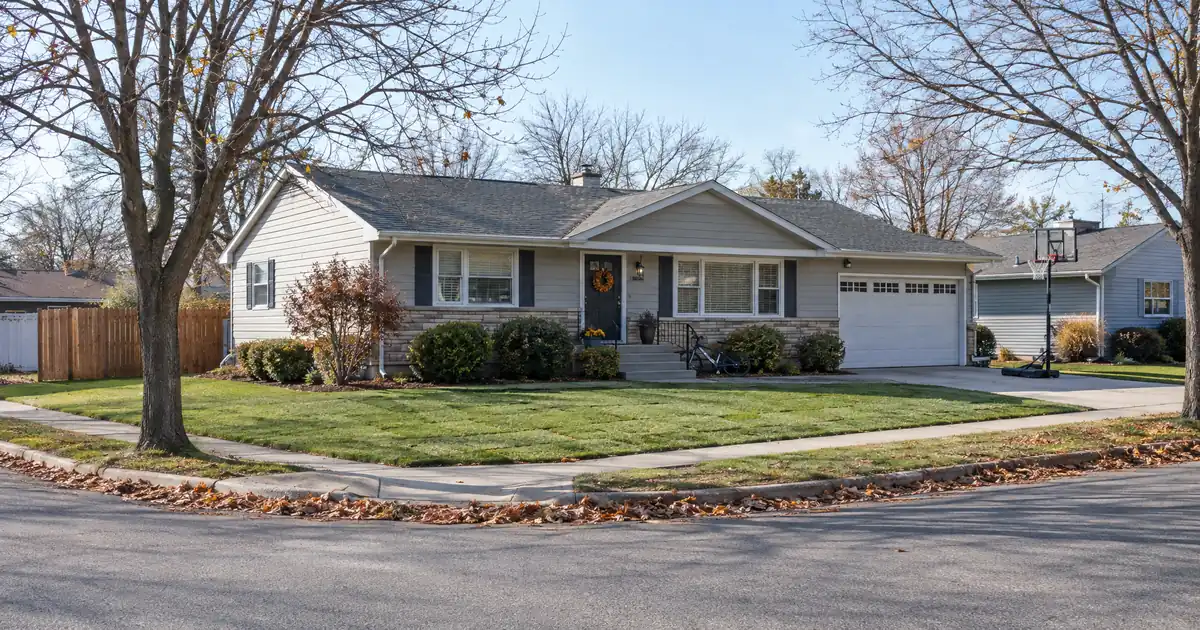
The Quick Read: “Does my location qualify?” is really three separate questions about one address. The loan program has to allow the property, the assistance provider has to be able to fund it, and the assistance program’s own footprint has to cover it. You can pass one test and fail another. Check all three before you write an offer.
Key Takeaways
- Location tests apply to the property you are buying, not to where you rent today.
- Some first mortgages have a map test (rural areas for USDA, approved counties for HUD-184). FHA has no rural map.
- The assistance has its own footprint, and one grant option is not offered in Washington.
- You do not have to be a first-time buyer for any of the options Lendmire arranges.
- Assistance is for a primary residence you will live in. It does not apply to rentals or second homes.
Key Terms Defined
First lien: The main mortgage, which gets paid first if the home is sold or foreclosed.
Second lien: A separate loan recorded behind the first mortgage. Even when it has no payment, it is still a loan with a recorded claim on the home.
Grant-style assistance: Money applied at closing with nothing to repay. No lien, no payment, no interest.
Forgivable second: A second lien with no interest and no payment that is erased after a set number of on-time first-mortgage payments.
Area median income (AMI): The midpoint household income for your county or metro area. Some programs set income limits as a share of it.
Underserved census tract: A small, government-defined statistical area that a program designates as one it wants to support. A tract is usually smaller than a zip code.
Blended credit score: A score that averages in a lower-scoring co-borrower when the primary wage earner holds the higher score and earns most of the household income.
Why “Does My Location Qualify?” Is Really Three Questions
Buyers usually ask one question and get a one-word answer. That answer is often wrong, because three different gatekeepers each look at the address.
Gate one: the first mortgage. Every assistance option sits on top of a government-backed first mortgage. That first loan has its own rules about property and borrower. FHA, the most common base, insures loans in every state and has no rural-or-urban map. It does cap loan size by county.
USDA and HUD-184 do have geography tests. We cover them below.
Gate two: the assistance provider. Whoever funds the assistance must be allowed to fund it for this property. This matters most when a local government or agency is the source.
Gate three: the assistance program’s footprint. Each program decides where it operates. Some are broad. Some exclude a state. Some reward buying in a targeted neighborhood.
Here is the practical consequence. A buyer who checks only the first gate can fall in love with a house and discover the other two gates late. Checking all three on the address first costs an hour. Finding out after an accepted offer costs much more.
If you want a plain overview of the structures before the location details, Lendmire’s page on down payment assistance programs lays out the options side by side.
Do You Have to Be a First-Time Buyer?
No. This is a common reason buyers talk themselves out of looking.
None of the options Lendmire arranges requires first-time status. Repeat and move-up buyers qualify. The three-year first-time definition (no ownership interest in a home during the three years before you apply) is just one of several categories that can open the grant option. Lendmire’s piece How Repeat Buyers Find Down Payment Assistance Programs goes deeper on that path.
Occupancy is the real line. These options are for an owner-occupied primary residence only. A rental, vacation home, or second home does not qualify.
The Four Shapes of Assistance
Across the wholesale programs Lendmire places files with, assistance comes in four shapes. Each is a percentage of price or value, not a fixed dollar promise. Each is subject to program guidelines and full underwriting.
| Feature | Grant | Forgivable second | Repayable second | Refinance-cost second |
|---|---|---|---|---|
| Amount | 2% or 3.5% of price | 3.5% of price or value (lesser) | 3.5% or 5% of price or value (lesser) | 1% to 3.5% of balance or value (lesser) |
| Repay? | Nothing to repay | Forgiven after 36 or 60 on-time payments | Yes, interest-bearing loan | Yes, same terms as repayable |
| Credit floor | 620 | 640 (660 blended) | 660 (670 blended) | 660 (670 blended) |
| First lien | FHA only | FHA, USDA, HUD-184 | FHA, USDA, HUD-184 | FHA refinance |
| Income test | 140% of AMI, unless a category applies | None beyond USDA’s own | None beyond USDA’s own | See program guidelines |
The grant is released at closing. A homebuyer education course is required, and you pay for it up front. The cost is credited back at closing.
The forgivable second carries no interest and no monthly payment. It is forgiven after 36 or 60 on-time first-mortgage payments, with no delinquency of 90 days or more.
The repayable second is a real loan. It has interest, a monthly payment, a 30-year amortization, and a balloon payment due in year 10. At 5%, it also covers closing costs and prepaid items. It comes with its own loan disclosure and a separate balloon disclosure.
The refinance-cost second helps with closing costs on an FHA refinance, with combined leverage up to 104%. It is not for streamline refinances. Each figure is subject to lender guidelines and a complete review of property type, leverage, and credit.
Two hard limits apply to all four. You cannot stack one with another assistance program. And a mortgage credit certificate, a federal tax credit tied to mortgage interest, is not allowed with the second-lien options.
How the First Lien and the Assistance Get Underwritten
Think of the file as two loans reviewed together. Here is the order a loan officer works through it.
1. Pick the first lien. FHA, USDA, or HUD-184. The agency’s rules for property, borrower, and underwriting apply to that loan. The assistance does not change them.
2. Test the address against the first-lien geography. USDA and HUD-184 have location lookups. FHA has loan limits by county.
3. Test the address against the assistance program. Is the property in a place the program serves? Does the buyer fit its income test or one of its qualifying categories?
4. Classify the assistance. A grant is a gift-style benefit with nothing to repay. Any lien-creating second counts as secondary financing, even when it is forgiven. HUD’s Handbook 4000.1 glossary defines the governmental and nonprofit entities that FHA recognizes as assistance sources.
5. Run the automated underwriting finding. The assistance options follow the finding from the automated underwriting system. Manual underwriting is allowed on the forgivable second and not on the repayable second.
6. Assemble the file. That means the application, the program reservation, source-of-funds evidence, the note and deed of trust for any second, and the education certificate when the grant requires one.
7. Close. For FHA, a second lien cannot produce cash back to you. Its costs also cannot be rolled into the FHA loan.
Underneath it all is FHA’s math. The minimum required investment is 3.5% of the lesser of price or appraised value, which means a 96.5% first loan. An upfront mortgage insurance premium, calculated as a percentage of the base loan, can be financed. An annual premium also applies, and its tier depends on your loan size and leverage.
FHA also caps loan size by county. One-unit limits for 2026 run from $541,287 to $1,249,125. A buyer in a high-cost county gets more room than a buyer in a low-cost one.
A required second-lien payment counts in your qualifying budget. A forgivable second usually adds none. A repayable second does. Plan around that before choosing.
Where the Location Rule Bites
The general rule is simple: FHA works nearly anywhere, and the assistance follows the program. These edge cases are where it breaks.
USDA: the map is a tool, not the final word
On a USDA first lien, the property must sit in an eligible rural area. The agency’s single-family guaranteed loan fact sheet says the loan is not restricted to first-time buyers. It requires you to live in the home and to meet the income requirement for the area where the home sits.
Buyers can type an address into USDA’s online property eligibility site, which also lets you browse the eligibility map. Two warnings apply.
First, USDA’s own training material says viewing the map is not a final determination by Rural Development. Maps change. Addresses near a boundary can return an “unable to determine” result, and lenders re-check at each stage.
Second, “rural” is about area character, not farming. There is no set acreage limit as long as the acreage is common for the area. You do not need farmland.
HUD-184: counties decide
The HUD-184 loan is a guarantee program for eligible members of federally recognized tribes. Participating tribes determine where the loan can be used. Eligible areas now reach beyond tribal trust land. In some states, only certain counties are approved.
That makes your county, not your state, the right thing to check. HUD publishes an approved-areas list, and it expands over time. Confirm against the current version.
One more point trips people up. HUD-184 does not itself provide down payment assistance. Any assistance is a separate layer. The forgivable and repayable seconds can pair with an HUD-184 first lien.
The grant and Washington
The grant option is not offered in Washington. A buyer there should look at the forgivable or repayable second instead. Credit and property rules differ, so do not assume the shapes are interchangeable.
The underserved tract door
For the grant, location can help you instead of block you. Buying in an underserved census tract is one qualifying category. If your household income is above the 140% of area median income test, a tract-based category can still open the grant. So can being a first responder, educator, medical worker, civil servant, or military member. Those categories also apply to a buyer who would pass the income test anyway.
Government and nonprofit sources
When a local or state government agency funds assistance on an FHA loan, the lender has to document that the agency acted within its authority for that property’s jurisdiction. HUD tightened this in a 2019 letter covered by Consumer Finance Monitor. Nonprofit sources face their own HUD roster and state approvals.
Most buyers never see this paperwork. It matters because a city program that looks perfect on a flyer can stall if the funding source lacks authority at your address. It is one more reason to let a loan officer test the file early.
USDA refinances
If you later refinance a USDA loan, assistance seconds cannot be folded into the new guaranteed loan. Silent seconds cannot be included. Ask about this before accepting any lien-based help.
A Worked Example
Picture a buyer renting in a mid-sized metro. Her credit score sits in the mid-600s. She has modest savings and has owned a home before. She wants a house in a small town about forty minutes out.
Gate one. She likes a town that might be USDA-eligible. She runs the address through the map. It returns eligible, but the house sits near a boundary, so her loan officer re-checks it before she writes the offer. Her household income also has to fit USDA’s limit for that county.
Gate two. She is not using a city program, so authority documentation is not an issue.
Gate three. Her score is above the 640 floor for the forgivable second and below the repayable second’s 660. She lives outside Washington. The grant is possible only if her income or a category fits.
Her loan officer’s read: pair a USDA or FHA first lien with the forgivable second at 3.5% of the lesser of price or value. It adds no monthly payment, which keeps her budget manageable.
If the boundary check had failed, the plan would shift. She could switch to an FHA first lien, which has no rural map, and keep the same assistance shape. The address changes the first lien, not the idea.
That is the pattern. Location rarely kills the plan outright. It usually changes which combination fits.
Common Mistakes Buyers Make
- Treating a map result as final. The map is a starting point.
- Assuming FHA provides the assistance. FHA insures the first mortgage. The assistance comes from separate programs.
- Calling a forgivable second a gift. It is a loan until the forgiveness period is complete.
- Checking where they live instead of where they are buying. The property location is what gets tested.
- Skipping the monthly-budget check. A repayable second adds a payment and a year-10 balloon.
- Waiting until after the offer. Test the address before you write.
Questions to Ask Your Loan Officer
Bring this list to the first conversation:
- Which first liens does this address allow: FHA, USDA, HUD-184?
- Which of the four assistance shapes fit my credit, income, and county?
- Do I fall under the grant’s income test, or one of its categories?
- Does the second add a monthly payment, and when does a balloon come due?
- What happens to the second if I sell or refinance?
- Is homebuyer education required, and how is it credited at closing?
- Who confirms the final eligibility, and in writing?
If Your Location Doesn’t Qualify
A “no” on the address is rarely a “no” on the whole plan. You still have options.
- Switch the first lien. FHA has no rural map and no county list.
- Switch the assistance shape. A forgivable or repayable second often fits where the grant does not.
- Look at a different property. Sometimes a tract change is a few blocks away.
- Check public programs. Many states, local governments, and nonprofits run programs, some aimed at specific groups or neighborhoods. State agencies such as CalHFA use a deferred second structure, for example. Each has its own footprint and funding, and none can be stacked with Lendmire’s options.
- Talk to a HUD-approved housing counselor. HUD maintains a directory of approved agencies.
Tax treatment can depend on your situation; buyers should speak with a qualified tax professional before relying on any deduction or credit.
Frequently Asked Questions
Can I qualify if I’ve owned a home before?
Yes. None of the options requires a first-time buyer. Repeat and move-up buyers qualify for the grant, forgivable second, and repayable second, subject to program guidelines and full underwriting. For a move-up angle, see Lendmire’s piece What Move-Up Buyers Must Know About Down Payment Assistance Eligibility.
Does it matter where I live now?
No. The test is the property you are buying, not your current address. Your home must become your primary residence, and the address is checked against the first-lien rules and the assistance program.
Can I check whether an address qualifies without applying?
Partly. You can look up an address on USDA’s eligibility site or check a county against HUD’s HUD-184 list. For the assistance itself, a loan officer can review it early without a full application. The map is not a final ruling, so expect the lender to re-check.
Is knowing my neighborhood name enough?
No. Rules attach to the exact address. A single census tract can contain eligible and ineligible addresses, and a neighborhood label does not tell you which side of a boundary a house sits on.
How often does eligibility change?
Maps, county lists, and program funding all change. HUD’s HUD-184 area list has expanded county by county, and USDA maps get updated. Confirm the address again close to the time you write an offer.
Next Step
If you are buying a primary home and want to see whether a down payment assistance option fits your file, Lendmire can help you compare the grant, forgivable and repayable structures alongside an FHA, USDA or HUD-184 first mortgage. Lendmire is a mortgage broker that arranges these through wholesale lenders, subject to program guidelines and full underwriting. Program details can change. This is not a commitment to lend.
Tell your loan officer the exact address first, because the buyer who tests the address before the offer is the buyer who avoids surprises.
For your own numbers, request a scenario review with Lendmire.
About Lendmire
Lendmire is a mortgage brokerage (NMLS# 2371349) licensed for consumer mortgage lending in 16 states, arranging government-backed purchase loans and the down payment assistance options that sit on top of them through a wholesale lending network. Eligibility is determined by the lender on each file. Scotsman Guide named Lendmire a Top Mortgage Workplace in both 2025 and 2026.
Get Started
Ready to find the right loan for you?
In about two minutes you can review financing options available for your home or investment property. No commitment required.
Informational only. Not a Loan Estimate, approval, or commitment to lend. Program availability and eligibility are subject to lender guidelines, credit approval, property review, and underwriting.
References
1. HUD FHA Handbook 4000.1 Glossary
2. USDA Rural Development single-family guaranteed loan fact sheet
3. Consumer Finance Monitor summary of HUD’s government-entity assistance requirements
This article is part of Lendmire’s down payment assistance program — full qualification details, guidelines, and scenarios live on the program page.
Related reading: Down Payment Assistance Purchase Price Limits for First-Time Buyers · How Repeat Buyers Find Down Payment Assistance Programs · How to Go From Renter to Owner With Down Payment Assistance
Brandon Miller
Founder & CEO, Mortgage Loan Originator, Lendmire LLC
- Mortgage Loan Originator · NMLS# 1129696 · Verify on NMLS Consumer Access
- North Carolina Real Estate Broker · License# 343312 · Verify on NCREC
- North Carolina Insurance Producer · License# 19053198 · Property, Casualty, Life, Health · Verify on NAIC SBS
- Lendmire LLC · Firm NMLS# 2371349 · Verify firm licensure
Legal disclosures. Lendmire (NMLS# 2371349) is a state-licensed mortgage brokerage that arranges financing through wholesale lender relationships. Lendmire is not a direct lender, depository institution, or registered financial advisor. The discussion above is general informational content about real estate financing — it is not financial, legal, or tax advice, and readers should consult licensed professionals for guidance on their individual circumstances. Loan inquiries are subject to lender underwriting; this article does not represent a commitment to lend. Loan terms, rates, and qualification standards vary by borrower, property, and state, and are subject to change at any time. Equal Housing Opportunity. NMLS Consumer Access: nmlsconsumeraccess.org.