
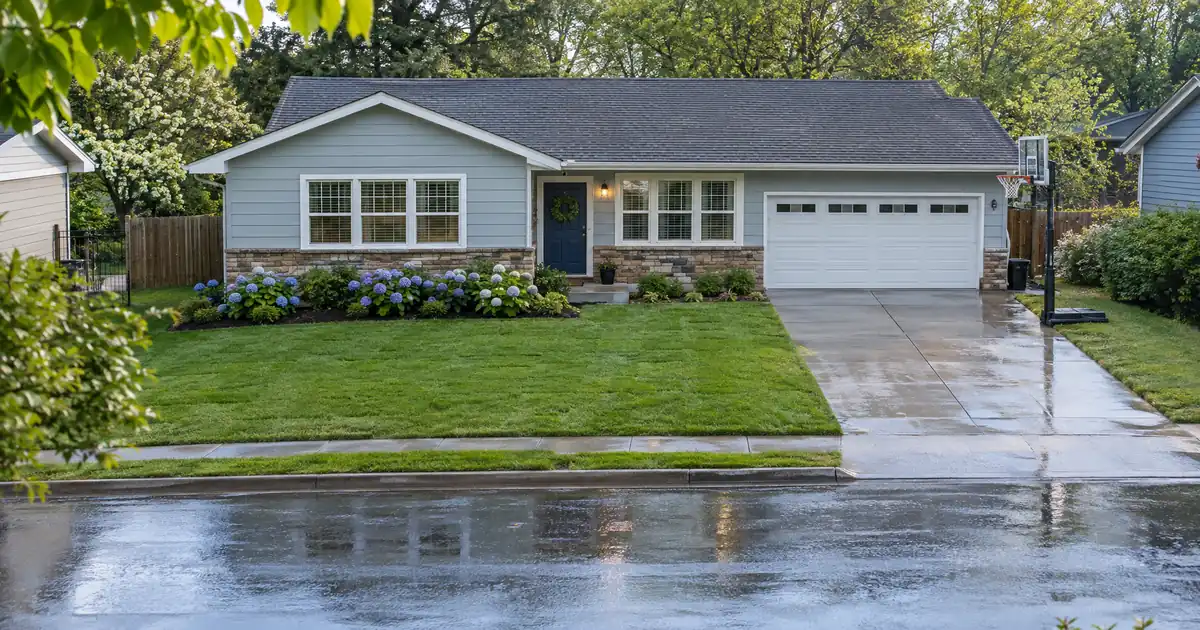
The Quick Read: An FHA appraiser does two jobs: estimate what the home is worth and check that the property meets HUD’s minimum standards for safety, soundness and marketability. The appraiser is not a home inspector. The visit is built to protect the lender, so buyers still need their own inspection. Cosmetic wear rarely sinks a file, but a missing safety item, a dead water heater or a failed roof can hold up the loan until it’s fixed.
What Is an FHA Loan, Briefly?
An FHA loan is a mortgage from a private lender that is insured by the Federal Housing Administration. The government doesn’t lend the money. It backs the loan, and in exchange the property has to meet FHA’s standards.
FHA payment estimate
Starting assumptions reflect an example price and the FHA minimum investment. Replace them with your own figures.
Editable benchmark: 7.32% as of October 22, 2026 · Freddie Mac 30-year average via FRED®. A conventional market reference, not an FHA loan quote.
Illustrative starting assumptions: a $350,000 price, the FHA minimum investment as the down payment, a thirty-year term at the current Freddie Mac benchmark, and property taxes and insurance estimated at typical national rates. Every field is editable.
Illustrative estimate only — not a Loan Estimate, approval, quote, or commitment to lend. The rate field carries the weekly Freddie Mac thirty-year conventional benchmark, a market reference and not an FHA loan quote; your rate is set by the lender at lock. FHA mortgage insurance follows HUD’s published schedule for the term, leverage and loan size entered; taxes, insurance and dues are editable estimates; closing costs are not included; county loan limits are not checked here. Licensed in sixteen states for consumer mortgages. Lendmire is not affiliated with or acting on behalf of FHA, HUD, or the federal government.
Across the wholesale programs Lendmire places files with, the structure is consistent. Maximum financing is 96.5% of value with a 3.5% minimum investment, at a decision score of 580 or higher. The home must be your principal residence, one to four units. Seller or interested-party contributions can run up to 6% of the price. Mortgage insurance has two parts: an upfront premium of 1.75% of the base loan, which is financed, and an annual premium that depends on term, loan amount and LTV. All of this is subject to lender guidelines and full file review, and none of it is a commitment to lend.
County loan limits apply and change every year, so check the current limit for the county you’re buying in.
Lendmire’s FHA loan programs are arranged through wholesale lenders. Lendmire is a broker, not the lender. The appraisal is where the property side of the file gets tested, and it’s the step buyers worry about most.
Key Takeaways
- The appraisal estimates value and does a preliminary check of HUD’s property standards.
- It is not an inspection. HUD’s own borrower form says so.
- The lender, not the appraiser, decides whether the property is acceptable.
- Safety, soundness and marketability issues matter. Scuffed floors and dated carpet generally don’t.
- A low value and a failed condition item are different problems with different fixes.
Key Terms Defined
Minimum Property Requirements (MPR): HUD’s baseline rules that a home must meet to be eligible for an FHA-insured loan.
Minimum Property Standards (MPS): The related construction and condition standards HUD applies, mostly to new or rehabilitated housing.
Appraised value: The appraiser’s opinion of market value, which feeds the lender’s loan-to-value math.
Cost to cure: The appraiser’s estimate of what a required repair will cost.
Reconsideration of value (ROV): A formal request, made through the lender, to have the appraiser take another look at the value conclusion.
Case number: The FHA identifier assigned to a specific property and loan file. A new case number means a new appraisal.
What Are the Two Jobs of an FHA Appraisal?
The appraisal estimates market value for the lender and gives a preliminary check that the home meets HUD’s Property Acceptability Criteria. HUD’s borrower disclosure form says an appraisal estimates value and does not replace a home inspection.
Job one is value. The appraiser compares the home to recent sales nearby and adjusts for differences. That conclusion drives the loan-to-value calculation, so it sets how much the lender can finance.
Job two is acceptability. The appraiser walks the property and notes anything that fails HUD’s criteria. The rulebook is HUD Handbook 4000.1, and HUD revises it regularly. Treat any checklist you read online, including this one, as a guide. The current handbook controls.
One point trips up buyers: the appraiser gives a preliminary read. The lender bears the responsibility for deciding whether the property is eligible. Same report, different decision-maker.
What Does the Appraiser Look For?
The appraiser looks for safe water, working sanitation, heat, hot water, electricity, a usable kitchen and bath, and a sound structure and roof. The test is whether the home is safe, secure, structurally sound and marketable. The table sorts typical findings by how much trouble they cause.
| Area | What’s checked | Typical problem | Severity |
|---|---|---|---|
| Water and sewer | Safe supply, sanitary disposal | Failed well or septic | Potential deal-breaker |
| Bathroom | Toilet, sink, tub or shower | Missing or inoperable fixture | Repair required |
| Heat and hot water | Adequate, working systems | Dead furnace or water heater | Repair required |
| Electrical | Service and visible wiring | Exposed wiring, no power | Repair required |
| Kitchen | Sink, stove hookup | Missing sink or hookup | Repair required |
| Roof and structure | Soundness, leaks | Active leak, sagging | Potential deal-breaker |
| Foundation, crawl space, attic | Observed for defects | Moisture, damage | Repair or inspection |
| Cosmetic wear | Overall condition | Worn carpet, scuffs | Routine |
The kitchen item causes the most confusion. FHA does not require a stove. It looks for a sink and a utility hookup for a stove, per McKissock’s summary of the handbook. Built-in appliances and real-property cabinets that are present should work.
Peeling paint is mostly a concern where lead-paint rules apply, which usually means older homes. Dated finishes aren’t a problem. A missing handrail or an unsafe stair can be.
How Is an FHA Appraisal Different From a Home Inspection?
An appraisal protects the lender by supporting the collateral. An inspection protects the buyer by examining how the house actually works. HUD does not require a general home inspection on a standard purchase, but buyers sign an acknowledgment of that fact.
| Item | FHA appraisal | Home inspection |
|---|---|---|
| Who it’s for | The lender | The buyer |
| Main question | What is it worth, does it meet HUD criteria | What condition is it really in |
| Depth | Observed conditions, preliminary | Systems, components, detail |
| Ordered by | The lender | The buyer |
HUD’s form is blunt about the gap. FHA can’t lend you money for repairs after closing, and it won’t buy the home back. The same form tells buyers to ask an inspector about radon, mold, asbestos, lead paint, urea formaldehyde insulation and pest infestations. An appraiser passing the house tells you the house is acceptable collateral. It doesn’t tell you the furnace has two winters left.
How Does the Process Run, Step by Step?
The lender orders the appraisal after assigning an FHA case number, using an appraiser on HUD’s FHA Appraiser Roster. Here is the sequence.
1. Case number and order. The lender assigns the FHA case number and orders the appraisal. Buyers usually pay the appraisal fee, which is a cost of the loan file.
2. Site visit. The appraiser observes the property, including the attic and the foundation or crawl space, and notes its condition.
3. Report and deficiencies. Required repairs are listed, usually with an estimated cost to cure. If the appraiser can’t tell whether something complies, the lender may require an inspection by a qualified party.
4. Lender review. The lender decides whether to approve, condition or reject based on the report.
5. Copy to the buyer. Under the federal ECOA valuation rule, the lender must notify you in writing that you can get a copy of the appraisal. Per the CFPB’s factsheet, the copy is provided promptly after the appraisal is completed, ahead of closing. Exact timing varies by file and lender.
6. Clearing conditions. Repairs get done and documented. A re-inspection or reappraisal may be needed, which is where files stall.
7. Validity. An initial appraisal stays valid for 180 days. FHA’s announcement of the change moved it up from 120 days and stretched update validity from 240 days to one year. A page still saying 120 days is out of date. If the file gets a new case number, it needs a new appraisal.
The copy of the report is free. The CFPB’s rule announcement notes a lender can still charge a reasonable fee for the appraisal itself. Those are two different charges.
Low Value or Failed Condition: Which Problem Do You Have?
A low value changes the financing. A failed condition item blocks the property until it’s fixed. Pages that blur the two send buyers down the wrong path.
Value shortfall. The appraisal comes in under the contract price. The lender finances against the appraised value, not the price. The gap has to be negotiated down with the seller, covered in cash, or the deal is reworked. The CFPB calls paying above appraised value “very risky”. Get your copy of the report first. The same page says lenders can’t interfere with the appraiser’s judgment.
FHA policy now includes a borrower-initiated reconsideration of value process. If the report missed a better comparable sale or got a fact about the home wrong, you can ask the lender to send it back with documentation. A good packet cites specific, recent nearby sales and facts, not opinions. HUD’s rules on this have changed over time, so ask the lender how it’s handled on your file.
Condition failure. The report is issued “subject to” repairs. The lender decides whether to approve, conditionally approve, or reject. HUD makes no promise about the home’s condition. Until the item is cured, the property can’t be insured. This is a property test, separate from your credit or income. Lendmire’s piece How to Fix Condition Issues an FHA Loan Appraiser Flags walks through the repair side in more detail.
What Do Real Scenarios Look Like?
Run these as modeled situations, not predictions.
Scenario one: the dead water heater. A buyer is under contract on a house with a failed water heater. The report is conditioned on working hot water. The seller replaces it, the lender gets documentation, and the deal works on. Small item, routine fix.
Scenario two: the missing railing and peeling paint. An older home has an open stair with no railing and flaking paint on an exterior wall. The railing is a safety cure. The paint matters if lead-paint rules apply. Buyer and seller negotiate who pays, and the lender needs proof the work is done.
Scenario three: the contract price runs above value. The report supports a value below the price. Repairs aren’t the issue. The financing is. The buyer can ask for a price reduction, bring cash for the gap, or request a reconsideration if there’s real evidence the value is light.
How Do Buyers and Sellers Prepare?
Buyers should walk the house the way an appraiser would, before writing an offer. Run the water. Check that the heat and hot water work. Look at the roof line, the stairs, the kitchen sink and the bathroom. Ask for a separate inspection, since the appraisal won’t replace it.
Sellers can head off most conditions cheaply. Keep the utilities on so systems can be tested. Clear access to the attic and crawl space. Fix the obvious: a leaking faucet, a broken railing, exposed wiring, a missing smoke detector. Doing it before the appraiser arrives saves a repair condition and a re-inspection later.
Contract language helps too. Build a repair contingency into the offer so it’s clear who handles required repairs and what happens if the cost runs high.
Where Does the General Rule Break?
Some properties need more than a standard walkthrough.
- Condos. The project itself has to meet separate approval rules in the handbook. A clean unit in an unapproved project is still a problem. Ask early.
- Manufactured homes. These carry added requirements, including a foundation engineering certification. Confirm the details in the current handbook.
- Two-to-four-unit homes. Allowed, but you must live in one of the units.
- Quick resales. When a seller recently bought the home, extra documentation can be required on the resale. Ask your loan team what applies to your file.
- Homes needing work. If a house is too rough, FHA’s 203(k) rehab financing exists for properties needing repairs. It has its own consultant requirements. It’s a different structure, not an exception to the appraisal.
- Refinances. An FHA Streamline refinances an existing FHA loan with no appraisal, a limited credit review and a net tangible benefit. An FHA rate-and-term with an appraisal reaches 97.75% on a principal residence occupied for the previous twelve months. An FHA cash-out reaches 80% LTV on a home owned and occupied for 12 months before the case number.
- Occupancy. FHA is for the home you live in. If you’re asking whether it can finance a rental, the answer is no. Occupancy decides the leverage.
Common Myths
“The appraisal is a home inspection.” It isn’t. HUD’s form says so directly.
“FHA requires a stove.” It requires a sink and a stove hookup.
“Ugly carpet fails the appraisal.” Cosmetic flaws generally don’t. Safety, security, soundness and marketability do.
“FHA guarantees the home’s condition.” HUD says it does not.
“You can’t dispute a low value.” A reconsideration of value request goes through the lender.
“The appraisal lasts 120 days.” That figure is out of date. It’s 180.
What Does the Decision Look Like in Practice?
Two questions drive it. Does the home pass HUD’s property test, and does the appraised value support the financing? If both answers are yes, the property side is done. The borrower side is separate: the base ratios are 31/43 for housing and total debt with no compensating factors, and documented compensating factors can reach 40/50 at the top tier. The automated finding governs most files. Self-employed buyers face their own documentation questions, covered in Lendmire’s piece Can Self-Employed Buyers Get an FHA Loan?.
HUD sets its own waiting periods after credit events, and they are not a promise from any lender: two years from a chapter 7 discharge and three years from a foreclosure.
Where the lender-side friction lives is conditions. Open repair items, stale reports and a changed case number are the usual reasons a clean file gets messy.
If you are buying a home and want to see whether an FHA loan fits your file, Lendmire can help you compare the options and what each one asks of the file. Reach the team at 828-256-2183 or request a quote.
Frequently Asked Questions
Does the FHA appraiser inspect the whole house?
No. The appraiser observes visible conditions, including the attic and the foundation or crawl space, and reports anything that fails HUD’s criteria. It isn’t a systems-level inspection. HUD’s borrower form says an appraisal doesn’t replace a home inspection, so a buyer should hire an inspector separately.
Can a house fail an FHA appraisal for cosmetic reasons?
Rarely. Worn carpet, scuffed paint and dated finishes don’t matter on their own. What matters is safety, security, soundness and marketability. Peeling paint draws attention mainly where lead-paint rules apply, which tends to mean older homes.
What if the appraisal comes in below the contract price?
The lender finances against the appraised value, so the gap has to be handled. Buyers can negotiate the price down, cover the difference in cash, or ask for a reconsideration of value with documented comparable sales. Get your copy of the report first. The file is subject to lender guidelines either way.
How long is an FHA appraisal good for?
An initial appraisal is valid for 180 days, and an update extends validity to one year from the initial report’s effective date, per FHA’s announcement. A new FHA case number requires a new appraisal.
Who pays for required repairs?
It’s a negotiation between buyer and seller, usually settled in the purchase contract. HUD does not fund repairs for the buyer after closing. The lender needs documentation that required items were cured before it will clear the condition.
About Lendmire
Lendmire (NMLS# 2371349) is a mortgage brokerage serving homeowners and home buyers in 16 states. FHA, VA, conventional and jumbo purchase and refinance loans are arranged through wholesale lending channels; Lendmire brokers the financing and the lender underwrites each application. Scotsman Guide named Lendmire a Top Mortgage Workplace in both 2025 and 2026.
Get Started
Ready to find the right loan for you?
In about two minutes you can review financing options available for your home or investment property. No commitment required.
Informational only. Not a Loan Estimate, approval, or commitment to lend. Program availability and eligibility are subject to lender guidelines, credit approval, property review, and underwriting.
References
1. HUD-92564-CN, For Your Protection: Get a Home Inspection
2. McKissock’s summary of the handbook
3. CFPB ECOA delivery of appraisals factsheet
6. CFPB: My appraisal is less than the sale price
This article is part of Lendmire’s FHA loan program — full qualification details, guidelines, and scenarios live on the program page.
Related reading: FHA Loans for High-Cost County Buyers: Where the Limit Applies · FHA Loans for Growing Families Who Already Used One on a First Home · FHA Loans for Buyers Moving Out Early: What Occupancy Allows
Brandon Miller
Founder & CEO, Mortgage Loan Originator, Lendmire LLC
- Mortgage Loan Originator · NMLS# 1129696 · Verify on NMLS Consumer Access
- North Carolina Real Estate Broker · License# 343312 · Verify on NCREC
- North Carolina Insurance Producer · License# 19053198 · Property, Casualty, Life, Health · Verify on NAIC SBS
- Lendmire LLC · Firm NMLS# 2371349 · Verify firm licensure
Important disclosures. Lendmire (NMLS# 2371349) is a licensed mortgage brokerage. Lendmire is not a direct lender, depository institution, or financial advisor. All loan inquiries are subject to lender underwriting; this article does not constitute a commitment to lend. Rates, terms, and program guidelines are subject to change without notice and vary by borrower profile, property type, and state. Information in this article is general in nature and is not financial, legal, or tax advice. Equal Housing Opportunity. NMLS Consumer Access: nmlsconsumeraccess.org.