
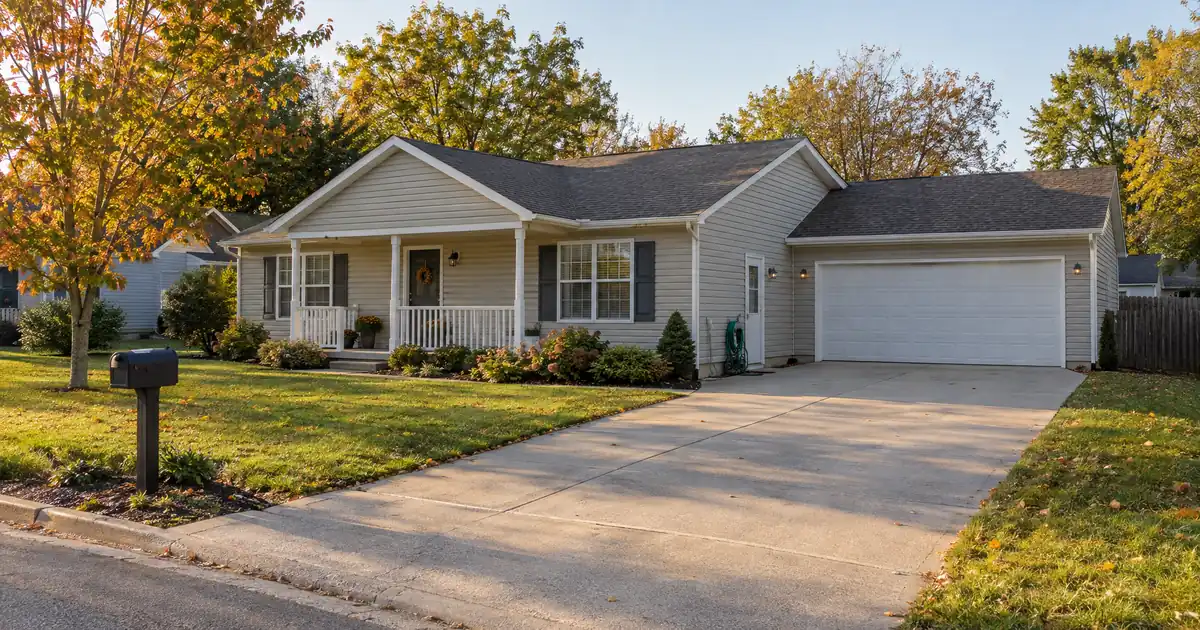
The Quick Read: FHA has no lifetime limit, and a family that outgrows its first FHA home can usually use the program again. The catch is timing. HUD generally insures one FHA mortgage on a principal residence at a time, so a family that wants to keep the first home needs the family-size exception. That exception requires proof of added legal dependents and enough equity in the current home.
Is There a Lifetime Limit on FHA Loans?
No. The restriction is on holding two FHA mortgages on principal residences at the same time, not on using the program twice. HUD’s FHA Q&A describes the general policy as one insured mortgage per borrower on a principal residence, with named exceptions.
FHA payment estimate
Starting assumptions reflect an example price and the FHA minimum investment. Replace them with your own figures.
Editable benchmark: 7.32% as of October 22, 2026 · Freddie Mac 30-year average via FRED®. A conventional market reference, not an FHA loan quote.
Illustrative starting assumptions: a $350,000 price, the FHA minimum investment as the down payment, a thirty-year term at the current Freddie Mac benchmark, and property taxes and insurance estimated at typical national rates. Every field is editable.
Illustrative estimate only — not a Loan Estimate, approval, quote, or commitment to lend. The rate field carries the weekly Freddie Mac thirty-year conventional benchmark, a market reference and not an FHA loan quote; your rate is set by the lender at lock. FHA mortgage insurance follows HUD’s published schedule for the term, leverage and loan size entered; taxes, insurance and dues are editable estimates; closing costs are not included; county loan limits are not checked here. Licensed in sixteen states for consumer mortgages. Lendmire is not affiliated with or acting on behalf of FHA, HUD, or the federal government.
If the first FHA loan is paid off, usually because the home was sold, the borrower can use FHA again. The new file is judged under the rules in force at that time. There are no special terms for first-time buyers, so a repeat buyer uses the same program. Lendmire’s FHA loan programs page covers the basics.
Which Situation Are You In?
Your path depends on what happens to the first loan.
- Selling the first home: FHA is available again once that loan is paid off. No exception is needed.
- Keeping the first home: You need the family-size exception, or another HUD exception.
- Already paid off or refinanced out of FHA: The one-at-a-time rule no longer applies to you. A first mortgage that isn’t FHA doesn’t trigger it either.
Most of this article covers the middle case, because that is where families get stuck. Lendmire’s piece Second FHA Loan Requirements for Borrowers Who Already Have One goes deeper on the broader set of exceptions.
How the Family-Size Exception Works
The exception has two parts, and the borrower must give satisfactory evidence of both. HUD’s Q&A points to Handbook 4000.1, section II.A.1.b.iii(A)(2), and the wording below is paraphrased from that page:
1. Your number of legal dependents has increased, and the current home no longer meets the family’s needs.
2. The loan-to-value ratio on the current home is 75% or less, or you pay it down to that level. It is measured with the outstanding balance and a current residential appraisal.
Wanting more space is not enough. Without an added legal dependent, the first test fails. An older HUD reference guide on increases in family size describes the same concept, though it is archived and not current policy. Confirm the final wording in the current Handbook.
What Counts as Proof That the Home No Longer Fits?
Lenders look for two things: documentation of the new dependent and a written explanation of why the current home falls short. A birth certificate or adoption paperwork covers the first. The second is usually a short letter about bedrooms, layout, or household size.
Lender checklists vary, and HUD’s public text says only “satisfactory evidence.” Borderline cases, such as a pregnancy not yet delivered or an adoption still in progress, are worth raising with a loan officer before you sign a contract. Across the wholesale programs Lendmire places FHA files with, the cleanest files tell a plain, documented story.
How the Equity Test Works
Divide your outstanding mortgage balance by the appraised value of the current home. The result must be 75% or less.
The first FHA loan was likely made at close to full financing, so a family a few years in often sits above that line. Two things move the number:
- Pay the balance down. You can reduce the balance until the ratio reaches 75%. This can be a sizable cash outlay, and it competes with your down payment on the new home.
- Wait. Principal paydown and appreciation both lower the ratio over time, though appreciation is never guaranteed.
Suppose your ratio comes back a few points over. That is not a denial. It is a choice between paying down, waiting, or selling instead. The appraisal on the current home is ordered separately from the appraisal on the new one.
Qualifying With Two Housing Payments
Passing the exception clears eligibility. It does not approve the loan. Underwriting still looks at credit, income, debt ratios, the property, and your capacity to carry both homes.
Underwriting generally adds the old home’s full housing payment to the new one when it calculates debt-to-income. Across the programs Lendmire works with, the base ratio pair is 31/43 (housing over total), and documented compensating factors can stretch that to 40/50 at the top tier. An automated finding governs most files, subject to lender guidelines.
If you plan to rent the old home, expect the income to be discounted. The archived HUD guide describes counting the lesser of the lease rent or the appraiser’s fair market rent, with a vacancy and maintenance factor applied. Current Handbook rental-income rules, including any equity requirement for the departing residence, should be confirmed with your loan officer. Two payments on one income, say during parental leave, is where files get tight.
The New Loan: What the Program Asks
The new home must be your principal residence, one to four units. For a purchase, maximum financing is 96.5% with a 3.5% minimum investment at a decision score of 580 or higher. The wholesale programs Lendmire uses start at 580. HUD has a lower tier, but this network does not reach below 580. Seller or interested-party contributions can go up to 6% of the price. A non-occupant co-borrower is allowed.
Mortgage insurance has two parts: an upfront premium of 1.75% of the base loan, which is financed, and an annual premium between 0.15% and 0.75% of the balance. The annual figure depends on term, loan amount, and LTV. On a thirty-year loan above 90% LTV, it lasts for the term. At or below 90%, it ends after eleven years. Leverage, reserves, and pricing vary by lender and program; the final terms follow the full file review.
County loan limits apply, change every year, and vary widely. HUD’s annual Mortgagee Letter publishes the national floor and ceiling, and your county sits somewhere between them. Multi-unit homes carry higher limits.
Budget for closing costs too. The CFPB says they typically run a few percent of the purchase price, separate from the down payment. That is a planning range, not a quote. Your Loan Estimate itemizes the actual costs.
Sell, Keep, or Refinance Out?
| Route | First loan | Cash needed | Best fit |
|---|---|---|---|
| Sell first | Paid off at sale | Down payment on new home | Little equity, tight budget |
| Keep under exception | Stays in place | Possible paydown plus both payments | Equity at 75% or less, steady income |
| Refinance out of FHA | Replaced by non-FHA loan | New loan costs | Wants to keep the home without the exception |
Keeping the home is possible. That doesn’t make it wise. Two mortgages, two sets of repairs, and a landlord role are real commitments. Some families do better selling and putting the equity into the next down payment. The FHA family-size route earns its place when the first home is a good long-term hold and the budget has room.
Scenarios
A new baby in a small starter home. The household added a legal dependent and the home is down to two bedrooms. The balance is near the 75% line. Paying down a modest amount clears the test, but doing so thins the cash left for the new down payment.
An adoption in progress. Whether a dependent must exist at application is a lender question. Raise it before you write an offer, not after.
A blended household. The dependent count rose, but proof of legal dependency matters here. Documentation depends on the family’s circumstances and the lender’s review.
A few points over the test. Pay down, wait, or sell. Compare each against your reserves before choosing.
Where the Rules Change
- Relocation: A new principal residence more than 100 miles away is a separate exception. The family-size equity test doesn’t apply. Confirm the distance rule in the Handbook.
- Leaving a jointly owned home: Also a separate exception.
- Non-occupying co-borrower: A borrower with an existing FHA loan on their own home may qualify as a non-occupying co-borrower on someone else’s loan. Older HUD archive pages added relationship requirements, so confirm current rules.
- The 75% test: It belongs to the family-size exception, not to every second FHA loan.
- Not for vacation or second homes. If the old home becomes a rental, the new FHA loan still has to be owner-occupied.
If you don’t qualify, conventional financing is the usual alternative. Lendmire’s comparison of VA, conventional, and FHA loans helps frame that choice.
Key Terms Defined
Legal dependent: A person the borrower is legally responsible for, such as a child by birth or adoption.
Principal residence: The home you live in as your main address.
Loan-to-value (LTV): The loan balance divided by the home’s appraised value.
Non-occupying co-borrower: A person on the loan who does not live in the home.
Base loan amount: The loan before the financed upfront premium is added.
Frequently Asked Questions
Can I use FHA again if I sold my first home?
Yes. Once the first FHA loan is paid off, the one-at-a-time limit no longer applies. You qualify under the rules in effect at that time, and you get no first-time-buyer terms, but you also face no waiting period for being a repeat user.
Does wanting more space count for the family-size exception?
No. HUD’s test requires an increase in legal dependents and a current home that no longer meets the family’s needs, with evidence for both. A preference for a larger house without a new dependent doesn’t qualify.
Can the first home become a rental?
Yes, under the exception you can keep it. The new FHA loan must still be your owner-occupied principal residence. Rental income, if counted, is discounted, so don’t plan on it covering the old payment on paper.
Does meeting the exception mean I’m approved?
No. It clears one eligibility hurdle. Credit, income, debt ratios, the property, and reserves are still reviewed under full lender guidelines, and nothing here is a commitment to lend.
Do I need to pay my first loan down to 75%?
Only if you want to keep the home under the family-size exception and are currently above that ratio. If you sell, the test doesn’t apply.
If you are buying a home and want to see whether an FHA loan fits your file, Lendmire can help you compare the options and what each one asks of the file.
For your own numbers, request a scenario review with Lendmire.
About Lendmire
Lendmire — NMLS# 2371349 — is a mortgage broker that arranges FHA, VA, conventional and jumbo home purchase and refinance financing in 16 states through wholesale lenders. Every option is subject to the lender’s guidelines and full underwriting. Scotsman Guide named Lendmire a Top Mortgage Workplace in both 2025 and 2026.
Get Started
Ready to find the right loan for you?
In about two minutes you can review financing options available for your home or investment property. No commitment required.
Informational only. Not a Loan Estimate, approval, or commitment to lend. Program availability and eligibility are subject to lender guidelines, credit approval, property review, and underwriting.
References
1. HUD FHA Q&A: Can a person have more than one FHA loan
2. HUD Archives HOC Reference Guide, Increase in Family Size
3. HUD Mortgagee Letter 2025-23
4. CFPB: Determine your down payment
This article is part of Lendmire’s FHA loan program — full qualification details, guidelines, and scenarios live on the program page.
Related reading: How to Buy Another Home With an FHA Loan After Repaying the First · FHA Appraisal vs Conventional Home Inspection for a First-Time Buyer · How to Prepare for an FHA Appraisal and a Home Inspection
Brandon Miller
Founder & CEO, Mortgage Loan Originator, Lendmire LLC
- Mortgage Loan Originator · NMLS# 1129696 · Verify on NMLS Consumer Access
- North Carolina Real Estate Broker · License# 343312 · Verify on NCREC
- North Carolina Insurance Producer · License# 19053198 · Property, Casualty, Life, Health · Verify on NAIC SBS
- Lendmire LLC · Firm NMLS# 2371349 · Verify firm licensure
Disclosures. The information presented in this article is general market commentary, not financial, legal, or tax advice. Lendmire is a mortgage brokerage (NMLS# 2371349) — not a direct lender or depository institution — and loan placement is subject to lender underwriting. Nothing in this content represents a commitment to lend. Loan terms, pricing, and program availability vary based on borrower qualifications, property characteristics, and state of subject property, and are subject to change at any time. Lendmire complies with Equal Housing Opportunity requirements. Consumer access: nmlsconsumeraccess.org.