
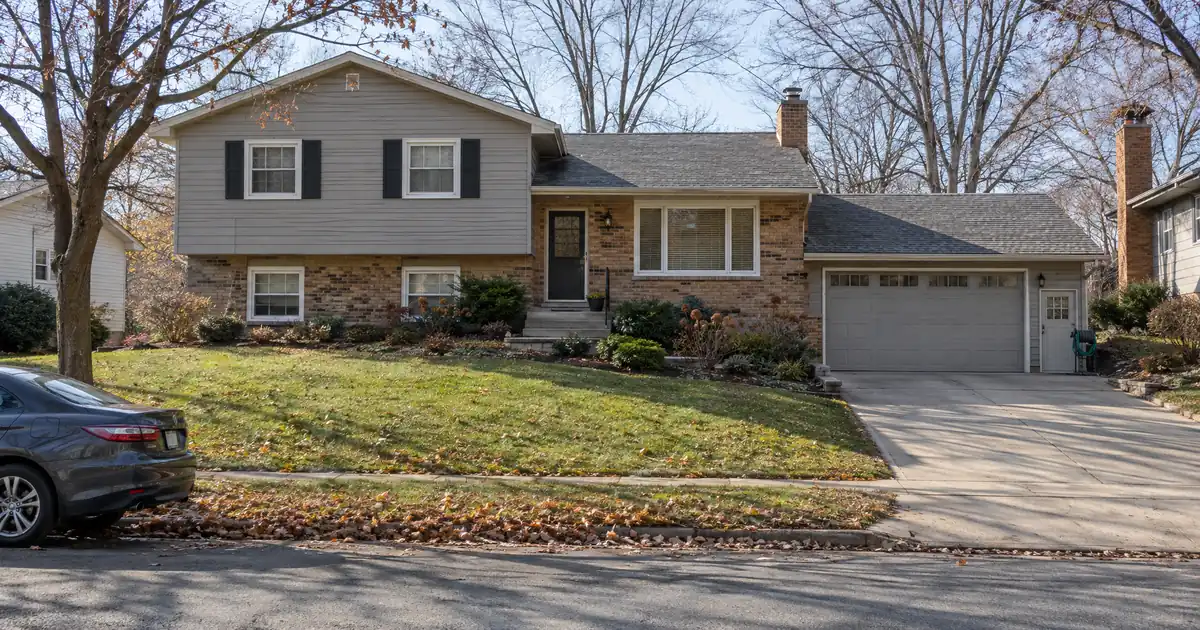
The Quick Read: A bank statement HELOC adds a second line of credit behind your current mortgage and is reviewed around personal deposits, while a cash-out refinance replaces the whole first mortgage with a new loan. For rental owners, the deciding factors are usually title, lien structure, and income basis, not the documentation label.
- A bank statement HELOC fits an individual or revocable-trust owner with strong personal deposits who wants to keep a good first mortgage.
- A cash-out refinance fits larger one-time needs, and for rentals it often is reviewed on rent through a DSCR structure instead of deposits.
- LLC-titled rentals generally point to the cash-out, because the HELOC cannot be written to an LLC.
- On an investment property, the network’s HELOC tops out at 70% CLTV and a $500,000 line.
- Every figure is subject to lender guidelines and full file review.
The Honest Answer on Who Each Option Is For
“Bank statement” describes how income is documented. It does not describe a loan structure. That distinction trips up many investors who assume the two products differ mainly in paperwork.
How large a line the equity supports.
An equity line is sized by combined loan-to-value, occupancy, and credit — not by rental coverage. Switch the occupancy or the credit band and the ceiling moves with it.
Investment-property lines require a 700 minimum credit score; second-home lines start at a 640 minimum and primary-residence lines at 600, and the combined-LTV ceiling steps down as the credit band drops on primary-residence and second-home lines and holds on investment-property lines; the line cap steps down on primary-residence lines and holds at every tier on investment-property and second-home lines.
A debt-to-income ratio above 45% requires 680+ credit. Profiles under 640 are limited to single-family homes. At least 75% of the approved line is drawn at closing. Ceilings, floors, and caps update from Lendmire’s centralized guideline source.
Line estimate
Illustrative estimate only — not a quote, Loan Estimate, approval, or commitment to lend. The rate is an editable assumption; equity-line pricing is variable through both the draw and repayment periods and never converts to fixed. Occupancy and credit drive the ceiling together: an investment property tops out at 70% combined LTV (minimum credit 700, line cap $500,000); a second home tops out at 90% combined LTV (minimum credit 640, line cap $500,000), with the ceiling stepping down as the credit band drops (the cap holds at every tier); a primary residence tops out at 90% combined LTV (minimum credit 600), and its $750,000 maximum line is available only at 75% combined LTV or below with a 700-or-better credit profile (720 on the longer-runway program) and a full appraisal. Lines above $500,000 require a full appraisal. Credit, debt-to-income, property type, and full underwriting review all affect the final line.
The HELOC is for the self-employed investor who owns the property personally (or in a revocable trust), carries a first mortgage worth keeping, and wants flexible access to equity. Tax returns often understate that borrower’s real cash flow, so deposits tell the better story.
The cash-out refinance is for the investor who wants one lump sum, owns through an entity, or would rather qualify on the property’s rent than on personal deposits. Across the wholesale network, rental cash-outs usually run through DSCR underwriting, which compares rent to the full monthly obligation of principal, interest, taxes, insurance, and any HOA dues.
A true bank statement cash-out refinance does exist. Published industry norms place it mostly with self-employed borrowers, and it is oriented toward owner-occupied homes more than rentals. That is why this comparison treats the rental cash-out as a rent-qualified loan and the HELOC as a deposit-qualified one.
Side-by-Side
The HELOC column reflects Lendmire’s wholesale network for investment properties. The cash-out column reflects published industry norms, with network DSCR figures noted where they apply.
| Factor | Bank Statement HELOC | Cash-Out Refinance (published norms) |
|---|---|---|
| Review basis | Personal deposits, credit, DTI | Deposits or, on rentals, property rent |
| Documentation | Bank statements, personal or business | Statements, or rent schedule on DSCR |
| Lien position | First or second lien line | New first lien replaces old loan |
| Who can hold title | Individual or revocable trust only | Individual; LLC on many DSCR files |
| Property types | 1-4 units, PUD, townhome, condo | Broadly similar; varies by lender |
| Valuation | Usually automated at this line size | Full appraisal typical |
| Leverage on rentals | 70% CLTV ceiling | Often up to 75% LTV on DSCR |
| Reserves | Lender-specific | Commonly around 6 months of PITIA |
| Funds access | Revolving line, draw then repay | One lump sum at closing |
Two cautions apply to this table. The HELOC column describes investment properties only, because primary-residence and second-home lines follow different tiers. And “commonly around 6 months of PITIA” is a range, not a rule. Reserves vary by lender, leverage, loan size, and transaction type.
How Bank Statement Income Works in Both Products
Underwriters read 12 or 24 months of complete statements, personal or business. They screen out transfers between your own accounts, loan proceeds, refunds, and one-time windfalls. Business accounts usually carry an expense factor, which means only part of the deposits counts as income. Trade coverage of non-QM lending, including Scotsman Guide’s overview of non-QM underwriting, describes this expense-factor method and notes that some lenders will accept debt-to-income ratios up to 50%.
Bank statement does not mean undocumented. Both products qualify on documented income under the applicable program, subject to lender guidelines, and both review credit, debts, and the property.
On the HELOC side, the network’s rules are specific. The maximum DTI is 50%, with 45% for credit profiles from 600 to 679. Investment lines floor at a 700 credit score, so the business-account minimum of 680 never becomes the binding constraint. In other words, once an investor clears the investment credit floor, deposits are rarely what stops the file. Each figure is subject to lender guidelines and a complete review of property type, leverage, and credit.
When the Bank Statement HELOC Is the Better Fit
The HELOC wins when the first mortgage is worth protecting and the need is bounded. It also wins when the borrower owns the property personally and qualifies better on deposits than on rent. Situations like these stand out.
Keeping a favorable first mortgage. A cash-out refinance reprices the entire balance. A HELOC leaves that first loan alone and adds a second lien (or sits in first position on a free-and-clear property). If your existing first mortgage is a strong asset, the HELOC avoids giving it up.
A defined need under the line cap. The network’s investment-property line runs from $25,000 up to a $500,000 maximum at 70% CLTV. Combined leverage counts every lien. Run the numbers on a modeled rental with a first mortgage at 45% of value: the 70% CLTV ceiling leaves up to 25 points of value for a line, still bounded by the $500,000 maximum. Those percentages are illustrative assumptions, not a quote.
Strong deposits, thin tax returns. An investor whose write-offs shrink taxable income but whose deposits are steady may qualify on the line even when a rent test is not the issue. The investor profile matters more than the property here.
Low valuation friction. Because an investment line cannot exceed $500,000, it generally runs on automated valuation and commonly closes without a traditional appraisal. A borrower may still request a full appraisal.
The HELOC has real structural limits, and they bind harder than most investors expect:
- Title must be held by an individual or an inter vivos revocable living trust. LLCs, corporations, partnerships, and irrevocable, blind, or land trusts cannot hold title.
- At least 75% of the line is drawn at closing, so it is not an unused reserve. You begin paying interest on most of it immediately.
- The line has a five-year interest-only draw followed by a 25-year fully amortizing repayment. Pricing floats through both periods and never converts to fixed.
- The CFPB’s explanation of HELOCs notes that payments are often significantly higher once the repayment period begins. For an investor with uneven deposits, that step-up deserves a stress test before signing.
- A borrower is limited to three lines, and an investor with more than 15 financed properties is not eligible.
- Manufactured homes, co-ops, condotels, log homes, commercial, mixed-use, and agricultural-zoned properties are not eligible.
- Availability is limited to the 16 states where Lendmire is a full-service mortgage broker, which is narrower than its 41-market DSCR footprint.
When the Bank Statement Cash-Out Refinance Is the Better Fit
The cash-out wins when the rental sits in an LLC, the need is large, or the property’s rent is a stronger story than the owner’s deposits. It also wins when the existing first mortgage has no special value worth preserving.
Entity-held rentals. If the property is already deeded to an LLC, the HELOC requires a vesting change first. Many DSCR cash-outs are written to LLC borrowers, depending on program guidelines. One caution: an LLC does not by itself remove personal liability, because personal guarantees are common on investor loans.
Large or one-time needs. A closed-end loan delivers one lump sum with one payment, which suits a down payment on the next property or a major renovation. It also avoids the line cap and the CLTV stacking math of a second lien.
Rent stronger than personal income. DSCR files qualify primarily on property-level rental income covering the payment, subject to lender guidelines. They do not need deposits as the basis. A borrower who is declined on personal DTI can still be reviewed on rent coverage.
Larger portfolios. Across most programs in the wholesale network, a standard rental cash-out reaches about 75% LTV, with roughly six months of seasoning as the common expectation. Credit expectations vary: a 620 floor exists in parts of the network, most programs want around 660, and 700 or better unlocks the strongest tiers. Standard loan sizes reach up to $3,000,000 on standard programs, with smaller balances available through select lenders.
Here is a modeled example. Take the same rental with the first mortgage at 45% of value. A cash-out can reach toward 75% LTV, so the borrower could pull up to 30 points of value rather than 25. The tradeoff is that the new, larger balance becomes the payment the property must cover. A rental that sat comfortably at 1.35x on the old balance might land near 1.1x on the new one. That ratio is a modeled assumption, not a sourced figure. Coverage below 1.00 is available through select lenders in the network, with leverage and terms adjusted, but it is a separate path and not a way to stretch a marginal file. Leverage, reserves, and pricing vary by lender and program; the final terms follow the full file review.
DSCR compares rent to PITIA only. Clearing the coverage test is not the same as positive cash flow, because repairs, vacancy, management, utilities, and capital expenses sit outside the calculation.
Short-term rentals follow tighter terms. Cash-out on STR collateral is capped at 70% LTV, with a 640+ score and about 12 months of hosting history expected. Standard long-term rentals reach 75%. Short-term rental rules can vary by city, county, HOA, and property type, so investors should confirm local rules before relying on projected rental income. Terms vary by lender guidelines, property type, leverage, credit profile, and full file review.
The Business-Purpose Frame
DSCR loans are designed for non-owner-occupied investment properties. Because they are business-purpose investor loans, they are reviewed differently from a standard owner-occupied mortgage; the OCC’s Comptroller’s Handbook on Truth in Lending describes the business-purpose exemption. Whether any particular loan is business or consumer purpose is a fact-specific call by the lender.
Edge Cases Worth Knowing
A decline on one doesn’t close the other. Personal DTI too high but rent coverage strong points toward the cash-out. A property held personally with thin rent but strong deposits points toward the line.
Stacking matters. Clearing 1.00x on a first loan says nothing about whether a second lien fits under a CLTV ceiling. Test both before choosing a sequence.
Credit above the floor buys eligibility, not leverage. On the investment HELOC, a 720 profile and a 700 profile both reach the same 70% CLTV, and 700 is a hard floor with no tier beneath it.
Seasoning goes both ways. A recent cash-out can delay another one, because seasoning expectations run from the last transaction. Plan the order of moves before starting either.
When neither fits. If the property is an ineligible type, the title cannot change, or the need is small and short-lived, a different tool may be the better answer. Selling, a bridge loan, or refinancing at lower leverage deserve a look.
Key Terms Defined
CLTV: Combined loan-to-value, which adds every lien on the property and divides by its value.
LTV: Loan-to-value, the loan balance divided by the property’s value.
Draw period: The stretch of a HELOC when you may borrow against the line, usually with interest-only payments.
PITIA: Principal, interest, taxes, insurance, and any association dues, the full monthly obligation on a property.
Expense factor: The share of business deposits an underwriter removes before counting the rest as income.
A Balanced Verdict
Neither option is the safer choice in general. The right answer depends on three facts: how the property is titled, whether the existing first mortgage is worth keeping, and whether rent or deposits tell the stronger story.
Choose the HELOC if you hold title personally or in a revocable trust, have a bounded need within the $500,000 investment line, and want to keep your first mortgage. Choose the cash-out if the property sits in an LLC, the need is large, or rent coverage is the stronger part of the file. If you are unsure, the complete DSCR loans guide explains how property-rent-based lender review differs from income-based qualification.
Tax treatment can depend on how the funds are used and how the property is held; borrowers should keep clear records and speak with a qualified tax professional before relying on any deduction.
Frequently Asked Questions
Can an LLC take out a bank statement HELOC on a rental?
Not under the network’s HELOC terms. Title must be held by an individual or a revocable living trust, and LLCs, corporations, and partnerships cannot hold it. An investor with an LLC-owned rental typically either changes vesting first or uses a DSCR cash-out, subject to lender program eligibility.
Does bank statement mean no documentation?
No. It means income is documented through deposits instead of tax returns. The file still goes through full review of credit, debts, and the property, and qualification is subject to lender guidelines.
What is the maximum leverage on an investment-property HELOC?
The ceiling is 70% CLTV, counting every lien, with a maximum line of $500,000. Credit above 700 does not raise that ceiling on an investment property. Higher CLTV tiers exist only for primary residences and second homes, and they require stronger credit.
If I am declined for a HELOC, can I still get a cash-out?
Often the two are judged on different tests, so one decision does not decide the other. A DSCR cash-out qualifies primarily on rent covering the payment, so a personal DTI problem may not carry over. Credit, leverage, and reserves still apply.
Which costs more over time?
It depends on the balance, the loan’s structure, and how long it stays open, so no general answer holds. A HELOC reprices only what you draw, but at least 75% is drawn at closing here. A cash-out reprices the full balance. The calculator can show an illustrative estimate for your own numbers.
Next Step
If you are weighing a home equity line against a cash-out refinance and want to see how the numbers work, Lendmire can help you compare options based on the property, the equity available, credit profile, combined leverage, and your goals. Lendmire is a mortgage broker arranging financing through select lenders in its wholesale network. This is not a commitment to lend.
Investors weighing their equity options can start with Lendmire’s guide to cash-out refinance on an investment property.
About Lendmire
Lendmire (NMLS# 2371349) is a mortgage broker. Home equity lines of credit — on a primary residence, a second home or an investment property — are arranged through wholesale lenders in Lendmire’s 16 full-service states, and every line is underwritten by the lender under its program guidelines. Scotsman Guide named Lendmire a Top Mortgage Workplace in both 2025 and 2026.
Get Started
Ready to find the right loan for you?
See your offer in seconds. No credit pull, no obligation.
Informational only. Not a Loan Estimate, approval, or commitment to lend. Program availability and eligibility are subject to lender guidelines, credit approval, property review, and underwriting.
References
1. Scotsman Guide – Rev Up the Engine for Non-QM Lending
2. CFPB’s explanation of HELOCs
3. OCC Comptroller’s Handbook – Truth in Lending Act
This article is part of Lendmire’s bank statement HELOC program — full qualification details, guidelines, and scenarios live on the program page.
Related reading: Bank Statement Loan vs. 1099 Loan for a Full-Time Contractor · Can You Get a Bank Statement HELOC on a Home Held in a Revocable Trust? · Bank Statement HELOC Paperwork When You Have No Tax Returns on File
Brandon Miller
Founder & CEO, Mortgage Loan Originator, Lendmire LLC
- Mortgage Loan Originator · NMLS# 1129696 · Verify on NMLS Consumer Access
- North Carolina Real Estate Broker · License# 343312 · Verify on NCREC
- North Carolina Insurance Producer · License# 19053198 · Property, Casualty, Life, Health · Verify on NAIC SBS
- Lendmire LLC · Firm NMLS# 2371349 · Verify firm licensure
Legal disclosures. Lendmire (NMLS# 2371349) is a state-licensed mortgage brokerage that arranges financing through wholesale lender relationships. Lendmire is not a direct lender, depository institution, or registered financial advisor. The discussion above is general informational content about real estate financing — it is not financial, legal, or tax advice, and readers should consult licensed professionals for guidance on their individual circumstances. Loan inquiries are subject to lender underwriting; this article does not represent a commitment to lend. Loan terms, rates, and qualification standards vary by borrower, property, and state, and are subject to change at any time. Equal Housing Opportunity. NMLS Consumer Access: nmlsconsumeraccess.org.