
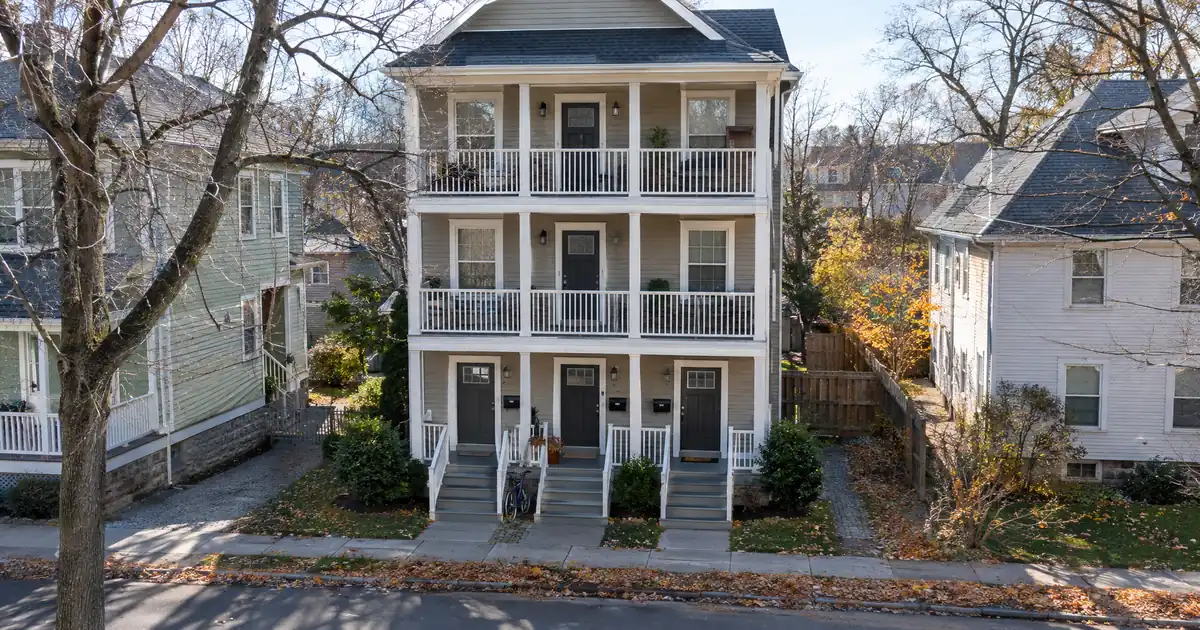
The Quick Read: A lender counts part of the rent from the units you don’t live in, and it adds that amount to your income. It does not subtract rent from your payment. The counted figure is 75% of the lesser of two numbers: the appraiser’s market rent and the rent in a lease. Three- and four-unit buildings face an extra test on top of that.
Key Takeaways
- You must live in the building. A 2-4 unit FHA loan is a home loan, not a pure rental purchase.
- Rent raises your qualifying income. Your housing payment still goes into your debt ratios at full size.
- On a duplex, rent helps your ratios. On three or four units, the building itself must also pass a self-sufficiency test.
- Your own unit’s rent does not count as income. It matters only inside the three- and four-unit test.
- Counted rent is an underwriting number, not a budget forecast. Vacancies and repairs still come out of your pocket.
What Is an FHA House Hack?
A house hack means you buy a small multi-unit building, live in one unit, and rent out the rest. FHA fits this well because it finances one to four units as a principal residence with up to 96.5% financing. The minimum investment is 3.5% of the lesser of price or appraised value, at a decision score of 580 or higher. Seller or interested-party contributions can reach 6% of the price.
FHA payment estimate
Starting assumptions reflect an example price and the FHA minimum investment. Replace them with your own figures.
Editable benchmark: 7.24% as of October 29, 2026 · Freddie Mac 30-year average via FRED®. A conventional market reference, not an FHA loan quote.
Illustrative starting assumptions: a $350,000 price, the FHA minimum investment as the down payment, a thirty-year term at the current Freddie Mac benchmark, and property taxes and insurance estimated at typical national rates. Every field is editable.
Illustrative estimate only — not a Loan Estimate, approval, quote, or commitment to lend. The rate field carries the weekly Freddie Mac thirty-year conventional benchmark, a market reference and not an FHA loan quote; your rate is set by the lender at lock. FHA mortgage insurance follows HUD’s published schedule for the term, leverage and loan size entered; taxes, insurance and dues are editable estimates; closing costs are not included; county loan limits are not checked here. Licensed in sixteen states for consumer mortgages. Lendmire is not affiliated with or acting on behalf of FHA, HUD, or the federal government.
Those figures describe the wholesale programs Lendmire places FHA files with, and they stay subject to lender guidelines and full file review. Lendmire’s FHA loan programs page covers the basics if you are starting from zero. A non-occupant co-borrower is allowed, which helps some first-time buyers. One person on the loan still has to live in the building.
Terminology trips people up here. Lenders use “multifamily” for five or more units. Buildings with one to four units are standard residential, and that is where FHA operates. A fiveplex falls outside the program.
How Does the Lender Turn Rent Into Qualifying Income?
The lender estimates the rent from the other units, trims it, and adds the trimmed amount to your gross income. That higher income lowers your debt-to-income ratio, which is the share of income that goes to debt. Here is the sequence a file follows.
1. Confirm the legal unit count. The count decides which tests apply. A duplex and a single-family home with a rentable apartment follow different paths.
2. Order the rent appraisal. If you have no rental history on the property, the appraiser reports market rent for each unit on a small-income-property form.
3. Collect the leases. If tenants are in place, their leases support the figure. If the unit is vacant, a prospective lease helps where one exists.
4. Pick the lesser figure. The lender compares the appraiser’s market rent to the lease rent and uses the lower one.
5. Take 75% of it. The 25% haircut stands in for vacancy and upkeep.
6. Add it to your income. The result joins your gross income. Your full housing payment goes into the ratios.
7. Test the ratios. Across the programs Lendmire places with, the base pair is 31/43. That means housing costs at 31% of income and total debts at 43%. Documented compensating factors can stretch it to 40/50 at the top tier. The automated finding governs most files.
Run a quick picture with no dollar signs. Say you live in one side of a duplex. The other side has a lease 10% below the appraiser’s market rent. The lender counts 75% of the lease figure. That works out to about two-thirds of what the appraiser said, added to your income.
Does Rent Lower My Mortgage Payment?
No. Rent raises your qualifying income, and the payment stays whole. This is the most common misunderstanding about house hacking.
People hear “rent pays the mortgage” and assume the lender nets the two. It doesn’t. Your full payment sits in the ratios. Only a slice of the rent shows up on the income side.
The slice also isn’t a budget forecast. Real tenants leave, units sit empty, and water heaters fail. The haircut is how underwriting handles risk. Your household budget has to handle it too, and it should assume less rent than the counted figure suggests.
Which Rent Figure Does the Lender Use?
The lender uses 75% of the lesser of the appraiser’s market rent and the rent in the lease. That rule comes from HUD Mortgagee Letter 2023-17, which updated FHA rental-income policy. HUD folds letters into its FHA Handbook 4000.1 over time, so your lender confirms the current wording.
Two cases show why “lesser of” matters:
- The tenant pays more than market. A seller’s tenant might pay a premium. The appraiser’s lower figure wins, so the extra rent adds nothing.
- The lease is below market. A relative or a long-term tenant might pay under market. The lease wins, and your counted rent shrinks.
A signed lease alone does not set the number. When the property has no rental history under you, the appraiser’s market-rent opinion is the required evidence. That appraisal does not have to come from an FHA roster appraiser, according to the same letter. The standard FHA appraisal still covers value and property condition separately.
What Changes on a Three- or Four-Unit?
On three and four units, the building must also pay for itself on paper. This is the self-sufficiency test. It is separate from the income math, and it can sink a file even when your salary is strong.
HUD’s older reference guide on rental income describes the idea. Net rent from the building must be at least the projected monthly payment. Net rent starts with the appraiser’s market rent from every unit, including the one you will live in. Then the lender subtracts vacancy and maintenance factors. Think of it as roughly three-quarters of market rent, or less if the appraiser’s vacancy estimate runs higher. That archived page is dated, so treat it as the concept and let your lender confirm current mechanics.
Picture a fourplex where the adjusted rent from all four units lands just under the payment. The building fails, whatever you earn. Change the price, pick a different building, or consider another loan type. Duplexes skip this test entirely.
| Factor | Income calculation | Self-sufficiency test |
|---|---|---|
| What it measures | Your income for ratios | Whether the building covers itself |
| Applies to | Two to four units | Three and four units only |
| Your own unit | Not counted | Included in the test |
| Rent figure | 75% of lesser of lease or market | Market rent less vacancy factors |
| Decides | Your debt-to-income ratio | Pass or fail on the property |
The unit count also changes the reserves you must show. Reserves are cash you still hold after closing.
| Factor | Two units | Three or four units |
|---|---|---|
| Rent adds to income | Yes | Yes |
| Self-sufficiency test | No | Yes |
| Reserves after closing | Confirm with lender | Three months of housing payment |
HUD’s letter requires three months of principal, interest, taxes and insurance in reserves on three- and four-unit properties. Rent does not stand in for reserves. Lendmire’s piece How FHA Counts Reserves When a House Hacker Buys a 2-4 Unit goes deeper on that side of the file.
Where Does the General Rule Break?
Several situations bend the standard path. Each one is worth raising with your loan officer before you write an offer.
A single-family home with a rentable apartment. HUD’s letter lets rent from an accessory dwelling unit count on a one-unit home. Summaries of the letter mention a cap on how much of your income that rent can supply, no use on cash-out refinances, and a small reserve requirement. Those details need confirming with your lender. A rented bedroom or a roommate is not an accessory unit. Final terms depend on lender guidelines, property type, leverage, and the borrower’s complete credit picture.
An extra unit on a duplex. Some lenders treat a legal added dwelling on a multi-unit building as another unit. A duplex plus an apartment could then be a triplex, which brings the self-sufficiency test and the three-month reserve requirement. Ask before you assume. Terms depend on the lender’s guidelines, the property type, the leverage, and a full review of the credit profile.
Commercial space. A ground-floor shop may not count toward qualifying income. Confirm with the lender what they will do with it.
Short-term rentals. FHA excludes transient occupancy from principal-residence use. The rent that qualifies you comes from market-rent analysis and leases, not nightly-rental projections.
Refinancing a building you already own. With rental history, the lender looks to documented history, often tax returns that report the rent. Tax treatment can depend on your situation; borrowers should speak with a qualified tax professional before relying on any deduction or credit.
A second FHA loan. FHA generally insures one principal residence per borrower at a time. The handbook names exceptions, so ask about your situation.
What Does the Rest of the File Ask For?
Rent is one piece. The lender still reviews credit, cash and the property.
Credit. The wholesale programs Lendmire places FHA loans with start at a 580 decision score. HUD itself has a lower tier at 10% minimum investment, but the network does not reach below 580. Credit events carry HUD’s waiting periods: two years from a Chapter 7 discharge and three years from a foreclosure.
Mortgage insurance. FHA charges an upfront premium of 1.75% of the base loan, and you can finance it. An annual premium of 0.15% to 0.75% of the balance follows, depending on term, loan amount and LTV. LTV is the loan balance as a percentage of the home’s value. On a thirty-year loan above 90% LTV, the annual premium lasts the full term. At or below 90%, it ends after eleven years. A Congressional Research Service overview describes the same lifetime-premium design for most FHA loans issued after mid-2013.
Loan limits. County loan limits apply and reset each year. They rise with each added unit, which is why an FHA multi-unit can buy more building than a one-unit loan. HUD’s Maximum Mortgage Limits guidance shows the number for your county.
Occupancy. At least one borrower must move in within 60 days of signing the security instrument and intend to stay at least one year, per HUD’s owner-occupant FAQ. HUD’s 203(b) program page frames the program around a principal residence in a one-to-four unit structure.
Lendmire’s article How Much Rent an FHA Loan Counts on a 2-4 Unit covers the rent side from another angle.
How Do You Document the Rent?
The paperwork depends on the building’s situation. Your loan officer will tell you which applies, but here is the usual shape.
- Tenants in place under leases. Collect the leases and the appraiser’s market-rent report. Expect the lender to compare the two and use the lesser.
- A vacant unit. The appraiser’s market rent carries the weight. A prospective lease helps if you can get one.
- A seller’s leases about to expire. Ask the lender early how it treats them. Market rent may end up governing.
- A building you will rent for the first time. No landlord track record is needed. The appraisal rent is the backbone of the file.
- A refinance with rental history. Expect the lender to ask for records showing the rent actually received.
Sequence matters too. Rent gets decided at the appraisal and underwriting stage, after you have a contract. Run your numbers before you write an offer, not after.
What If the Numbers Don’t Work?
A file that falls short still has levers.
1. Lower the price. A smaller loan eases both the ratios and the self-sufficiency test.
2. Choose a different building. A duplex avoids the test. A fourplex with stronger rents may pass.
3. Pay down debts. Lower monthly debts help the total ratio.
4. Add documented compensating factors. Reserves, a steady job history and a low use of credit can lift the ceiling toward 40/50.
5. Consider a different loan program. Conventional guidelines treat rent from your own unit and accessory units differently. Compare them with your loan officer before assuming either one wins.
If a lender says it can’t count projected rent, ask which guideline it is applying. Overlays, a lender’s own extra rules, differ from one lender to the next. A broker can place the file with another wholesale lender whose overlays fit.
How Should You Budget Beyond Qualifying?
Plan on less rent than the lender counted. The 25% haircut is the underwriter’s cushion, not yours. Keep your own reserves for vacancies and repairs, and don’t spend rent you haven’t collected.
Think about the move-in commitment too. The year you intend to live there is part of the deal. If you plan to move out sooner, talk with your loan officer first.
The real trade is simple. You accept a stricter test and a mortgage insurance cost in exchange for low leverage and a building that helps pay for itself. For many first-time buyers, that is a fair deal. It works best when you underwrite the building honestly.
Next Step
If you are buying a home and want to see whether an FHA loan fits your file, Lendmire can help you compare the options and what each one asks of the file.
Key Terms Defined
House hack: Buying a small multi-unit building, living in one unit, and renting out the others.
Effective income: The income a lender counts for qualifying, including the counted share of rent.
Market rent: The rent an appraiser says a unit should earn, based on comparable rentals.
Lease rent: The rent written in a signed lease.
Self-sufficiency test: On three- and four-unit buildings, the check that net rent covers the projected payment.
Reserves: Cash you still hold after closing, measured in months of your housing payment.
Debt-to-income ratio: Your monthly debts divided by your gross monthly income.
Accessory dwelling unit: A separate living space on a one-unit property, such as a garage apartment.
Frequently Asked Questions
Does my own unit’s rent count as income?
No. The unit you live in adds nothing to your qualifying income. It shows up only in the self-sufficiency test on three- and four-unit buildings, where the market rent from every unit is included.
Does a duplex have to pass the self-sufficiency test?
No. The test applies to three- and four-unit properties only. A duplex still gets the 75% rent calculation, and it is judged on your ratios.
What if the tenant pays more than the appraiser’s market rent?
The lender uses the lesser figure, so the appraiser’s number caps what counts. The extra rent doesn’t help you qualify, though it still helps your cash flow after closing.
Can I count rent if I have never been a landlord?
Usually yes. For a property with no rental history under you, the appraiser’s market-rent opinion supports the figure, and leases back it up where they exist. Each lender sets its own overlays, so ask early.
Is an FHA multifamily loan the same as a 2-4 unit loan?
For most house hackers, yes. FHA covers one to four units as a principal residence. Buildings with five or more units fall outside the program.
For your own numbers, request a scenario review with Lendmire.
About Lendmire
Lendmire (NMLS# 2371349) is a mortgage brokerage serving homeowners and home buyers in 16 states. FHA, VA, conventional and jumbo purchase and refinance loans are arranged through wholesale lending channels; Lendmire brokers the financing and the lender underwrites each application. Scotsman Guide named Lendmire a Top Mortgage Workplace in both 2025 and 2026.
Get Started
Ready to find the right loan for you?
See your offer in seconds. No credit pull, no obligation.
Informational only. Not a Loan Estimate, approval, or commitment to lend. Program availability and eligibility are subject to lender guidelines, credit approval, property review, and underwriting.
References
1. HUD Mortgagee Letter 2023-17
3. HUD archive: rental income reference guide
4. Congressional Research Service, FHA-Insured Home Loans: An Overview
5. Maximum Mortgage Limits guidance
This article is part of Lendmire’s FHA loan program — full qualification details, guidelines, and scenarios live on the program page.
Related reading: Can You Get Another FHA Loan After Selling Your Home? · How to House-Hack a Duplex With an FHA Loan and Live in One Unit · FHA Loan Requirements for Using a Second FHA Loan
Brandon Miller
Founder & CEO, Mortgage Loan Originator, Lendmire LLC
- Mortgage Loan Originator · NMLS# 1129696 · Verify on NMLS Consumer Access
- North Carolina Real Estate Broker · License# 343312 · Verify on NCREC
- North Carolina Insurance Producer · License# 19053198 · Property, Casualty, Life, Health · Verify on NAIC SBS
- Lendmire LLC · Firm NMLS# 2371349 · Verify firm licensure
Required disclosures. Lendmire (NMLS# 2371349) operates as a licensed mortgage broker, not a direct lender or depository. The discussion in this article is general in nature and should not be relied upon as financial, legal, or tax advice — every investment scenario is unique and should be reviewed by a qualified professional. Any loan inquiry is subject to lender underwriting, and this article is not a commitment to lend or a guarantee of approval. Mortgage rates, loan terms, and program guidelines vary by borrower, property, and state, and may change without notice. Equal Housing Opportunity. Verify licensure at NMLS Consumer Access.