
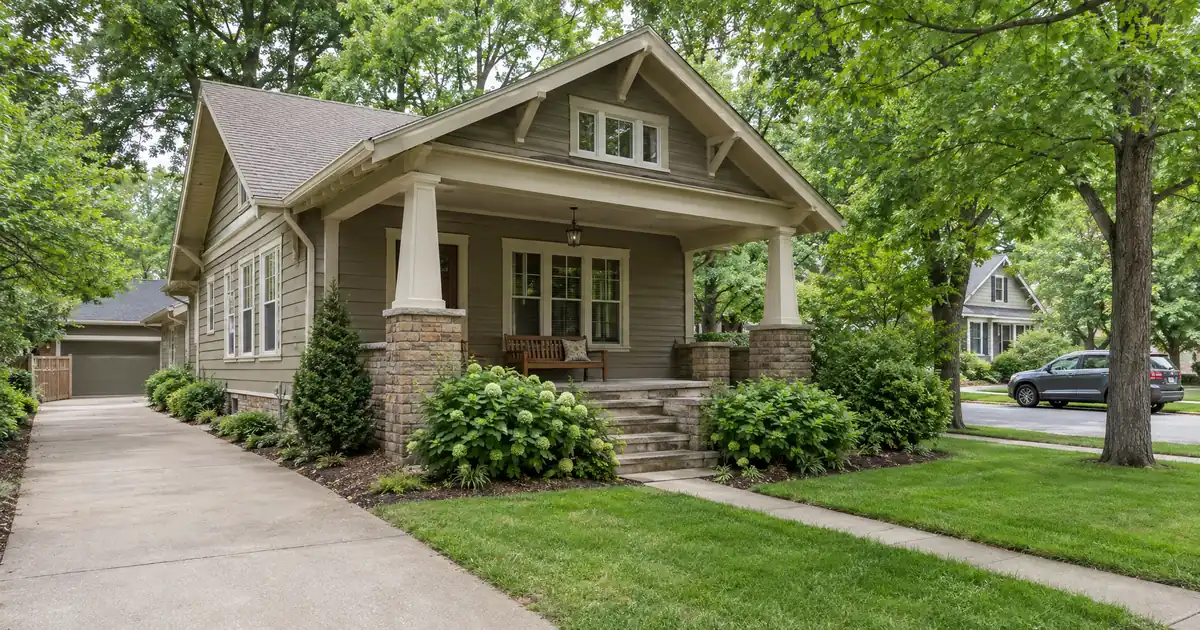
The Quick Read: A DSCR loan tests the rental property. A bank statement loan tests you, the borrower. If the rent comfortably covers the full monthly obligation on a non-owner-occupied rental, DSCR is usually the cleaner fit. If your deposits are strong but the rent is thin, or you plan to live in the home, a bank statement loan may fit better. Both are placed subject to lender guidelines.
- DSCR (debt service coverage ratio) asks whether the property’s rent covers its payment. Personal income is not the test.
- A bank statement loan is reviewed on documented income under the applicable program, subject to lender guidelines. It averages 12 months of deposits.
- Bank statement files carry your personal debts. DSCR files generally do not stack against them.
- Owner-occupied homes lean bank statement. Pure rentals lean DSCR.
- Many self-employed investors use both, at different stages.
“Galena rental investor” here is a persona, not a market claim. The comparison holds nationally. Short-term rental rules can vary by city, county, HOA, and property type, so investors should confirm local rules before relying on projected rental income.
What your deposits qualify you for.
Alt-doc programs read 12 months of business or personal bank deposits instead of tax returns. Enter your average monthly deposits and see the income a lender would credit you.
The expense factor is set by the lender from your business type and profit-and-loss statement; it is not a number you choose. This widget quotes no rate and no payment.
Program parameters shown update from Lendmire’s centralized guideline source.
Estimate
Illustrative estimate only — not a quote, Loan Estimate, approval, or commitment to lend. Deposit average, expense factor, and housing ratio are editable assumptions; the expense factor a lender applies is set from your business type and documentation. No interest rate or monthly payment is quoted here. Purchase capacity is a simplified illustration and does not account for taxes, insurance, HOA dues, or other debts. Alt-doc income documentation is available on consumer mortgages in the states where Lendmire is licensed for consumer lending; actual terms vary by lender, borrower, and property.
The Honest Answer: Who Each One Is Really For
DSCR is built for the investor whose rental pays for itself. You buy a duplex, a cabin, or a small multifamily. The lender looks at rent versus the monthly obligation. Your tax returns and pay stubs stay out of the picture, though credit, reserves, and the appraisal still matter.
A bank statement loan is built for the self-employed borrower whose tax returns understate real cash flow. Write-offs shrink the income on paper. Deposits tell a fuller story. This product fits best when you will live in the property, or when the property’s own rent is weak.
The overlap is the case most guides handle badly: a self-employed person buying a rental. There, the property usually decides. If the rent covers the payment, DSCR keeps your personal income and debts off the file. If it doesn’t, your deposits may carry the deal.
Side-by-Side
The bank statement column reflects published industry norms, and Lendmire’s wholesale network places both products. Exact terms vary by lender.
| Factor | DSCR Loan | Bank Statement Loan |
|---|---|---|
| What is tested | Property rent vs. obligation | Borrower’s deposit history |
| Documentation | Appraisal, rent evidence, credit, reserves | 12 months of statements, business or personal |
| Personal debt ratio | Generally not part of the test | Part of the review |
| Property types | Non-owner-occupied investment | Primary, second home, or investment |
| Entity vesting | LLC common, per program terms | Often personal name, program-dependent |
| Reserves | Typically asked for | Commonly around 6 months |
| Timeline | Depends on file complexity | Depends on statement review |
Think of the table as a starting map. Individual lender program sheets control the details.
How a DSCR File Is Read
The lender divides the property’s monthly rent by its full monthly obligation: principal, interest, taxes, insurance, and any HOA dues. The result is the coverage ratio. Some practitioners instead divide net operating income by annual debt service, so ask which formula a given lender uses. This article uses the rent-over-obligation version.
At 1.00x, rent just covers the obligation. That is a common benchmark, not a rule. Above it, the file usually looks stronger. Below it, select lenders in the network do offer programs, though leverage and terms adjust, and approval is never assured.
Rent is established by an appraisal plus a rent schedule. Single-family rentals typically use a rent schedule form (Form 1007). Two-to-four-unit properties use an operating income form (Form 1025). Short-term rentals add another wrinkle: with no booking history, projected income carries less weight than trailing results.
Picture a lakeside duplex whose combined rents clear roughly 1.25x. That file reads simply. Now picture a seasonal cabin whose long-term rent lands near 0.90x. On long-term rent alone, that file is thin. The options a lender may review include a sub-1.00 program at adjusted leverage, interest-only structuring, or blended short-term income if history exists. None of these is a promise.
Lendmire’s complete DSCR loans guide covers the ratio, documents, and leverage in more detail.
How a Bank Statement File Is Read
Here the lender gathers 12 months of statements, business or personal. Across our wholesale network, the pattern is consistent. Underwriters strip out deposits that aren’t income, such as transfers between your own accounts and loan proceeds. They average what remains. On business statements, they apply an expense factor. That factor is lender-specific, so no one should promise you a number.
Then your personal debts enter. The resulting income is compared against your obligations, including the new loan. This is the step that limits scaling. Each financed rental adds to the load.
Messy deposits hurt. Commingled personal and business accounts, big one-time transfers, and declining months all weaken a file. Clean, steady deposits help.
Bank statement loans are non-QM, meaning they sit outside the standard qualified-mortgage box. They are not no-verification loans. Where the loan is for consumer purposes, the lender must still verify income using reliable records, and CFPB guidance on ability-to-repay calls for reasonably reliable third-party records. Bank statements are one such record.
The Debt Wall: Same Investor, Two Methods
Say you own a self-employed landscaping business and already finance several properties. Your deposits look healthy. But each mortgage adds to your personal obligations. On a bank statement file, a new rental pushes your debt load higher, and eventually the ratio stops working.
Run the same investor through DSCR. The question is no longer your deposits versus your debts. It’s whether this one property’s rent covers its own payment. If the coverage ratio clears the lender’s minimum, your other mortgages are not the obstacle. Credit, reserves, and recourse terms still apply.
That is why scaling investors tend to drift toward DSCR. It is also why a first purchase can go either way.
When DSCR Is the Better Fit
Choose DSCR when the rental is the story. It tends to fit when:
- The rent covers the full monthly obligation with some cushion.
- You are buying through an LLC, subject to lender program eligibility.
- You already carry several financed properties and don’t want personal debt ratios in the way.
- Your tax returns show little income because of write-offs or reinvestment.
- You want personal income documents kept off the file.
DSCR is also the typical route for small multifamily and tourist-oriented rentals where the property’s income is the strongest evidence. Lendmire’s piece Bank Statement Loan vs DSCR When an Investor’s Deposits Are Falling shows what happens when deposits fade and the property has to carry the file.
One caveat: DSCR loans are business-purpose investor loans and are designed for non-owner-occupied properties. They are generally full recourse to the borrower, and credit score still matters. Under CFPB rules on exempt transactions, credit to buy a non-owner-occupied rental is generally treated as business purpose, so these loans are reviewed differently from a standard owner-occupied mortgage.
When a Bank Statement Loan Is the Better Fit
Choose a bank statement loan when you are the story. It tends to fit when:
- You will live in the property. On a primary residence, select lenders in our network go up to 90% LTV on a purchase or rate-term refinance.
- Your deposits are strong but the rent is thin, or the property is vacant or unproven.
- The home is a second home, not a pure rental.
- You want to cash out of a primary residence. That tops out at 80% LTV with a fixed expense ratio, or 75% with an accountant-prepared ratio. A second-home cash-out runs up to 75% LTV.
- You prefer to qualify from assets. The asset-depletion alternative runs to about 80% LTV on a primary residence. These specifics are subject to lender guidelines and a full review of property, leverage, and credit.
On an investment property, cash-out on this documentation tops out around 75% LTV. Investment purchase leverage varies by lender, so treat it as a conversation, not a number. Loan sizes run roughly $125,000 to $3,500,000, with reserves commonly around 6 months. All of it is subject to lender guidelines and individual underwriting.
Occupancy changes the paperwork. An owner-occupied file is a consumer mortgage, so standard consumer disclosures apply. A bank statement loan on a non-owner-occupied rental, including a short-term rental, is business-purpose and exempt from those disclosures. Check the unit rules, though. Compliance Alliance notes that for owner-occupied rentals, business purpose depends on unit count and on whether you expect to occupy the property more than 14 days.
Consumer mortgage licensing for this lane covers 16 states, so availability differs from DSCR.
The Self-Employed Investor: Choosing When Both Apply
Ask four questions, in order.
1. Will you live there? If yes, bank statement is the likely path.
2. Does the rent cover the full monthly obligation? If yes, DSCR becomes attractive.
3. Are your personal debts already heavy? If yes, DSCR avoids stacking them.
4. Are your deposits stronger than the property’s rent? If yes, bank statement may carry a file DSCR can’t.
A common pattern is a bank statement loan for the home you live in and DSCR loans for the rentals. Another is buying on one product and refinancing into the other once the property has a rental history.
Mixed use is where people slip. If you plan to stay in the property for stretches, tell the lender. Purpose and occupancy control the classification, not the label on the loan. Cash-out proceeds spent on personal items can undermine a business-purpose designation.
Short-Term and Seasonal Rentals
Seasonal and tourist rentals are the classic edge case. DSCR tests the property’s own income, so strong booking history helps. A buyer with no history leans on projections, which lenders discount. A bank statement loan says nothing about the property’s earning power, which helps when the property is new and the borrower is strong.
Both can cover short-term rentals, depending on the program. Each has tradeoffs: DSCR needs the property to prove itself, while bank statement needs you to.
What to Gather
For DSCR: a lease or rent evidence, the appraisal and rent schedule, entity papers if you buy through an LLC, proof of reserves, and your credit report.
For a bank statement loan: 12 months of clean statements, proof of self-employment such as a CPA letter or business license, a list of your debts, and reserve documentation.
Pull your statements before you call. Mark any large transfers so you can explain them.
Key Terms Defined
DSCR: the property’s monthly rent divided by its full monthly obligation.
Non-QM: a loan that falls outside the standard qualified-mortgage rules.
Expense factor: the percentage a lender subtracts from business deposits to estimate qualifying income.
Reserves: liquid funds held after closing, usually counted in months of the housing payment.
Recourse: the lender’s ability to pursue you personally if the loan defaults.
Vesting: how title is held, such as your name or an LLC.
The Verdict
Neither product is better in the abstract. DSCR wins when the rent is healthy and you want your personal debts out of the way. Bank statement wins when you live there, when deposits outweigh rent, or when the property can’t yet prove itself. Many investors end up using both. Tax treatment varies; consult a qualified professional.
If you are self-employed and want to see how the numbers work, Lendmire can help you compare bank statement and DSCR options based on your deposits, the property, credit profile, leverage, and your goals. Call 828-256-2183 or request a quote. Qualification is subject to lender guidelines and is not a commitment to lend.
Frequently Asked Questions
Can a bank statement loan finance a rental?
Yes, on many programs. Cash-out on an investment property tops out around 75% LTV, and investment purchase leverage varies by lender. If the rent is strong, DSCR often fits better.
Can DSCR fund my home?
No. DSCR is designed for non-owner-occupied investment properties. A home you live in points toward a bank statement or other owner-occupied program.
Do I need an LLC?
Not necessarily. DSCR files commonly close in an LLC, subject to lender program eligibility. Bank statement programs underwrite an individual and often fit personal title, though this depends on the program.
Does DSCR check my personal income?
It does not test it. Qualification runs on the property’s income, though credit, reserves, and the appraisal still apply.
What if the rent doesn’t cover the payment?
Select lenders in the network offer sub-1.00 programs, with leverage and terms adjusted. Interest-only structuring or blended short-term income may also be reviewed. A bank statement loan is the other route if your deposits are strong.
About Lendmire
Lendmire — NMLS# 2371349 — is a mortgage broker that arranges bank statement, P&L-only, 1099-only and asset-based home financing in 16 states through wholesale lenders, on primary residences, second homes and investment properties. Every option is subject to the lender’s guidelines and full underwriting. Scotsman Guide named Lendmire a Top Mortgage Workplace in both 2025 and 2026.
Get Started
Ready to find the right loan for you?
See your offer in seconds. No credit pull, no obligation.
Informational only. Not a Loan Estimate, approval, or commitment to lend. Program availability and eligibility are subject to lender guidelines, credit approval, property review, and underwriting.
References
1. CFPB – ATR/QM Small Entity Compliance Guide
2. CFPB – Reg Z §1026.3 Exempt transactions
3. Compliance Alliance – Reg Z and “Investment” Properties
This article is part of Lendmire’s bank statement loan program — full qualification details, guidelines, and scenarios live on the program page.
Related reading: Portfolio DSCR Loan vs Bank Statement Loan for a High-DTI Investor · Bank Statement Loan vs. a W-2 Co-Borrower for a Freelancer Buyer · How to Buy a Home on 1099 Income With a Bank Statement Loan
Brandon Miller
Founder & CEO, Mortgage Loan Originator, Lendmire LLC
- Mortgage Loan Originator · NMLS# 1129696 · Verify on NMLS Consumer Access
- North Carolina Real Estate Broker · License# 343312 · Verify on NCREC
- North Carolina Insurance Producer · License# 19053198 · Property, Casualty, Life, Health · Verify on NAIC SBS
- Lendmire LLC · Firm NMLS# 2371349 · Verify firm licensure
Important disclosures. Lendmire (NMLS# 2371349) is a licensed mortgage brokerage. Lendmire is not a direct lender, depository institution, or financial advisor. All loan inquiries are subject to lender underwriting; this article does not constitute a commitment to lend. Rates, terms, and program guidelines are subject to change without notice and vary by borrower profile, property type, and state. Information in this article is general in nature and is not financial, legal, or tax advice. Equal Housing Opportunity. NMLS Consumer Access: nmlsconsumeraccess.org.