
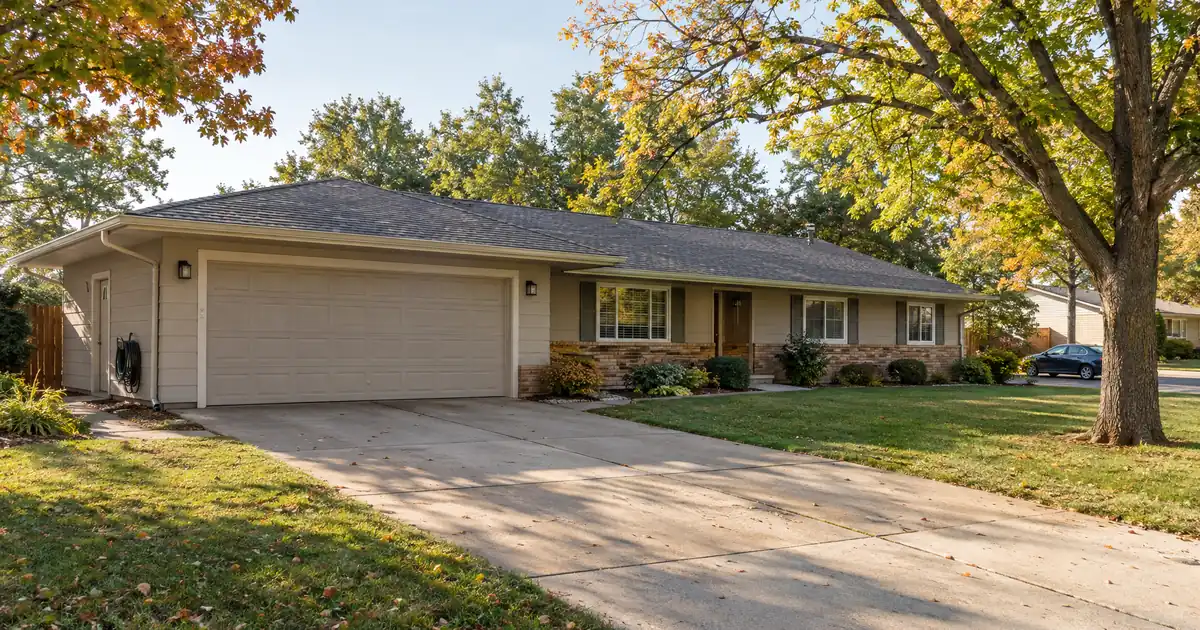
The Quick Read: A self-employed homeowner can use a bank statement cash-out refinance to fund an accessory dwelling unit (ADU), but only if the loan is reviewed on the borrower’s deposits and the home holds enough equity today, not after the build. The loan replaces the first mortgage and pays out the difference at closing. The lender sizes it against the home’s current appraised value, so the finished ADU rarely counts toward the loan amount.
- Qualification runs on 12 months of business or personal bank statements, with income taken from deposit averages, subject to lender guidelines.
- On an owner-occupied primary residence, cash-out typically tops out at 80% LTV (75% on a second home); on an investment property, around 75%.
- The ADU’s future rent generally does not help a bank statement file qualify. Your deposits carry the loan.
- Reserves commonly run about 6 months of the housing payment, so spending all your cash on the build first can hurt.
- Loan sizes typically run from $125,000 to $3,500,000, subject to lender guidelines and credit approval.
Lendmire is a mortgage broker, not a lender. It shops this scenario across select wholesale lenders and matches the file to the program that fits.
What Is a Bank Statement Cash-Out Refinance for an ADU?
A bank statement cash-out refinance swaps your current mortgage for a larger one and hands you the difference in cash. The ADU is the use of funds. The bank statements are how you prove income.
The federal consumer-finance regulator describes a cash-out refinance as replacing your existing mortgage with a bigger one and taking the difference in cash, often with closing costs. Depending on the terms, it may cost more or less than a HELOC. That comparison is a real decision, not a formality.
The “bank statement” half makes this a non-QM product. Programs like this typically let self-employed borrowers qualify on actual cash flow rather than the net figure on tax returns, using 12 to 24 months of deposits, as Scotsman Guide describes. Across the wholesale network Lendmire works with, 12 months is the common documentation window.
One distinction matters here. A bank statement loan underwrites you, the person. A DSCR loan, by contrast, qualifies the file on the rent the property earns. For an owner-occupied home with a backyard ADU in the plan, the bank statement route is usually the one in play.
Who This Loan Fits (and Who Should Skip It)
It fits the self-employed owner whose tax returns understate real cash flow because of write-offs. It fits the owner with substantial equity and a clear build budget. It fits the borrower who wants one lump sum and a single closing.
Skip it, or at least pressure-test it, in these situations:
- Your deposits are thin, irregular, or mostly transfers between your own accounts.
- Your existing first mortgage has favorable terms and your equity is modest. Refinancing the entire balance to fund a smaller build can be a costly trade. A second-lien option may fit better.
- You are a W-2 borrower with clean tax returns. Conventional or a home equity product may be cheaper.
- You plan to qualify using projected ADU rent. That is a different loan, covered below.
Key Terms Defined
Non-QM: A loan that falls outside the standard government-sponsored mortgage rules and follows each lender’s own program guidelines.
Expense factor: The percentage of business deposits a lender treats as operating costs before counting what is left as income.
LTV (loan-to-value): The loan amount divided by the home’s appraised value.
DTI (debt-to-income): Your total monthly debts compared with your qualifying monthly income.
Reserves: Liquid funds you hold after closing, usually measured in months of the housing payment.
As-is value: The appraised value of the property in its current condition, before any planned improvements.
What Are the Requirements? A Quick Reference
| Requirement | What the underwriter checks | How to prepare |
|---|---|---|
| Income documentation | 12 months of business or personal statements | Pull every statement, unbroken |
| Qualifying income | Deposit averages after expense factor | Separate business from personal funds |
| Equity | As-is value against the cash-out LTV ceiling | Get a realistic value estimate first |
| Occupancy | Primary, second home, or investment | Know which applies to the property |
| Reserves | About 6 months of housing payment | Keep cash liquid; do not spend it all |
| Credit | Score and history review | Clean up balances before applying |
| Loan size | Typically $125,000 to $3,500,000 | Confirm your payoff plus cash-out fits |
All figures are typical network ranges, subject to lender guidelines, credit approval, and property review.
How Income Is Calculated From Bank Statements
Underwriters start with the deposits and then clean them. Transfers between your own accounts, loan proceeds, and other non-income deposits come out. What remains is averaged over the statement period.
Business statements get an expense factor, because not every dollar deposited is profit. Personal statements are generally counted without that haircut. The factor is set by each lender’s program, not by regulation and not by the borrower, and it varies from one lender to the next. That variation is exactly why shopping the file matters. On owner-occupied cash-out, some programs use a fixed expense ratio, and a lower one applies when an accountant prepares the ratio.
The result then feeds a debt-to-income test, since the loan rests on the borrower. Your new payment joins your personal obligations. Each additional bank statement loan you carry adds to that load, which is one reason this route behaves differently from a DSCR loan.
Underwriters also read the statements line by line. Large unexplained deposits and signs of tampering get flagged. Clean, consistent statements move through review far more smoothly than messy ones. The Scotsman Guide notes lenders review many variables, including ability to repay, assets, and income verification. Bank statement does not mean light documentation. For more detail on what to gather, see Lendmire’s piece on the documents a super jumbo bank statement cash-out refinance needs.
Equity and Valuation: Where ADU Plans Break
This is the central issue. On a refinance, the appraisal generally reflects the home’s current as-is value. The ADU does not exist.
So the cash-out is sized on today’s equity. If your home supports the cash-out LTV ceiling and leaves enough proceeds after paying off the first mortgage, the money is there. If it does not, the ADU budget outruns the loan.
Picture a homeowner whose build budget looks fine against the finished value but not against the as-is value. The lender lends a percentage of the lower number. The gap is value that exists on paper after construction but cannot be borrowed against beforehand.
Even after completion, an ADU may support a higher appraised value, depending on comps and underwriter review. It does not automatically equal what you spent. Appraisers can credit less than construction cost. Plan the cash-out around what the home is worth now.
Two further limits apply. No home equity option converts 100% of equity to cash, as the CFPB’s home equity guide points out. And taking equity out means you own less of your home.
Leverage Limits by Occupancy
Occupancy sets the ceiling. Across select lenders in the network, typical cash-out limits look like this:
| Property type | Typical cash-out LTV ceiling |
|---|---|
| Primary residence | Up to 80% (75% with accountant-prepared ratio) |
| Second home | Up to 75% |
| Investment property | Around 75% |
Higher ceilings quoted for primary residences apply to purchase and rate-term transactions, not cash-out, so do not size an ADU budget against them. Stronger credit and smaller loan sizes tend to earn the top of each range. An asset-depletion alternative, which qualifies from liquid assets, runs to about 80% on a primary residence.
Occupancy also decides the disclosure regime. An owner-occupied file is a consumer mortgage. A bank statement loan on a non-owner-occupied rental is business-purpose and handled differently. Know which one your property is before you apply.
Lump Sum vs. Construction Draws
A cash-out pays at closing. Construction spends over months. That mismatch shapes your plan.
You receive the funds up front, then manage them against contractor payments. Build in a contingency for overruns. Keep the unspent balance somewhere safe and liquid. And do not assume the lender will hold proceeds back and release them in stages. How a non-QM cash-out treats construction holdbacks varies by program, so confirm that before you count on it.
If you need staged funding, a construction-to-permanent product or a renovation loan may fit better. Those products usually bring more documentation and added cost, so weigh that against the simplicity of a single lump sum.
Can ADU Rent Help You Qualify?
On a bank statement loan, generally no. Qualification rests on your documented deposits, not on the unit’s projected rent. The income method is the whole point of the program.
Rent matters on a DSCR loan, where the property’s income covers the payment. In that structure, the ADU’s market rent can count toward the property’s gross rent, but typically only once the unit is complete, permitted, and appraised. A property with an unbuilt ADU has no countable ADU rent. Whether a house with an ADU is classified as a one-unit property with an accessory unit or as a two-unit property can also change the appraisal form used.
Non-QM programs set their own rules on how an ADU is treated, so the permitted status of the unit is a sensible thing to confirm before you build.
Build Now, Refinance Later: The Other Sequence
Many investors fund the build with cash or a home equity line, then refinance once the ADU is finished. The refinance then carries the bank statement documentation or, if the unit rents, a DSCR file based on the completed unit’s rent.
This sequence has a clear upside: the appraisal can reflect a finished, rentable unit. It also has a real cost. You front the build with other capital, and you may need that cash later as reserves. Spend everything on construction and you may struggle to show the roughly 6 months of reserves a later refinance asks for. Terms depend on the lender’s guidelines, the property type, the leverage, and a full review of the credit profile.
This is a genuine toss-up for many borrowers. Refinancing first gives one lump sum but sizes against today’s value. Building first and refinancing later can unlock more, but it demands cash or a second lien up front. If your existing first mortgage has favorable terms, refinancing the full balance just to extract build money can cost more than a second-lien alternative. The better path depends on your equity, your cash, and your existing loan.
After completion, rental income can open the door to a DSCR refinance. For how that works, see Lendmire’s complete DSCR loans guide.
Compared With the Alternatives
| Option | Income documentation | How funds arrive | Best for |
|---|---|---|---|
| Bank statement cash-out | Deposit averages | Lump sum at closing | Self-employed, strong equity |
| HELOC or home equity loan | Varies by lender | Line or lump sum | Low-rate first mortgage |
| Construction-to-permanent | Varies by program | Staged draws | Large builds needing draws |
| DSCR refinance | Property rent | Lump sum at closing | Finished, rented ADU |
| Personal loan | Credit-based | Lump sum | Small budgets only |
No row wins every time. The best program for your situation turns on the amount you need, the rate on your current loan, and how you document income.
Step-by-Step: From Planning to Construction
1. Define the build. Settle the ADU type, rough budget, and contingency before you talk to any lender.
2. Check permits and zoning. Rules differ widely by jurisdiction. Confirm the unit can be legally permitted.
3. Estimate equity. Compare your as-is value against the cash-out ceiling for your occupancy type.
4. Gather 12 months of statements. Separate business and personal accounts, and be ready to explain any large deposit.
5. Compare options through a broker. A broker can shop the scenario across wholesale lenders, because expense factors and overlays differ.
6. Appraisal and underwriting. The lender reviews income, credit, reserves, and value.
7. Close and fund. You receive proceeds as a lump sum, then manage the build.
Where Files Stall
Most delays trace back to the same few problems:
- Large, unexplained deposits with no paper trail.
- Business and personal funds mixed in one account.
- Transfers counted as income that the underwriter removes.
- Equity that looks fine against finished value but falls short as-is.
- Cash spent on the build first, leaving reserves short.
Fixing these before applying is cheaper than fixing them mid-file. Non-QM borrowers often bring stronger credit and more cash to the table than people assume, which helps a file that is otherwise clean. The Scotsman Guide notes that average non-QM borrower credit scores run in the 730 to 740 range.
Costs and Equity Drag
Expect closing costs, a new first mortgage on the full balance, and a larger monthly obligation, which also lifts your personal DTI. Paying non-mortgage debts with mortgage debt can raise foreclosure risk. If you also plan to repay other debts with the proceeds, size that decision carefully. Tax treatment can depend on how the funds are used and how the property is held; borrowers should keep clear records and speak with a qualified tax professional before relying on any deduction.
Frequently Asked Questions
Can I use a bank statement cash-out refinance to build an ADU without traditional personal-income documentation?
Yes, in most cases. The loan is reviewed on documented income under the applicable program, subject to lender guidelines. Twelve months of business or personal statements replace tax returns as the income proof. The lender still reviews credit, reserves, equity, and the property.
Will the lender lend against the value of the finished ADU?
Usually not on a refinance. The appraisal generally reflects as-is value, so the cash-out is sized against current equity. A completed ADU may support a higher value later, depending on comps and underwriter review.
Does projected ADU rent count toward qualifying?
Not on a bank statement loan. Your deposits carry the file. Rent can count on a DSCR loan, typically once the unit is complete, permitted, and appraised.
What is the maximum cash-out LTV?
It depends on occupancy. Typical ceilings are up to 80% on a primary residence, up to 75% on a second home, and around 75% on an investment property, subject to loan size, credit, and lender guidelines. The exact numbers vary by lender and program and follow a full review of property, leverage, and credit.
Should I refinance first or build first?
It depends on your equity, your cash, and the rate on your current mortgage. Refinancing first delivers a lump sum sized to today’s value. Building first can unlock more equity afterward but requires upfront capital and may deplete reserves.
Next Step
If you are self-employed and want to see how the numbers work, Lendmire can help you compare bank statement loan options based on your deposits, the property, credit profile, leverage, and your goals. You can reach the team at 828-256-2183. Qualification is subject to lender guidelines, credit approval, and property review. This is not a commitment to lend.
Investors weighing their equity options can start with Lendmire’s guide to cash-out refinance on an investment property.
About Lendmire
Lendmire (NMLS# 2371349) is a mortgage broker licensed for consumer lending in 16 states. Bank statement, P&L-only, 1099-only and asset-based mortgages for self-employed and high-net-worth borrowers are arranged through wholesale lenders on primary residences, second homes and investment properties; every file is underwritten by the lender under its program guidelines. Scotsman Guide named Lendmire a Top Mortgage Workplace in both 2025 and 2026.
Get Started
Ready to find the right loan for you?
See your offer in seconds. No credit pull, no obligation.
Informational only. Not a Loan Estimate, approval, or commitment to lend. Program availability and eligibility are subject to lender guidelines, credit approval, property review, and underwriting.
References
1. CFPB – Ask CFPB: loans similar to a HELOC
2. Scotsman Guide – One out of 20 mortgages are non-QM
3. Scotsman Guide – Helping borrowers fit the boxes
4. CFPB – Using home equity guide
This article is part of Lendmire’s bank statement loan program — full qualification details, guidelines, and scenarios live on the program page.
Related reading: Can You Get Approved for a Bank Statement Cash-Out Refinance With Closing Costs Rolled In? · Does a Bank Statement Cash-Out Refinance Make Sense for a Roof or Storm Damage? · How to Plan and Use a Bank Statement Cash-Out Refinance to Build an Emergency Fund
Brandon Miller
Founder & CEO, Mortgage Loan Originator, Lendmire LLC
- Mortgage Loan Originator · NMLS# 1129696 · Verify on NMLS Consumer Access
- North Carolina Real Estate Broker · License# 343312 · Verify on NCREC
- North Carolina Insurance Producer · License# 19053198 · Property, Casualty, Life, Health · Verify on NAIC SBS
- Lendmire LLC · Firm NMLS# 2371349 · Verify firm licensure
Compliance and disclosures. Lendmire (NMLS# 2371349) is a licensed mortgage broker and is not a direct lender, depository institution, financial advisor, or tax professional. Content in this article is general market analysis and educational information — not financial, legal, or tax advice for any specific situation. Lendmire does not guarantee loan approval; every transaction is subject to underwriting by the funding lender. Mortgage pricing and loan program guidelines are subject to change at any time without notice and vary by borrower characteristics, property type, and state regulations. Lendmire complies with Equal Housing Opportunity. Licensure verification: NMLS Consumer Access.