
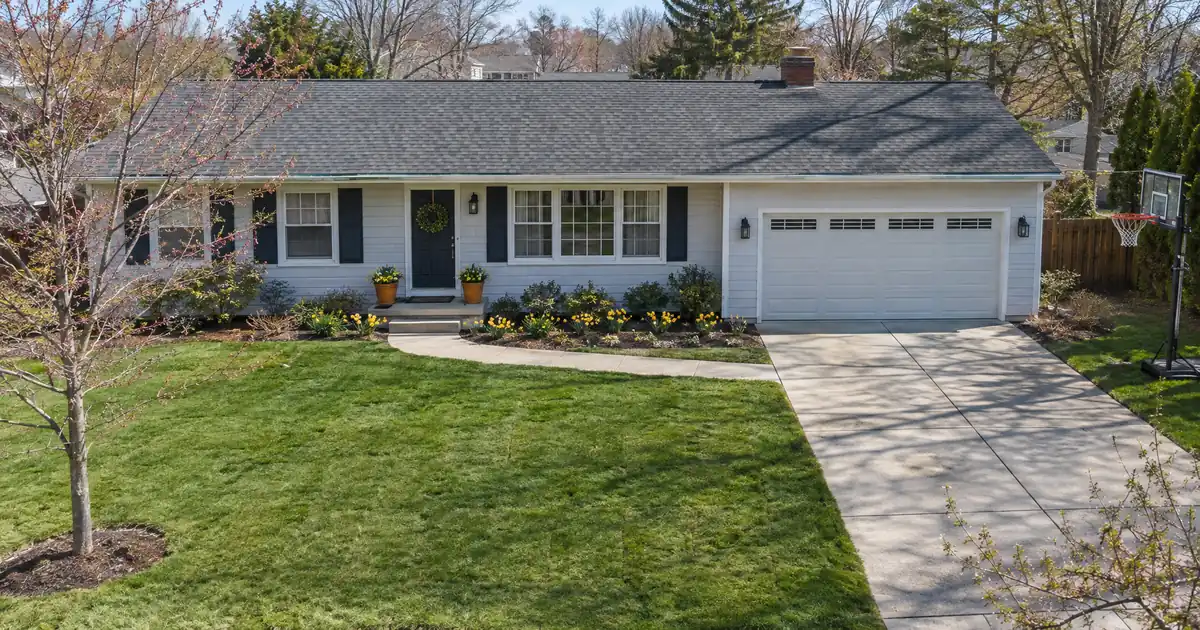
The Quick Read: There is no separate VA debt consolidation loan. Consolidation is one use of the standard VA cash-out refinance, which replaces your current mortgage with a new VA-backed loan and hands you the difference in cash. The best program for your situation depends on your equity, your income cushion, and whether trading short-term debt for a longer mortgage term actually saves you money.
Is There a VA Program Built for Debt Consolidation?
No. “Military debt consolidation loan” is a marketing label, not a product. VA’s own cash-out page lists paying off debt next to school costs and home improvements as ordinary uses of the same loan.
VA cash-out estimate
Seeded with an example value, a typical balance, and a round cash request at the first-use fee; change any field.
Editable benchmark: 7.24% as of October 29, 2026 · Freddie Mac 30-year average via FRED®. A conventional market reference, not a VA cash-out refinance quote.
Illustrative starting assumptions: a $350,000 home value, a $193,000 current balance, the full-value VA cap with the first-use funding fee financed, a thirty-year term at the current Freddie Mac benchmark, and property taxes and insurance estimated at typical national rates. Every field is editable.
Illustrative estimate only — not a Loan Estimate, approval, quote, or commitment to lend. The rate field carries the weekly Freddie Mac thirty-year conventional benchmark, a market reference and not a VA cash-out refinance quote; a VA loan is priced by the lender at lock. The total loan, funding fee included, is capped at the program leverage on the reasonable value; the fee follows the tier chosen. The cash available is what the cap allows less the balances paid off and the fee, before closing costs, which are not included. The HELOC line is the line program’s combined loan-to-value ceiling applied to the same value and balance. Taxes and insurance are editable estimates. The debt-to-income figure is a guideline; residual income decides a VA file. Licensed in sixteen states for consumer mortgages.
Two more facts clear up common confusion. VA does not lend you the money. It guarantees the loan, and a private lender makes it. And you do not need an existing VA mortgage. A cash-out refinance can move a conventional or FHA loan into the VA program.
That second point matters for the “best” question. The best VA cash-out program for your situation is the same loan with different lender terms attached. Wholesale lenders differ in how they treat credit, leverage, and income, so the fit depends on your file.
How Does a VA Cash-Out Refinance Work, Step by Step?
The new loan pays off your old mortgage, covers the costs, and sends the remainder to you or directly to your creditors. Here is the sequence on a typical file.
1. Eligibility. You need a VA certificate of eligibility (COE), and you must live in the home. The COE comes from VA, and your lender can usually pull it for you.
2. Application and full underwriting. Unlike a streamline refinance, a cash-out is fully underwritten on credit and income.
3. VA appraisal. The appraiser sets the home’s reasonable value. Your borrowing ceiling is measured against that number, not your own estimate.
4. Net tangible benefit test. The refinance has to show a real benefit to you. More on that below.
5. Disclosures. The lender gives you a side-by-side comparison of the old loan and the new one.
6. Closing and payoff. The old lien is paid off. For debt consolidation, the lender often pays your creditors directly from the proceeds.
Lendmire’s VA cash-out refinance program page walks through how these loans are arranged. As a broker, Lendmire shops the file across wholesale lenders rather than lending itself.
What Is the Maximum Loan, and What Does It Cost?
Across the wholesale programs we place VA files with, a cash-out reaches 100% of the appraised value, and that includes the financed funding fee. Full entitlement carries no VA loan limit and no mortgage insurance of any kind. VA lender guidance confirms that the new loan, with all financed fees and charges, may not exceed 100% of value.
The VA funding fee is the main program charge. On a cash-out refinance it is 2.15% for first use and 3.3% for subsequent use, and the reduced tiers for larger down payments do not apply to refinances. You can finance the fee into the loan, but it still has to fit under the 100% ceiling. Veterans who receive compensation for a service-connected disability are exempt, along with a few other exempt groups. VA’s fee schedule circular lists the cash-out figures.
Closing costs are separate from the fee. They can often be paid from loan proceeds, which can reduce or eliminate cash due at closing. VA notes that the cash-out amount is added to the loan, so your balance and your lifetime interest both go up. Hold onto that sentence. It drives most of what follows.
How Is a VA Cash-Out Underwritten?
Residual income is the controlling test. That is the money left each month after your taxes, housing costs, debts, and basic living expenses. VA wants to see that you can live comfortably on what remains.
The 41% debt-to-income figure is a guideline, not a cap. A ratio above it is not an automatic denial. It does mean the lender will look hard at residual income, and it needs to sit well above the program’s minimum.
VA sets no minimum credit score. The wholesale programs we use start at a 580 decision score, and some lenders set a higher floor for cash-out. Credit, income, and the appraisal all feed the decision. Everything here is subject to lender guidelines and a full file review, and none of it is a commitment to lend.
Here is a practitioner point borrowers miss. Paying off debts at closing can help your ratios, because paid-off accounts drop out of the calculation. The underwriter then tests whether the new mortgage payment fits your budget. The qualifying budget only improves if the consolidated payment is lower than the combined old ones.
What Is the Net Tangible Benefit Test?
It is VA’s check that the refinance helps you rather than just the lender. Every cash-out must meet it, and VA’s Lenders Handbook covers it in the refinancing chapter. VA’s lender slides describe a list of eight possible benefits, and a loan needs at least one.
Examples include:
- Eliminating monthly mortgage insurance, as when you leave an FHA or conventional loan.
- Moving from an adjustable rate to a fixed rate.
- Shortening the loan term.
- Lowering the principal-and-interest payment.
- Landing at or below 90% of the home’s value.
For consolidation borrowers, the common route is leaving mortgage insurance behind or reaching a lower monthly payment. If the file cannot show a benefit, the loan does not fit the program. The fallback is a different structure or a different plan for the debt.
Which Version of the Cash-Out Applies to You?
The rule bends in a few named places. These are the edge cases that change the answer.
Non-VA loan into VA. Seasoning, the required waiting period after your current loan began, does not apply when you refinance a non-VA loan. A conventional or FHA borrower can move into the VA program and drop monthly mortgage insurance in one step.
VA loan into a new VA loan. Seasoning applies. In the wholesale programs we use, that is the later of 210 days from the first payment and the sixth payment. The net tangible benefit test applies too.
Fixed to adjustable. If you refinance a fixed-rate loan into an adjustable one with more than one discount point charged, the Handbook limits the loan to 90% of reasonable value.
Type I versus Type II. A Type I cash-out does not exceed the payoff of the loan you are replacing, so no equity comes out. A Type II cash-out exceeds the payoff. That is the true cash-out used for consolidation.
Streamline refinance (IRRRL). It lowers the rate on an existing VA loan or moves it from adjustable to fixed, with no VA appraisal and a 0.5% fee unless exempt. It cannot put meaningful cash in your hands, so it is not a consolidation tool.
Paid-off homes. Lenders disagree on whether a home with no mortgage qualifies. Ask the lender before you assume either answer.
Second homes and rentals. The home has to be your residence. Occupancy decides the loan.
Which Debts Belong in the Refinance, and Which Don’t?
Include debts where the interest cost is clearly higher than what you will pay on the mortgage, and where the debt would not otherwise be paid off soon. Credit cards are the classic fit. Leave out debts that are nearly paid, debts with special protections, and anything you could clear from savings.
| Debt type | Usually a good fit? | Why |
|---|---|---|
| Credit cards | Often yes | Short-term, high-cost, easy to move |
| Auto loans | Sometimes | Fed guide cautions on short-term secured debt |
| Personal loans | Sometimes | Depends on balance left and term |
| Federal student loans | Usually no | You lose federal repayment protections |
| Nearly paid-off debts | No | Stretching them adds interest |
The Federal Reserve’s consumer guide to refinancing notes that many advisers caution against cash-out refinancing to pay down unsecured debt like credit cards, or short-term secured debt like car loans. The reason is simple. You swap a short debt for a long one.
How Does the Decision Look in Practice?
Run it as a scenario with no dollar figures. Picture a veteran with a conventional loan, paying monthly mortgage insurance, who also carries heavy credit card balances. The home appraises with solid equity.
A cash-out at up to 100% of value, with the funding fee financed inside that ceiling, pays off the old loan and the cards. Mortgage insurance disappears, which satisfies the net tangible benefit test. Several payments collapse into one. Monthly pressure drops.
Now the catch. The balance rose by the cash-out and the financed fee. The card debt now sits on a long mortgage term. Total interest over the life of the loan can still come out higher, even with a smaller monthly payment. The payment drops and the total cost can rise. Both statements can be true at once.
For borrowers who are already carrying very high-cost debt and are disciplined afterward, this is a genuine toss-up. For borrowers whose cards will refill, it is a trap. The math rarely decides it; behavior does.
1. Add up the monthly payments on every debt you plan to pay off.
2. Compare that total to the new mortgage payment on the larger balance.
3. Ask whether you would pay these debts off sooner on their own schedule.
4. Ask what you will do differently so the balances do not return.
If step 3 gives you a faster payoff than the mortgage term would, think twice. Bringing in extra principal payments after closing can shorten the stretch, and that is the cleanest way to blunt the longer-term cost.
What Are the Risks of Consolidating Debt Into Your Mortgage?
Credit card debt is unsecured. Once it is paid by a mortgage, it is secured by your home. Miss payments and the lender can foreclose, which an unsecured creditor cannot do directly. The same equity-and-foreclosure logic applies here that the CFPB describes for home equity borrowing.
Equity is your cushion. Because a VA cash-out can run up to 100% of value, there is little protection if home values fall. You could end up owing more than the home is worth, which makes selling or refinancing harder.
Then there is the pattern after closing. CFPB research on cash-out borrowers found that borrowers often use the proceeds to pay down other debts, particularly credit card and auto loan debt. Credit scores improved sharply at first, then gradually worsened. Not ideal. The relief is real, but it fades if spending habits do not change.
A cash-out also uses entitlement tied to the new loan, which can affect later VA purchases. Confirm your remaining entitlement before closing if you plan to buy again.
Skip this refinance if you are likely to run the cards back up, if your income is unstable, or if your equity is thin enough that the 100% ceiling leaves you no margin.
How Does a Cash-Out Compare With the Alternatives?
| Option | Secured by home? | Best for |
|---|---|---|
| VA cash-out refinance | Yes | Large balances, strong equity |
| Home equity loan or line | Yes | Keeping a first mortgage you like |
| Personal loan | No | Smaller balances, no equity |
| Balance transfer card | No | Debt you can clear in a short window |
| Nonprofit debt management plan | No | Damaged credit, no new borrowing |
| VA streamline (IRRRL) | Yes | Lowering a VA loan, no cash |
If you hold a low-cost first mortgage you want to keep, replacing it with a cash-out changes more than your debt. It resets the whole loan. A second-lien product can leave the first mortgage untouched. That tradeoff is worth weighing before you commit.
How Do You Find the Best Program for Your Situation?
The best program depends on your credit profile, equity, income documentation, and the property. Wholesale lenders that write VA cash-outs differ on credit floors, leverage overlays, and how they handle higher debt ratios. VA’s rules set the frame. Each lender then adds its own.
This is where a broker earns its role. A broker works with a network of wholesale cash-out refinance lenders and matches your scenario to the program that fits. It does not decide the loan. The lender does that after review.
Compare offers on the Loan Estimate, which every lender must give you. Look at the funding fee, the total cash due, the loan amount, and the net tangible benefit. Ask whether the lender pays creditors directly at closing. Ask about overlays that go beyond VA’s rules.
Key Terms Defined
Certificate of Eligibility (COE): The VA document showing you qualify for a VA-backed loan.
Residual income: The money left each month after taxes, housing costs, and debts, which VA treats as the controlling test.
Net tangible benefit: A real, measurable gain you must receive from the refinance.
Seasoning: The waiting period after your current loan begins before you can refinance it into a new VA loan.
Funding fee: The one-time VA charge on the loan, which you can finance and which exempt veterans do not pay.
Entitlement: The amount of VA guarantee available to you, which a cash-out can use up.
Frequently Asked Questions
Can all of the cash go to paying off debt?
Yes, you can direct the proceeds to debt, since VA lists debt payoff among the allowed uses. You also have no obligation to pay off every debt. The decision is yours, though the lender often pays chosen creditors directly at closing.
Do I need an existing VA loan to do this?
No. A conventional or FHA borrower can refinance into a VA-backed loan with a cash-out. Seasoning does not apply when the loan being replaced is not a VA loan, and leaving monthly mortgage insurance behind often satisfies the benefit test.
Is a VA cash-out the same as a streamline refinance?
No. A streamline refinance lowers the rate on an existing VA loan with no appraisal and cannot provide meaningful cash. A cash-out needs full underwriting, a VA appraisal, and a net tangible benefit.
Will consolidating improve my credit?
It can help at first. CFPB research found scores improved sharply after cash-out, then gradually worsened. Keeping the paid-off accounts from refilling is what decides the long-term result.
Does VA cap a cash-out at 90% of value?
No. VA allows up to 100% of the appraised value, including the financed funding fee. Ninety percent shows up as one benefit test, a limit in the fixed-to-adjustable case, and a common lender overlay. Your lender’s own limits may be tighter.
If you are weighing a cash-out refinance against keeping the loan you have, Lendmire can help you compare the programs and the equity each one reaches.
For your own numbers, request a scenario review with Lendmire.
About Lendmire
Lendmire (NMLS# 2371349) is a mortgage brokerage serving homeowners and home buyers in 16 states. FHA, VA, conventional and jumbo purchase and refinance loans are arranged through wholesale lending channels; Lendmire brokers the financing and the lender underwrites each application. Scotsman Guide named Lendmire a Top Mortgage Workplace in both 2025 and 2026.
For the program’s current guidelines, see VA loan programs.
Get Started
Ready to find the right loan for you?
See your offer in seconds. No credit pull, no obligation.
Informational only. Not a Loan Estimate, approval, or commitment to lend. Program availability and eligibility are subject to lender guidelines, credit approval, property review, and underwriting.
References
1. VA.gov: Cash-out refinance loan
2. VA: Aq42 Lender Call Jan2019
3. VA Circular 26-23-06, Exhibit B: loan fees
5. VA Lenders Handbook (VAP 26-7), Chapter 6: Refinancing Loans
6. Federal Reserve – Consumer’s Guide to Mortgage Refinancings
7. CFPB – Ask CFPB: consolidating credit card debt
8. CFPB: CFPB Report Finds Cash Out Mortgage Refinance Borrowers Improve Credit Scores
This article is part of Lendmire’s VA cash-out refinance program — full qualification details, guidelines, and scenarios live on the program page.
Related reading: How a VA Lender Sequences VA Cash-Out Refinance Approval · VA Cash-Out Refinance Documentation Needed Before Approval · VA Cash-Out vs Conventional Cash-Out for a Veteran: What Decides
Brandon Miller
Founder & CEO, Mortgage Loan Originator, Lendmire LLC
- Mortgage Loan Originator · NMLS# 1129696 · Verify on NMLS Consumer Access
- North Carolina Real Estate Broker · License# 343312 · Verify on NCREC
- North Carolina Insurance Producer · License# 19053198 · Property, Casualty, Life, Health · Verify on NAIC SBS
- Lendmire LLC · Firm NMLS# 2371349 · Verify firm licensure
Important disclosures. Lendmire (NMLS# 2371349) is a licensed mortgage brokerage. Lendmire is not a direct lender, depository institution, or financial advisor. All loan inquiries are subject to lender underwriting; this article does not constitute a commitment to lend. Rates, terms, and program guidelines are subject to change without notice and vary by borrower profile, property type, and state. Information in this article is general in nature and is not financial, legal, or tax advice. Equal Housing Opportunity. NMLS Consumer Access: nmlsconsumeraccess.org.