
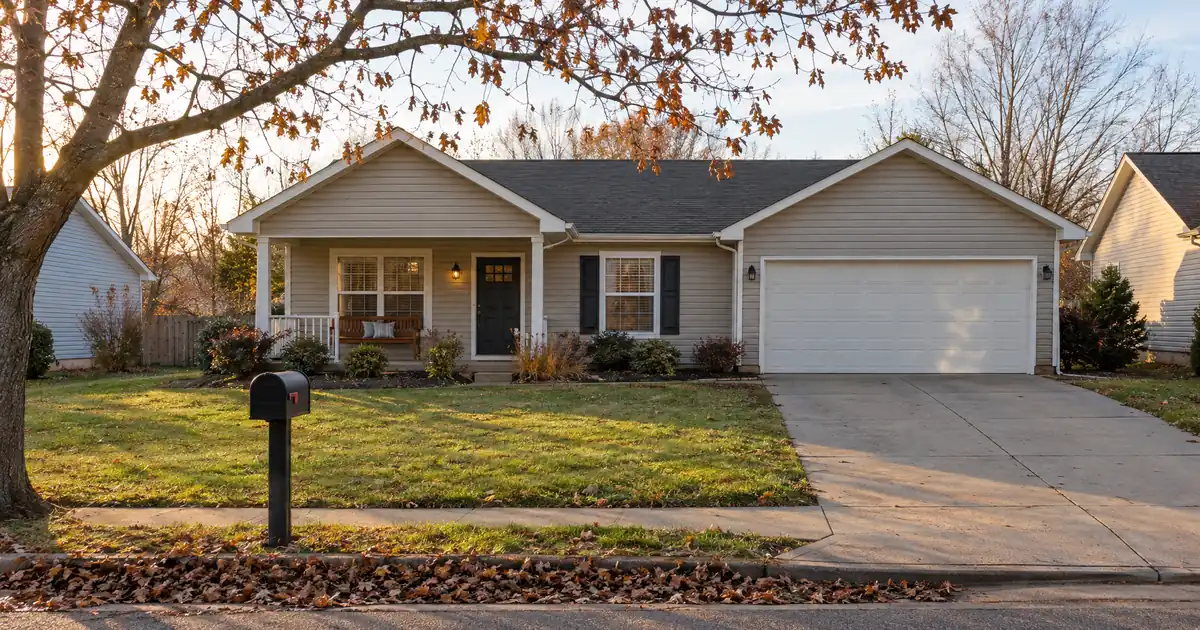
The Quick Read: FHA cash-out refinance requirements center on a home you have owned and lived in for 12 months, a clean recent payment history, and enough equity to stay at or under 80% loan-to-value after the new loan. The standard break-even formula, closing costs divided by monthly savings, often doesn’t fit a cash-out loan, because the balance and payment usually rise. A better test compares what the cash costs you against other ways to get the same money.
What Is an FHA Cash-Out Refinance?
An FHA cash-out refinance replaces your current mortgage with a new, larger FHA-insured loan and hands you the difference in cash. You pay off the old loan, cover closing costs, and keep what remains.
FHA cash-out estimate
Seeded with an example value, a balance to match, and a round cash request; change any field.
Editable benchmark: 7.24% as of October 29, 2026 · Freddie Mac 30-year average via FRED®. A conventional market reference, not an FHA cash-out refinance quote.
Illustrative starting assumptions: a $350,000 home value, a $193,000 current balance, the FHA cap on a principal residence with the upfront premium financed, a thirty-year term at the current Freddie Mac benchmark, and property taxes and insurance estimated at typical national rates. Every field is editable.
An illustration, not a Loan Estimate, an approval, a quote, or a commitment to lend. The rate shown is the weekly Freddie Mac thirty-year conventional benchmark, used as a market reference; an FHA cash-out is priced by the lender at lock, and this is not an FHA cash-out refinance quote. HUD’s cap limits the base loan; the upfront premium is financed on top of the capped base loan; the monthly premium for the first year follows the snapshot’s schedule. Cash available means the base loan the cap permits less the balances retired, before closing costs, which this calculator leaves out. The line figure applies the line program’s combined loan-to-value ceiling to the same value and balance. Taxes and insurance are estimates you can edit. Licensed in sixteen states for consumer mortgages.
Lendmire’s FHA cash-out refinance program page lays out how this works on a primary residence. Your current loan doesn’t have to be an FHA loan, which surprises many homeowners. A conventional borrower can refinance into FHA if the file meets the program’s rules.
The program serves homeowners who want to consolidate debt, fund repairs, or build a cash reserve. It also helps some borrowers whose credit profile fits FHA’s flexibility better than a conventional file. It is not a tool for everyone, and the cost side deserves as much attention as the eligibility side.
What Are the FHA Cash-Out Refinance Requirements?
Across the wholesale programs Lendmire places FHA files with, the core tests are occupancy, equity, payment history, credit, and debt ratios. Each is subject to lender guidelines and full file review.
| Requirement | What it means | Common pitfall |
|---|---|---|
| Ownership and occupancy | Owned and lived in as your principal residence for 12 months before the case number | Renting the home out during that window |
| Maximum LTV | Up to 80% of the home’s value | Assuming older, higher limits still apply |
| Payment history | Mortgage payments made within the month due | A late payment in the past year |
| Credit | Decision score of 580 or higher on the programs Lendmire works with | Expecting HUD’s lower tier to be available |
| Debt ratios | Base pair of 31/43, up to 40/50 with documented factors | Heavy new debt taken on before applying |
| Property | Owner-occupied, one to four units | Treating a second home as eligible |
A few of these deserve more explanation.
Equity and the limit
HUD’s Mortgagee Letter 2019-11 cut the maximum loan-to-value on FHA cash-out refinances from 85% to 80% of the home’s adjusted value for case numbers assigned on or after September 1, 2019. HUD’s own announcement says the change aligns FHA with the cash-out maximum used by Fannie Mae and Freddie Mac.
Some pages still show 85%. That figure is outdated. In plain terms, you need at least 20% equity left in the home after the new loan is in place.
Ownership and occupancy
The 12-month clock runs to the date the FHA case number is assigned. That is the number the lender requests to start the file. Lenders typically look for evidence of occupancy such as employment records or utility bills at the home’s address.
Payment history
For a cash-out, HUD’s Handbook language, as excerpted in Mortgagee Letter 2020-30, asks lenders to document that mortgage payments were made within the month due over the previous 12 months. One late payment in that window can stall the file. Handbook 4000.1, the document that holds FHA’s underwriting rules, is revised periodically, so the lender’s current reading governs.
Credit and ratios
On the wholesale programs Lendmire places loans with, the working floor is a decision score of 580. HUD itself has a lower tier, but this network doesn’t reach below 580. The base debt-to-income pair is 31/43, housing cost over total debt. Documented compensating factors, such as reserves or a strong payment record, can push ratios toward 40/50 at the top tier. The automated finding governs most files.
How Is the FHA Cash-Out Loan Underwritten, Step by Step?
The process follows a set order, and the order matters for when costs hit.
1. Eligibility screen. The lender checks occupancy, payment history, and whether the home is listed for sale. Some lenders add their own overlays here, such as requiring a listed home to sit off the market for a period first.
2. Case number. The FHA case number assignment date starts the clock for occupancy and the loan-to-value test.
3. Appraisal. An FHA-approved appraiser values the home and checks it against HUD’s property standards. Appraisal validity periods change over time, so the lender confirms the current window.
4. Maximum loan calculation. The base loan is capped at 80% of value. Any subordinate lien counts toward the same cap.
5. Underwriting. The lender reviews credit, income, ratios, and the payoff of every existing lien.
6. Disclosures. You receive a Loan Estimate showing projected costs, then a Closing Disclosure before signing. Compare the two line by line.
How Do You Calculate the Maximum Cash You Can Take?
Start with 80% of the appraised value. Subtract the payoff of your current mortgage and any other liens. Then subtract closing costs if they come out of proceeds rather than being financed. What remains is your net cash.
Run the logic with percentages. Say your home appraises at a value where your current loan balance equals 50% of that value. The 80% cap leaves a gap of 30% of value. Closing costs and any prepaid items come out of that gap, and the rest reaches you as cash. The higher your existing balance, the thinner that gap gets.
Mortgage insurance adds a layer. Across the FHA programs Lendmire works with, the upfront premium is 1.75% of the base loan, and it can be financed. The annual premium runs between 0.15% and 0.75% of the balance, depending on term, loan amount, and LTV. Above 90% LTV on a thirty-year loan, the annual premium lasts the full term. At or below 90%, it ends after eleven years. A cash-out capped at 80% falls into the second group on a thirty-year term, though the lender confirms the schedule that applies to your file. HUD’s Mortgagee Letter 2023-05 contains the premium appendix.
County loan limits apply to the size of the loan. They change every year, so ask the lender what applies where you live.
Why Doesn’t the Usual Break-Even Formula Fit Cash-Out?
The usual break-even formula is total closing costs divided by monthly savings. It works well when a refinance lowers your payment. The CFPB’s Your Home Loan Toolkit notes that refinance costs can be about the same as your original closing costs and frames a refinance as worthwhile if you recoup that cost within about two years.
Cash-out breaks that formula. You are borrowing more, so the payment often goes up. Divide closing costs by a savings figure of zero or less and the answer means nothing.
So change the question. Instead of “how long until I recover my costs,” ask which of these you are actually measuring:
- Savings on the old balance. If the new loan also improves the terms on what you already owed, calculate savings on that balance only. Treat the cash as a separate decision.
- The cost of the cash itself. Add the upfront premium, closing costs, annual premium, and the extra interest on the larger balance over the time you will hold it.
- Savings from retiring other debt. If the cash pays off higher-cost debt, compare the monthly outflow you eliminate against the added mortgage payment.
How Long Does Break-Even Take for Different Uses of the Cash?
The answer depends on what the money does. Here are three illustrative situations, described without dollar figures.
Debt payoff. Picture a homeowner who uses cash to clear several credit cards. The mortgage payment rises, but the card payments disappear. Break-even is the point where cumulative savings on those payments cover the closing costs and premium. If the cards carried high costs, this can come within a few years. If the homeowner runs the balances back up, the break-even never arrives, and the debt now sits against the home.
Home improvement. Say a borrower spends the cash on a roof and kitchen. There are no monthly savings to count. The test is whether the project protects or raises the home’s value, and whether you plan to stay long enough to benefit. This one is a judgment call, not a formula.
Cash reserve. Taking cash and parking it has a pure cost. You pay interest on the larger balance and the premium while the money sits idle. That’s the hardest case to justify on break-even grounds.
What Moves the Break-Even Point Further Out?
- Financing the closing costs. Rolling costs into the balance doesn’t make them free. It raises the loan, adds interest, and pushes break-even later. The Federal Reserve’s refinancing guide makes this point alongside its break-even discussion.
- Resetting the term. Refinancing late in a loan restarts amortization, so early payments go mostly to interest again. A lower payment spread over more years can raise total cost, a point the CFPB toolkit also makes.
- Prepayment penalties. A penalty on the old loan adds to your cost and lengthens break-even.
- A shorter time horizon. If you sell or move before costs are recovered, you lose money on the transaction.
- Mortgage insurance. The upfront premium adds to the starting cost, and the annual premium raises the payment for as long as it applies.
For a closer look at the rolling-costs question, Lendmire’s piece on the best FHA cash-out refinance program when rolling closing costs into the loan balance goes through the trade-offs.
How Does FHA Cash-Out Compare With the Alternatives?
| Factor | FHA cash-out | Conventional cash-out | Home equity loan or HELOC |
|---|---|---|---|
| First mortgage | Replaced | Replaced | Left in place |
| Max LTV | 80% | Matches FHA per HUD | Varies by lender |
| Mortgage insurance | Upfront and annual | Depends on file | Not applicable |
| Closing costs | On the whole new loan | On the whole new loan | Usually on the new line only |
| Best fit | Weaker credit, FHA flexibility | Stronger credit | Keeping a good existing loan |
The Federal Reserve’s guide notes that a home equity loan or line may be a cheaper alternative to cash-out. That holds most clearly when your existing first mortgage has terms worth keeping. Refinancing all of it to reach a slice of cash costs more than borrowing only the slice.
Where FHA cash-out tends to make sense: your credit profile fits FHA better than conventional, your current loan terms aren’t worth preserving, and you plan to stay in the home long enough to recover the costs. Where the alternatives win: you have a strong, low-cost first mortgage, you need a modest amount, or you plan to move soon.
Where Do the General Rules Break?
A few situations bend the usual rules.
- Inherited homes. Handbook language reported by industry sources suggests the 12-month wait may be waived for an inheritance, but renting the home after inheriting can restart the occupancy requirement. A lender’s current reading of the Handbook decides how this applies.
- Homes owned free and clear. HUD’s archived reference guide shows that a home with no mortgage can still be refinanced as a cash-out.
- Prior forbearance. The Handbook excerpt in a 2020 HUD mortgagee letter contains a rule tied to completing a forbearance plan and then making consecutive on-time payments. A lender applies the current wording.
- Homes listed for sale. HUD doesn’t spell this out the way some lenders do. Overlays vary, and a recently listed home may need to be off the market before applying.
- Credit events. HUD’s waiting periods are two years from a chapter 7 discharge and three years from a foreclosure. Those are HUD rules, not a promise from the network.
- Streamline and rate-and-term refinances. These are different programs. A Streamline on an existing FHA loan involves no appraisal and a limited credit review, and it requires a net tangible benefit. A rate-and-term with an appraisal reaches 97.75% on a primary residence occupied for the previous twelve months. Neither pays you cash.
Two more notes. HUD revises Handbook 4000.1 on a rolling basis, and a recent transmittal lists changes to the refinance section. Treat any rule summary, including this one, as a starting point.
When Does an FHA Cash-Out Not Pay Off?
Be honest about the no-go cases:
- You expect to sell or move within a short window.
- You need a small amount that a home equity line could supply at far lower total cost.
- Your current first mortgage has terms you would hate to give up.
- You would use the cash for spending that doesn’t improve your finances or your home.
- Your budget is already tight, and a larger payment would strain it.
A higher balance on the same house also means less equity cushion if values soften. That risk is real, and it’s easy to ignore when the cash is on the table.
Key Terms Defined
Adjusted value: The appraised value (or sales price, for a purchase) used to calculate FHA loan-to-value limits.
Loan-to-value (LTV): The loan balance divided by the home’s value, shown as a percentage.
Upfront mortgage insurance premium: A one-time FHA charge of 1.75% of the base loan, which can be financed into the balance.
Annual mortgage insurance premium: A yearly FHA charge, billed monthly, set by term, loan amount, and LTV.
Case number: The identifier HUD assigns to an FHA loan file; its assignment date starts the occupancy and LTV clocks.
Break-even: The point where your savings from a refinance equal what it cost you.
Amortization: The schedule of paying down a loan, where early payments go mostly to interest.
A Practical Decision Checklist
1. Confirm 12 months of ownership and occupancy. 2. Check your payment history for the past year. 3. Estimate equity against the 80% cap. 4. Decide what the cash will do and which test applies: debt payoff, improvement, or reserve. 5. Request the Loan Estimate and compare total costs against alternatives. 6. Count how long you plan to keep the home.
If you are weighing a cash-out refinance against keeping the loan you have, Lendmire can help you compare the programs and the equity each one reaches. Call 828-256-2183 or request a quote through Lendmire’s quote page.
Frequently Asked Questions
Do I need an existing FHA loan to do an FHA cash-out refinance?
No. A homeowner with a conventional or other loan can refinance into an FHA cash-out if the file meets program rules. Occupancy, payment history, equity, and credit are reviewed regardless of the current loan type. Details are subject to lender guidelines and full file review.
How much equity do I need to keep?
At least 20%. The new loan, plus any other lien, is capped at 80% of the home’s value. Older material showing 85% reflects a rule HUD replaced for case numbers assigned on or after September 1, 2019.
Can I roll closing costs into the new loan?
Often, yes, but it raises the balance and pushes break-even later. Costs paid from proceeds reduce your net cash instead. Neither option makes them disappear. Your Loan Estimate shows the total so you can compare.
What happens if I sell before I break even?
You lose part or all of what you paid in closing costs and premiums, since you didn’t hold the loan long enough to recoup them. This is why a short time horizon is one of the clearest reasons to skip a cash-out refinance.
Is a home equity line cheaper than an FHA cash-out?
Sometimes. If your first mortgage has good terms and you need a modest amount, borrowing only the slice you need can cost less than refinancing everything. The Federal Reserve’s guide raises this alternative. It depends on your existing loan and how much cash you need.
About Lendmire
Lendmire, NMLS# 2371349, is a mortgage brokerage with consumer lending licenses in 16 states. FHA, VA, conventional and jumbo purchase and refinance loans are arranged through wholesale lending partners, and each application is reviewed individually by the lender. Scotsman Guide named Lendmire a Top Mortgage Workplace in both 2025 and 2026.
For the program’s current guidelines, see FHA loan programs.
Get Started
Ready to find the right loan for you?
See your offer in seconds. No credit pull, no obligation.
Informational only. Not a Loan Estimate, approval, or commitment to lend. Program availability and eligibility are subject to lender guidelines, credit approval, property review, and underwriting.
References
1. HUD Mortgagee Letter 2019-11
2. HUD press release on cash-out risk
3. HUD Mortgagee Letter 2020-30
4. HUD Mortgagee Letter 2023-05
5. CFPB Your Home Loan Toolkit
6. Federal Reserve refinancing guide
7. HUD’s archived reference guide
8. HUD Handbook 4000.1 Update 18 transmittal
This article is part of Lendmire’s FHA cash-out refinance program — full qualification details, guidelines, and scenarios live on the program page.
Related reading: FHA Cash-Out Refinance Lenders to Remove an Ex-Spouse From the Mortgage After a Divorce · Best FHA Cash-Out Refinance Program With FHA Cash Reserve Requirements · How an FHA Lender Sizes a Cash-Out Refinance Against a Streamline
Brandon Miller
Founder & CEO, Mortgage Loan Originator, Lendmire LLC
- Mortgage Loan Originator · NMLS# 1129696 · Verify on NMLS Consumer Access
- North Carolina Real Estate Broker · License# 343312 · Verify on NCREC
- North Carolina Insurance Producer · License# 19053198 · Property, Casualty, Life, Health · Verify on NAIC SBS
- Lendmire LLC · Firm NMLS# 2371349 · Verify firm licensure
Disclosure information. Lendmire is a state-licensed mortgage brokerage under NMLS# 2371349. Lendmire is not a depository institution, direct lender, or financial advisor — all loans referenced are placed through wholesale lender partners and are subject to each lender's underwriting standards. This article is provided for general informational purposes and is not a commitment to lend, nor does it constitute financial, legal, or tax advice. Loan programs, terms, rates, and qualification standards change without notice and depend on borrower profile, property type, and the state in which the subject property is located. Equal Housing Opportunity provider. NMLS Consumer Access: nmlsconsumeraccess.org.