
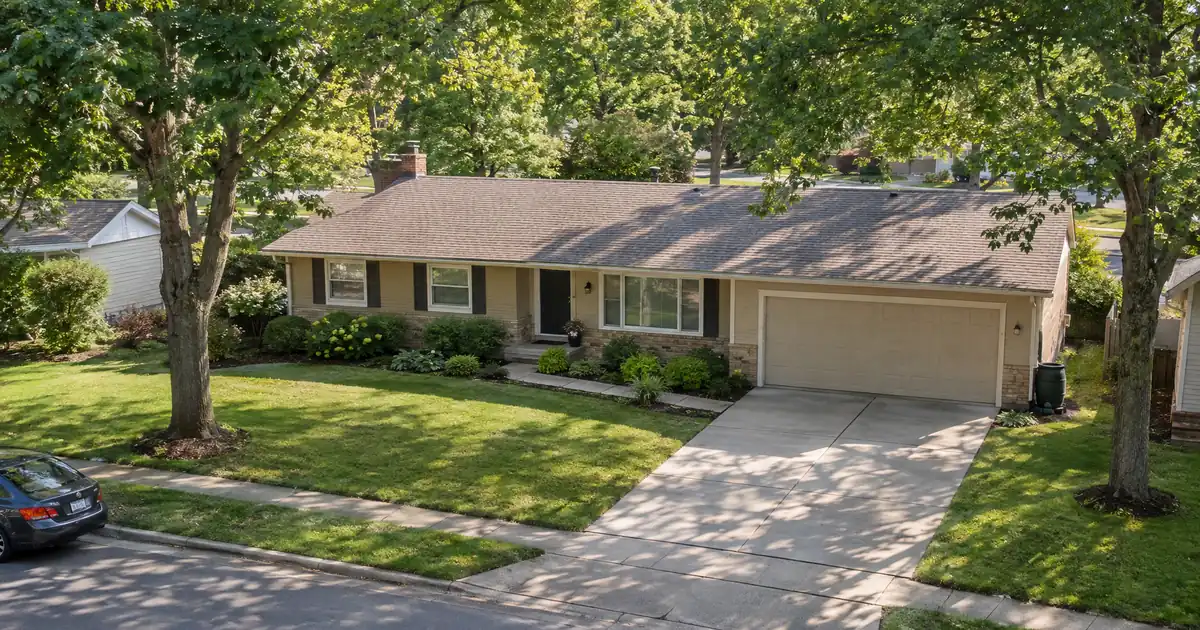
The Quick Read: A bank statement HELOC on a trust-held rental clears two separate gates: the title must sit with an individual or a revocable living trust, and the borrower’s deposit history must support the line. The rental’s rent does not qualify the loan; the borrower’s credit, income, and debts do.
- On an investment property, the network ceiling is 70% combined loan-to-value (CLTV), with a $500,000 maximum line and a 700 minimum credit score.
- Revocable living trusts can hold title. LLCs, corporations, partnerships, and irrevocable, blind, or land trusts cannot.
- Deposit history stands in for tax returns, but it is alternative documentation, not “no documentation.”
- A rental already deeded to an LLC needs a vesting change or a DSCR cash-out refinance instead.
- Availability is limited to Lendmire’s 16 full-service states, which is narrower than its DSCR footprint.
Many landlords with a trust-held rental hear two conflicting things. Banks say rentals are too risky for a line of credit, and trust paperwork makes some loan officers nervous. This guide walks through what the product is, how underwriting treats it step by step, the structures that exist, and where the general rule breaks. Everything below is subject to lender guidelines and full file review, and none of it is a commitment to lend.
How large a line the equity supports.
An equity line is sized by combined loan-to-value, occupancy, and credit — not by rental coverage. Switch the occupancy or the credit band and the ceiling moves with it.
Investment-property lines require a 700 minimum credit score; second-home lines start at a 640 minimum and primary-residence lines at 600, and the combined-LTV ceiling steps down as the credit band drops on primary-residence and second-home lines and holds on investment-property lines; the line cap steps down on primary-residence lines and holds at every tier on investment-property and second-home lines.
A debt-to-income ratio above 45% requires 680+ credit. Profiles under 640 are limited to single-family homes. At least 75% of the approved line is drawn at closing. Ceilings, floors, and caps update from Lendmire’s centralized guideline source.
Line estimate
Illustrative estimate only — not a quote, Loan Estimate, approval, or commitment to lend. The rate is an editable assumption; equity-line pricing is variable through both the draw and repayment periods and never converts to fixed. Occupancy and credit drive the ceiling together: an investment property tops out at 70% combined LTV (minimum credit 700, line cap $500,000); a second home tops out at 90% combined LTV (minimum credit 640, line cap $500,000), with the ceiling stepping down as the credit band drops (the cap holds at every tier); a primary residence tops out at 90% combined LTV (minimum credit 600), and its $750,000 maximum line is available only at 75% combined LTV or below with a 700-or-better credit profile (720 on the longer-runway program) and a full appraisal. Lines above $500,000 require a full appraisal. Credit, debt-to-income, property type, and full underwriting review all affect the final line.
What Is a Bank Statement HELOC on a Rental?
A bank statement HELOC is a revolving line of credit secured by a rental property, where the borrower documents income through 12 to 24 months of deposits rather than tax returns. It suits self-employed owners whose write-offs shrink taxable income. The line is sized by equity, not by what the rent produces.
The federal consumer-finance regulator describes a HELOC as an open-end line of credit that lets you borrow repeatedly against home equity, meaning value minus what you owe on the mortgage. That open-end feature is the point. You draw what you need, and you can draw again later.
Lendmire is a mortgage broker. It places these files with select wholesale lenders and does not lend itself. Across that network, the investment-property version is a standalone line that can sit in first or second lien position. A second lien leaves an existing first mortgage untouched, which matters to anyone holding a low-cost first loan.
How Is This Different From a DSCR Loan?
A DSCR loan is reviewed primarily on property-level rental income covering the payment, subject to lender guidelines. A HELOC does the reverse: it underwrites the person. Credit, deposit-verified income, and debt-to-income all drive the decision, and the rent barely enters the picture.
That difference decides which product fits. Investors who want a loan underwritten to the property’s rent, or who hold title in an LLC, usually belong on a DSCR loan. The complete DSCR loans guide covers how that product works. Investors with healthy personal debt ratios and a trust-held rental may find the line more flexible, because it taps equity without refinancing the first mortgage.
One caution on DSCR numbers, since they come up in this comparison. Clearing a 1.00 coverage ratio is not the same as positive cash flow. DSCR counts rent against principal, interest, taxes, insurance, and dues. Repairs, vacancy, management, and capex sit outside it.
Gate One: Can the Trust Hold the Line?
Title comes first. The property must be held in fee simple or leasehold by the individual borrower or by an inter vivos revocable living trust. That is the sharpest structural difference from a DSCR loan, which can be made to an LLC subject to lender program eligibility.
Any lender reviewing a revocable-trust file looks for the same basics. Fannie Mae’s Selling Guide is useful as a contrast point: the trustee must have the power to mortgage the property, title is vested in the trustee, and the title policy carries no trust-related exceptions. Non-QM programs set their own rules and are not governed by that guide, but the checklist logic carries over.
| Title held by | Eligible for this line? |
|---|---|
| Individual borrower | Yes |
| Revocable living trust | Yes |
| LLC, corporation, partnership | No |
| Irrevocable, blind, or land trust | No |
The funding check matters most. A trust only holds the rental if the deed was recorded into the trust. Plenty of landlords signed trust documents, never recorded the deed, and assume the property is covered. It isn’t. Fix the deed first, then apply.
Gate Two: How Are the Deposits Read?
Instead of returns, the file uses 12 to 24 months of statements, with the window set by the lender. The statements prove income, but equity sizes the line. The lender still verifies deposits and reviews credit, equity, property, and debts.
On an investment line, the credit floor is 700, and business bank accounts require a 680 minimum for the deposit analysis. Because investment already floors at 700, the deposit review is never the binding constraint on credit. Debt-to-income runs to a 50% maximum, with qualification on the interest-only payment calculated on the maximum draw.
A trust-held rental raises practical questions on the deposit side:
- Whose name is on the account? Statements should match the borrower. The borrower’s credit drives the file, not the trust’s.
- Where does rent land? Rent deposited to a personal or business account is easier to trace than rent mixed with household spending. Separate rental receipts before applying.
- How is passive rent treated? Many bank-statement programs are built around active business deposits. Programs differ on whether and how rental receipts count, so confirm it with the broker before relying on any assumption.
How Underwriting Works, Step by Step
1. Collateral screen. Many large retail lenders decline non-owner-occupied collateral outright. Investors on BiggerPockets describe hearing that rentals are too risky and that debt-to-income limits tighten. A wholesale channel is the usual alternative for borrowers who get that answer.
2. Credit and income. The score uses a single-bureau model keyed to the primary wage earner, with a report no more than 90 days old at closing.
3. Combined LTV. Add the new line to every existing lien, then divide by appraised value. The CFPB’s HELOC booklet teaches the textbook method: take a percentage of the home’s value, then subtract what is owed. It uses 75 percent only as an illustration. On this network, the investment-property ceiling is 70% CLTV.
4. Valuation. An investment line caps at $500,000, and full appraisals begin only above $500,000. So an investment HELOC is structurally in the automated-valuation lane and commonly closes with no traditional appraisal, though a higher CLTV may call for a secondary valuation and a borrower may request a full appraisal.
5. Trust paperwork. Expect a certification of trust showing the trust’s name, date, revocability, trustee, and borrowing powers, plus a title commitment showing vesting in the trustee. The full trust agreement may be requested.
6. Signatures. The trustee signs the security instrument, and the individual borrower signs the note. Trust names must match across the deed, title commitment, and loan documents.
7. Close and draw. At least 75% of the line is drawn at closing. After that, additional draws work like a credit card, with interest only on what you use.
What Structures Exist?
On investment properties, one structure is available: a 5-year interest-only draw period followed by a 25-year fully amortizing repayment. The line floats across both periods and never converts to fixed. Primary residences and second homes have a shorter 3-year draw option too, but that does not apply to rentals.
Other parameters worth knowing for an investment line:
- Line size runs from $25,000 up to the $500,000 investment maximum. Lines above $500,000 are primary-residence only.
- The minimum subsequent draw after closing is $1,000 on the longer-runway structure, except Texas at $4,000.
- A borrower is limited to three lines in total, and anyone owning more than 15 financed properties is not eligible.
- Eligible properties include single-family, 2-4 units, PUDs, townhomes, and condominiums, including non-warrantable ones. Manufactured homes, co-ops, condotels, log homes, commercial, mixed-use, and agricultural zoning are not offered.
- Bankruptcy needs 4 years of seasoning. Foreclosure-family events on investment files follow a 7-and-4-year path.
Where the General Rule Breaks
The unfunded trust. The deed was never recorded. The rental is not in the trust, so the trust paperwork proves nothing. Record the deed, then reapply.
The LLC-held rental. An LLC cannot hold title under this product. The two routes are a vesting change into your name or a revocable trust, or a DSCR cash-out refinance on the LLC, subject to lender program eligibility. A vesting change can touch the existing mortgage, the insurance named-insured, and title coverage, so those are questions for an attorney, the servicer, and the insurer before any deed moves.
The irrevocable or land trust. Excluded. Same alternatives apply.
The rental versus the primary home. A trust-held primary residence gets a different table. On primary residences and second homes, ceilings reach higher, but the 90% CLTV tier exists only at a 720-or-better credit profile. None of that applies to a rental, where the ceiling is 70%.
The sub-700 borrower. Investment lines floor at 700, with no tier beneath it. Credit above 700 buys no extra leverage on a rental, since both 700 and 720 reach 70% CLTV.
Using the home’s line for a rental. Some investors pull from a primary residence line to fund a down payment. BiggerPockets members debate that strategy. It is a different transaction from a line secured by the rental itself.
What About Existing Mortgages and Rental Restrictions?
An existing first mortgage may carry terms about transfers of title, so moving a mortgaged rental into a trust is worth checking with the servicer and counsel first. Those are questions to ask, not conclusions.
Default on a home equity line can cost you the property, selling generally requires paying the line off in full, and some lines restrict renting out the home. On a rental line that is mostly a reminder to read the credit agreement on use and occupancy.
Second liens also stack leverage. A line that sits on top of a first mortgage thins the equity cushion if values fall, and lenders can freeze or reduce lines after a significant decline in value.
HELOC or DSCR Cash-Out: How the Decision Looks
| Factor | Bank statement HELOC | DSCR cash-out refinance |
|---|---|---|
| Reviewed on | Borrower credit and deposits | Property rental income |
| Title | Individual or revocable trust | LLC allowed, per program |
| Investment leverage | 70% CLTV, up to $500,000 | About 70% LTV on standard rentals |
| First mortgage | Can stay in place | Replaced |
A bank statement HELOC fits the investor with healthy personal debt ratios, a 700-plus score, a trust-held rental, and a moderate capital need who wants to leave a low first mortgage alone. A DSCR cash-out fits an LLC owner, an investor whose personal debt is heavy, or anyone needing more than $500,000. Where the property’s rent is the cleaner story, the DSCR route usually pencils better. The brokerage’s own walkthrough on getting a bank statement HELOC on a trust-held rental goes deeper on matching the program to the file.
Key Terms Defined
- Bank statement HELOC: a revolving equity line where deposit history, not tax returns, documents income.
- Vesting: how title is held, such as “Name, Trustee of the Name Revocable Trust.”
- Revocable living trust: a trust the creator can change or cancel, generally treated close to the individual for lending.
- Certification of trust: a short document proving the trust’s existence, trustee, and borrowing powers.
- CLTV: all liens, including the new line, divided by appraised value.
Common Misconceptions
“Bank statement means no documents.” In fact, the file still verifies deposits, credit, equity, property, and debts.
“You can’t get a HELOC on a rental.” Availability varies by lender. Large retail lenders often decline, while select wholesale programs write them within the limits above.
“A trust works like an LLC.” It doesn’t. A revocable trust is treated nearly like the individual, and it is not liability protection in the way an LLC is. Asset-protection questions belong with an attorney.
“The trust is the borrower.” The settlor’s credit drives the file, and the trustee signs the security instrument.
This article is general information, not legal or tax advice. Readers should consult a qualified attorney or CPA about their own situation. Tax treatment varies; consult a qualified professional.
If you are considering a home equity line and want to see how the numbers work, Lendmire can help you compare HELOC options based on the property, the equity available, credit profile, combined leverage, and your goals. Lendmire arranges these files through select wholesale lenders in the 16 states where its full-service lending operates.
Frequently Asked Questions
Does the rental have to come out of the trust?
No. A revocable living trust is an eligible vesting, as long as it was properly funded and the trustee has authority to pledge the property. What has to change is nothing, unless the title is held by an LLC or an irrevocable, blind, or land trust.
Who signs when the rental is in a trust?
Names on the deed, title commitment, and loan documents should match exactly, or the file stalls.
What is the most leverage available on a rental?
Through this network, 70% CLTV on an investment property, up to a $500,000 line. Credit scores of 700 and 720 both reach that same ceiling. Market surveys of lenders report different figures, but 70% is the network figure for investment properties.
Do I need an appraisal?
Usually not. Because investment lines cap at $500,000 and full appraisals begin above $500,000, these lines ordinarily use automated valuation. A higher CLTV may call for a secondary valuation, and a borrower may request a full appraisal.
Is the rate fixed?
No. Pricing floats through both the interest-only draw and the repayment period and never converts to fixed.
About Lendmire
Lendmire (NMLS# 2371349) is a mortgage broker. Home equity lines of credit — on a primary residence, a second home or an investment property — are arranged through wholesale lenders in Lendmire’s 16 full-service states, and every line is underwritten by the lender under its program guidelines. Scotsman Guide named Lendmire a Top Mortgage Workplace in both 2025 and 2026.
Get Started
Ready to find the right loan for you?
See your offer in seconds. No credit pull, no obligation.
Informational only. Not a Loan Estimate, approval, or commitment to lend. Program availability and eligibility are subject to lender guidelines, credit approval, property review, and underwriting.
References
2. Fannie Mae Selling Guide B2-2-05
3. BiggerPockets forum: HELOC on investment rental properties
4. BiggerPockets forum: HELOC for a rental down payment
This article is part of Lendmire’s bank statement HELOC program — full qualification details, guidelines, and scenarios live on the program page.
Related reading: Best Bank Statement HELOC Program When the Appraisal Comes in Low · Best Bank Statement HELOC Program to Pay for a Home Improvement Project · Bank Statement HELOC Options Without a Home Appraisal
Brandon Miller
Founder & CEO, Mortgage Loan Originator, Lendmire LLC
- Mortgage Loan Originator · NMLS# 1129696 · Verify on NMLS Consumer Access
- North Carolina Real Estate Broker · License# 343312 · Verify on NCREC
- North Carolina Insurance Producer · License# 19053198 · Property, Casualty, Life, Health · Verify on NAIC SBS
- Lendmire LLC · Firm NMLS# 2371349 · Verify firm licensure
Compliance and disclosures. Lendmire (NMLS# 2371349) is a licensed mortgage broker and is not a direct lender, depository institution, financial advisor, or tax professional. Content in this article is general market analysis and educational information — not financial, legal, or tax advice for any specific situation. Lendmire does not guarantee loan approval; every transaction is subject to underwriting by the funding lender. Mortgage pricing and loan program guidelines are subject to change at any time without notice and vary by borrower characteristics, property type, and state regulations. Lendmire complies with Equal Housing Opportunity. Licensure verification: NMLS Consumer Access.