
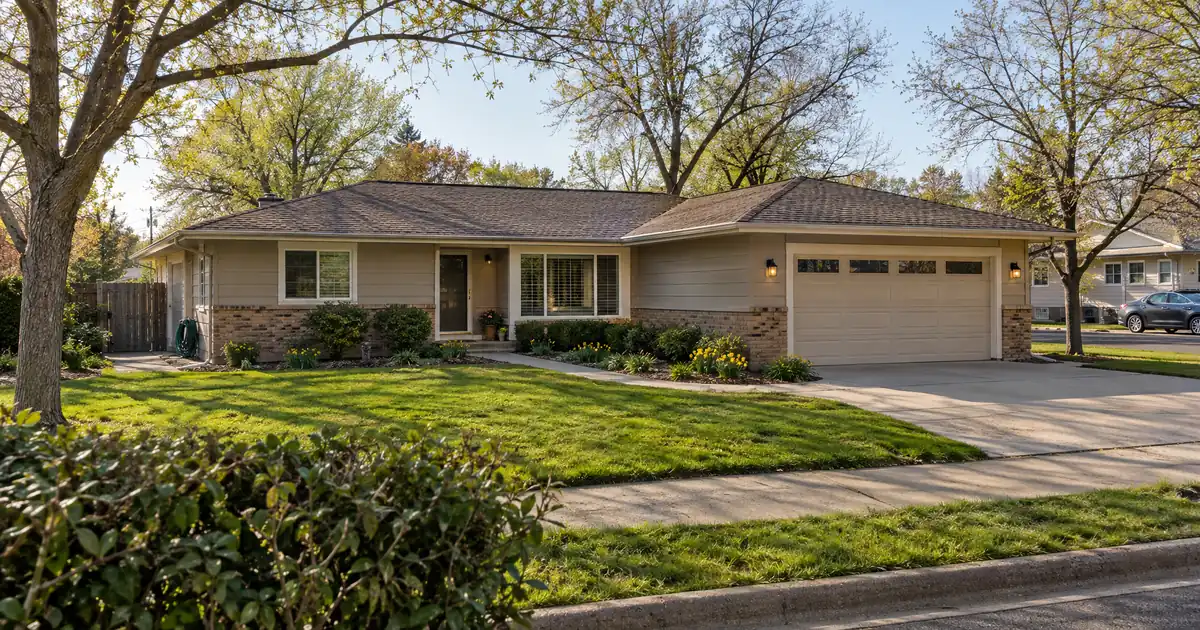
The Quick Read: Start by getting the deed recorded in your name, because a lender can’t write a cash-out loan on a house the estate still owns. After that, a bank statement cash-out works like any other cash-out: the statements set your income, and the appraisal, occupancy, credit and reserves set how much cash comes out. Lendmire is a mortgage broker that matches the file to a wholesale program, and qualification runs on documented income under the applicable program, subject to lender guidelines.
- Recorded title in the heir’s name comes first. Probate letters alone are not title.
- A paid-off inherited house still counts as cash-out when you borrow against it.
- Programs typically review 12 months of personal or business statements.
- On an owner-occupied primary residence, cash-out tops out at 80% LTV, or 75% with an accountant-prepared expense ratio.
- On a second home the cash-out ceiling is 75% LTV, and on an investment property it is about 75%.
Key Terms Defined
Cash-out refinance: A new first mortgage larger than the debt it replaces, with the difference paid to the borrower.
Bank statement loan: A mortgage that sets qualifying income from deposit history instead of tax returns.
Expense factor: The share of deposits a program treats as business costs before counting income.
Recorded title: A deed filed with the county in the heir’s name, which is what a lender and title company need to see.
Buyout: Paying co-heirs for their share so one heir keeps the house.
Seasoning: How long you must have owned the property before a program allows cash-out.
Can You Apply Yet?
You can apply once the house is in your name. Anything earlier is a different product, not a mortgage.
| Stage | What you can do | Ask the lender |
|---|---|---|
| Probate open | Plan, gather documents | Is any file possible before the deed? |
| Letters issued, no deed | Prepare the file | Will you close on estate-owned property? |
| Deed recorded, sole heir | Apply for cash-out | Does the program carve out inherited property? |
| Deed recorded, co-heirs | Apply for a buyout | Do all owners sign at closing? |
During open probate, the estate usually owns the house, and lenders and title companies generally won’t close. That is industry practice, not a federal rule. Probate loans and inheritance advances are separate products that lean on the expected inheritance. They aren’t mortgages.
Does a Paid-Off Inherited House Still Count as Cash-Out?
Yes. Borrowing against a lien-free house is cash-out, so cash-out leverage limits apply. The same goes for a sibling buyout, which most lenders handle as a cash-out refinance, as Redfin’s explainer on refinancing to buy out heirs describes. Paying off an old HELOC may also count as cash-out, depending on what that line funded, so confirm the treatment in the specific program.
How Bank Statement Income Works for an Heir
The lender averages your eligible deposits over the statement window, applies an expense factor, and counts your ownership share of the business. Across Lendmire’s wholesale network, most programs review 12 months of statements, business or personal. The expense factor is set by the lender or program. Only an accountant-prepared ratio or P&L may change it, and no one can simply pick their own.
The usual math is eligible deposits divided by months, times one minus the expense factor, times your ownership percentage. The Scotsman Guide’s overview of non-QM lending describes the same pattern, with an example expense factor of 50% and a statement window of 12 to 24 months across the market. Lenders must still confirm you can repay the loan, so this is real underwriting.
The heir-specific wrinkle is inherited cash. Estate distributions, sale proceeds, transfers between your own accounts and loan draws are generally stripped out of income. During the statement window:
- Do keep business deposits in the business account, with clean records.
- Do keep a paper trail for any large deposit.
- Don’t run inherited cash through your business account.
- Don’t pay siblings or move estate money before the closing is arranged.
Lumpy deposits weaken the average. If your monthly deposits swing widely, ask a broker which programs average more gracefully.
Qualification Checklist
| Requirement | What the lender checks | Proof |
|---|---|---|
| Title | Deed in your name | Recorded deed |
| Income | Deposit average after expense factor | 12 months of statements |
| Ownership | Your share of the business | Ownership documentation |
| Value | Appraisal against the cash-out cap | Appraisal |
| Credit | Score and history | Credit report |
| Reserves | Commonly about 6 months of housing payment | Asset statements |
| Loan size | Roughly $125,000 to $3,500,000 | Payoff and buyout figures |
These are typical ranges from select wholesale programs, and every file is underwritten individually.
Which Occupancy Lane Fits?
Occupancy sets both the leverage ceiling and the disclosure rules.
| Plan for the house | Typical cash-out ceiling | Disclosure regime |
|---|---|---|
| Live in it (primary) | Up to 80% LTV, or 75% with an accountant-prepared ratio | Consumer mortgage, TRID applies |
| Second home | Up to 75% LTV | Consumer mortgage, TRID applies |
| Rent it out | About 75% LTV on an investment property | Business-purpose, TRID-exempt |
The 90% LTV figure that sometimes gets quoted for bank statement loans applies to primary-residence purchase and rate-and-term transactions. It is not a cash-out number. These specifics are subject to lender guidelines and a full review of property, leverage, and credit.
If the house will be a rental, the federal rule on business-purpose credit exempts it from the consumer-credit rules. A CFPB exam manual treats credit to acquire or improve non-owner-occupied rental property that way. The label has to be accurate, so don’t call an owner-occupied loan business-purpose.
An heir with no business income has another option. If the house will rent well, a DSCR loan is reviewed for the property on its rent rather than your deposits, and asset depletion (qualifying from liquid assets) runs to about 80% LTV on a primary residence. Lendmire’s complete DSCR loans guide covers that lane. Terms depend on the lender’s guidelines, the property type, the leverage, and a full review of the credit profile.
Step-by-Step Application
1. Confirm title. Get the deed recorded in the keeping heir’s name. With co-heirs, every owner must sign or convey.
2. Pick the occupancy lane. Decide live-in, second home or rental before choosing a program.
3. Pull your statements. Gather complete statements for every account in the lookback window.
4. Document ownership and deposits. Prepare the business ownership percentage and sourcing for large deposits.
5. Add an expense letter if useful. A tax professional’s P&L or letter may help where the program allows it.
6. Write the buyout agreement. Put each co-heir’s payment in writing before the application.
7. Disclose the inheritance and the purpose. Tell the broker the property is inherited and what the cash is for.
8. Order the appraisal. The appraiser’s value, not the stepped-up tax basis, drives the loan size.
9. Close. Sibling deeds, the payoff of any existing lien and the new first lien are coordinated on one closing day.
A broker that shops several wholesale lenders can match your occupancy, credit, leverage need and documentation to the program that fits. The best program for your situation depends on those details. It also depends on whether a lender carves out inherited property from its seasoning rule. No law sets a waiting period for non-QM cash-out, so each program decides, and you should ask in writing.
Worked Example: One Heir, One House
Picture a self-employed heir keeping a paid-off house appraised at a round $400,000, with one sibling to buy out. Assume the house will be the heir’s primary residence, so the cash-out ceiling is up to 80% LTV, or 75% with an accountant-prepared ratio. The new loan has to cover the sibling’s share, closing costs and whatever cash the heir wants. If the sibling’s share plus costs fits under that ceiling, the buyout works. If the heir wants extra cash on top, the ceiling can become the binding limit. Switching to a rental plan drops the ceiling to about 75%, so a small buyout that fits one lane might not fit another. The exact numbers vary by lender and program and follow a full review of property, leverage, and credit.
Co-Heir Scenarios
- Several heirs, one keeper: All owners must sign or convey at closing.
- A sibling who refuses: The buyout stalls until an agreement exists. A lender can’t force a co-owner to sell.
- Siblings not yet on title: Finish the deed work first, since the loan can’t be placed until title is clean.
Common Mistakes
- Assuming agency inheritance rules govern every lender. Non-QM programs set their own seasoning terms.
- Treating probate letters as a deed.
- Depositing estate money into the business account mid-window.
- Paying siblings before closing.
- Assuming a stepped-up tax basis changes the LTV math. IRS Publication 551 sets inherited basis generally at date-of-death fair market value, but that is a tax concept. Lenders size on current appraised value. Tax treatment varies; consult a qualified professional.
Is Cash-Out the Right Move?
Leverage on a paid-off house adds a payment, which cuts cash flow if it’s a rental. Cash-out can make sense when the proceeds recycle into a better asset or fund a required buyout. Selling may fit better when the house won’t carry its new payment. Compare options by occupancy:
| Option | Fits best when |
|---|---|
| Bank statement cash-out | Self-employed, strong deposits, weak tax returns |
| DSCR cash-out | The house rents well |
| Asset depletion | Large liquid assets, thin deposits |
| Sell | The numbers won’t carry new debt |
Frequently Asked Questions
Can I refinance an inherited house while probate is still open?
Generally no. During open probate the estate usually owns the property, and lenders and title companies won’t close on it. Wait for the recorded deed, then apply.
Do I need to wait before taking cash out on inherited property?
It depends on the program. No law sets a waiting period for non-QM cash-out, so each lender decides whether to carve out inherited property. Ask in writing before you spend money on an appraisal.
Can I use inherited cash as income?
No. Estate distributions and one-off lumps are generally stripped out of the deposit average. They may still count as reserves, with documentation, subject to lender guidelines.
What if I plan to rent the house?
Then it’s a non-owner-occupied investment property, with cash-out around 75% LTV and business-purpose treatment. A DSCR loan may fit better if the rent covers the payment. Final terms depend on the lender’s guidelines, the property type, and the borrower’s complete credit picture.
Can the cash pay my siblings?
Yes. Most lenders treat a buyout as a cash-out refinance, and the title company pays the co-heirs at closing from the new loan.
If you are self-employed and want to see how the numbers work, Lendmire can help you compare bank statement loan options based on your deposits, the property, credit profile, leverage, and your goals. Lendmire’s related piece Bank Statement Cash-Out Refinance Rules on an Inherited House goes deeper on the title questions.
A deeper walk-through of investment-property equity extraction lives in Lendmire’s guide to cash-out refinance on an investment property.
About Lendmire
Lendmire is a mortgage brokerage (NMLS# 2371349) licensed for consumer mortgage lending in 16 states, arranging bank statement and other alternative-documentation mortgages — P&L-only, 1099-only and asset-based paths — through a wholesale lending network. Eligibility is determined by the lender on each file. Scotsman Guide named Lendmire a Top Mortgage Workplace in both 2025 and 2026.
Get Started
Ready to find the right loan for you?
See your offer in seconds. No credit pull, no obligation.
Informational only. Not a Loan Estimate, approval, or commitment to lend. Program availability and eligibility are subject to lender guidelines, credit approval, property review, and underwriting.
References
1. Redfin, How to Refinance Inherited Property to Buy Out Heirs
2. Scotsman Guide, Rev Up the Engine for Non-QM Lending
This article is part of Lendmire’s bank statement loan program — full qualification details, guidelines, and scenarios live on the program page.
Related reading: Does a Bank Statement Cash-Out Refinance Make Sense to Invest in the Stock Market? · How Lenders Underwrite a Bank Statement Cash-Out Refinance With a 50% Expense Ratio · Can You Get Approved for a Bank Statement Cash-Out Refinance When the Appraisal Is Low?
Brandon Miller
Founder & CEO, Mortgage Loan Originator, Lendmire LLC
- Mortgage Loan Originator · NMLS# 1129696 · Verify on NMLS Consumer Access
- North Carolina Real Estate Broker · License# 343312 · Verify on NCREC
- North Carolina Insurance Producer · License# 19053198 · Property, Casualty, Life, Health · Verify on NAIC SBS
- Lendmire LLC · Firm NMLS# 2371349 · Verify firm licensure
Compliance and disclosures. Lendmire (NMLS# 2371349) is a licensed mortgage broker and is not a direct lender, depository institution, financial advisor, or tax professional. Content in this article is general market analysis and educational information — not financial, legal, or tax advice for any specific situation. Lendmire does not guarantee loan approval; every transaction is subject to underwriting by the funding lender. Mortgage pricing and loan program guidelines are subject to change at any time without notice and vary by borrower characteristics, property type, and state regulations. Lendmire complies with Equal Housing Opportunity. Licensure verification: NMLS Consumer Access.