
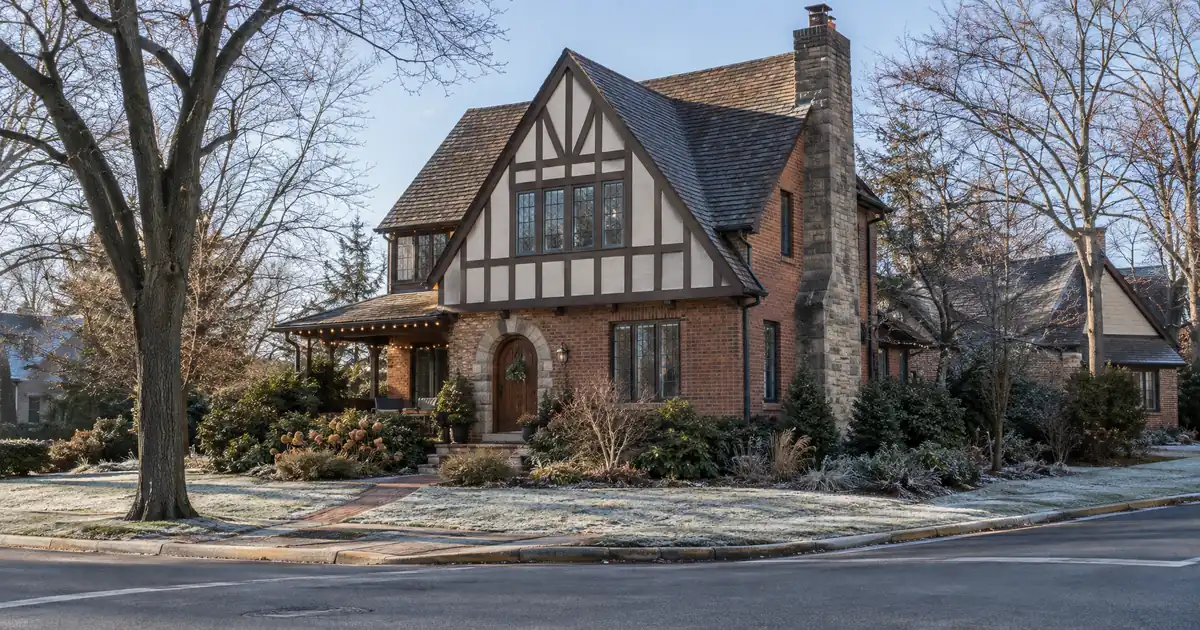
The Quick Read: A foreign national can sometimes pull equity from a U.S. rental by qualifying on documented bank deposits instead of U.S. tax returns or a U.S. credit file, but only through the small group of lenders that accept foreign statements. The best program for your file depends on your deposits, the property, and how clean your paperwork is. Lendmire is a mortgage broker that shops these files across select wholesale lenders.
- Qualification rests on about 12 months of statements, with income estimated from deposit averages and lender-specific expense factors.
- Cash-out on an investment property typically tops out around 75% LTV, and foreign-national overlays can pull a given file lower.
- Loan sizes run roughly $125,000 to $3,500,000, with reserves commonly near 6 months of the housing payment.
- A rent-based DSCR loan is often the simpler lane when the rent clearly covers the payment, so bank statements earn their place only when the rent story is weak.
- Translated, certified, and sourced documents are worth preparing early, because lenders that accept foreign statements expect them to be clear and verifiable.
Who This Program Fits (and Who It Doesn’t)
This lane fits a non-resident owner of a U.S. rental whose strength is cash flow abroad, not U.S. paperwork. Think of a business owner overseas who bought a U.S. rental years ago and now wants equity out for the next purchase. Their deposits tell a stronger story than the property’s rent does.
DSCR Cash-Out Calculator
Run the cash-out numbers in your market
Rate source: Freddie Mac 30-yr average via FRED® — Federal Reserve Bank of St. Louis · effective Nov 5, 2026
Prefilled with starting assumptions — enter your property’s value, balance, taxes, and insurance for a more accurate picture.
Program parameters update from Lendmire’s centralized guideline source. Taxes and insurance are editable estimates.
As of Nov 5, 2026 · General Freddie Mac market benchmark, not a Lendmire loan offer. Property value, balance, taxes, and insurance are editable estimates. Maximum loan-to-value varies by lender, program, property type, and seasoning. Not a Loan Estimate, approval, or commitment to lend. Program availability and eligibility are subject to lender guidelines, credit approval, property review, and underwriting.
It fits less well in three cases. The first is an owner whose lease rent comfortably covers the payment. A DSCR loan is reviewed primarily on property-level rental income covering the payment, subject to lender guidelines, and it asks for less borrower paperwork. The second is a borrower whose foreign deposits are hard to trace or mix personal and business money. The third is a visa holder or green-card holder living in the U.S. Those borrowers often fit a standard alt-doc program, so the foreign-national label can cost them leverage they don’t need to give up.
Here is the tradeoff in one line. Bank statements document the borrower, while DSCR documents the property. If the property is the stronger half of the file, lean on it. If the borrower is, lean on the borrower.
Lendmire’s piece Best Short-Term Rental Cash-Out Refinance Program as a Foreign National Owning a US Rental covers the case where the property’s income is Airbnb-style. Short-term rental rules can vary by city, county, HOA, and property type, so investors should confirm local rules before relying on projected rental income.
How Underwriting Reads Foreign Bank Statements, Step by Step
Underwriters build qualifying income by averaging deposits across the statement window and then applying an expense factor. Across Lendmire’s wholesale network, the window is typically 12 months, using either personal or business accounts. Each lender sets its own expense factor, so no universal formula exists and none should be promised.
The review usually runs in this order:
1. Account selection. The lender decides which accounts count. Business accounts usually take a larger expense adjustment than personal accounts, though rules differ by program.
2. Deposit scrub. Reviewers remove transfers between your own accounts, one-time windfalls, loan proceeds, and anything they can’t tie to income.
3. Currency conversion. Foreign-currency deposits are converted and averaged, so a volatile exchange rate can move your qualifying income even when your business didn’t change.
4. Translation and certification. Statements not in English generally need a certified translation, and lenders may want proof the accounts belong to you.
5. Ownership and entity review. If the property sits in an LLC, the lender looks at who stands behind it, subject to program terms.
6. Property review. An appraisal sets value and therefore LTV, and the rental’s condition and occupancy are confirmed.
Credit is the other open question. Many lenders accept a foreign credit report or bank reference letters where no U.S. file exists. Others want a U.S. score. The requirement changes by lender and borrower category, which is exactly why a broker that sees many guidelines helps.
Bank Statement, DSCR, Asset-Based, or ITIN: Which Lane?
No lane wins on every file. The right choice follows your strongest, cleanest evidence. Here is how the common scenarios usually sort out.
| Your situation | Likely lane | Why |
|---|---|---|
| Rent clearly covers the payment | DSCR | Property income drives the file |
| Rent is thin or not yet established | Bank statements | Deposits carry the file |
| Large liquid balances, uneven deposits | Asset-based | Assets support the file |
| U.S.-resident ITIN holder | ITIN or standard alt-doc | Often priced nearer domestic files |
| Clean deposits, strong rent | Compare both | Leverage and terms may differ |
A word on DSCR below 1.00 coverage. Programs in that range are available through select lenders in the network, but LTV and terms adjust to match. That is a real option for some rentals, though it comes with reduced leverage.
The asset-based lane deserves a note too. On a rental, expect the same investment cash-out ceiling of about 75% LTV that applies elsewhere in this article, and don’t let a higher primary-residence figure shape your expectations.
What “Best Program” Means for Your File
The best program for your situation is the one whose documentation rules match your strongest evidence. No program is best in the abstract, and the lenders that write this product vary in what they accept.
A broker scoring a foreign-national bank-statement file looks at these criteria:
- Account acceptance. Does the lender take foreign-currency statements, and personal, business, or both?
- Expense factor. How much of your deposits does the lender treat as business expense?
- Credit substitute. Does the lender accept a foreign credit report or reference letters?
- Cash-out ceiling. The investment-property cap is typically around 75% LTV, but some lenders set it lower for foreign nationals.
- Reserve rules. Typical programs ask for roughly 6 months, though foreign-national files may be asked for more. Some lenders allow reserves held abroad if documented, and others want funds moved to a U.S. account.
- Entity rules. Can the loan close in an LLC, and what do guarantor rules require?
- Closing mechanics. Does the lender allow remote signing, power of attorney, or notarization abroad?
Weigh these in order of how likely each is to break your file. Someone with perfect statements and a U.S. LLC cares most about the cash-out ceiling. Someone with statements in two currencies cares most about account acceptance.
How Cash-Out Is Sized
Cash-out is sized from appraised value, not from what you paid. The lender applies its LTV cap to the appraised value, subtracts your current payoff and costs, and the remainder is your potential proceeds. On an investment property the cap is typically up to 75% LTV. Foreign-national overlays can lower it, and your file’s strength decides where you land.
The table below is an illustration, not a quote and not a market figure. It assumes a modeled existing payoff of 55% of the original appraised value, and every row is a percentage of that original value. In the lower-appraisal column, the payoff stays at 55% of the original value while the cap applies to the smaller number.
| Item | Base case | Appraisal 5% lower |
|---|---|---|
| Appraised value | 100% of value | 95% of value |
| Cash-out cap at 75% LTV | 75% of value | 71.25% of value |
| Room before costs (cap minus payoff) | 20% of value | 16.25% of value |
Two lessons come out of that table. First, a modest appraisal miss takes a disproportionate bite out of proceeds: a 5% drop in value cuts the room before costs from 20% to 16.25% of the original value, a loss of nearly a fifth of the proceeds. The payoff stays fixed while the cap shrinks. Second, cash-out raises the new payment. If the file also leans on rent, higher debt can lower the coverage ratio, so run both before you commit to a larger draw.
Ask what the proceeds are for. Pulling equity to buy another rental where the numbers already work is a clean use. Pulling equity to cover a shortfall at the property itself is a different decision, and it is worth stress-testing before you sign.
An illustrative calculator on the site lets you adjust these inputs yourself. Treat it as an estimate, not a quote.
Recent Cash Purchase, Seasoning, and Reserves
Many foreign investors buy U.S. rentals with cash and refinance later. Lenders treat that situation differently, and the rules aren’t uniform. Some programs apply a seasoning period before cash-out. Others have delayed-financing-style options for recent cash purchases. Ask early, because the answer affects whether this is even the right moment to apply.
Reserves deserve their own planning. A typical program asks for roughly 6 months of the housing payment, held as verified liquid funds. For a foreign-national file the lender may ask for more, and the location of the funds matters. Two habits cause trouble:
- Moving money at the last minute. A large transfer into a U.S. account right before application looks like an unsourced deposit. Lenders want a paper trail from the original source.
- Shuffling between your own accounts. Internal transfers inflate deposit totals, and underwriters remove them.
If you expect to need reserves in a U.S. account, move them early and keep the wire records.
The Document Pile, Explained
Most of these documents are routine. The pitfalls are what slow files down.
| Document | Why it’s needed | Common pitfall |
|---|---|---|
| Passport | Primary ID | Expired or name mismatch |
| 12 months of statements | Income from deposits | Missing months, gaps |
| Certified translation | Lender must read them | Uncertified or partial |
| Current mortgage statement | Payoff amount | Out-of-date balance |
| Insurance and tax bill | Property carrying costs | Policy lapses |
| Entity documents | LLC ownership | Unsigned operating agreement |
| U.S. bank account | Closing funds, payments | Opened too late |
| Foreign credit report or references | Credit substitute | Lender doesn’t accept it |
A passport is the anchor. Whether a tax-ID number is required depends on the lender and the loan structure. An LLC borrower generally needs its own EIN, and some programs want an ITIN while others don’t.
One misconception comes up constantly. An ITIN is only a tax-processing number, and it grants no immigration status or work authorization, as the American Immigration Council explains. It can help a file, but it never changes who you are for lending purposes.
Where the General Rule Breaks
Borrower category. A pure foreign national lives abroad with no U.S. credit or status. A visa holder, green-card holder, or U.S.-resident ITIN holder may qualify under a standard alt-doc or DSCR program instead, often with better leverage. If you live in the U.S. on a work visa, don’t assume the foreign-national label applies.
Occupancy decides the disclosure regime. A bank-statement loan on a non-owner-occupied rental is a business-purpose investor loan. Foreign-national programs generally cover investment properties and second homes, not primary residences. A second-home cash-out is a consumer mortgage, so TRID disclosures apply, and the typical ceiling is about 75% LTV. A rental, including a short-term rental, is business-purpose and exempt from TRID. Know which one your property is, because the paperwork and your borrower experience differ. Consumer mortgage licensing for owner-occupied alt-doc files covers 16 states, so if the property is a second home, its state matters.
Business purpose is real, but it’s not a free pass. Federal guidance treats credit to buy or improve non-owner-occupied rental property as business-purpose credit, which the CFPB’s truth-in-lending manual describes. The Federal Register ability-to-repay rule places such loans outside the consumer ability-to-repay framework. That is why lenders can underwrite on deposits or on rent. It doesn’t mean every rule disappears, so expect screening and documentation checks anyway.
Tax. Tax treatment varies; consult a qualified professional.
Extended terms. Interest-only and 40-year structures are DSCR-side offerings. Bank-statement terms follow each lender’s program sheet, so term length is a question to ask, not something to assume.
Lender variation. Some lenders accept a foreign credit report while others insist on a U.S. score, and leverage caps differ too. This variation is the reason to shop the file instead of picking a lender first.
Key Terms Defined
Foreign national: A borrower who is not a U.S. citizen or permanent resident and typically has no U.S. credit file or income history.
Bank statement loan: A loan that qualifies the borrower on documented income under the applicable program, using deposit averages instead of tax returns, subject to lender guidelines.
Expense factor: The percentage of business deposits a lender treats as operating cost before counting the rest as income.
Cash-out refinance: A new loan that pays off the old one and returns the leftover equity to the borrower as cash.
LTV: Loan-to-value, the new loan amount divided by the property’s appraised value.
DSCR: Debt service coverage ratio, monthly rent divided by the full monthly housing obligation.
Seasoning: The time a lender wants you to have owned a property or held funds before using them.
Reserves: Verified liquid funds the lender requires you to hold after closing, usually expressed in months of the housing payment.
What the Decision Looks Like in Practice
Start with an honest comparison of your two stories: the property’s and yours. If the rent comfortably covers the payment, ask about DSCR first and keep bank statements as the backup. If rent is weak but your deposits are steady and traceable, the bank-statement lane makes sense. If neither story is clean, fix the documents before you apply, because a weak first submission narrows your options.
A short self-check helps:
- Do you have about 12 months of statements you can fully explain?
- Are the accounts in your name or your entity’s name?
- Can you document the source of your reserves?
- Do you know whether the property is a pure rental or a possible second home?
- Have you checked your borrower category?
For a deeper foundation on how investor loans are structured, Lendmire’s complete DSCR loans guide covers the rent-based side of the market.
If you are a foreign national with a U.S. rental and want to see how the numbers work, Lendmire can help you compare bank statement loan options based on your deposits, the property, credit profile, leverage, and your goals. Programs are subject to lender guidelines. This is not a commitment to lend.
Frequently Asked Questions
Can a foreign national cash-out refinance a U.S. rental using bank statements?
Sometimes. A subset of wholesale lenders accept foreign statements and qualify on documented income under the applicable program, subject to lender guidelines. Many foreign-national files use DSCR instead, so the bank-statement route is a narrower field.
Do I need a U.S. credit score?
It depends on the lender. Some accept a foreign credit report or bank reference letters, while others want a U.S. score. A broker can match your file to the lenders whose credit rules fit.
How much equity can I take out?
On an investment property, cash-out typically tops out around 75% LTV of the appraised value. Foreign-national overlays can set it lower, and your profile, loan size, and property type all matter. Loan sizes run roughly $125,000 to $3,500,000.
Does a recent cash purchase affect cash-out?
Often yes. Some programs apply seasoning rules, and others offer delayed-financing-style options for recently purchased properties. Ask before you apply, because it determines whether the timing works.
Does a lower appraisal change my proceeds?
Yes, and the effect is larger than the appraisal miss itself. Your payoff stays fixed while the LTV cap applies to a smaller value, so proceeds shrink faster than the value does.
About Lendmire
Lendmire is a mortgage brokerage (NMLS# 2371349) licensed for consumer mortgage lending in 16 states, arranging bank statement and other alternative-documentation mortgages (P&L-only, 1099-only and asset-based paths) through a wholesale lending network. Eligibility is determined by the lender on each file. Scotsman Guide named Lendmire a Top Mortgage Workplace in both 2025 and 2026.
For the mechanics of pulling equity out of a rental property, see Lendmire’s guide to cash-out refinance on an investment property.
Get Started
Ready to find the right loan for you?
See your offer in seconds. No credit pull, no obligation.
Informational only. Not a Loan Estimate, approval, or commitment to lend. Program availability and eligibility are subject to lender guidelines, credit approval, property review, and underwriting.
References
1. American Immigration Council, Facts About the ITIN
2. CFPB, Truth in Lending Act examination manual
3. Federal Register, Ability-to-Repay and Qualified Mortgage Standards
This article is part of Lendmire’s bank statement loan program — full qualification details, guidelines, and scenarios live on the program page.
Related reading: How to Qualify and Apply for a Bank Statement Cash-Out Refinance at Maximum LTV · How to Qualify and Apply for a Bank Statement Cash-Out Refinance on a Home You Already Own · Bank Statement Cash-Out Refinance Requirements Below the Lender’s Minimum Loan Amount
Brandon Miller
Founder & CEO, Mortgage Loan Originator, Lendmire LLC
- Mortgage Loan Originator · NMLS# 1129696 · Verify on NMLS Consumer Access
- North Carolina Real Estate Broker · License# 343312 · Verify on NCREC
- North Carolina Insurance Producer · License# 19053198 · Property, Casualty, Life, Health · Verify on NAIC SBS
- Lendmire LLC · Firm NMLS# 2371349 · Verify firm licensure
Disclosure information. Lendmire is a state-licensed mortgage brokerage under NMLS# 2371349. Lendmire is not a depository institution, direct lender, or financial advisor — all loans referenced are placed through wholesale lender partners and are subject to each lender's underwriting standards. This article is provided for general informational purposes and is not a commitment to lend, nor does it constitute financial, legal, or tax advice. Loan programs, terms, rates, and qualification standards change without notice and depend on borrower profile, property type, and the state in which the subject property is located. Equal Housing Opportunity provider. NMLS Consumer Access: nmlsconsumeraccess.org.