
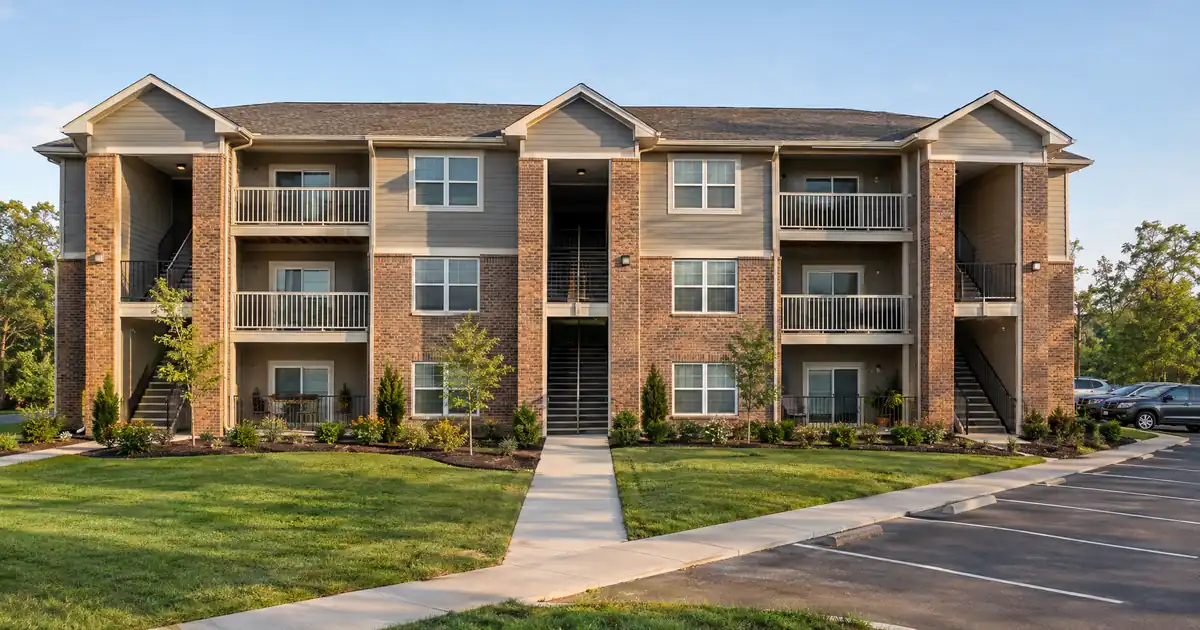
The Quick Read: The best program for your duplex, triplex, or fourplex depends on how you use the property and what your deposits show. A bank statement cash-out refinance is reviewed around documented income under the applicable program, subject to lender guidelines. The lender reads your deposit history instead of your tax returns. Leverage tops out near 75% LTV on a rental cash-out and can reach 80% on an owner-occupied primary residence. The right fit comes from matching your file to the program that reads it most favorably.
- Most programs in Lendmire’s wholesale network start from 12 months of personal or business statements.
- Investment cash-out on a rental tops out around 75% LTV, subject to lender guidelines.
- An owner-occupied cash-out runs up to 80% LTV on a primary residence, or up to 75% with an accountant-prepared expense ratio, and up to 75% on a second home.
- Occupancy decides the paperwork. A pure rental is a business-purpose loan, while a house hack is a consumer mortgage.
- If rent covers the payment comfortably but your deposits are thin, DSCR often fits better than bank statements.
Lendmire is a mortgage broker. It does not lend or fund. It places files with select wholesale lenders and matches each scenario to a program. This article walks through the mechanics, step by step, then shows where the usual rules break.
DSCR Cash-Out Calculator
Run the cash-out numbers in your market
Rate source: Freddie Mac 30-yr average via FRED® — Federal Reserve Bank of St. Louis · effective Oct 29, 2026
Prefilled with starting assumptions — enter your property’s value, balance, taxes, and insurance for a more accurate picture.
Program parameters update from Lendmire’s centralized guideline source. Taxes and insurance are editable estimates.
As of Oct 29, 2026 · General Freddie Mac market benchmark, not a Lendmire loan offer. Property value, balance, taxes, and insurance are editable estimates. Maximum loan-to-value varies by lender, program, property type, and seasoning. Not a Loan Estimate, approval, or commitment to lend. Program availability and eligibility are subject to lender guidelines, credit approval, property review, and underwriting.
What a Bank Statement Cash-Out Looks Like on a Two-to-Four Unit Rental
A bank statement cash-out replaces your current mortgage with a larger one and pays you the difference. It reads your deposits to set income. Scotsman Guide describes the review as covering 12 to 24 months of personal or business statements. Lendmire’s network programs generally work from 12 months.
Two-to-four unit buildings sit in the residential lending lane. The same trade press names them as a core investor segment in the non-QM market, per Scotsman Guide’s coverage of equity and non-QM lending. Loan sizes in this lane typically run from $125,000 up to $3,500,000. Reserves commonly sit around six months of the housing payment.
The product suits a self-employed investor whose tax returns show heavy write-offs. Taxable income looks small on paper. Deposits tell a stronger story. This loan is built to read that story.
Key Terms Defined
Bank statement loan: A mortgage that is reviewed around average deposits over a set statement window instead of tax returns.
Expense factor: The share of business deposits the lender treats as operating costs before it counts the remainder as income.
Cash-out refinance: A new, larger mortgage that pays off the old one and releases the difference to you as cash.
Seasoning: The length of time you have owned the property or held the loan being paid off.
DSCR: Debt service coverage ratio, meaning the property’s rent divided by its full monthly debt obligation.
Form 1025: The appraisal report format used for two-to-four unit income properties.
How Underwriting Treats Your Deposits, Step by Step
Underwriting on this file runs in a fixed order. Each step can move your final loan amount.
1. The statement window is set. Your program decides between 12 months and a longer period. A longer window can help seasonal or fast-growing income. A shorter one can help if your income is rising.
2. Eligible deposits are totaled. The underwriter screens out transfers between your own accounts and other credits that are not income. Each program defines this differently.
3. An expense factor is applied to business accounts. The formula is eligible deposits, divided by the months in the window, times what is left after the factor. As an illustration, a 50% factor means a business account showing 100 in monthly deposits counts as 50 of income. Trade coverage uses 50% as a common example, but programs vary, and a lender-specific factor is never a promise.
4. The factor can sometimes be replaced. An accountant-prepared expense ratio or a profit-and-loss statement may substitute for the default. On an owner-occupied cash-out, the accountant-prepared route carries a lower leverage ceiling, so it trades income credit for lower LTV.
5. Debt-to-income is calculated. Qualifying income is compared to your total obligations, including the new loan. The lender’s own guidelines set the limit.
6. The property is appraised. A two-to-four unit property is appraised on Form 1025, which includes a rent analysis. That form is only the report format. Agency conforming loan rules do not apply to non-QM bank statement files.
7. Cash-out is sized. Your proceeds are capped by the tighter of two limits: equity (the LTV ceiling) or income (debt-to-income).
8. The new loan pays off the old lien and costs. What remains goes to you as proceeds. Proceeds are not income.
What “Best” Means for a Two-to-Four Unit File
No single program wins for every investor. The lenders that write this loan differ in how they read deposits, so the best program for your situation comes down to a handful of criteria. This scorecard shows what to weigh.
| Criterion | Why it matters on 2-4 units |
|---|---|
| Statement window options | Seasonal or growing income reads differently |
| Expense factor handling | Default factor versus accountant ratio or P&L |
| Personal vs. business treatment | Programs weight the two account types differently |
| Cash-out LTV by occupancy | Rental, second home, and primary differ |
| Entity vesting rules | Whether an LLC can hold title, per program terms |
| Appraisal treatment of rent | Form 1025 rent analysis can affect value support |
A broker that shops multiple wholesale lenders can compare these rows against your actual file. A single lender can only show you its own answer. The strongest leverage requires a clean credit profile and steady deposits. The strictest overlays want more reserves and a longer statement history.
Leverage Depends on How You Use the Building
Cash-out ceilings change with occupancy, so it’s worth confirming which use applies before planning around a given loan-to-value figure.
| Property use | Cash-out ceiling (typical) | Disclosure regime |
|---|---|---|
| Rental (non-owner-occupied) | Around 75% LTV | Business-purpose, TRID-exempt |
| Primary residence, fixed expense ratio | Up to 80% LTV | Consumer mortgage, TRID applies |
| Primary residence, accountant-prepared ratio | Up to 75% LTV | Consumer mortgage, TRID applies |
| Second home | Up to 75% LTV | Consumer mortgage, TRID applies |
Primary-residence purchase and rate-term loans can reach up to 90% LTV through select lenders. That figure does not apply to a cash-out. On a rental purchase, bank statement leverage varies by lender, so treat it as a conversation rather than a number. Asset-depletion qualification, which uses liquid assets in place of deposits, can reach about 80% LTV on a primary residence. All figures are subject to lender guidelines, credit profile, and loan size.
Pricing and payment details are not covered in this article. Any figures depend on the specific loan scenario and lender, so they are confirmed only when a loan is quoted.
Why Occupancy Changes the Paperwork
A rental you do not live in is a business-purpose loan. The Federal Register notice for the ability-to-repay rule states that business-purpose loans fall outside the consumer rule and treats investment-purpose loans as business-purpose. In practice, that means the lender’s own guidelines carry the underwriting load.
Owner-occupied files go the other way. If you live in one unit of a fourplex, the loan is a consumer mortgage and TRID disclosures apply. That changes the forms you receive, and it can change which programs fit.
The test looks at the loan’s purpose as well as the property. A rental cash-out whose proceeds go to personal use is a facts question. Tell your broker plainly how you plan to use the funds before the file is structured. Tax treatment varies; consult a qualified professional.
Rent on Your Statements: The Overlap Problem
Rent from four units often lands in the very account being underwritten. That creates two issues.
First, the lender can see rent deposits and may treat them as part of your cash flow. Second, the appraiser’s rent schedule and your leases need to tell the same story. Mismatched leases and appraisal rent figures are a common reason a file stalls.
Rent paid in cash or through a property manager is harder to trace. If a manager collects rent and sends you a net deposit, the statements show less than the gross. A clean ledger or management statement can bridge that gap. Keep rent deposits in an account you can document, and keep personal and rental money from tangling together.
Worked Example: Net Proceeds on a Fourplex
The numbers below are modeled assumptions, not market data. They are shown as percentages of appraised value so the structure is clear.
- Appraised value: 100 units.
- Leverage: 75% LTV on a rental cash-out, so the new loan is 75 units.
- Existing payoff: 50 units.
- Closing costs: a couple of units, which varies.
- Net proceeds: low-20s as a percent of value. Exact terms depend on the lender’s guidelines, property type, leverage, and a full review of the borrower’s file.
Now the income side. Say twelve months of business deposits average 100 units a month. A 50% expense factor leaves 50 units of qualifying income. If the accountant route supports a lower factor, qualifying income rises, though on an owner-occupied file the leverage ceiling drops. That tradeoff is why the choice of documentation path matters as much as the headline LTV.
Gross equity and net proceeds are different numbers. Plan around the net.
Bank Statement or DSCR?
For a pure rental, DSCR often fits better. DSCR qualifies primarily on property-level rental income covering the payment, subject to lender guidelines. It does not depend on your personal deposits, so it avoids the personal debt-to-income limit that can cap a multi-property investor on the bank statement path. Lendmire’s piece Best DSCR Cash-Out Refinance Program on a Two-to-Four Unit Investment Property covers that route in depth. The complete DSCR loans guide explains the product from the start.
| Factor | Bank statement | DSCR |
|---|---|---|
| What is qualified | Your deposits | The property’s rent coverage |
| Personal debt-to-income | Matters | Not the main test |
| Strong when | Cash flow is high, rent coverage is thin | Rent covers the payment comfortably |
| Typical rental cash-out LTV | Around 75% | Around 75% |
| Typical borrower | Self-employed with strong deposits | Investor with a growing portfolio |
Bank statement wins in one situation. Your deposits are strong, but the building’s rent only thinly covers its payment. DSCR wins when the rent covers the payment well and your personal debts would crowd a bank statement file. LLC-titled files may be available under either lane, depending on program guidelines, but the bank statement income still belongs to a person, so the owner is underwritten.
If you live in one unit, the picture changes again.
Where the Rule Breaks
Several edge cases bend the general rule.
- House hacking. Living in one unit puts a consumer mortgage in play. The occupancy ceilings and disclosures shown above apply, not the rental ones.
- Entity borrowers. An LLC can hold title on a rental, subject to program terms. Moving title into an LLC before a refinance can trigger due-on-sale language in the existing loan, so settle that with the current lender and title company first.
- Personal versus business statements. Some programs credit personal deposits at a high share and apply a factor to business accounts. Others do the reverse. The difference can change your qualifying income meaningfully.
- Owned free and clear. A building with no mortgage is generally treated as a cash-out, not a purchase.
- A low appraisal. If Form 1025 comes in below your expectation, the LTV ceiling applies to the lower number. Cash-out shrinks fast.
- Payoff surprises. Interest accrued on the old loan raises the payoff and cuts net proceeds.
One more edge deserves a flag. Non-QM does not mean subprime. Per Scotsman Guide, non-QM borrowers typically carry stronger credit and put more money down than many assume. The loans are still underwritten individually.
Document Checklist for the File
| Item | Why it is needed |
|---|---|
| 12 months of statements | Deposit averaging |
| Expense ratio letter or P&L (if used) | Replaces the default factor |
| Leases for every unit | Supports the rent schedule |
| Current mortgage statement | Establishes payoff |
| Insurance declaration page | Confirms coverage |
| Entity documents (if titled in an LLC) | Confirms ownership and authority |
| Explanation of large deposits | Prevents misread income |
Start the large-deposit explanations early. Underwriters flag unusual credits before anything else.
Who Should Choose Something Else
Skip bank statements if your rent covers the payment comfortably and your personal debts are heavy. DSCR fits that profile better. If you only need a modest amount of equity and have an existing bank relationship, a line of credit may cost less, although some banks decline credit lines on non-owner-occupied homes. If your tax returns already show strong, steady income, a conventional path may fit, with the limits that come with agency rules.
A bank statement cash-out suits investors whose cash flow is strong, whose returns understate it, and whose rent coverage alone would leave money on the table.
Frequently Asked Questions
Can I use bank statements to cash out on a fourplex?
Yes, on many programs, subject to lender guidelines. The loan is reviewed around documented deposits, and the fourplex is the collateral. Expect leverage around 75% LTV if you do not live in it. Appraisal on Form 1025 sets the value used for that ceiling.
Can I cash out if I live in one of the units?
Yes, and the leverage can be higher. A primary residence cash-out runs up to 80% LTV with a fixed expense ratio, or up to 75% with an accountant-prepared ratio. The file is a consumer mortgage, so TRID disclosures apply. Your state matters too, because Lendmire’s consumer licensing covers 16 states.
Does DSCR beat bank statements for a rental?
Often, for a pure rental with comfortable rent coverage. DSCR looks at the property rather than your personal debt-to-income. Bank statements win when your deposits are strong and the building’s rent coverage is thin.
How much cash will I actually receive?
Less than your gross equity. Net proceeds equal the new loan, minus the old payoff, closing costs, and any debts you pay off. Plan around that net figure, not the maximum loan.
Does a bank statement loan mean I will not be underwritten?
No. The lender reviews credit, reserves, deposits, property value, and ownership. On a business-purpose rental loan, the lender’s own guidelines set the standard.
Next Steps
If you are self-employed and want to see how the numbers work, Lendmire can help you compare bank statement loan options based on your deposits, the property, credit profile, leverage, and your goals. Call 828-256-2183 or request a quote to start the conversation. Program details are subject to lender guidelines. This is not a commitment to lend.
Investors weighing their equity options can start with Lendmire’s guide to cash-out refinance on an investment property.
For current guidelines and terms, see Lendmire’s bank statement loan programs page.
About Lendmire
As a mortgage broker (NMLS# 2371349), Lendmire helps self-employed and high-net-worth borrowers in 16 states qualify on bank statements, a profit-and-loss statement, 1099s or liquid assets instead of tax returns, through wholesale lenders. Lendmire is never the lender; program terms are set by the lender and its guidelines. Scotsman Guide named Lendmire a Top Mortgage Workplace in both 2025 and 2026.
Get Started
Ready to find the right loan for you?
See your offer in seconds. No credit pull, no obligation.
Informational only. Not a Loan Estimate, approval, or commitment to lend. Program availability and eligibility are subject to lender guidelines, credit approval, property review, and underwriting.
References
1. Scotsman Guide – Helping borrowers fit the boxes
2. Scotsman Guide – Mortgage brokers tapping home equity and non-QM
3. Form 1025
4. Federal Register – Ability-to-Repay and Qualified Mortgage Standards
This article is part of Lendmire’s bank statement loan program — full qualification details, guidelines, and scenarios live on the program page.
Brandon Miller
Founder & CEO, Mortgage Loan Originator, Lendmire LLC
- Mortgage Loan Originator · NMLS# 1129696 · Verify on NMLS Consumer Access
- North Carolina Real Estate Broker · License# 343312 · Verify on NCREC
- North Carolina Insurance Producer · License# 19053198 · Property, Casualty, Life, Health · Verify on NAIC SBS
- Lendmire LLC · Firm NMLS# 2371349 · Verify firm licensure
Disclosures. The information presented in this article is general market commentary, not financial, legal, or tax advice. Lendmire is a mortgage brokerage (NMLS# 2371349) — not a direct lender or depository institution — and loan placement is subject to lender underwriting. Nothing in this content represents a commitment to lend. Loan terms, pricing, and program availability vary based on borrower qualifications, property characteristics, and state of subject property, and are subject to change at any time. Lendmire complies with Equal Housing Opportunity requirements. Consumer access: nmlsconsumeraccess.org.