
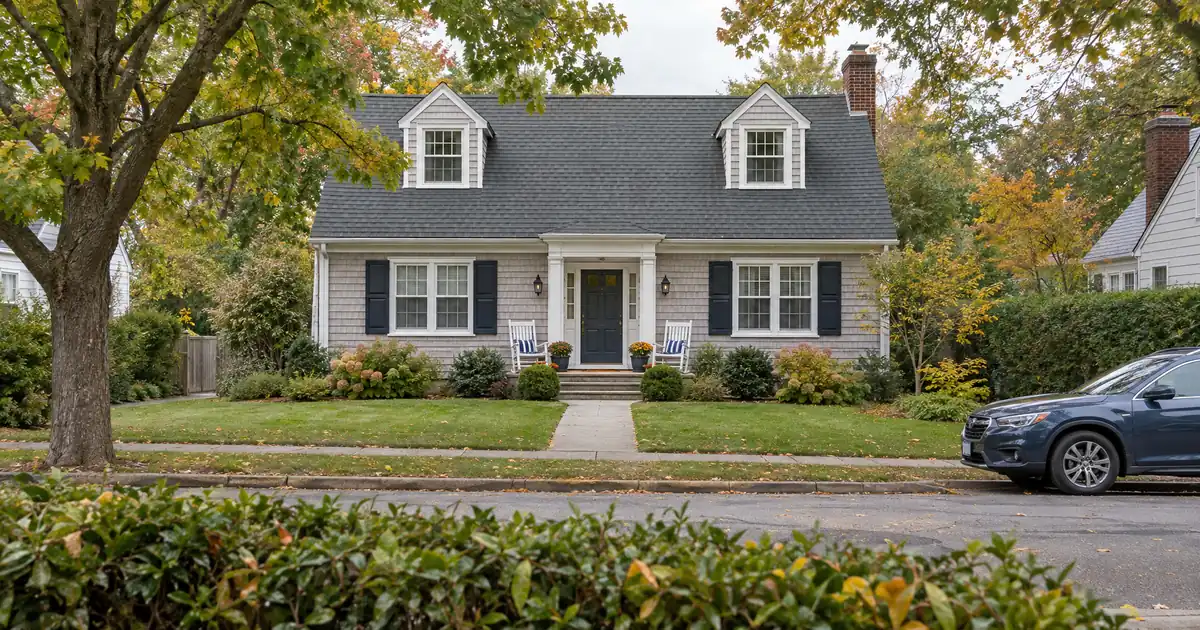
The Quick Read: When a conventional lender declines an LLC-held rental, the route is a non-QM cash-out refinance, and the right lane depends on what the file shows. A bank statement loan reads your deposits, while a debt service coverage ratio (DSCR) loan reads the property’s rent, and select wholesale lenders place both, subject to lender guidelines. Lendmire is a mortgage broker that matches your scenario to the program rather than lending directly.
- Conventional lenders are built around individual borrowers, so LLC title is a common reason for a decline.
- A bank statement loan is reviewed on documented income under the applicable program, usually built from 12 months of deposits.
- Cash-out on an investment property tops out around 75% LTV (loan-to-value, the loan as a percent of the property’s value).
- Whether an LLC can be the borrower depends on each program’s eligibility rules. Some programs want an individual or trust on title.
- A DSCR loan is often the cleaner lane when rent is strong, the property count is high, or you want the debt to stay in the entity.
Why Do Conventional Lenders Say No to LLC Rentals?
Conventional lenders say no because their products assume a person owns the property and carries the loan. An LLC breaks that assumption. Add several financed properties or self-employment income that looks thin on a tax return, and the file stops fitting the box.
DSCR Cash-Out Calculator
Run the cash-out numbers in your market
Rate source: Freddie Mac 30-yr average via FRED® — Federal Reserve Bank of St. Louis · effective Oct 29, 2026
Prefilled with starting assumptions — enter your property’s value, balance, taxes, and insurance for a more accurate picture.
Program parameters update from Lendmire’s centralized guideline source. Taxes and insurance are editable estimates.
As of Oct 29, 2026 · General Freddie Mac market benchmark, not a Lendmire loan offer. Property value, balance, taxes, and insurance are editable estimates. Maximum loan-to-value varies by lender, program, property type, and seasoning. Not a Loan Estimate, approval, or commitment to lend. Program availability and eligibility are subject to lender guidelines, credit approval, property review, and underwriting.
A decline is a diagnosis, not a verdict. The reason on the letter points to the lane that fixes it.
| Decline reason | What it means | Lane that often fits |
|---|---|---|
| LLC holds title | Product wants an individual borrower | DSCR, or move title first |
| Tax returns show low income | Write-offs shrink qualifying income | Bank statement |
| Too many financed properties | Conventional caps the count | DSCR |
| Debt-to-income too high | Personal debts crowd out the loan | DSCR |
One decline can have two causes. A contractor with an LLC rental and heavy write-offs might fail on both title and income. Sorting the reasons first keeps you from applying to the wrong program and collecting a second no.
What Is a Bank Statement Cash-Out Refinance?
A bank statement cash-out refinance replaces your current mortgage with a larger one and hands you the difference in cash. The lender reviews your file on documented income under the applicable program, subject to lender guidelines. It does that by reading your deposits instead of your tax returns.
Across Lendmire’s wholesale network, the typical file uses 12 months of statements, personal or business. The lender averages your qualifying deposits and applies an expense factor to business-account deposits. That factor differs by lender, so no universal formula exists.
This is not a shortcut around proof. It is a different kind of proof. You still document income, assets, and the property. The lender simply reads cash flow where a conventional lender reads a tax return.
Loan sizes in this lane generally run from $125,000 to $3,500,000. Reserves are commonly around six months of the housing payment, subject to lender guidelines.
Key Terms Defined
Non-QM: a mortgage that falls outside the standard rules for qualified mortgages and is underwritten under a lender’s own program.
Cash-out refinance: a new, larger loan that pays off the old one and gives you the remaining equity in cash.
Expense factor: the percentage of business deposits a lender treats as operating costs before counting the rest as income.
Seasoning: the waiting period a lender wants between buying a property and refinancing it.
Vesting: how title to the property is held, such as in your name, a trust, or an LLC.
Personal guarantee: your promise to repay if the LLC does not.
DSCR: a ratio that compares a property’s rent to its full monthly debt obligation.
Can an LLC Borrow on a Bank Statement Cash-Out?
It depends on the program. A bank statement loan qualifies a person, so many programs want an individual or a trust on title. Some will lend to an entity with a guarantor. Eligibility on that point varies by lender, which is the main reason a broker that sees many programs matters here.
Where an entity is allowed, expect these documents:
- Articles of organization and the operating agreement
- The EIN letter and a certificate of good standing
- Guarantor identification and credit authorization
- Complete bank statements, personal or business
- The current mortgage statement, lease, and insurance declarations
Entity age usually matters less than people fear. The lender looks hard at the property, the guarantor’s credit, and reserves.
An LLC does not make the loan non-recourse. Most lenders require a personal guarantee, so your assets stay exposed to the loan. The LLC protects you from liability claims at the property. It does not protect you from the lender.
Bank Statement or DSCR for an LLC Rental?
Choose the lane by asking which number is stronger, your deposits or the property’s rent. Bank statement programs test you. DSCR programs test the property. Neither is an agency product, and both are non-QM.
| Your situation | Lane that often fits |
|---|---|
| Strong deposits, thin rent | Bank statement |
| Strong rent, uneven deposits | DSCR |
| Many financed properties | DSCR |
| Debt must stay in the LLC | DSCR |
| Cash out on your own home | Bank statement |
DSCR is purpose-built for investment property. The lender divides monthly rent by the full monthly obligation, including principal, interest, taxes, insurance, and any HOA dues. Rent that clears the payment with room to spare makes a clean file. Lendmire’s complete DSCR loans guide walks through that math.
If rent falls short of the payment, options still exist. Programs below 1.00 coverage are available through select lenders in the network, but the LTV and terms adjust. Strong deposits can also carry a file in the bank statement lane, if the title question is solved.
Leverage matters in both lanes. A cash-out on an investment property tops out around 75% LTV. Investment purchase leverage on bank statement documentation varies by lender, and investor-focused leverage guidance belongs to the DSCR side.
One cost deserves honest attention. Moving from a conventional loan into a non-QM loan may bring weaker terms, so rerun your cash-flow math before you commit. The extra cost sometimes buys access to equity you could not otherwise reach. Other times the cash-out is not worth the price.
How Do Lenders Read Your Deposits?
Lenders read deposits in four steps: collect complete statements, remove non-income credits, apply the expense factor, and average the result. The screening step is the one that surprises people.
1. Complete statements. Every page, every month, with no gaps.
2. Screening. Transfers between your own accounts, loan proceeds, refunds, and unexplained credits come out.
3. Expense factor. On business accounts, the lender counts only part of each deposit as income. Some programs accept an accountant-prepared ratio instead of a fixed one.
4. Averaging. The remaining deposits are averaged over the statement period to produce monthly qualifying income.
The reason for the screening is simple. The CFPB’s ability-to-repay compliance guide lists bank account statements among the records a lender can use to verify income. It also expects a good-faith determination that you can repay. A lender cannot count a deposit it cannot identify as income.
Commingling is where files stall. If rent, personal spending, and business receipts all run through one account, the underwriter has to sort them. Clean, separate accounts make the sorting easy. Lendmire’s piece How Lenders Underwrite a Bank Statement Cash-Out Refinance With No Tax Returns goes deeper on the deposit math.
Occupancy Decides the Rulebook
The occupancy of the property decides which rules govern your loan. A non-owner-occupied rental refinanced for business purposes is treated differently from a home you live in. Under CFPB Regulation Z section 1026.3, credit to acquire, improve, or maintain a non-owner-occupied rental is deemed business purpose. That deeming stops applying if you expect to occupy the property for more than 14 days in the coming year.
In practice, an owner-occupied file is a consumer mortgage, and TRID disclosure rules apply. A bank statement loan on a non-owner-occupied rental, including a short-term rental, is business-purpose and exempt from TRID.
Purpose is about the use of proceeds too. Doss Law’s business purpose guide warns that a cash-out on a rental can read as consumer-purpose if you spend the money on personal obligations. A compliance discussion on Bankers Online makes the related point that loan purpose, not the collateral label, drives coverage. Investment property is not a magic word.
Leverage follows occupancy:
| Property and transaction | Typical ceiling |
|---|---|
| Primary residence cash-out, fixed expense ratio | Up to 80% LTV |
| Primary residence cash-out, accountant-prepared ratio | Up to 75% LTV |
| Second home cash-out | Up to 75% LTV |
| Investment property cash-out | Around 75% LTV |
| Primary residence purchase or rate-term | Up to 90% LTV |
The 90% figure applies only to a primary-residence purchase or rate-and-term refinance, never to a cash-out. These are typical ranges from select lenders, and stronger files earn the top of each range. An asset-depletion alternative, which is reviewed against liquid assets, can reach about 80% LTV on a primary residence. Consumer mortgage licensing for the owner-occupied lane covers 16 states.
Title and Sequencing Traps
Moving title is where good plans go wrong. Many investors try to fix the LLC problem by deeding the property out of the LLC before the refinance, then back in afterward. That can work. It can also backfire.
Three risks deserve a pause before anyone signs a deed:
- Due-on-sale exposure. Your current loan may let the lender call the balance when title transfers.
- Seasoning. A lender may count time held differently when title moved recently.
- Insurance and liability gaps. Coverage can lapse if the named insured no longer holds title.
Practitioners disagree on how risky a deed move is for a given loan. That is why you get the answer from an attorney and the new lender before touching title, not after. A deed you cannot undo is a poor place to experiment.
Sometimes the cleaner answer is to skip the deed shuffle. A DSCR loan can lend against property vested in the LLC, subject to program terms, so no title gymnastics are needed.
How Do You Find the Right Lender After a Decline?
The right lender depends on your property type, credit profile, leverage need, documentation, and title situation. No single lender wins every file. Programs differ on entity eligibility, expense factors, minimum credit, and how they treat recent purchases.
A broker earns its place here. Lendmire works with a multi-state network of wholesale cash-out refinance lenders, shops the scenario across them, and matches it to the program with the best fit for your situation. It does not lend, underwrite, or approve. The lender does that.
When you screen any program, ask these questions:
- Does the program accept an LLC as the borrower, or must an individual or trust hold title?
- Which statements does it read: personal, business, or both?
- How does it treat commingled accounts and large one-time deposits?
- What is the cash-out ceiling for my occupancy and property type?
- How many months of reserves does it want?
- Does it count my recent purchase toward seasoning?
Written answers beat verbal ones. A program that accepts entities on paper but rejects them at underwriting wastes your time.
Three Hypothetical Scenarios
These are illustrations, not approvals. Each file is underwritten individually.
The contractor with write-offs. A self-employed contractor owns a duplex in an LLC. Tax returns show modest income because of deductions, and a conventional lender declined on both income and title. Twelve months of business deposits are strong. The bank statement lane fits if a program accepts the title arrangement, with cash-out around 75% LTV on the investment property. If no program takes the LLC, the DSCR lane is the fallback. Final terms depend on lender guidelines, property type, leverage, and the borrower’s complete credit picture.
The portfolio investor. An investor holds several financed rentals, and a lender declined on property count. Rents on the subject property cover its full obligation at roughly 1.2x. DSCR fits, because the property carries the file and personal debt-to-income stops being the obstacle.
The thin-rent property. A rental in an LLC covers only part of its obligation, and the owner has strong, clean deposits. DSCR may fall below 1.00. Select lenders in the network offer programs below 1.00 with lower LTV and adjusted terms, and the bank statement lane may carry the file instead. A lender would review credit, reserves, and the property before saying which works.
Step by Step From Decline to Closing
1. Read the decline letter. Sort the reasons: title, income, property count, or debt-to-income.
2. Pick the lane. Match the reason to bank statement or DSCR using the table above.
3. Gather documents. Pull 12 months of statements, entity documents, the current mortgage statement, the lease, and insurance.
4. Clean the deposits. Separate personal and business activity, and be ready to explain large or unusual credits.
5. Settle title before you apply. Talk to an attorney and the lender about vesting, and do not move title on a guess.
6. Submit to the matched program. A broker shops the scenario across wholesale lenders.
7. Review the terms. Compare the cost of the non-QM loan against what the cash-out is worth to you.
8. Close. Sign, and the lender funds.
When Conventional or Another Route Still Wins
Non-QM is not always the answer. If you hold title personally, your tax returns show solid income, and you own few financed properties, conventional financing can still cost less. Pursue that path first.
A HELOC (home equity line of credit) can fit when you need a smaller amount and already have a first mortgage you want to keep. Commercial financing may suit larger or mixed-use holdings. A cash-out refinance replaces your whole loan. If your current terms are strong, a second lien may protect them better.
The most common mistakes are applying before sorting the decline reason, moving title before talking to a lawyer, and mixing personal and business deposits.
Next Step
If you are self-employed and want to see how the numbers work, Lendmire can help you compare bank statement loan options based on your deposits, the property, credit profile, leverage, and your goals. You can reach the team at 828-256-2183. Program details are subject to lender guidelines and credit approval, and none of this is a commitment to lend.
This article is general information, not legal or tax advice. Consult a qualified attorney or CPA about your own situation before moving title or taking cash out.
Frequently Asked Questions
Can I get a bank statement cash-out on a rental held in an LLC?
Sometimes. It depends on the program, because many require an individual or trust on title. Some accept an entity with a personal guarantor. If no bank statement program takes the LLC, a DSCR loan can often lend against LLC-vested property, subject to program terms.
How much cash can I take out of an investment property?
Cash-out on an investment property tops out around 75% LTV on typical programs. Owner-occupied cash-out differs: up to 80% on a primary residence with a fixed expense ratio, 75% with an accountant-prepared ratio, and 75% on a second home. Actual limits depend on loan size, credit, and lender guidelines. These specifics are subject to lender guidelines and a full review of property, leverage, and credit.
Does a bank statement loan mean no income documentation?
No. The lender reviews your file on documented income under the applicable program. It reads 12 months of deposits, removes transfers and non-income credits, and applies an expense factor. The proof is different from a tax return, but it is real proof.
Will an LLC protect me if I stop paying?
Not from the lender. Most programs require a personal guarantee, so the guarantor stays responsible for the loan. The LLC helps with liability at the property, not with the debt itself.
Should I use bank statements or DSCR for a rental?
Use bank statements when your deposits are strong and the rent is thin. Use DSCR when the rent covers the payment well, you own many financed properties, or you want the loan to stay in the LLC. Many investors choose after a broker compares both against their file.
For the mechanics of pulling equity out of a rental property, see Lendmire’s guide to cash-out refinance on an investment property.
About Lendmire
Lendmire, NMLS# 2371349, is a mortgage brokerage with consumer lending licenses in 16 states. Bank statement, P&L-only, 1099-only and asset-based mortgages are arranged through wholesale lending partners for borrowers whose tax returns understate their income, and each application is reviewed individually by the lender. Scotsman Guide named Lendmire a Top Mortgage Workplace in both 2025 and 2026.
Get Started
Ready to find the right loan for you?
See your offer in seconds. No credit pull, no obligation.
Informational only. Not a Loan Estimate, approval, or commitment to lend. Program availability and eligibility are subject to lender guidelines, credit approval, property review, and underwriting.
References
1. CFPB ATR/QM Small Entity Compliance Guide
2. CFPB Regulation Z § 1026.3, business-purpose exemption
3. Doss Law, Business Purpose Exemption Simplified
4. Bankers Online, New QM Rule and Investment Properties
This article is part of Lendmire’s bank statement loan program — full qualification details, guidelines, and scenarios live on the program page.
Brandon Miller
Founder & CEO, Mortgage Loan Originator, Lendmire LLC
- Mortgage Loan Originator · NMLS# 1129696 · Verify on NMLS Consumer Access
- North Carolina Real Estate Broker · License# 343312 · Verify on NCREC
- North Carolina Insurance Producer · License# 19053198 · Property, Casualty, Life, Health · Verify on NAIC SBS
- Lendmire LLC · Firm NMLS# 2371349 · Verify firm licensure
Legal disclosures. Lendmire (NMLS# 2371349) is a state-licensed mortgage brokerage that arranges financing through wholesale lender relationships. Lendmire is not a direct lender, depository institution, or registered financial advisor. The discussion above is general informational content about real estate financing — it is not financial, legal, or tax advice, and readers should consult licensed professionals for guidance on their individual circumstances. Loan inquiries are subject to lender underwriting; this article does not represent a commitment to lend. Loan terms, rates, and qualification standards vary by borrower, property, and state, and are subject to change at any time. Equal Housing Opportunity. NMLS Consumer Access: nmlsconsumeraccess.org.