
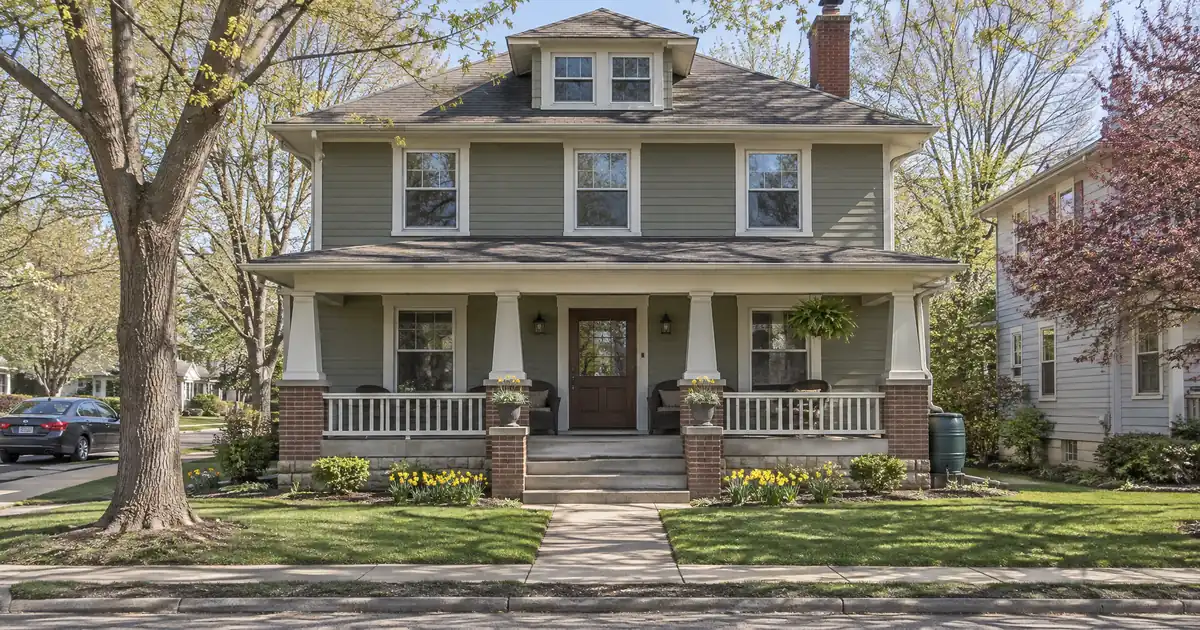
The Quick Read: Generally no, not while the policy is lapsed, because bank statements prove income and do nothing to cure an insurance problem on the collateral. An open lapse usually has to be fixed before the line funds, typically by reinstating the policy or binding a new one with the lender named as mortgagee. A past gap that is already cured and replaced by active, continuous coverage is a different and much more workable situation.
- Insurance is a collateral condition. Income documentation is a separate track.
- The usual fix is a new declarations page showing active coverage and the lender named.
- No federal law requires homeowners insurance. The loan contract does.
- Flood insurance is the one federally mandated exception when the property sits in a Special Flood Hazard Area.
- Lendmire is a mortgage broker, so it matches the file to a wholesale lender whose rules fit. Approval stays with the lender.
Why Bank Statements Don’t Fix an Insurance Gap
A bank statement HELOC lets a self-employed borrower qualify on documented deposits instead of tax returns and W-2s. That replaces one piece of the file. It does not replace the property conditions: title, valuation, and insurance.
How large a line the equity supports.
An equity line is sized by combined loan-to-value, occupancy, and credit — not by rental coverage. Switch the occupancy or the credit band and the ceiling moves with it.
Investment-property lines require a 700 minimum credit score; second-home lines start at a 640 minimum and primary-residence lines at 600, and the combined-LTV ceiling steps down as the credit band drops on primary-residence and second-home lines and holds on investment-property lines; the line cap steps down on primary-residence lines and holds at every tier on investment-property and second-home lines.
A debt-to-income ratio above 45% requires 680+ credit. Profiles under 640 are limited to single-family homes. At least 75% of the approved line is drawn at closing. Ceilings, floors, and caps update from Lendmire’s centralized guideline source.
Line estimate
Illustrative estimate only — not a quote, Loan Estimate, approval, or commitment to lend. The rate is an editable assumption; equity-line pricing is variable through both the draw and repayment periods and never converts to fixed. Occupancy and credit drive the ceiling together: an investment property tops out at 70% combined LTV (minimum credit 700, line cap $500,000); a second home tops out at 90% combined LTV (minimum credit 640, line cap $500,000), with the ceiling stepping down as the credit band drops (the cap holds at every tier); a primary residence tops out at 90% combined LTV (minimum credit 600), and its $750,000 maximum line is available only at 75% combined LTV or below with a 700-or-better credit profile (720 on the longer-runway program) and a full appraisal. Lines above $500,000 require a full appraisal. Credit, debt-to-income, property type, and full underwriting review all affect the final line.
Think of two separate tests. The first asks whether the borrower can carry the payment. The second asks whether the house securing the line is protected. A lapsed policy fails the second test no matter how strong the deposits look.
No statute makes a homeowner buy hazard insurance. The requirement lives in the loan agreement. That is why a lender can decline to fund over a lapse even though you broke no law by letting the policy expire.
What Lenders Ask For, and When the Gap Shows Up
Lenders typically ask for the declarations page, which shows the coverage amount, premium, and policy period. Credit union checklists list it as a routine file item alongside statements and ID. In other words, it’s a standard document, not a special request.
Here is how a lapse tends to surface at each stage:
| Stage | What happens with a lapse |
|---|---|
| Application | Declarations page missing or expired |
| Underwriting | Condition added: proof of current coverage |
| Closing | Policy must be in force at funding |
| After funding | Lender may place its own coverage |
A new carrier’s binder can sometimes bridge the gap while the full policy issues. Underwriting generally wants the complete declarations page before funding.
Cured Gap vs. Open Lapse
The distinction that matters most is whether the lapse is still open.
| Situation | Typical outlook |
|---|---|
| Past gap, now cured | Workable with proof of current, continuous coverage |
| Open lapse today | Fix first, then apply or clear the condition |
| Policy expiring mid-file | Renew and send the new declarations page |
| Lapse after the line opens | Lender may force-place coverage under the contract |
No authoritative public source sets a standard look-back period for a cured gap, so lenders differ. Across a wholesale network, the common thread is that underwriters want to see active coverage at the file date and a clean path forward. How much weight a short historical gap gets depends on the lender, the property, and the rest of the file.
Fix It in This Order
1. Reinstate or replace the policy. Call the carrier about reinstatement, or bind a new policy. Ask about a lapse versus a cancellation versus a nonrenewal, because the carrier’s wording affects how easy it is to get covered again.
2. Match the coverage to the property. A rental often needs a landlord or dwelling-fire policy rather than a standard owner-occupant form. Confirm the policy type fits how the property is used.
3. Get the lender named. The new declarations page should list the lender as mortgagee once one is identified.
4. Check flood. Standard hazard policies do not cover flood. If the property is in a flood zone, that is a separate policy.
5. Then apply. Send the declarations page with the statement set so the insurance condition is already answered.
If standard carriers decline the property, some borrowers end up with a state-backed or surplus-lines policy. Whether a given lender accepts that coverage varies by program, so raise it early rather than at closing.
Flood Is the Exception: It’s Federally Mandated
Hazard insurance is a contract matter. Flood is different. The OCC’s consumer site states that flood insurance is required on a home equity loan when the building is in a Special Flood Hazard Area where coverage is available. A line of credit gets a flood determination before it is made. Later draws generally do not trigger a new one, though an increase may.
Where the line is a second lien, the required flood coverage can be sized on the combined first mortgage and line balances. Condo units are covered by the same mandatory purchase rule.
What Happens If the Policy Lapses After Funding
Most mortgage and line agreements let the lender buy a policy and charge you for it. It tends to cost more than a policy you buy yourself, and it mainly protects the lender. It is generally limited to the dwelling.
For a landlord, the missing piece is liability. Force-placed coverage typically does not provide it, so a lapse leaves the owner exposed on the exact risk that hurts rental owners most.
The federal force-placed notice rule, Regulation X section 1024.37, sets advance-notice timelines, but it applies to “mortgage loans” as the servicing rules define them. Open-end lines of credit are generally exempt from those servicing rules. Business-purpose loans are also outside its scope. So a HELOC borrower, and especially an investor, should not count on a 45-day warning. The contract and state law govern, and a qualified attorney can confirm how they apply to a specific line.
Where a Bank Statement HELOC Actually Fits
Occupancy changes the answer, and so does the vesting. Across Lendmire’s wholesale network, the equity-line programs are tiered by use:
- Investment property: maximum 70% CLTV, 700 minimum credit, line up to $500,000.
- Second home: up to 90% CLTV only at 720+ credit, 640 minimum, line up to $500,000.
- Primary residence: up to 90% CLTV only at 720+ credit, up to $500,000, with higher lines to $750,000 at lower leverage, subject to lender guidelines.
Title matters too. These lines require the individual borrower or a revocable living trust to hold title. A property deeded to an LLC cannot take one, and the owner would need a vesting change or a different product. The lines are offered through Lendmire’s 16 full-service states, which is narrower than its DSCR footprint.
Lines at or below $500,000 ordinarily run an automated valuation, and any line above $500,000 requires a full appraisal. Eligible property types include single-family, 2-4 units, PUD, townhome, and condominium, while manufactured homes, co-ops, condotels, and log homes are not eligible.
The network figure for an investment property is the 70% CLTV ceiling above.
A Different Product From a DSCR Loan
A bank statement HELOC is not a DSCR loan. DSCR compares rent to the full monthly obligation (principal, interest, taxes, insurance, and any HOA dues), while the HELOC runs on documented personal income and debt-to-income. Insurance shows up in both, but in different ways. In a DSCR file, the insurance premium is an expense in the coverage math, and proof of active coverage is still a closing condition.
If the goal is acquiring or refinancing a rental that qualifies primarily on property-level rental income, subject to lender guidelines, the complete DSCR loans guide lays out how that path works. For the insurance angle specifically, Lendmire’s piece Can a Lapsed Homeowners Insurance Policy Block a HELOC? covers the underwriting side.
Key Terms Defined
Lapse: A period when the policy is not in force, usually from a missed renewal or payment.
Declarations page: The policy summary showing coverage amount, premium, and policy period.
Binder: Short-term proof of coverage issued while the full policy is being finalized.
Mortgagee clause: The policy language that names the lender as a protected party.
Lender-placed coverage: Insurance the lender buys and bills to the borrower after a lapse.
Who This Helps, and Who Should Pause
A self-employed owner with a cured gap and current coverage is a reasonable candidate to proceed. An owner with an open lapse should fix coverage first, because applying early only adds a condition to the file.
Pause if standard carriers have dropped the property, if it sits vacant, or if the title is in an LLC. Those are structural issues, and a different product, or a different timing, may fit better. A broker that shops several wholesale lenders can match the scenario to the program, but no lender-side outcome is promised.
Frequently Asked Questions
Does a one-day lapse hurt a HELOC application?
It can, because even a short gap gives a lender grounds to ask for proof of current coverage and, after funding, to place its own policy. If the gap is already cured, a new declarations page with continuous coverage going forward usually resolves the question, subject to lender guidelines.
Is homeowners insurance legally required?
No federal law requires it. The exception is flood insurance, which is required on a federally regulated lender’s loan when the property sits in a Special Flood Hazard Area.
Will a lapse get a different review on a bank statement file?
Insurance is a collateral condition, so it applies regardless of how income is documented. The bank statement track changes how deposits are analyzed, not whether the property must be insured.
What if my carrier non-renewed my rental?
Replace the policy before applying, and confirm the new form fits rental use. Surplus-lines or state-backed coverage may be accepted by some lenders and not others, so ask before the file reaches underwriting.
Can lender-placed insurance fix the problem for me?
It is a lender remedy, not a borrower solution. It typically costs more, is limited to the dwelling, and generally excludes liability and contents.
If you are considering a home equity line and want to see how the numbers work, Lendmire can help you compare HELOC options based on the property, the equity available, credit profile, combined leverage, and your goals. Reach the team at 828-256-2183 or request a quote. Program details change, every file is reviewed individually, and nothing here is a commitment to lend.
About Lendmire
Lendmire is a mortgage brokerage (NMLS# 2371349) arranging home equity lines of credit — primary-residence, second-home and investment-property lines — through a wholesale lending network in its 16 full-service states. Eligibility is determined by the lender on each file. Scotsman Guide named Lendmire a Top Mortgage Workplace in both 2025 and 2026.
Get Started
Ready to find the right loan for you?
See your offer in seconds. No credit pull, no obligation.
Informational only. Not a Loan Estimate, approval, or commitment to lend. Program availability and eligibility are subject to lender guidelines, credit approval, property review, and underwriting.
References
1. Alliant Credit Union: HELOC documents
2. OCC HelpWithMyBank: flood insurance on home equity loans
3. CFPB Regulation X, section 1024.37
This article is part of Lendmire’s bank statement HELOC program — full qualification details, guidelines, and scenarios live on the program page.
Related reading: Bank Statement HELOC Requirements Without Being on the Mortgage · Bank Statement HELOC Rules in a Living Trust · Bank Statement HELOC Requirements for Self-Employed Homeowners
Brandon Miller
Founder & CEO, Mortgage Loan Originator, Lendmire LLC
- Mortgage Loan Originator · NMLS# 1129696 · Verify on NMLS Consumer Access
- North Carolina Real Estate Broker · License# 343312 · Verify on NCREC
- North Carolina Insurance Producer · License# 19053198 · Property, Casualty, Life, Health · Verify on NAIC SBS
- Lendmire LLC · Firm NMLS# 2371349 · Verify firm licensure
Compliance and disclosures. Lendmire (NMLS# 2371349) is a licensed mortgage broker and is not a direct lender, depository institution, financial advisor, or tax professional. Content in this article is general market analysis and educational information — not financial, legal, or tax advice for any specific situation. Lendmire does not guarantee loan approval; every transaction is subject to underwriting by the funding lender. Mortgage pricing and loan program guidelines are subject to change at any time without notice and vary by borrower characteristics, property type, and state regulations. Lendmire complies with Equal Housing Opportunity. Licensure verification: NMLS Consumer Access.