
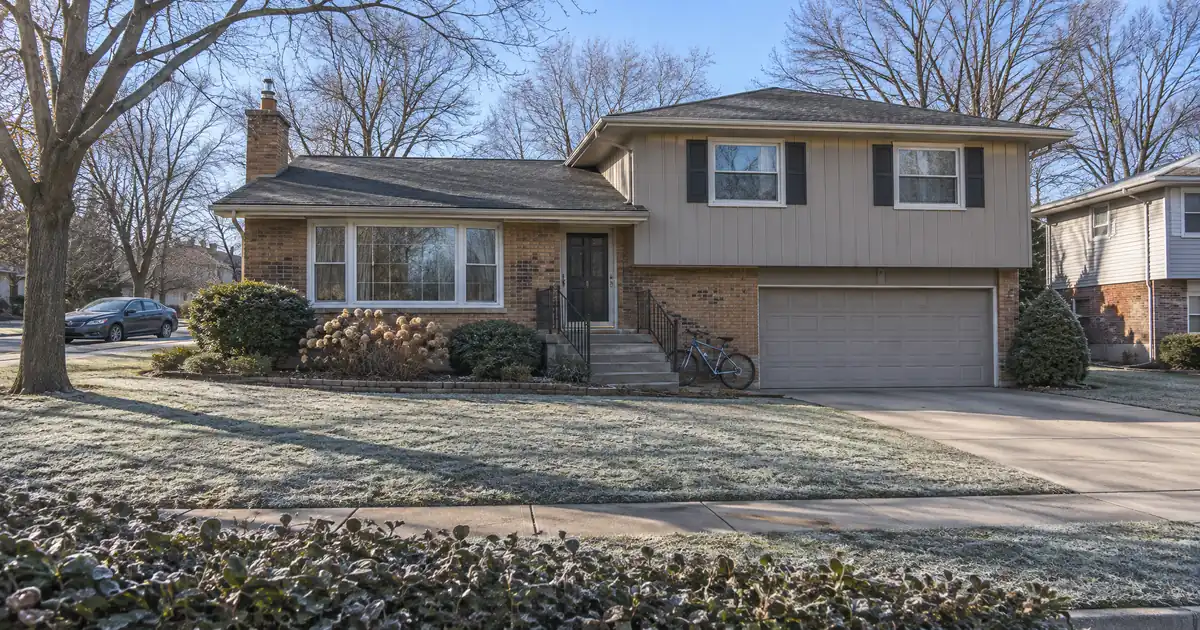
The Quick Read: Usually yes, once the house is finished, the construction loan is paid off or converted, title sits with the individual borrower or a revocable trust, and the lender’s seasoning rule is met, because the bank statement income method does not change for a new build and the property only has to qualify as ordinary, finished collateral. Completion status, title, valuation and lien position are the points a lender will focus on.
- The line goes on a finished home, not one under construction.
- Any wait after completion is a lender seasoning rule, and it varies by lender.
- Title must sit with the individual or a revocable living trust, so LLC-titled builds need a different path.
- A DSCR cash-out refinance is the usual alternative when the property sits in an LLC.
Why Does Completion Come First?
A line of credit needs collateral that can be valued, and a house under construction cannot be valued from comparable sales. Across a wholesale network of lenders, the finished and legal-to-occupy house is the starting point. A certificate of occupancy is the usual proof.
How large a line the equity supports.
An equity line is sized by combined loan-to-value, occupancy, and credit — not by rental coverage. Switch the occupancy or the credit band and the ceiling moves with it.
Investment-property lines require a 700 minimum credit score; second-home lines start at a 640 minimum and primary-residence lines at 600, and the combined-LTV ceiling steps down as the credit band drops on primary-residence and second-home lines and holds on investment-property lines; the line cap steps down on primary-residence lines and holds at every tier on investment-property and second-home lines.
A debt-to-income ratio above 45% requires 680+ credit. Profiles under 640 are limited to single-family homes. At least 75% of the approved line is drawn at closing. Ceilings, floors, and caps update from Lendmire’s centralized guideline source.
Line estimate
Illustrative estimate only — not a quote, Loan Estimate, approval, or commitment to lend. The rate is an editable assumption; equity-line pricing is variable through both the draw and repayment periods and never converts to fixed. Occupancy and credit drive the ceiling together: an investment property tops out at 70% combined LTV (minimum credit 700, line cap $500,000); a second home tops out at 90% combined LTV (minimum credit 640, line cap $500,000), with the ceiling stepping down as the credit band drops (the cap holds at every tier); a primary residence tops out at 90% combined LTV (minimum credit 600), and its $750,000 maximum line is available only at 75% combined LTV or below with a 700-or-better credit profile (720 on the longer-runway program) and a full appraisal. Lines above $500,000 require a full appraisal. Credit, debt-to-income, property type, and full underwriting review all affect the final line.
That sets the first gate. Until the build is done, the lender has nothing stable to lend against. After completion, the house becomes ordinary collateral like any other single-family home, townhome or small multifamily.
The second gate is the construction financing itself. If a construction loan is still open, a new line generally has to pay it off. If the build was paid in cash, the file needs to show where the payoff money came from.
What the Bank Statement Part Actually Changes
It changes how income is documented, not how the property is judged. A self-employed borrower supplies a window of personal or business statements instead of tax-return income. The lender reviews deposits, removes the ones that are not income, and applies its own expense factor to business accounts.
Scotsman Guide describes the usual non-QM bank statement setup for first mortgages: 12 to 24 months of statements, an example expense factor of 50%, and a third-party P&L as a possible substitute. That article is older and covers first mortgages, so read it as a picture of the method rather than a HELOC rulebook. The statement window and expense factor are set by each program.
Bank statement does not mean thin file. A borrower still is reviewed on documented income under the applicable program, subject to lender guidelines, and credit, equity, debt-to-income and the property are all reviewed. For lines in this network, the debt-to-income ceiling is 50%, and it drops to 45% for credit profiles from 600 to 679. Anything above 45% needs a 680 minimum. The lender qualifies the borrower on the interest-only payment calculated on the maximum draw, so a large undrawn line still counts against the ratio.
Build Milestones and What Each One Unlocks
Each milestone opens a different door, and the dates do not line up the way borrowers expect. The table below shows the order lenders tend to review them.
| Milestone | What it unlocks | What to do |
|---|---|---|
| Framing and draws | Nothing for a line yet | Keep draw records clean |
| Certificate of occupancy | Legal-to-occupy collateral | Add the copy to the file |
| Construction loan paid or converted | Clear lien position | Get the payoff or note documents |
| Deed recorded in correct name | Title eligibility | Check vesting before applying |
| Seasoning met | Lender’s ownership rule satisfied | Ask which date the clock starts from |
| Valuation ordered | Value and CLTV set | Expect a model or full appraisal |
Ask which one applies before building a plan around a date. Seasoning is lender policy, and it differs across wholesale programs.
A line opened at the builder’s closing generally runs into the seasoning rule. The same is true when a cash-out line follows a recent purchase or build, where the lender may limit proceeds by cost as well as value.
Which Occupancy Is the New Build?
The occupancy decides the ceiling, so the answer is never a single number. The wholesale programs in the network price these three cases very differently, and every figure below is subject to lender guidelines and full file review.
Investment property. The ceiling is 70% CLTV, with a 700 minimum credit profile and a maximum line of $500,000. Investment lines run a 5-year interest-only draw followed by a 25-year fully amortizing repayment. Nothing in the network goes above 70% CLTV on an investment property.
Second home. Credit starts at 640. The ceiling reaches 90% CLTV only at a 720 credit profile, up to $500,000. Lower tiers step down from there: 85% at 700 and 680, 80% at 660, and 75% at 640.
Primary residence. The minimum credit score is 600, and the maximum line is $750,000. A 720 profile reaches 90% CLTV up to $500,000, and 700 reaches 85% up to $500,000. Above $500,000, the cap is 75% CLTV, and a full appraisal is required.
A line above $500,000 is for primary residences only. It needs a credit profile of 700 or better (720 on the longer-runway program, the 5-year draw and 25-year repayment structure). Primary and second-home lines can also use a shorter 3-year draw with a 17-year repayment.
On all of these, at least 75% of the line is drawn at closing. Pricing floats during both the draw and repayment periods and never converts to fixed. The minimum later draw is typically $1,000. Availability is limited to 16 full-service states, which is narrower than the 41-market DSCR footprint.
Title and Vesting: Where Builder-Investors Get Stuck
Title is the sharpest structural limit on a new build. These lines require fee simple or leasehold title held by the individual borrower or an inter vivos revocable living trust. LLCs, corporations, partnerships, and irrevocable, blind or land trusts cannot hold title.
Many investors build in an entity from day one for liability reasons. That is sound planning for a build-to-rent, but it rules out this product.
Check the recorded deed before applying. A builder’s closing package, a trust transfer or a later quitclaim can leave the recorded owner different from the person on the application. Fixing vesting after a file is submitted adds review, not clarity.
Valuation and Lien Position After the Build
For lines at or below $500,000, valuation is ordinarily an automated model with no traditional appraisal. A higher CLTV may call for a secondary valuation, and a borrower may ask for a full appraisal at any size. Every line above $500,000 requires a full appraisal.
A new build has no sales history, so the model leans on the surrounding comparable sales. A well-documented appraisal request can help if the model comes in light, though value is always subject to underwriter review.
Lien position depends on how the build exited. These are standalone lines that can sit in first or second position. If a construction-to-permanent loan converted to a first mortgage and stayed, the new line sits second, and the combined loan-to-value is what limits it. If the build was paid in cash, a first-lien line may be possible, with the source of payoff funds documented.
A borrower is limited to three lines in total, and anyone owning more than 15 financed properties is not eligible. Builders who finance each project separately reach that limit sooner than they expect.
Deposit Hygiene for the Statement Window
The review removes deposits that are not income, and it asks about large ones. Prepare these before the file goes in.
- Pull every statement in the window for every account used, with all pages included.
- Mark transfers between your own accounts so they are not counted as income.
- Label loan proceeds, draw reimbursements and refunds, which the lender will exclude.
- Write a short explanation for any large deposit tied to the build.
- For business accounts, document your ownership share, since income is prorated if you own less than 100% of the entity.
- Add the ID, the current mortgage statement, the proof of insurance, and the certificate of occupancy.
Statements that overlap the build period often show heavy outflows. That is normal. The reviewer needs the income pattern to be readable, which clean labeling provides.
Key Terms Defined
Bank statement HELOC: a home equity line where deposits from bank statements document income instead of tax returns.
Seasoning: the minimum time a lender wants you to have owned the property before it will place a line.
CLTV: combined loan-to-value, which adds the first mortgage and the new line together and divides by the property value.
Certificate of occupancy: the local sign-off that a finished building is legal to occupy.
Lien position: whether the new line is first or second in line to be repaid from the property.
Vesting: the way title is held on the recorded deed, such as individual, trust or LLC.
When a DSCR Cash-Out Fits Better
An investor whose new build sits in an LLC, or who wants rent to carry the file, should price a DSCR cash-out refinance next to the line. The difference is structural. A DSCR loan is reviewed primarily on property-level rental income covering the payment, subject to lender guidelines, so the borrower’s deposits are not the driver. LLC-titled borrowers can use it, subject to lender program eligibility.
| Factor | Bank statement HELOC | DSCR cash-out |
|---|---|---|
| Income basis | Documented deposits | Property rental income |
| Title holder | Individual or revocable trust | LLC possible per program |
| Investor ceiling | 70% CLTV | About 75% LTV, standard rental |
| Typical seasoning | Set by each lender | About 6 months common |
D.C. |
On the DSCR side, the 1.00 coverage mark is where select programs start, and stronger ratios open better terms and leverage. Coverage below 1.00 is available through select lenders in the network, with leverage and terms adjusted. Most programs want credit around 660, a 620 floor exists in parts of the network, and 700 and up unlocks the strongest tiers. Reserves commonly run around 6 months of PITIA, though that varies by lender, loan size and transaction type.
Clearing 1.00 is a test of rent against PITIA, not a promise of positive cash flow. Repairs, vacancy, management, utilities and capex sit outside the calculation. Lendmire’s complete DSCR loans guide walks through how that math is built.
A Scenario: The Self-Employed Owner-Builder
Picture a self-employed contractor who built a duplex as a rental, paid off the construction loan, and holds title personally. The income is in business deposits, and the tax returns show heavy write-offs. This is the profile the bank statement method is built for.
Run the file against the gates. The certificate of occupancy is in hand, the payoff is documented, and the deed is in the contractor’s own name. The property is an investment, so the ceiling is 70% CLTV, the credit profile needs to be 700 or better, and the line tops out at $500,000. Because that sits at or below $500,000, valuation is ordinarily a model rather than a full appraisal.
Now change one fact. The contractor deeded the duplex to an LLC at completion. The line is off the table until the vesting changes, so the contractor compares a DSCR cash-out instead. If the rent clears coverage in the 1.2x range at 75% LTV or below, that path may work, subject to lender review and seasoning.
Business-Purpose Loans and Variable Pricing
DSCR loans are designed for non-owner-occupied investment properties. Because they are business-purpose investor loans, they are reviewed differently from a standard owner-occupied mortgage. The federal rule at 12 CFR 1026.3 exempts credit extended primarily for a business purpose from the consumer lending rules, and the purpose of the credit is what matters, not the collateral.
Equity lines themselves carry a different risk. The CFPB’s HELOC booklet notes that these lines typically carry variable pricing and can be reduced if the home’s value falls significantly. It also lists possible up-front costs such as an appraisal fee, an application fee and closing costs. An investor planning around a line should stress-test the plan for a lower limit than expected.
Frequently Asked Questions
Is there a legal waiting period after a new build is finished?
No. The wait is a lender seasoning rule, and it differs by lender and by how the lender counts the start date. Some count from the certificate of occupancy and some from the recorded deed. Ask each lender which date applies.
Can an LLC that owns my new build take a bank statement HELOC?
No. A property already deeded to an LLC needs a vesting change or a DSCR cash-out instead.
Does the certificate of occupancy mean I can borrow right away?
Not by itself. It proves the house is finished and legal to occupy. Seasoning, the construction payoff, title and valuation can each still hold the file.
How much can I borrow against a new-build rental?
On an investment property, the network ceiling is 70% CLTV, with a minimum credit profile of 700 and a maximum line of $500,000. Primary residences and second homes reach higher CLTV tiers, but only at stronger credit profiles. Every figure is subject to lender guidelines and file review.
Does bank statement income mean the lender skips underwriting?
No. The method changes how income is documented. Credit, equity, debt-to-income, valuation and property eligibility are still fully reviewed, and the lender wants complete statements with large deposits explained.
Next Step
If you are considering a home equity line and want to see how the numbers work, Lendmire can help you compare HELOC options based on the property, the equity available, credit profile, combined leverage, and your goals. As a mortgage broker working with select wholesale lenders, Lendmire is not the lender, and every program is subject to lender guidelines. For a new build, the first question to settle is how the property is titled.
About Lendmire
Lendmire is a mortgage brokerage (NMLS# 2371349) arranging home equity lines of credit — primary-residence, second-home and investment-property lines — through a wholesale lending network in its 16 full-service states. Eligibility is determined by the lender on each file. Scotsman Guide named Lendmire a Top Mortgage Workplace in both 2025 and 2026.
Get Started
Ready to find the right loan for you?
See your offer in seconds. No credit pull, no obligation.
Informational only. Not a Loan Estimate, approval, or commitment to lend. Program availability and eligibility are subject to lender guidelines, credit approval, property review, and underwriting.
References
1. Scotsman Guide, Rev Up the Engine for Non-QM Lending
This article is part of Lendmire’s bank statement HELOC program — full qualification details, guidelines, and scenarios live on the program page.
Related reading: Bank Statement HELOC Requirements on an Offer Letter · Bank Statement HELOC Rules Without Changing the Deed · Bank Statement HELOC Requirements and Timeline for Landlords
Brandon Miller
Founder & CEO, Mortgage Loan Originator, Lendmire LLC
- Mortgage Loan Originator · NMLS# 1129696 · Verify on NMLS Consumer Access
- North Carolina Real Estate Broker · License# 343312 · Verify on NCREC
- North Carolina Insurance Producer · License# 19053198 · Property, Casualty, Life, Health · Verify on NAIC SBS
- Lendmire LLC · Firm NMLS# 2371349 · Verify firm licensure
Disclosures. The information presented in this article is general market commentary, not financial, legal, or tax advice. Lendmire is a mortgage brokerage (NMLS# 2371349) — not a direct lender or depository institution — and loan placement is subject to lender underwriting. Nothing in this content represents a commitment to lend. Loan terms, pricing, and program availability vary based on borrower qualifications, property characteristics, and state of subject property, and are subject to change at any time. Lendmire complies with Equal Housing Opportunity requirements. Consumer access: nmlsconsumeraccess.org.