
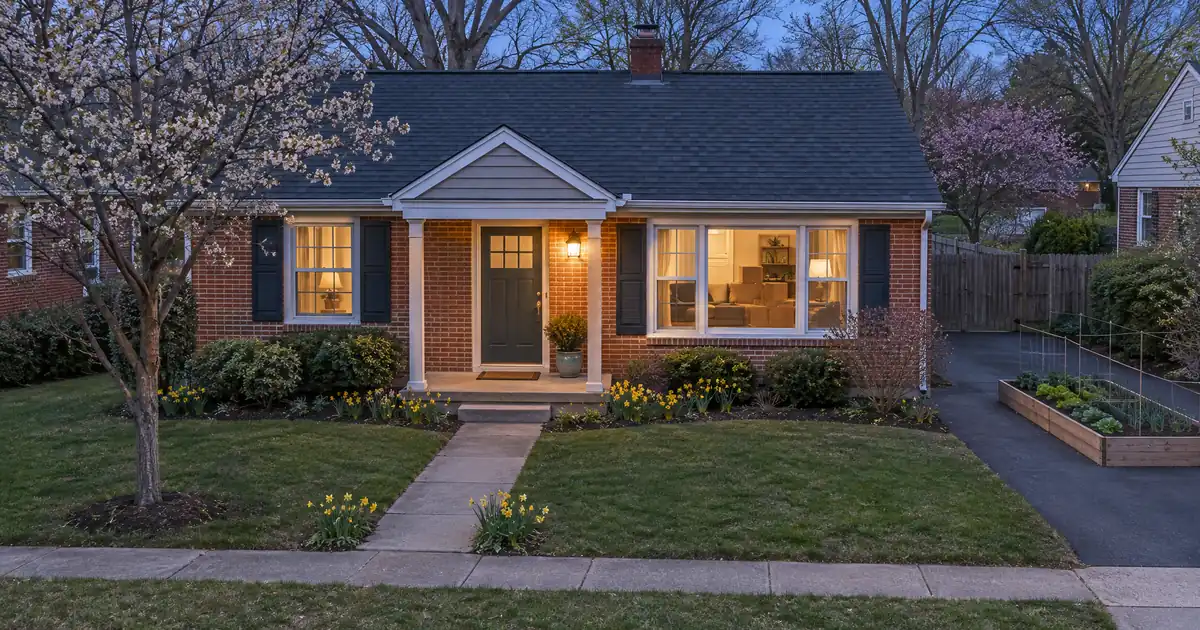
The Quick Read: On an FHA cash-out, a lender orders a brand-new appraisal of the inherited home, and that number sets how much you can borrow. An inherited home has no purchase price, so the appraiser builds the value from recent comparable sales and from the home’s current condition. The FHA program caps cash-out financing at 80% of that appraised value, subject to lender guidelines and full file review. Older reports from the estate, such as a date-of-death valuation, do not replace the lender’s appraisal.
What to Know Before You Order Anything
- The lender, not you and not the estate, orders the appraisal, and the appraiser must be approved for FHA work.
- The appraisal does two jobs: it sets the value, and it checks that the home meets FHA’s basic property standards.
- Appraised value times the program’s 80% cap is your ceiling. A low appraisal lowers that ceiling directly.
- Renting the home out after you inherit it can bring back a 12-month wait. Keep it owner-occupied.
- You have the right to a copy of the appraisal.
What Is a Lender Appraisal on an Inherited Home?
A lender appraisal is an independent opinion of what the home is worth today, written by a licensed appraiser the lender selects. It exists because the lender is taking the house as collateral. If you stop paying, the house is what the lender can fall back on, so the lender wants a current, neutral value.
FHA cash-out estimate
Seeded with an example value, a balance to match, and a round cash request; change any field.
Editable benchmark: 7.18% as of November 5, 2026 · Freddie Mac 30-year average via FRED®. A conventional market reference, not an FHA cash-out refinance quote.
Illustrative starting assumptions: a $350,000 home value, a $193,000 current balance, the FHA cap on a principal residence with the upfront premium financed, a thirty-year term at the current Freddie Mac benchmark, and property taxes and insurance estimated at typical national rates. Every field is editable.
An illustration, not a Loan Estimate, an approval, a quote, or a commitment to lend. The rate shown is the weekly Freddie Mac thirty-year conventional benchmark, used as a market reference; an FHA cash-out is priced by the lender at lock, and this is not an FHA cash-out refinance quote. HUD’s cap limits the base loan; the upfront premium is financed on top of the capped base loan; the monthly premium for the first year follows the snapshot’s schedule. Cash available means the base loan the cap permits less the balances retired, before closing costs, which this calculator leaves out. The line figure applies the line program’s combined loan-to-value ceiling to the same value and balance. Taxes and insurance are estimates you can edit. Licensed in sixteen states for consumer mortgages.
Most home loans lean on a purchase price. Inheritance has none. Nobody paid anything, so the appraiser starts from scratch. The appraiser studies recent sales of similar homes nearby, adjusts for differences like size, age, and condition, and lands on a value for the home as it sits today.
That value then drives everything. It decides your maximum loan, how much cash you can pull out after paying off any existing balance, and whether the home needs repairs before the loan can proceed.
Here the focus is the appraisal, because on an inherited home it carries more weight than almost any other step.
Lender Appraisal vs. Date-of-Death Appraisal
Heirs often already hold a valuation from the estate and assume it will do. It will not. The two reports answer different questions.
| Factor | Lender appraisal | Date-of-death appraisal |
|---|---|---|
| Purpose | Supports a loan | Documents estate value |
| Value date | Today | Date of the death |
| Ordered by | The lender | Estate or executor |
| Used for | Maximum loan size | Estate paperwork |
| Reusable for the loan? | It is the loan report | Background only |
The older report is a snapshot of the past. The lender needs a snapshot of the present, taken by someone it chose. In a market that moved since the death, the two numbers can differ a lot. That is normal, and it is one reason heirs get surprised at the appraisal.
The federal housing agency’s own rules point the same way. The lender must order a new appraisal for each FHA case number, and it cannot reuse a report done under a different case number. The case number is the file ID the lender requests to start an FHA loan.
From Deed to Closing: The Order of Operations
Here is how the process runs on an inherited home, with the appraisal step in context.
1. Get title in order. The lender needs to document how you acquired the home. That usually means a death record, will or probate papers, and a recorded deed or other acceptable title evidence.
2. Confirm the home is your residence. You live there. Utility bills and similar records help show it.
3. Screen the file. The lender checks credit, income, debt ratios, and the loan structure before spending your money on an appraisal.
4. Case number assigned. The lender requests an FHA case number for your loan.
5. Appraisal ordered. The lender picks an FHA-approved appraiser. The appraiser schedules a visit, inspects the home, and writes the report.
6. Review of the report. The lender reads the value, checks the property standards, and decides what conditions, if any, apply.
7. Final underwriting and closing. If the value and the file hold up, the loan moves to closing with the Loan Estimate and Closing Disclosure you will receive.
The lender may charge a reasonable fee for the appraisal itself, and that fee is often collected before the loan closes. Whether it is refundable if the loan does not close depends on the lender’s terms, so ask for the Loan Estimate and read the line.
The 12-Month Rule and Its Inheritance Exception
Standard FHA cash-out requires that you have owned and lived in the home as your principal residence for 12 months before the case number. Inheritance is the one place where that wait can be waived.
FHA policy lives in HUD’s Single Family Housing Policy Handbook 4000.1, which the agency describes as the single authoritative source for Single Family policy. As Lendmire’s brokers read and apply it, an inherited home can qualify without the 12-month wait, provided you have not treated the home as an investment since inheriting it. HUD’s older archived reference guide describes the same idea: inherited properties were eligible for cash-out when the borrower had occupied the home since the inheritance, and the lender had to document the inheritance. That page is archived, so treat it as background rather than current policy.
How a given lender applies the exception, and which documents it wants, depends on that lender’s guidelines. This is where working with a broker helps: the match between your situation and a lender’s reading of the rule matters more than the rule’s headline.
What the FHA Appraiser Inspects
An FHA appraiser does more than assign a value. The appraiser is on HUD’s FHA roster, must be qualified for your local market, and reports on the home’s physical and economic characteristics. HUD’s handbook glossary describes the role that way, and the standard report is the URAR form.
On the visit, the appraiser typically does these things:
- Walks the interior and exterior and notes size, layout, and updates.
- Looks for safety, soundness, and sanitation problems that fall under FHA’s minimum property requirements.
- Selects recent nearby sales that resemble your home.
- Adjusts those sales up or down for differences.
- Reports a final value to the lender.
The appraiser gives the lender a preliminary read on whether the property is acceptable. The lender, not the appraiser, carries the responsibility for eligibility. So a good appraisal does not approve your loan. It is one input among several.
The condition problem
Inherited homes often have deferred maintenance. A parent may have stopped fixing things years ago. The house may have been vacant for a while or filled with belongings. Peeling paint on an older home, a failing roof, a broken heating system, or missing handrails can lead to repair requirements before the loan can go forward.
If the report flags something, the lender may require the repair or a re-inspection. That is the lender’s call, not a penalty. Cleaning out and fixing obvious problems before the visit is cheap insurance.
How the Appraised Value Sets Your Loan
The FHA cash-out reaches 80% of the appraised value on a home you have owned and occupied for the required period, or qualify for under the inheritance exception. County loan limits also apply. Everything below uses percentages, because the real numbers depend on your appraisal.
HUD’s glossary also explains that on refinances an as-is appraisal sets the value when the property was acquired within 12 months of the case number. For an inherited home, that fits the ordinary case: the lender wants today’s value of the home as it stands.
Run the numbers as a placeholder. Say the home appraises at 100% of what you expected. The most you can borrow is 80% of that. Now suppose there is a remaining mortgage equal to 20% of the value.
- Maximum new loan: 80% of value.
- Pays off the old mortgage: 20% of value.
- What is left for cash: roughly 60% of value, before closing costs and the financed upfront premium.
Now say the appraisal comes in 10% below what you hoped. Every number drops with it. The ceiling falls to 80% of the lower value, and the old balance stays the same, so the cash left over shrinks by more than 10%. Small value misses hit cash-out hard.
If the home is free and clear, with no mortgage on it, the same 80% ceiling applies. HUD’s archived guide notes that properties owned free and clear may be refinanced as cash-out transactions. Yes, a paid-off home still counts as cash-out.
What else sizes the loan
Appraised value sets the ceiling, but your file sets what you actually qualify for. Across the FHA wholesale programs Lendmire places loans with, decision scores start at 580. The standard debt ratios are 31/43 (housing costs and total debts as percentages of income), and documented compensating factors can stretch the top tier to 40/50.
Mortgage insurance is part of the structure. An FHA loan carries an upfront premium of 1.75% of the base loan, which is financed, plus an annual premium. At or below 90% LTV on a thirty-year loan, the annual premium ends after eleven years. These are program mechanics, not prices, and they show up on your Loan Estimate. Terms depend on the lender’s guidelines, the property type, the leverage, and a full review of the credit profile.
Income matters as much as value.
Where the General Rule Breaks
You rent the home after inheriting it. This is a common trap. Renting it out turns the home into an investment property in the handbook’s terms, and the 12-month occupancy requirement comes back. Cash-out is not available on FHA investment property. Even a short rental stretch can change your options, so keep the home owner-occupied.
The home was a gift, not an inheritance. The exception covers inheritance. Gifted homes do not get the same treatment, so the 12-month rule applies.
Several heirs share title. Everyone who signs the new note should be on title. An heir who is not living in the home generally cannot use FHA cash-out because of the occupancy test. If one heir is buying the others out, the buyout often needs documentation, such as a decree or an enforceable agreement. A neutral lender appraisal helps here, because it gives co-heirs a number nobody on the family side chose. Expect real paperwork, and plan the order of steps with your lender early.
A two-to-four-unit home. If you live in one unit and rent the others, lenders differ on how they treat it under the inheritance exception. The handbook does not spell it out clearly for the heir-occupant case. Ask before you assume.
An existing mortgage on the home. If a mortgage already sits on the inherited home, payment-history rules apply to it. Lenders look at how that loan has been paid.
You want the loan to wait. There is no benefit to waiting if you qualify now. But there is a cost to delay in another way: if you rent in the meantime, the exception can be lost.
A different loan type. Conventional loans treat inherited property differently, and VA loans follow their own rules. FHA streamline refinances apply only to existing FHA loans, so they do not fit a newly inherited home.
What If the Appraisal Comes in Low?
A low number is a real risk on inherited homes, because family expectations often rest on an old estate valuation or a neighbor’s sale. If it happens, you have choices.
1. Read the report. Check the comparable sales. Are they truly similar in size, age, and location? Mistakes happen.
2. Ask the lender about a reconsideration of value. If you have better comparable sales, send them. Lenders have their own process for this and set their own rules.
3. Borrow less. The cash-out may still work at a lower amount if the ceiling covers your payoff and your goal.
4. Fix and re-inspect. If the problem is condition, repairs may lift the picture.
5. Wait and refile. Markets move, but a new case number means a new appraisal, and the old one cannot be reused.
6. Reconsider the loan. Sometimes a different program or a different amount fits better.
A broker can help here because different wholesale lenders handle value disputes and conditions differently. The best program for your situation depends on your credit, your income, the home’s condition, and how title is held.
Your Right to See the Appraisal
The appraisal is not a secret. Under the CFPB’s valuations rule, the lender must tell you within three business days of your application that you have a right to a copy of any appraisal on a first-lien home loan. The CFPB’s consumer guide explains that you can waive the timing requirement for getting it before closing, but you still receive the copy. The lender may charge a reasonable fee for the appraisal itself, but not for the copy.
Read your copy as soon as it arrives. If you spot a wrong square footage or a bad comparable, the sooner you flag it, the better.
Documents to Gather
- Death certificate.
- Will, probate or court documents, if there was a probate.
- Recorded deed or other title evidence in your name.
- Proof you live in the home, such as utility bills.
- Income documents for the loan, which depend on how you earn.
- Homeowner’s insurance and property tax information for the home.
- Details on any existing mortgage.
Key Terms Defined
Appraisal: an independent opinion of a home’s market value, written by a licensed appraiser.
As-is value: what the home is worth in its current condition, before any repairs.
Case number: the identification number a lender requests from FHA to start a specific loan file.
Cash-out refinance: a new loan larger than what you owe, with the difference paid to you in cash.
LTV (loan-to-value): the loan amount as a percentage of the appraised value.
Date-of-death appraisal: a valuation of the home as of the date the owner died, used for estate purposes.
Minimum property requirements: FHA’s basic standards for safety, soundness, and sanitation that the appraiser checks.
Frequently Asked Questions
Do I need to own the inherited home for 12 months before an FHA cash-out?
Often no. The FHA handbook has an inheritance exception that can waive the 12-month ownership and occupancy wait, as long as you have lived in the home and not treated it as an investment. Lenders apply this under their own guidelines, so confirm with your lender before you assume it. Renting the home out first can bring the 12-month rule back.
Can the lender use the appraisal done for the estate or probate?
No. The lender must order a new appraisal for its own FHA case number and cannot reuse one done under another case number. The estate valuation is background. It can help you set expectations, but it does not replace the lender’s report.
Does the appraiser decide whether I get the loan?
No. The appraiser provides a value and a check on property acceptability. The lender decides eligibility, based on the appraisal plus your credit, income, ratios, and title documents. Nothing here is a commitment to lend.
What happens if the home needs repairs?
The appraiser reports on FHA’s minimum property requirements, so safety or soundness problems can become conditions. The lender may require repairs or a re-inspection before moving ahead. Fixing visible problems before the visit often helps.
Can I get a copy of the appraisal?
Yes. The lender must notify you of your right to a copy within three business days of application, and it cannot charge you for the copy itself. You can waive the timing requirement, but you still receive the report.
Where This Leaves You
If you are weighing a cash-out refinance against keeping the loan you have, or no loan at all, Lendmire can help you compare the programs and the equity each one reaches. A short conversation about how title was acquired, whether you live in the home, and what the home needs will show whether the FHA path fits.
Inherited homes carry an odd advantage: the equity is often already there, and the appraisal is the step that turns it into a number you can actually use.
For your own numbers, request a scenario review with Lendmire.
About Lendmire
Lendmire, NMLS# 2371349, is a mortgage brokerage with consumer lending licenses in 16 states. FHA, VA, conventional and jumbo purchase and refinance loans are arranged through wholesale lending partners, and each application is reviewed individually by the lender. Scotsman Guide named Lendmire a Top Mortgage Workplace in both 2025 and 2026.
Get Started
Ready to find the right loan for you?
See your offer in seconds. No credit pull, no obligation.
Informational only. Not a Loan Estimate, approval, or commitment to lend. Program availability and eligibility are subject to lender guidelines, credit approval, property review, and underwriting.
References
1. HUD Handbook 4000.1 Overview
2. HUD HOC Reference Guide: Refinances (archived)
3. HUD Handbook 4000.1 Glossary
4. CFPB: ECOA Valuations compliance guide
5. CFPB: ECOA appraisals rule, what it means for consumers
This article is part of Lendmire’s FHA cash-out refinance program — full qualification details, guidelines, and scenarios live on the program page.
Related reading: How an FHA Cash-Out Lender Reads Trustee Signing Authority · How an FHA Cash-Out Works on an Inherited Home for a Retiree · How an FHA Cash-Out Appraisal Treats Acreage on a Rural Home
Brandon Miller
Founder & CEO, Mortgage Loan Originator, Lendmire LLC
- Mortgage Loan Originator · NMLS# 1129696 · Verify on NMLS Consumer Access
- North Carolina Real Estate Broker · License# 343312 · Verify on NCREC
- North Carolina Insurance Producer · License# 19053198 · Property, Casualty, Life, Health · Verify on NAIC SBS
- Lendmire LLC · Firm NMLS# 2371349 · Verify firm licensure
Legal disclosures. Lendmire (NMLS# 2371349) is a state-licensed mortgage brokerage that arranges financing through wholesale lender relationships. Lendmire is not a direct lender, depository institution, or registered financial advisor. The discussion above is general informational content about real estate financing — it is not financial, legal, or tax advice, and readers should consult licensed professionals for guidance on their individual circumstances. Loan inquiries are subject to lender underwriting; this article does not represent a commitment to lend. Loan terms, rates, and qualification standards vary by borrower, property, and state, and are subject to change at any time. Equal Housing Opportunity. NMLS Consumer Access: nmlsconsumeraccess.org.