
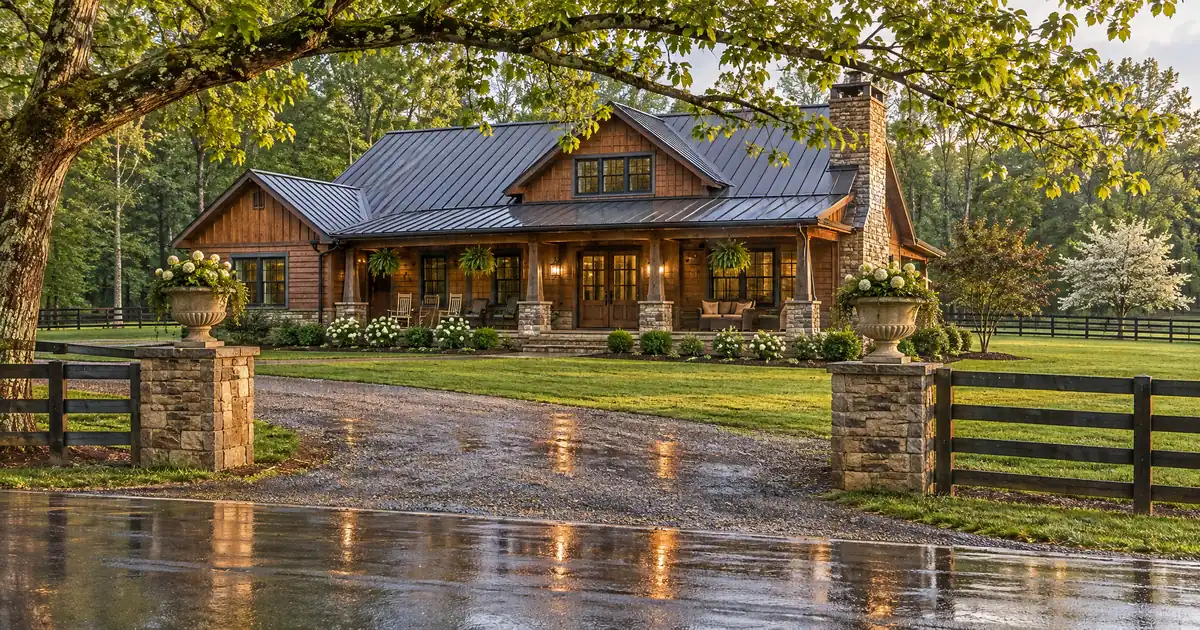
The Quick Read: The FHA cash-out appraisal treats acreage in one of two ways, depending on whether the extra land can be split off and sold. Land that cannot be separated is “surplus” and gets included in the value, though it may add little. Land that can be sold off is “excess” and gets left out. Because the FHA cash-out loan reaches 80% LTV on the value that results, how the appraiser classifies your land sets how much cash you can take.
Does FHA Put a Cap on Acreage?
HUD’s rules set no general acreage cap. The test is whether the property works as a residence. The limits borrowers run into usually come from three places: lender overlays, local zoning, and the residential-use test.
FHA cash-out estimate
Seeded with an example value, a balance to match, and a round cash request; change any field.
Editable benchmark: 7.18% as of November 5, 2026 · Freddie Mac 30-year average via FRED®. A conventional market reference, not an FHA cash-out refinance quote.
Illustrative starting assumptions: a $350,000 home value, a $193,000 current balance, the FHA cap on a principal residence with the upfront premium financed, a thirty-year term at the current Freddie Mac benchmark, and property taxes and insurance estimated at typical national rates. Every field is editable.
An illustration, not a Loan Estimate, an approval, a quote, or a commitment to lend. The rate shown is the weekly Freddie Mac thirty-year conventional benchmark, used as a market reference; an FHA cash-out is priced by the lender at lock, and this is not an FHA cash-out refinance quote. HUD’s cap limits the base loan; the upfront premium is financed on top of the capped base loan; the monthly premium for the first year follows the snapshot’s schedule. Cash available means the base loan the cap permits less the balances retired, before closing costs, which this calculator leaves out. The line figure applies the line program’s combined loan-to-value ceiling to the same value and balance. Taxes and insurance are estimates you can edit. Licensed in sixteen states for consumer mortgages.
Overlays deserve attention on a rural file. Some lenders set their own ceiling on site size even where HUD does not. A file that is fine under HUD’s rules can still be turned away by a lender that won’t take a large parcel. Across the wholesale programs Lendmire places FHA files with, the practical move is to ask about acreage before the appraisal is ordered, not after.
Here is the program in brief. Lendmire’s FHA cash-out refinance program reaches 80% LTV on a home you have owned and occupied for 12 months before the case number. That 80% applies to the appraised value, so the appraisal drives everything else. Exact terms depend on the lender’s guidelines, property type, leverage, and a full review of the borrower’s file.
Key Terms Defined
Site: The land the home sits on and the land that supports it, as the appraiser describes it.
Excess land: Land not needed to support the existing home. HUD’s glossary says it may have a different highest and best use than the home and may be sellable separately.
Surplus land: Land the home does not currently need but that cannot be separated and sold, so it has no independent use of its own.
Highest and best use: The most productive legal use of the land. The appraiser’s analysis of it decides whether land counts as excess.
Adjusted Value: The value figure the 80% cap is applied to on a cash-out refinance.
Hypothetical condition: An appraisal assumption. When excess land is carved out, the appraiser values only the home and its principal site as if the rest were not there.
What Does the Appraiser Actually Do With Your Land?
The appraiser works through the site in order. HUD’s rules for reporting excess or surplus land sit in Handbook 4000.1, which HUD’s knowledge base points to for this topic. The handbook is the authority, so read its current text for the excess-and-surplus-land section.
1. Look at the site. The appraiser notes the acreage, what the land supports, and what a typical lot looks like in the area.
2. Test whether the land is separable. Could the extra land be legally divided or developed? That turns on zoning, platting, and legal descriptions. Minimum lot sizes can keep land from being sold off even when it looks like plenty.
3. Classify it. If it can be separated, it is excess. If it can’t, it is surplus.
4. Write the report. For excess land, the appraiser must support the conclusion with a highest-and-best-use analysis. For surplus land, the appraiser includes it in the valuation.
5. Reach the value. Excess land is left out of the final number. The appraiser values the principal site and home under a hypothetical condition.
6. Apply the cap. The lender applies the 80% limit to the resulting figure.
One point of caution. The appraiser is not a home inspector. The appraiser’s observation is limited to readily observable conditions, and it is not as comprehensive as a licensed inspector’s review.
How Is Surplus Land Different From Excess Land in Practice?
Surplus land counts, but it often counts for little. The appraiser decides what it adds. Extra elbow room behind a house on a lot that can’t be split is nice to own, yet buyers in that market may not pay much more for it. The appraisal can show that honestly.
Excess land is the bigger swing. If a second parcel could be sold or built on, its value is carved out. You still own it. It just doesn’t help your loan amount.
Here is how the common land scenarios can play out:
| Land situation | Likely treatment | Effect on cash-out |
|---|---|---|
| Typical lot for the area | Included in value | Normal |
| Extra acres, cannot be split | Surplus, included | May add little value |
| Separate buildable lot | Excess, excluded | Lower value base |
| Barn or outbuilding | Valued as a contributor, if typical | Depends on comps |
The appraiser’s judgment and the local comparable sales decide each file.
What Happens When Excess Land Is Carved Out?
The value shrinks, and so does the loan base. The appraisal then covers a smaller property than the one you own, and the 80% cap lands on that smaller figure.
Run it in percentages. Say the full parcel would appraise at 100 and the carved-out lot accounts for 15 of it. The appraiser reports 85. The cash-out loan can reach 80% of 85, not 80% of 100. The new loan still has to pay off your current mortgage and any financed costs before any cash reaches you. So the cash shrinks by more than the lot’s share, because the payoff stays the same.
Older HUD reference guidance says the lender makes sure the whole property, excess land included, is covered by the mortgage and note, with the maximum loan figured only on the non-excess portion. That guidance is in an archived HUD reference guide. It is archived, so confirm it against the current handbook before leaning on it. If it still applies, you could be pledging land that does not count toward your loan size. Ask your loan officer about this up front.
Why the 80% Cap Matters Here
FHA used to allow more. HUD’s press release says FHA lowered the maximum LTV for cash-out refinances from 85% to 80%. Mortgagee Letter 2019-11 applies the 80% limit to the Adjusted Value. You will still see 85% on older web pages. It is out of date.
That matters on rural files for a simple reason. The appraisal is the base, and rural appraisals are the ones most likely to move. Fewer comparable sales, odd lot shapes, and acreage questions all put pressure on the value figure.
Outbuildings, Hobby Farms, and Working Land
A barn is not automatically a problem. A home that functions as a residence with a barn and a few animals can be fine. The question is what the property is used for. A working farm that earns its living from the land is a different file.
I could not find FHA’s exact handbook wording on farm and income-producing use, so ask your loan officer to check the current text on your property. For comparison, USDA’s guaranteed housing program does not restrict site size but expects the property to be mainly residential, and a hobby farm or garden is allowed. Other agencies handle this their own way. Keep the question to FHA rules when you are talking to your lender.
Practical documentation helps. If an outbuilding is for personal use, say so, and keep a record of how you use it. Photographs and a short description save the appraiser guesswork.
How Do Thin Rural Comparables Change the Picture?
In rural areas, there may be few recent sales close to your acreage and house size. The appraiser may have to reach further, and that is where values drift lower than owners expect.
Here is the practical advice from working these files. Gather your own comps before the appraisal. Sales of homes with similar acreage, nearby, and recent enough to matter. If the report comes back low, a reconsideration request with those comps and any condition facts can sometimes recover value. It is a routine step, not a last-ditch one. Nothing guarantees a change, and the appraiser makes the call.
What to Prepare Before the Appraisal
Documents that make a rural file cleaner:
- A recorded survey or plat showing boundaries and any separate parcels.
- Parcel records and legal descriptions, so the appraiser can tell one lot from several.
- Zoning information, especially minimum lot size.
- A list and photos of outbuildings, with notes on how you use them.
- Recent comparable sales of rural homes with similar acreage.
- Proof that you have owned and lived in the home for 12 months before the case number.
Many problems come from a mismatch between parcel numbers and the legal description. Clear that up before the appraiser arrives.
What If the Appraisal Leaves Out Land or Comes in Low?
You have a few paths, and none is a commitment.
First, ask whether the classification is right. If the second lot can’t legally be split, the land may be surplus, not excess, and the zoning records can show that. Second, request a reconsideration with comps and documents. Third, take a smaller cash-out amount that fits the lower value. Fourth, consider a different loan structure, such as the FHA rate-and-term refinance, which reaches 97.75% on a principal residence you have occupied for the previous twelve months, or the FHA Streamline if your current loan is already FHA. The Streamline needs no appraisal, but it brings no cash out, and the premium continues.
If the home has no FHA loan today, Lendmire’s other consumer programs may fit better, depending on how much of the land the appraiser credits.
What Cash-Out Does to Your Budget
The CFPB’s home equity guide says lenders typically require you to keep at least 10% to 20% of your home’s value as equity. It also says a cash-out refinance may extend the time to pay off your mortgage, and the monthly payment may rise because the new loan is larger.
An FHA loan adds its own mortgage insurance costs to that picture. There is an upfront premium of 1.75% of the base loan, which can be financed, and an annual premium that depends on term, loan amount, and LTV. On a thirty-year loan above 90% LTV the annual premium lasts for the term. At or below 90% it ends after eleven years. Ratios start at 31/43 with no compensating factors, and documented factors can reach 40/50 at the top tier, with the automated finding governing most files. The wholesale programs start at a 580 decision score. County loan limits apply. All of this is subject to lender guidelines and full file review.
Frequently Asked Questions
Is there a maximum number of acres for an FHA cash-out refinance?
HUD’s rules set no general acreage cap that I could find. The practical limits come from lender overlays, zoning, and whether the property is a residence. One lender’s guidelines, for example, list properties over a certain size as ineligible, so ask early.
Does FHA count all of my land in the appraised value?
Not always. Surplus land is included, though it may add little. Excess land, meaning a separable lot that could be sold or developed, is left out of the value. The appraiser’s highest-and-best-use analysis supports that call.
Will a barn or hobby animals disqualify my home?
Not automatically. What matters is whether the property functions as a residence rather than a working farm. I could not confirm FHA’s exact handbook wording on this, so have your loan officer check the current text for your property.
How much cash can I take on a rural home?
FHA cash-out reaches 80% LTV on a home you have owned and occupied for 12 months before the case number. The cap applies to the appraised figure after any excluded land, and the new loan must first cover your payoff and financed costs. Every figure here varies by lender and program — guidelines, property type, leverage, and credit profile all apply.
What if I disagree with how the appraiser classified my land?
Ask for reconsideration with a survey, zoning records, and comparable sales. If the land cannot legally be divided, the evidence may support surplus rather than excess. The appraiser decides, and the outcome is not assured.
For your own numbers, request a scenario review with Lendmire.
About Lendmire
Lendmire, NMLS# 2371349, is a mortgage brokerage with consumer lending licenses in 16 states. FHA, VA, conventional and jumbo purchase and refinance loans are arranged through wholesale lending partners, and each application is reviewed individually by the lender. Scotsman Guide named Lendmire a Top Mortgage Workplace in both 2025 and 2026.
Get Started
Ready to find the right loan for you?
See your offer in seconds. No credit pull, no obligation.
Informational only. Not a Loan Estimate, approval, or commitment to lend. Program availability and eligibility are subject to lender guidelines, credit approval, property review, and underwriting.
References
1. HUD Handbook 4000.1 glossary
2. HUD archives: reference guide on unique properties
3. HUD press release on cash-out LTV
4. HUD Mortgagee Letter 2019-11
5. USDA RD lender training, Part 4
6. CFPB, Using Home Equity guide
This article is part of Lendmire’s FHA cash-out refinance program — full qualification details, guidelines, and scenarios live on the program page.
Related reading: Best FHA Cash-Out Refinance Program to Tap Equity on an FHA-Insured Home · FHA Cash-Out Refinance Requirements on a Recently Bought Home · FHA Cash-Out Refinance Requirements for Consolidating Debt by Pulling Out Home Equity
Brandon Miller
Founder & CEO, Mortgage Loan Originator, Lendmire LLC
- Mortgage Loan Originator · NMLS# 1129696 · Verify on NMLS Consumer Access
- North Carolina Real Estate Broker · License# 343312 · Verify on NCREC
- North Carolina Insurance Producer · License# 19053198 · Property, Casualty, Life, Health · Verify on NAIC SBS
- Lendmire LLC · Firm NMLS# 2371349 · Verify firm licensure
Legal disclosures. Lendmire (NMLS# 2371349) is a state-licensed mortgage brokerage that arranges financing through wholesale lender relationships. Lendmire is not a direct lender, depository institution, or registered financial advisor. The discussion above is general informational content about real estate financing — it is not financial, legal, or tax advice, and readers should consult licensed professionals for guidance on their individual circumstances. Loan inquiries are subject to lender underwriting; this article does not represent a commitment to lend. Loan terms, rates, and qualification standards vary by borrower, property, and state, and are subject to change at any time. Equal Housing Opportunity. NMLS Consumer Access: nmlsconsumeraccess.org.