
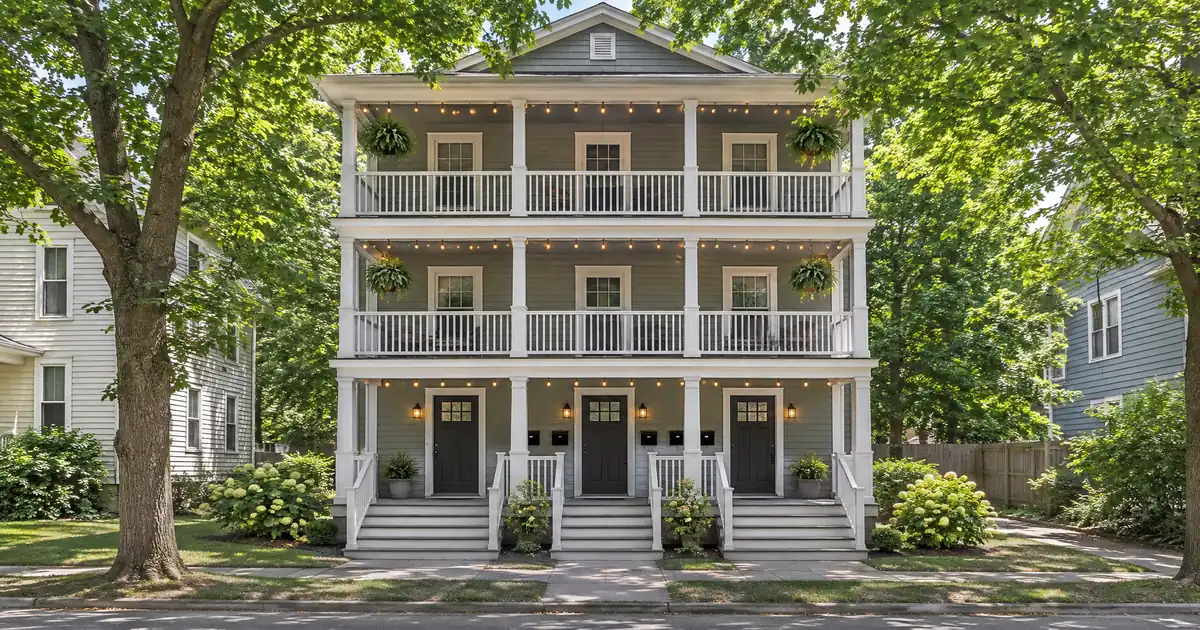
The Quick Read: On a triplex FHA cash-out refinance, rent from the two units you lease out can help you qualify, but only a discounted share of it counts. The lender uses a reduced portion of the lower of two figures: your lease rent or the appraiser’s market rent. You must live in the third unit, and the home must be one you have owned and occupied for 12 months before the case number. Counted rent is an underwriting figure, not a promise about your real cash flow.
Key Takeaways
- You live in one unit. The other two are leased.
- Counted rent is a reduced share of the lower of lease rent or appraiser market rent.
- Your own unit’s rent does not add to your qualifying income.
- Three- and four-unit homes face an extra self-sufficiency test and a cash reserve requirement.
- Cash-out reaches 80% LTV on a home owned and occupied for 12 months before the case number. These specifics are subject to lender guidelines and a full review of property, leverage, and credit.
What Is an FHA Cash-Out on a Triplex?
An FHA cash-out refinance replaces your current mortgage with a larger one and hands you the difference in cash. On a triplex, the property has three units. You live in one as your principal residence. Tenants rent the other two.
FHA cash-out estimate
Seeded with an example value, a balance to match, and a round cash request; change any field.
Editable benchmark: 7.18% as of November 5, 2026 · Freddie Mac 30-year average via FRED®. A conventional market reference, not an FHA cash-out refinance quote.
Illustrative starting assumptions: a $350,000 home value, a $193,000 current balance, the FHA cap on a principal residence with the upfront premium financed, a thirty-year term at the current Freddie Mac benchmark, and property taxes and insurance estimated at typical national rates. Every field is editable.
An illustration, not a Loan Estimate, an approval, a quote, or a commitment to lend. The rate shown is the weekly Freddie Mac thirty-year conventional benchmark, used as a market reference; an FHA cash-out is priced by the lender at lock, and this is not an FHA cash-out refinance quote. HUD’s cap limits the base loan; the upfront premium is financed on top of the capped base loan; the monthly premium for the first year follows the snapshot’s schedule. Cash available means the base loan the cap permits less the balances retired, before closing costs, which this calculator leaves out. The line figure applies the line program’s combined loan-to-value ceiling to the same value and balance. Taxes and insurance are estimates you can edit. Licensed in sixteen states for consumer mortgages.
Across the wholesale programs we place files with, the FHA cash-out reaches 80% LTV (loan-to-value, the loan as a share of the home’s appraised value). That cap applies to a home owned and occupied for 12 months before the case number is assigned. A case number is the file ID HUD assigns to your loan. Terms depend on the lender’s guidelines, the property type, the leverage, and a full review of the credit profile.
This is an owner-occupant loan. If you do not live in the building, the standard FHA cash-out is not the tool.
How Is the Rent Actually Counted?
HUD’s rule lets income from the subject property count as effective income when the home is a two- to four-unit dwelling. HUD Mortgagee Letter 2023-17 revised that policy for both automated and manually underwritten loans. Income from commercial space cannot count.
Two paths exist, depending on your rental history.
With a rental history. If you have reported rent on this property, the lender looks at your tax returns. The rent shown on Schedule E (the tax form for rental income) is averaged. Positive net rental income adds to your qualifying income. Negative net rental income gets treated as a debt.
Without a history. If you have no rental history on the property since your last tax filing, the lender takes a haircut. It uses a reduced share of the lesser of two numbers. One is the appraiser’s market rent. The other is the rent in your signed lease. The “lesser of” wording matters, because a higher appraisal does not rescue a below-market lease. Even when the lease is the lower figure, only a reduced share of that lease rent counts, never the full amount.
Exact formulas change with handbook updates. HUD publishes the controlling text in Handbook 4000.1, and your lender confirms the current version against your file.
Step by Step: How the Lender Underwrites Your Triplex
1. Eligibility check. You live in one unit as your principal residence. You have owned and occupied it for 12 months before the case number.
2. Rent documents. You provide signed leases for both rented units. If you have reported rent before, you add tax returns with Schedule E. The lender may also ask for proof the rent was received.
3. Appraisal. The appraiser completes a small residential income property report, which gives market rent for each unit. A cash-out also needs a full appraisal, and the 80% cap is measured against adjusted value.
4. Pick the income method. History means averaging Schedule E. No history means the haircut on the lesser of lease or market rent.
5. Net the rent against the property’s housing costs. Counted rent minus the full housing payment gives net rental income. Positive adds to income. Negative joins your debts.
6. Run the ratios. The base pair is 31/43 (housing costs over income, total debts over income) with no compensating factors. Documented compensating factors can reach 40/50 at the top tier. The automated finding governs most files, subject to lender guidelines.
7. Size the loan. The maximum is 80% of adjusted value, and county loan limits apply.
Which Rent Source Applies?
| Situation | Evidence | What counts |
|---|---|---|
| Both units leased, no rental history | Leases plus appraiser rent | Reduced share of the lesser figure |
| Rent reported for a while | Tax returns, Schedule E | Averaged net rent from the returns |
| Lease below market | Lease and appraisal | Lease rent, since it is lower |
| One unit vacant | Appraiser’s market rent | Lender reviews vacancy treatment |
The vacant-unit row deserves a caution. The appraiser’s market rent is likely the basis, but treatment of vacancy is something to confirm with the lender against the handbook before you plan around it.
A Worked Example, in Percentages and Plain Words
Take a triplex where you live in one unit. Say each rented unit’s lease matches the appraiser’s market rent, so the lesser figure is the same either way. You have no reported rental history on the property.
The lender takes only a reduced portion of that combined rent. Then it subtracts the full housing payment on the new loan, including mortgage insurance. If the result is positive, the surplus adds to your income. If it is negative, the shortfall is treated as a monthly debt, which squeezes your ratios.
Now change one input. Suppose one lease is well below market. The lender counts the lower figure for that unit, so counted income drops. Your debt-to-income ratio moves the wrong way, even though your actual bank balance did not change.
That is the key lesson: budgeting on full rent overstates what you can borrow. The haircut exists so the file still works when a unit sits empty or a tenant pays late.
The Self-Sufficiency Test for Three Units
A triplex adds a hurdle that a duplex does not have. HUD’s reference guide on refinances says three- and four-unit properties must pass a self-sufficiency test and keep three months of reserves after closing. Reserves are cash you still hold after closing, measured in months of the full housing payment.
In plain terms, the test asks whether the building’s own rent can carry the building’s payment. It generally looks at market rent from all units, with an allowance for vacancy and upkeep. Then the net figure has to cover the full housing payment on the new loan.
Two points follow. First, your own unit’s rent shows up in this test, even though it does not add to your qualifying income. Second, this test can block a file even when your personal income is strong and your equity is high. Lenders apply the exact deduction under current HUD text, so ask for their worksheet early.
Borrowers tend to focus on income and appraised value, then discover the building itself has to pass its own test.
Where the General Rule Breaks
A few edge cases trip people up.
- Lease below market. The lesser-of rule means a cheap lease lowers counted income. A strong appraisal does not help.
- Commercial space. If the building has a storefront unit, that rent is excluded.
- ADU confusion. An accessory dwelling unit is a small second home on a one-unit lot. In a cash-out, HUD bars ADU rent as effective income. A triplex is not an ADU, so it falls under the multi-unit rules. Many borrowers mix the two up.
- Non-occupant co-borrower. On a standard cash-out, income from someone who does not live in the home cannot be used to qualify. A non-occupant co-borrower is allowed on an FHA purchase, which is a different rule.
- Vacant units. No lease means the appraiser’s market rent becomes the basis, subject to lender review.
- Older guides. Some archived pages still show a lower-equity cash-out limit. They are out of date, as the next section explains.
Why the Cash-Out Cap Is 80%
HUD announced a cut to the cash-out limit, and it explained its risk reasoning there. The same page notes an earlier cut in 2009. The current cap is 80% of adjusted value, set by Mortgagee Letter 2019-11.
For you, 80% means the cash you walk away with can be small. The new loan first pays off your old mortgage and covers costs. Only what remains below the cap reaches your pocket. On a triplex with a large existing balance, that remainder may be modest.
How a Triplex Cash-Out Differs From a Purchase
A purchase and a cash-out treat the same rent differently in practice.
| Factor | Purchase | Cash-out refinance |
|---|---|---|
| Maximum financing | 96.5% LTV | 80% LTV |
| Occupancy history | Move in at closing | 12 months owned and occupied |
| Rental history | Often none yet | Schedule E may exist |
| Non-occupant co-borrower | Allowed | Income cannot qualify |
A buyer with no history leans on leases and appraiser rent. A refinancing owner may have a track record on tax returns, which the lender reads directly. If your other options are an FHA rate-and-term refinance or a Streamline, those follow different rules. The 80% cap and 12-month occupancy are specific to cash-out.
What Documents to Gather
- Signed leases for both rented units.
- Two years of tax returns with Schedule E, if you have reported rent here.
- Proof of rent received, as your lender requires.
- Your current mortgage statement.
- Homeowners insurance information.
- Cash reserves documentation for the three-month requirement.
Common Misconceptions
- “All the rent counts.” Only a reduced share does.
- “My own unit’s rent adds to my income.” It does not. It matters only in the self-sufficiency test.
- “FHA cash-out goes higher than 80%.” The current cap is 80%.
- “I can cash out an investment triplex with FHA.” The standard cash-out requires you to live there.
- “Self-sufficiency applies to duplexes.” It applies to three- and four-unit homes.
What This Means for Your Decision
Counted rent can be the piece that makes your ratios work. It can also overstate what you can comfortably carry. Real vacancies, repairs, and late rent hit your cash flow. A larger loan also means a larger payment and new FHA mortgage insurance, which includes an upfront premium of 1.75% of the base loan, financed, plus an annual premium between 0.15% and 0.75% of the balance. On a thirty-year loan above 90% LTV, the annual premium lasts for the term.
Tax treatment can depend on your situation; borrowers should speak with a qualified tax professional before relying on any deduction or credit.
If you are weighing a cash-out refinance against keeping the loan you have, Lendmire can help you compare the programs and the equity each one reaches. Lendmire is a mortgage broker, and all program figures are subject to lender guidelines and full file review. Nothing here is a commitment to lend.
Key Terms Defined
Lease rent: The monthly rent written in your signed lease with a tenant.
Market rent: The rent an appraiser estimates a unit would earn on the open market.
Counted rent: The reduced share of rent a lender allows toward qualifying, which is not your actual rent.
Self-sufficiency test: A check for three- and four-unit homes that asks whether the building’s net rent can cover its own housing payment.
Schedule E: The tax form where you report rental income and expenses.
Frequently Asked Questions
Do I have to live in the triplex?
Yes. A standard FHA cash-out is for an owner-occupied principal residence. At least one borrower must have owned and occupied the home for 12 months before the case number is assigned. If you do not live there, this loan is not the right fit.
Is all of the rent from my two tenants counted?
No. Only a reduced share counts. With no rental history on the property, the lender uses a discounted portion of the lesser of your lease rent or the appraiser’s market rent. With a history, the lender averages the net rent on your Schedule E.
Does the rent from my own unit help me qualify?
No, not as income. It does not add to your qualifying income. It appears only in the self-sufficiency test for three- and four-unit homes. Confirm the current treatment with your lender against HUD’s handbook.
What if one of my units is vacant?
The appraiser’s market rent likely becomes the basis for that unit, since there is no lease. Lenders review vacancy treatment individually. The self-sufficiency test also still applies, so a vacancy can make that test harder to pass.
Is rent alone enough to qualify?
No. Counted rent can improve your ratios, but you still need credit, documented income, reserves, and a property that passes the appraisal and self-sufficiency test. Everything is subject to lender guidelines and full file review.
For your own numbers, request a scenario review with Lendmire.
For current guidelines and terms, see Lendmire’s FHA loan programs page.
About Lendmire
Lendmire (NMLS# 2371349) is a mortgage broker licensed for consumer lending in 16 states. Lendmire arranges FHA, VA, conventional and jumbo purchase and refinance loans through wholesale lenders; every file is underwritten by the lender under the applicable program guidelines. Scotsman Guide named Lendmire a Top Mortgage Workplace in both 2025 and 2026.
Get Started
Ready to find the right loan for you?
See your offer in seconds. No credit pull, no obligation.
Informational only. Not a Loan Estimate, approval, or commitment to lend. Program availability and eligibility are subject to lender guidelines, credit approval, property review, and underwriting.
References
1. HUD Mortgagee Letter 2023-17
2. HUD Housing Handbooks page (Handbook 4000.1)
3. HUD Reference Guide on Refinances
4. HUD announcement on cash-out risk
5. HUD Mortgagee Letter 2019-11
This article is part of Lendmire’s FHA cash-out refinance program — full qualification details, guidelines, and scenarios live on the program page.
Related reading: Can You Get an FHA Cash-Out Refinance?
Brandon Miller
Founder & CEO, Mortgage Loan Originator, Lendmire LLC
- Mortgage Loan Originator · NMLS# 1129696 · Verify on NMLS Consumer Access
- North Carolina Real Estate Broker · License# 343312 · Verify on NCREC
- North Carolina Insurance Producer · License# 19053198 · Property, Casualty, Life, Health · Verify on NAIC SBS
- Lendmire LLC · Firm NMLS# 2371349 · Verify firm licensure
Disclosures. The information presented in this article is general market commentary, not financial, legal, or tax advice. Lendmire is a mortgage brokerage (NMLS# 2371349) — not a direct lender or depository institution — and loan placement is subject to lender underwriting. Nothing in this content represents a commitment to lend. Loan terms, pricing, and program availability vary based on borrower qualifications, property characteristics, and state of subject property, and are subject to change at any time. Lendmire complies with Equal Housing Opportunity requirements. Consumer access: nmlsconsumeraccess.org.