
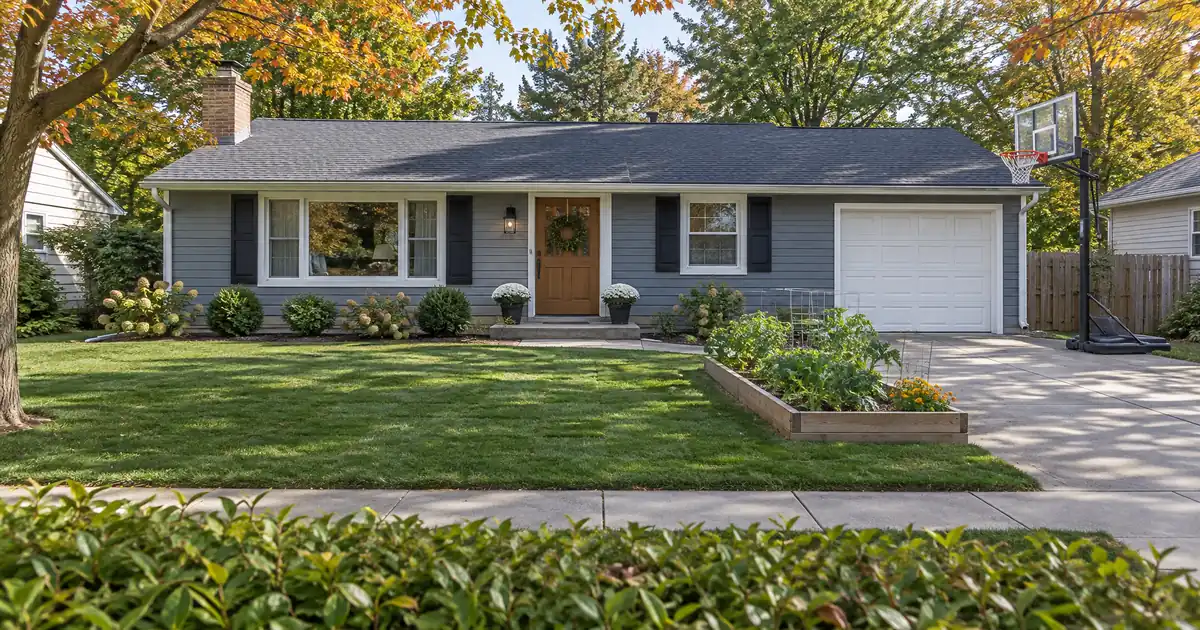
The Quick Read: The VA cash-out appraisal judges an addition on what it physically is, not on whether a permit sits in a file. A finished, heated, safe room connected to the home and built to match it can count toward living area. Space that fails those tests can be excluded from the square footage or written up as a repair, and either one shrinks the value that sets your maximum loan.
What Does a VA Appraisal Actually Do?
A VA appraisal does two jobs at once. It estimates market value, and it flags visible problems that fail VA’s Minimum Property Requirements. On a cash-out refinance, an appraisal is required. There is no purchase contract to anchor the number, so the appraised value is the whole story.
VA cash-out estimate
Seeded with an example value, a typical balance, and a round cash request at the first-use fee; change any field.
Editable benchmark: 7.18% as of November 5, 2026 · Freddie Mac 30-year average via FRED®. A conventional market reference, not a VA cash-out refinance quote.
Illustrative starting assumptions: a $350,000 home value, a $193,000 current balance, the full-value VA cap with the first-use funding fee financed, a thirty-year term at the current Freddie Mac benchmark, and property taxes and insurance estimated at typical national rates. Every field is editable.
Illustrative estimate only — not a Loan Estimate, approval, quote, or commitment to lend. The rate field carries the weekly Freddie Mac thirty-year conventional benchmark, a market reference and not a VA cash-out refinance quote; a VA loan is priced by the lender at lock. The total loan, funding fee included, is capped at the program leverage on the reasonable value; the fee follows the tier chosen. The cash available is what the cap allows less the balances paid off and the fee, before closing costs, which are not included. The HELOC line is the line program’s combined loan-to-value ceiling applied to the same value and balance. Taxes and insurance are editable estimates. The debt-to-income figure is a guideline; residual income decides a VA file. Licensed in sixteen states for consumer mortgages.
The handbook text is spread across three chapters of the VA Lenders Handbook: Chapter 10 on the appraisal process, Chapter 11 on the appraisal report, and Chapter 12 on MPRs. None of the handbook text reviewed uses the phrase “unpermitted addition.” The treatment comes from reading those three chapters together.
Here’s the catch most borrowers miss. The handbook text does not make a permit a stated condition. Permit status matters indirectly: through zoning, through safety, and through lender overlays that are often stricter than VA itself.
For context, Lendmire’s VA cash-out refinance program page covers the program basics.
Step by Step: What the Appraiser Does With the Addition
The process runs in a set order. Each step can change the number.
1. VA assigns the appraiser. The lender does not pick the appraiser. VA selects a fee-panel appraiser from its list.
2. The appraiser measures and sketches. The report includes a building sketch with gross living area (GLA) calculations and exterior dimensions. The appraiser’s own measurement controls. The county record and the old listing do not.
3. The appraiser decides what counts as living area. Per Chapter 11 on the appraisal report, room additions and garage or carport conversions should be included in GLA when the added space meets certain conditions. Those conditions are interior access in a functional manner, a permanent and sufficient heat source, and design, quality and appeal similar to the main dwelling.
4. The appraiser applies the MPRs. Visible wiring, plumbing, heating, structural or moisture problems in the addition can become required repairs. Those conditions get cleared before the loan can close.
5. The appraiser comments on zoning. If the addition breaks setbacks or other local rules, the appraiser comments on legal status.
6. The report gets reviewed. Fee appraisers’ work is subject to quality review, and reports are desk-reviewed by the lender or by VA staff.
7. The Notice of Value sets the ceiling. The reasonable value on the Notice of Value drives the maximum cash-out loan. Exclude the addition’s square footage and the value falls. Cash to the borrower falls with it. Leverage, reserves, and pricing vary by lender and program; the final terms follow the full file review.
Where Zoning Enters (and Why It Is the Real Risk)
Zoning is where an addition can turn from a measuring question into an eligibility question. Under Chapter 12 on minimum property requirements, the property must comply with applicable zoning ordinances. If it does not comply but the local authority accepts it, the appraiser must call it “Legal Non-Conforming” and comment on marketability and any adverse effect on value.
That label is not a death sentence. Legal non-conforming use is acceptable under the handbook and gets described in the report. The trouble is lender behavior. Some lenders add their own scrutiny when a legal non-conforming property could not be rebuilt after a loss, and some add permit-verification overlays on additions and finished basements. Those overlays are the lender’s rules, not VA’s.
The Federal Register notice on VA’s property requirements frames MPRs as both a legal requirement and a safeguard for the Veteran and the guaranty. That is why a safety defect in an addition gets handled as a repair rather than waved through.
How Different Additions Get Treated
The table below shows the typical treatment. It is a pattern, not a promise. Each appraiser and lender reads the facts of the specific property.
| Addition type | Likely appraiser treatment | Cash-out effect |
|---|---|---|
| Finished, heated room off the house | Counted in GLA if quality matches | Value supported |
| Room with no permanent heat | Often left out of GLA | Value drops |
| Garage conversion | Living gain weighed against lost parking | Mixed |
| Partly below-grade basement | Counted only if full utility and market acceptance | Depends on comps |
| Detached or ADU-type space | Reviewed under separate ADU guidance | Depends on utilities and comps |
| Addition with visible safety defects | Repair condition | Fix before closing |
| Addition that breaks zoning | Legal status comment | Lender overlay risk |
Basements deserve a note. The handbook allows partially below-grade habitable space in GLA when it has full utility, is accepted in the market and matches the home’s quality. Garage conversions are a trade: the appraiser weighs the living space gained against the parking lost.
A Worked Example, Without Dollar Figures
Say a homeowner wants a VA cash-out refinance. Their home has a finished sunroom, closed in years ago without a permit. It has windows and a ceiling but no permanent heat source.
The appraiser measures it. Because it lacks permanent heat, it likely fails the GLA test. The report shows the main house’s square footage only, and the sunroom is noted separately. Comparable sales get matched to the smaller living area, so the appraised value comes in lower than the owner hoped.
The VA cash-out reaches up to 100% of the appraised value, including any financed funding fee. So when value falls, that ceiling falls with it. Two things shrink at once: the cash in the borrower’s hands, and the room to roll the funding fee into the loan. If the payoff on the existing loan already eats most of that ceiling, the cash-out may not be worth doing. Lender guidelines and the full file review can narrow the result further.
Now change one fact. The owner adds a permanent heat source before the appraisal. The same room may now meet the GLA conditions, and the value picture can improve. Same room, different treatment. That is why the physical test matters more than the paper.
Purchase vs. Cash-Out: Why This Hits Harder on Refinance
On a purchase, the contract price anchors the deal. The older handbook text allows a VA field office to waive an MPR on existing construction only in narrow cases, and one condition is that the Veteran is under contract to buy. That makes it largely a purchase tool, not a cash-out tool. Check the current chapter before relying on it.
On a cash-out, nothing anchors the number except the appraisal. The cash-out refinance also has to show a net tangible benefit, and it carries seasoning rules. The IRRRL is different. It refinances an existing VA loan with no VA appraisal, so an addition never gets reviewed. The half-percent rate-reduction and fee-recoupment tests belong to the IRRRL and do not apply to the cash-out.
Funding fee mechanics matter here too. On a cash-out refinance, the funding fee is 2.15% for first use and 3.3% after, and it is waived for veterans receiving compensation for a service-connected disability and the other exempt groups. A financed fee sits inside the loan ceiling. Lower value, less room.
Before, During and After the Appraisal
- Gather any permit records, contractor invoices and photos of the work.
- Fix visible safety items such as exposed wiring or moisture damage.
- Tell the loan officer about the addition up front. Surprises at the appraisal are worse.
- Be there or make the home accessible, and point out the finished space.
- Remember that the fee appraiser may not discuss value or conditions with anyone except VA staff or the lender’s reviewer. Do not expect a negotiation at the door.
After a low value or a condition:
- Ask the lender to request a reconsideration of value, with better comparable sales or proof the space meets the GLA tests.
- Clear repair conditions and have the work documented.
- Look into a retroactive permit, covered below.
- Reset the plan if cash drops. A smaller cash-out, or keeping the current loan, may be the better call.
Can You Legalize the Addition?
Sometimes. A retroactive permit means asking the local building office to review and approve work already done. The process, costs and what inspectors demand vary by locality, and some jurisdictions may require opening walls or upgrading systems. That answer is local, so a national article cannot give you the steps.
If the permit is granted, the lender’s overlay concern often eases and the zoning comment gets cleaner. Whether the appraiser then gives the space full value still depends on the physical tests and the comparable sales. A permit helps. It does not replace the heat, access and quality tests.
Common Misconceptions
- “VA requires a permit.” The handbook text reviewed does not make a permit a stated condition. The tests are zoning compliance, MPRs and the GLA criteria.
- “Unpermitted always fails.” Not on the text above. Outcomes turn on safety, zoning and the quality of the work. Lender overlays can be stricter than VA.
- “The appraisal is an inspection.” It is not. An appraisal estimates value and flags readily apparent MPR issues. A home inspection digs deeper.
- “The county record gives the square footage.” The appraiser’s measurement controls.
Key Terms Defined
Gross living area (GLA): The finished, heated living space the appraiser counts when valuing the home, measured by the appraiser. It is generally above-grade, though partly below-grade habitable space can count when it has full utility and is accepted in the market.
Minimum Property Requirements: VA’s standards for safety, soundness and sanitation that a home must meet to secure a VA-guaranteed loan.
Notice of Value: The VA document stating the reasonable value of the property, which caps the loan amount.
Legal non-conforming: A use or structure that does not match current zoning but was accepted by the local authority, and gets described in the appraisal.
Retroactive permit: A permit sought after the work was already built, so the local office can review and approve it.
Frequently Asked Questions
Does VA require a permit for an addition?
The handbook text reviewed does not state a permit as a condition. VA’s tests are zoning compliance, MPRs and the GLA criteria. Lenders often add their own permit checks, though, so ask yours early.
Will the appraiser exclude my unpermitted addition from square footage?
It depends on the space. If it is finished, heated, connected to the home and similar in quality, it can count. If it lacks permanent heat, has no functional interior access or looks unsafe, it may be excluded or flagged as a repair.
How does a lower value affect my VA cash-out?
The VA cash-out can reach 100% of the appraised value, including the financed funding fee. A lower value cuts that ceiling, which reduces the cash you receive and the room to finance the fee. Final amounts are subject to lender guidelines and full file review.
Can I dispute the appraisal?
You can ask your lender to request a reconsideration of value. Support it with recent comparable sales or proof that the addition meets the GLA conditions. The appraiser cannot negotiate the number with you directly.
Would an IRRRL avoid this problem?
Yes, in that an IRRRL generally needs no new appraisal, so the addition is never reviewed. But it only works for borrowers who already hold a VA loan, and it does not pay out cash.
Where This Leaves You
Check the physical facts first: heat, access, finish, safety. Then ask the loan officer how the lender treats unpermitted work. If you are weighing a cash-out refinance against keeping the loan you have, Lendmire can help you compare the programs and the equity each one reaches. Lendmire’s piece Can a VA Cash-Out Close With a Solar Lien or Unpermitted Addition? covers the related lien and title questions. Program figures are subject to lender guidelines and full file review, and nothing here is a commitment to lend.
For your own numbers, request a scenario review with Lendmire.
About Lendmire
Lendmire, NMLS# 2371349, is a mortgage brokerage with consumer lending licenses in 16 states. FHA, VA, conventional and jumbo purchase and refinance loans are arranged through wholesale lending partners, and each application is reviewed individually by the lender. Scotsman Guide named Lendmire a Top Mortgage Workplace in both 2025 and 2026.
Get Started
Ready to find the right loan for you?
See your offer in seconds. No credit pull, no obligation.
Informational only. Not a Loan Estimate, approval, or commitment to lend. Program availability and eligibility are subject to lender guidelines, credit approval, property review, and underwriting.
References
2. VA: VA Pamphlet Chapter Appraisal Report
3. VA Handbook Chapter 12: Minimum Property Requirements Overview
4. Federal Register: Loan Guaranty, Minimum Property Requirements for VA-Guaranteed and Direct Loans
This article is part of Lendmire’s VA cash-out refinance program — full qualification details, guidelines, and scenarios live on the program page.
Related reading: How a VA Lender Counts Triplex Rent on a Cash-Out · Can You Get a VA Cash-Out With a Solar Lien or Unpermitted Addition? · Does a VA Cash-Out Use Up Your Remaining Entitlement?
Brandon Miller
Founder & CEO, Mortgage Loan Originator, Lendmire LLC
- Mortgage Loan Originator · NMLS# 1129696 · Verify on NMLS Consumer Access
- North Carolina Real Estate Broker · License# 343312 · Verify on NCREC
- North Carolina Insurance Producer · License# 19053198 · Property, Casualty, Life, Health · Verify on NAIC SBS
- Lendmire LLC · Firm NMLS# 2371349 · Verify firm licensure
Disclosure information. Lendmire is a state-licensed mortgage brokerage under NMLS# 2371349. Lendmire is not a depository institution, direct lender, or financial advisor — all loans referenced are placed through wholesale lender partners and are subject to each lender's underwriting standards. This article is provided for general informational purposes and is not a commitment to lend, nor does it constitute financial, legal, or tax advice. Loan programs, terms, rates, and qualification standards change without notice and depend on borrower profile, property type, and the state in which the subject property is located. Equal Housing Opportunity provider. NMLS Consumer Access: nmlsconsumeraccess.org.