
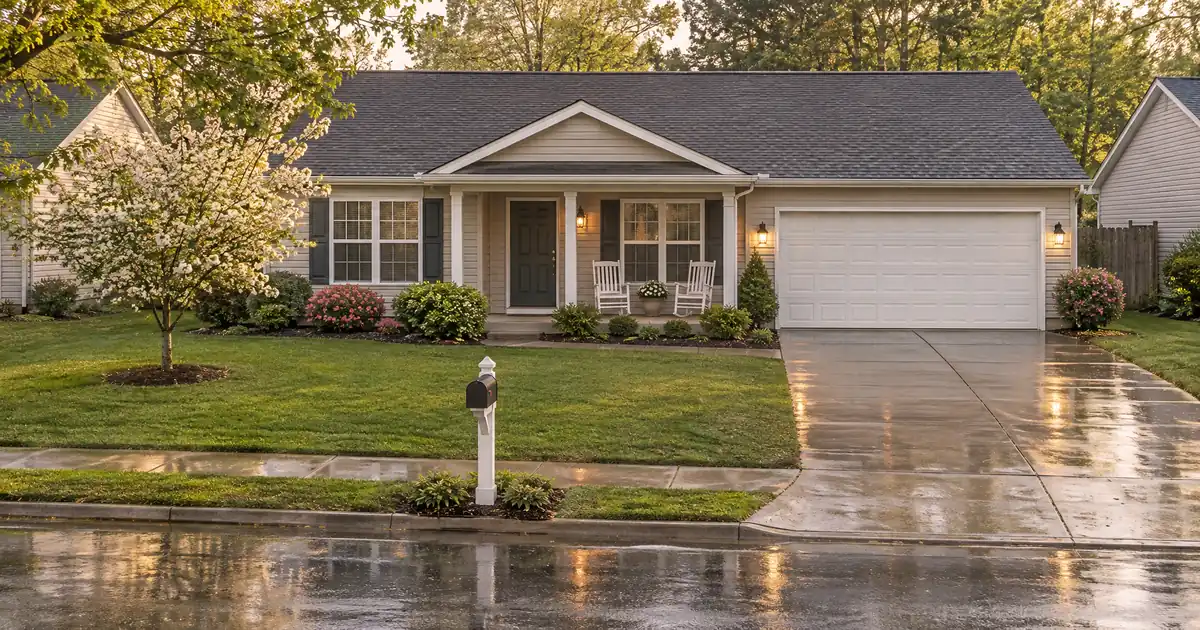
The Quick Read: On an FHA cash-out refinance, a full appraisal is the value that counts, and an online estimate does not stand in for it. The appraisal sets the home’s value, and the maximum loan is 80% of that adjusted value. An automated estimate can help you size up the idea early, but the appraiser’s number decides how much equity you can actually reach.
What Is an Automated Value, and Why Doesn’t It Carry Over?
An automated value is a computer estimate of what a home is worth. Lenders and consumer sites build it from public records, recent sales and pricing models. Nobody visits the house.
FHA cash-out estimate
Seeded with an example value, a balance to match, and a round cash request; change any field.
Editable benchmark: 7.18% as of November 5, 2026 · Freddie Mac 30-year average via FRED®. A conventional market reference, not an FHA cash-out refinance quote.
Illustrative starting assumptions: a $350,000 home value, a $193,000 current balance, the FHA cap on a principal residence with the upfront premium financed, a thirty-year term at the current Freddie Mac benchmark, and property taxes and insurance estimated at typical national rates. Every field is editable.
An illustration, not a Loan Estimate, an approval, a quote, or a commitment to lend. The rate shown is the weekly Freddie Mac thirty-year conventional benchmark, used as a market reference; an FHA cash-out is priced by the lender at lock, and this is not an FHA cash-out refinance quote. HUD’s cap limits the base loan; the upfront premium is financed on top of the capped base loan; the monthly premium for the first year follows the snapshot’s schedule. Cash available means the base loan the cap permits less the balances retired, before closing costs, which this calculator leaves out. The line figure applies the line program’s combined loan-to-value ceiling to the same value and balance. Taxes and insurance are estimates you can edit. Licensed in sixteen states for consumer mortgages.
FHA works differently. Across the wholesale programs behind Lendmire’s FHA loans, a cash-out refinance needs a lender-ordered appraisal from an FHA Roster Appraiser. An automated estimate or a waiver does not replace that appraisal on a cash-out file. So a value you saw online, or a waiver offered on a conventional quote, does not travel into an FHA file.
That matters most when a borrower switches loan types midstream. Say a homeowner starts with a conventional quote that carried an automated value, then moves to FHA. The earlier number is gone. The FHA process starts over with a new case number and an appraisal order.
Key Terms Defined
Automated valuation model (AVM): A software estimate of value built from data, with no visit to the home.
Value acceptance (appraisal waiver): A conventional-loan option where the lender accepts an automated value and skips the appraisal. It is not an FHA cash-out option.
Full appraisal: A licensed appraiser’s opinion of value after an in-person look at the property.
Adjusted value: The value FHA uses for its loan limit after applying its own rules, including how long you have owned the home.
FHA Streamline: A refinance of an existing FHA loan with no appraisal. It cannot pay out cash.
Combined loan-to-value (CLTV): Your first mortgage plus any other liens, divided by value.
How the Appraisal Takes Over, Step by Step
Here is the sequence on a typical FHA cash-out file.
1. The file is classified as cash-out. Any refinance that puts equity cash in your hands beyond a small incidental amount is a cash-out. A home owned free and clear can also qualify for cash-out when the borrower takes equity out.
2. The lender obtains an FHA case number and orders the appraisal. The borrower does not pick the appraiser. HUD’s Handbook 4000.1 glossary describes the appraiser as an FHA Roster Appraiser who gives FHA an opinion of value.
3. The appraiser inspects what is readily observable. The same glossary says the appraiser’s observation is limited to readily observable conditions and is not as comprehensive as a home inspection. FHA also expects the home to meet its property standards, so some repairs can be required before the loan is insured.
4. The value is adjusted under HUD’s rules. HUD applies its limit to adjusted value, not simply to the number on the report. Ownership length matters here, and we return to that below.
5. The 80% cap sets the ceiling. HUD Mortgagee Letter 2019-11 lowered the FHA cash-out cap to 80% of adjusted value, and that limit includes any other liens. The cap applies to a home owned and occupied for 12 months before the case number.
6. The appraisal stays valid for a set window. Mortgagee Letter 2022-11 set an initial validity of 180 days from the appraisal’s effective date. If a closing drifts past that window, the value may need an update.
7. You receive a copy. Under the federal appraisal-copy rule, the lender must tell you within three business days of application that you can get a free copy of any appraisal or written valuation. That includes an automated one if it was used in connection with your application.
Why the Appraised Value Drives Your Cash
The appraisal does not just confirm the number. It sets the ceiling.
Picture two homeowners with the same balance and the same hopes. One home appraises at the figure they expected. The other comes in lower. Same payoff, same program, different result: the lower value shrinks the 80% cap, and the cash left after paying off the existing loan shrinks with it. A modest miss in value can cut the cash proportionally more, because the payoff stays fixed while the ceiling drops.
A few other pieces move with the value:
- Loan amount. A larger cash-out loan means a larger balance on which the mortgage insurance is calculated.
- Mortgage insurance. FHA charges an upfront premium of 1.75% of the base loan, which is financed, plus an annual premium between 0.15% and 0.75% of the balance, depending on term, loan amount and LTV. On a thirty-year loan with higher leverage, the annual premium lasts for the term. At lower leverage, it ends after eleven years. The premium is a program fact, so confirm how it applies to your file with the lender.
- Monthly obligation. A bigger loan changes the monthly payment. Your Loan Estimate shows the actual figures. Exact terms depend on the lender’s guidelines, property type, leverage, and a full review of the borrower’s file.
Qualification still depends on the rest of the file. The base ratios are 31/43 (housing and total debt to income) when there are no compensating factors. Documented compensating factors can raise them as far as 40/50 for the strongest files, though the automated underwriting finding governs most files. All of this is subject to lender guidelines and full file review.
Where the Rule Bends: Edge Cases
The general rule is simple: cash out means a full appraisal. These cases change how it plays out.
The Streamline is not a workaround. The FHA Streamline refinances an existing FHA loan with no appraisal, a limited credit review and a net tangible benefit. That is exactly why it cannot hand you equity. HUD’s archived reference guide limits incidental cash back to $500. If you want real cash, you are in the appraisal lane. If you only want a better structure on your current FHA loan, the Streamline may fit.
Recently acquired homes. HUD’s glossary treats a property acquired within 12 months of case number assignment differently, and on refinances it calls for an as-is appraisal in specified cases. For a home owned 12 months or more, the as-is value becomes the adjusted as-is value when an appraisal is obtained. Our programs also require the home to have been owned and occupied for 12 months before the case number on a cash-out.
Occupancy. Standard FHA cash-out is for a principal residence you live in. Income from someone who does not live in the home generally cannot be used to qualify on a cash-out. Occupancy decides the leverage, so a second home or rental does not fit this program.
Inherited homes. HUD guidance has allowed cash-out on an inherited home the borrower has lived in since the inheritance. Because that guidance has since been archived, ask the lender how it applies today.
Hawaiian Homelands. The 80% change does not apply to loans insured under Section 247 of the National Housing Act, according to a law-firm summary of the letter. That is a narrow exception.
County loan limits. FHA limits are set by county and change every year. County loan limits apply, so check yours with the lender before you plan a loan size.
What If the Appraisal Comes In Low?
Start with the problem you can fix. Is the number low because the appraiser missed something about your home? Documented improvements, recent comparable sales and corrected facts about the property are the usual raw material for a challenge.
Here the rules are in flux, so keep your expectations plain. HUD issued Mortgagee Letter 2024-07 with borrower-initiated reconsideration-of-value rules, then rescinded those requirements the following year. What a lender offers today varies. Ask the lender up front how it handles a value dispute, and who submits the request.
Your options when value falls short:
- Ask for a reconsideration if the lender has a process and you have solid evidence.
- Borrow less. Take the smaller cash-out the 80% cap allows.
- Wait and re-run it. Home improvements or market shifts can change the number later.
- Compare other programs. A different structure may reach different equity.
The appraisal is generally a borrower closing cost, so a second one means a second bill. Weigh that before you order another.
Misconceptions Worth Clearing Up
- “FHA cash-out goes to 85%.” That is outdated. HUD’s press release says the cap moved from 85 to 80 percent, matching the GSEs’ cash-out limit.
- “An online estimate can replace the appraisal.” It cannot. On an FHA cash-out file, the lender-ordered appraisal is the value that counts.
- “A Streamline can give me cash.” It cannot.
- “The appraisal is a home inspection.” It is not. The appraiser looks at readily observable conditions only.
- “I only get the report if the loan closes.” The federal rule requires the copy even if the loan does not close.
- “The old 120-day window still applies.” It is 180 days now.
Where This Leaves the Borrower
In practice, your decision looks like this. If you need equity cash, plan around the appraisal, not an estimate. Use online figures only to gauge whether the idea is worth pursuing. Check that you have owned and lived in the home for 12 months. Expect an appraiser’s opinion, possible repair conditions and a copy of the report in your hands.
If you only want to restructure an existing FHA loan, the Streamline is a separate lane with no appraisal and no cash.
If you are weighing a cash-out refinance against keeping the loan you have, Lendmire can help you compare the programs and the equity each one reaches. Program details are subject to lender guidelines and full file review, and nothing here is a commitment to lend.
Frequently Asked Questions
Can I skip the appraisal on an FHA cash-out if my home has a recent online value?
No. A cash-out file needs a full appraisal ordered through the lender. The only FHA refinance that skips the appraisal is the Streamline, and it cannot pay out cash. An online value can help you plan, but it will not set your loan amount.
Do I get to see the appraisal?
Yes. Federal rules require the lender to tell you about your right to a free copy within three business days of application. You get the copy even if the loan never closes. If an automated value was used in connection with your application, you are entitled to that too.
What happens if I switch from a conventional loan to FHA after getting an automated value?
The earlier value does not carry over. FHA starts with its own case number and a lender-ordered appraisal. Plan for that step, since the new number can differ from the estimate you saw before.
How long is an FHA appraisal good for?
The initial validity period is 180 days from the appraisal’s effective date, and an updated appraisal is valid for one year. If your closing runs past the window, the lender may need an update. Ask how your lender handles timing.
How much equity can I reach with an FHA cash-out?
Up to 80% of the home’s adjusted value, including any other liens, on a home owned and occupied for 12 months before the case number. The appraisal sets that value. County loan limits apply, and your ratios and credit must also fit the program.
For your own numbers, request a scenario review with Lendmire.
About Lendmire
As a mortgage broker (NMLS# 2371349), Lendmire helps homeowners and home buyers in 16 states with FHA, VA, conventional and jumbo purchase and refinance loans arranged through wholesale lenders. Lendmire is never the lender; program terms are set by the lender and the agency guidelines. Scotsman Guide named Lendmire a Top Mortgage Workplace in both 2025 and 2026.
Get Started
Ready to find the right loan for you?
See your offer in seconds. No credit pull, no obligation.
Informational only. Not a Loan Estimate, approval, or commitment to lend. Program availability and eligibility are subject to lender guidelines, credit approval, property review, and underwriting.
References
1. HUD Handbook 4000.1 Glossary
2. HUD Mortgagee Letter 2019-11
3. HUD Mortgagee Letter 2022-11
4. CFPB announcement on appraisal copies rule
5. HUD Archives HOC Reference Guide – Refinances
8. HUD Mortgagee Letter 2025-08
This article is part of Lendmire’s FHA cash-out refinance program — full qualification details, guidelines, and scenarios live on the program page.
Related reading: How to Handle Extra Acreage in an FHA Cash-Out Appraisal · How an FHA Cash-Out Lender Handles a Low Appraisal Challenge · FHA Cash-Out Refinance Requirements With No Mortgage
Brandon Miller
Founder & CEO, Mortgage Loan Originator, Lendmire LLC
- Mortgage Loan Originator · NMLS# 1129696 · Verify on NMLS Consumer Access
- North Carolina Real Estate Broker · License# 343312 · Verify on NCREC
- North Carolina Insurance Producer · License# 19053198 · Property, Casualty, Life, Health · Verify on NAIC SBS
- Lendmire LLC · Firm NMLS# 2371349 · Verify firm licensure
Disclosures. The information presented in this article is general market commentary, not financial, legal, or tax advice. Lendmire is a mortgage brokerage (NMLS# 2371349) — not a direct lender or depository institution — and loan placement is subject to lender underwriting. Nothing in this content represents a commitment to lend. Loan terms, pricing, and program availability vary based on borrower qualifications, property characteristics, and state of subject property, and are subject to change at any time. Lendmire complies with Equal Housing Opportunity requirements. Consumer access: nmlsconsumeraccess.org.