
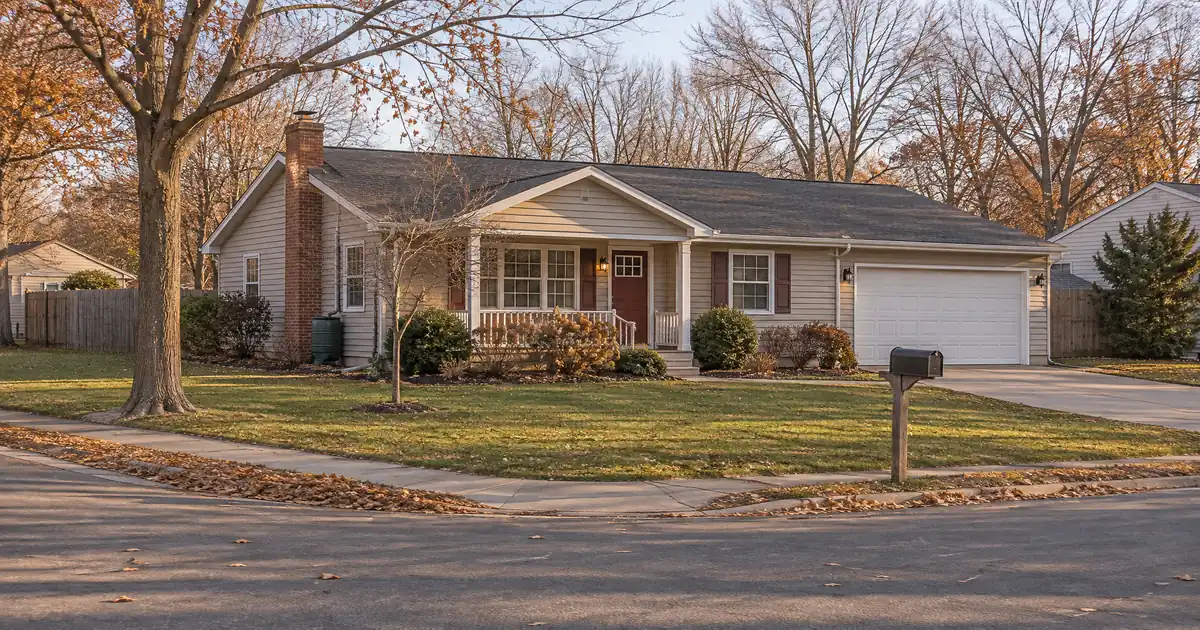
The Quick Read: A low appraisal lowers the ceiling on your loan, and the lender’s first move is to review the report, not to fight the number. The underwriter can ask the appraiser to take another look when you supply specific, documented facts the report missed. The appraiser can still hold the original value. After that, the lender resizes the loan to the final number, and your cash drops faster than the value does.
Key Takeaways
- The appraised value, not what you think the home is worth, sets the maximum loan on an FHA cash-out.
- A challenge works through the lender. You hand your evidence to your loan officer, who routes it to the underwriter.
- Facts and comparable sales move appraisers. Opinions and frustration do not.
- Once the value is final, the loan is resized. A small value drop can cut your cash by a much larger share.
- You have real choices after a low value: take less cash, pay something down, switch products, or wait.
Why the Appraisal Sets the Ceiling on Your Cash
The appraised value decides how big the loan can be. On a cash-out refinance, you borrow against the equity in your home. The lender measures that equity using the appraisal.
FHA cash-out estimate
Seeded with an example value, a balance to match, and a round cash request; change any field.
Editable benchmark: 7.18% as of November 5, 2026 · Freddie Mac 30-year average via FRED®. A conventional market reference, not an FHA cash-out refinance quote.
Illustrative starting assumptions: a $350,000 home value, a $193,000 current balance, the FHA cap on a principal residence with the upfront premium financed, a thirty-year term at the current Freddie Mac benchmark, and property taxes and insurance estimated at typical national rates. Every field is editable.
An illustration, not a Loan Estimate, an approval, a quote, or a commitment to lend. The rate shown is the weekly Freddie Mac thirty-year conventional benchmark, used as a market reference; an FHA cash-out is priced by the lender at lock, and this is not an FHA cash-out refinance quote. HUD’s cap limits the base loan; the upfront premium is financed on top of the capped base loan; the monthly premium for the first year follows the snapshot’s schedule. Cash available means the base loan the cap permits less the balances retired, before closing costs, which this calculator leaves out. The line figure applies the line program’s combined loan-to-value ceiling to the same value and balance. Taxes and insurance are estimates you can edit. Licensed in sixteen states for consumer mortgages.
Here is the core mechanic. Across the wholesale programs Lendmire works with, an FHA cash-out reaches 80% loan-to-value. That is on a home you have owned and lived in for 12 months before the case number is assigned. Loan-to-value (LTV) is the loan amount divided by the home’s value.
Notice what that means. The cap is a percentage of the appraised value. If the appraisal comes in lower than you expected, the cap shrinks with it. Nothing else in the file has changed, but the maximum loan has.
Then comes the part many homeowners miss. Your cash is not the loan. Cash is what remains after the lender pays off your current mortgage, covers closing costs, and funds any prepaid items. Those other pieces stay the same when the value drops. So the whole loss lands on your cash.
Credit score does not raise the cap, either. A stronger profile helps with approval, but the 80% ceiling does not move.
Step by Step: What the Lender Does With a Low Value
The lender follows a set sequence once a low value arrives. Knowing it helps you act at the right moment and with the right paperwork. Here is how it typically runs.
1. The appraisal is ordered. The lender orders it from an FHA-approved appraiser. The report gives an opinion of value. It also checks whether the home meets FHA’s minimum property standards.
2. You get a copy. You are entitled to see the report. Read it the day it arrives.
3. The underwriter reviews the report. The underwriter looks for errors, missing information, weak comparable sales, and condition findings.
4. A decision is made on whether to ask for reconsideration. If the underwriter sees that relevant information was not considered, the underwriter can request a reconsideration of value, often shortened to ROV. That is a formal request that the appraiser take another look.
5. Your evidence is routed. You send your documents to the loan officer. The loan officer passes them to the underwriter, who sends the relevant data to the appraiser.
6. The appraiser responds. The appraiser can raise the value, hold it with a written explanation, or lower it. FHA does not require the appraiser to change the number.
7. The loan is resized. The lender re-runs the math using the final value. The new loan amount, cash to you, and mortgage insurance base all reset.
8. You decide. You can proceed with the smaller loan, change the plan, or stop.
Step 4 is where borrowers are often confused. You cannot file the request yourself on a formal track. The request comes from the lender side.
Is There a Formal Right to Appeal?
Not under current FHA policy. HUD, the agency that sets FHA’s rules, once had a formal process that let borrowers start a reconsideration. A later letter, HUD Mortgagee Letter 2025-08, rescinded it. The same letter keeps the older approach: the underwriter may request a reconsideration when the appraiser did not consider information that was relevant on the appraisal’s effective date.
In practice, that means your evidence matters, but the lender chooses whether to forward it. A loan officer who knows the file well can make a strong case. A vague complaint gives the underwriter little to send.
The same letter covers a fee point. The appraiser may charge more if the new data was not available on the effective date. If that was not your fault, the letter says you are not held responsible.
Federal policy can change. Ask your lender what process applies to your file today, rather than relying on an old forum post.
What Counts as a Real Challenge
Appraisers respond to facts they can verify. They do not respond to pressure. The strongest challenges fall into a few clear types.
Factual errors in the report. Check square footage, bedroom and bathroom count, lot size, and year built. Look at the photos too. A wrong detail can mean the appraiser compared your home against the wrong group of sales.
Upgrades the report missed. A new roof, a remodeled kitchen, a finished space, or a new heating system may not appear in the report. Bring receipts, permits, and dated photos.
Better comparable sales. Comparable sales, or “comps,” are recent sales of similar nearby homes. Sales that closed before the appraisal’s effective date carry the most weight. Sales after that date usually do not help.
Weak or mismatched comps. Sometimes the appraiser used homes that are very different from yours in size, condition, or location. Point out the mismatch, and name better matches.
Give your loan officer a package that includes the following:
- A short, factual letter that lists each error or omission, one line each.
- Proof for every claim: receipts, permits, dated photos, a corrected floor plan.
- Three to five comparable sales you believe are better, with addresses and sale dates.
- A note on why each sale is similar to your home.
Leave out anything about how much you need the money. It does not change the value. It also does not help the underwriter justify the request.
A clear error usually gets fixed. A difference of opinion on condition or neighborhood often does not.
Can You Order a Second Appraisal?
Not on your own, and shopping for a friendlier appraiser is not an option. FHA appraisals are assigned through the lender. A second appraisal is something the lender may consider when a report has documented, material problems and the first appraiser cannot or will not fix them.
That is a high bar. A number you dislike does not meet it. Errors the appraiser refuses to correct might. The decision sits with the lender and the underwriter.
Be ready for the cost, too. A second report or a reconsideration can add expense. The original appraisal fee is typically owed whether or not the loan closes.
What Resizing Does to Your Cash
A value drop of a few percent can cut your cash by a quarter or more. This is the reason borrowers feel blindsided. The table below shows the pattern with hypothetical numbers, expressed as points of the home’s original expected value. These are modeled assumptions, not market data.
Assume the home was expected to appraise at 100 points. Assume your current mortgage payoff is 65 points. The program cap is 80% of value.
| Item | Expected value | Value 5% lower |
|---|---|---|
| Home value | 100 points | 95 points |
| Maximum loan at 80% | 80 points | 76 points |
| Less current payoff | 65 points | 65 points |
| Room for cash (before costs) | 15 points | 11 points |
The value fell 5%. The room for cash fell by about 27%. Closing costs and prepaids then come out of what remains, so your actual cash is smaller still.
A smaller loan has one upside. The FHA upfront mortgage insurance premium is 1.75% of the base loan and is typically financed, so a smaller base loan means a smaller premium. The annual premium also depends on loan term, amount, and LTV. But that is a side effect, not a reason to celebrate.
If the reduced cash no longer covers your purpose, such as paying off a debt or funding a repair project, the plan has to change.
Where the Usual Rules Bend
Homes owned under 12 months. A standard FHA cash-out requires 12 months of ownership and occupancy. When a borrower did acquire a home within the past 12 months, HUD’s Adjusted Value rule changes the math. The HUD Handbook 4000.1 glossary says Adjusted Value is then the lesser of purchase price plus documented improvements or the appraised value. Adjusted Value is the number the LTV is measured against.
Inherited or gifted homes. The same glossary lets a home acquired by inheritance or gift from a family member use the 12-months-or-more calculation. Occupancy rules still decide whether the file fits a cash-out.
Rate-and-term refinances. An FHA rate-and-term refinance pays off your loan without cash to you. With an appraisal, it reaches 97.75% LTV on a principal residence you have occupied for the previous 12 months. A low appraisal still matters, but the room is much larger because there is no cash taken out. These specifics are subject to lender guidelines and a full review of property, leverage, and credit.
The FHA Streamline. A Streamline refinances an existing FHA loan with no appraisal. A low value cannot hurt it. It also does not pay you cash, so it is not a workaround for a cash-out. It requires a net tangible benefit, and the mortgage insurance premium continues.
Condition findings. FHA appraisals double as a property check. If the appraiser flags a repair that affects safety, soundness, or security, the report is made “subject to” that repair. The work must be completed and reinspected before closing. That is a different problem from a low value, and a reconsideration will not solve it.
Stricter lender rules. Lenders can set tighter standards than FHA. Some set a higher credit floor. Some look back further at late payments. Across the wholesale programs Lendmire places FHA loans with, the starting point is a 580 decision score, and every figure remains subject to lender guidelines and full file review.
A conventional cash-out. A conventional cash-out refinance is not an FHA loan. It follows the conventional rulebook instead of HUD’s, so its limits on loan-to-value, credit, and occupancy differ from the FHA cash-out rules above, and a low value may leave more or less room depending on those limits. A broker can compare it against your FHA options.
Home equity lines. A HELOC is a second loan, not a first-lien refinance. The appraisal-copy rules covered below apply to first-lien loans, so they work differently there.
Your Decision Path After a Low Value
Your next move depends on what went wrong. The best program for your situation also depends on why you wanted cash. This table matches the situation to a sensible response.
| Situation | Best response |
|---|---|
| Report has a clear factual error | Send proof; ask for reconsideration |
| Missed upgrades with receipts | Send documents and dated photos |
| Better comps exist before effective date | Send the comps with addresses and dates |
| Appraiser holds, value is fair | Resize the loan; adjust the plan |
| Cash no longer covers your goal | Take less cash, or pay something down |
| You no longer need cash out | Look at a rate-and-term or Streamline, if eligible |
| Condition repair flagged | Complete the repair; get reinspection |
A few more thoughts on the choices.
Take less cash. If your goal still works at the smaller amount, this is the simplest path.
Pay down the existing loan. Bringing cash to closing can restore room. This only makes sense if the extra payment is smaller than the benefit you get.
Switch the product. If cash was a bonus rather than the goal, a rate-and-term refinance may work with the lower value. If you already have an FHA loan and want a lower payment, a Streamline needs no appraisal.
Wait. Values shift. A better set of comparable sales, a finished repair, or more time in the home can change the picture. Waiting carries its own cost, but it beats forcing a refinance that no longer fits.
A broker that shops multiple wholesale lenders can help here. Different lenders set different overlays. The lenders that write your file depend on your credit profile, the property, and the leverage you need.
What You Are Entitled to See
You have a right to a copy of your appraisal. Under the federal ECOA appraisal rule, the lender must give you a free copy of each appraisal on a first-lien home loan. The lender may charge a reasonable fee for the appraisal itself, but not for the copy. The lender must also tell you about this right in writing at application. The Federal Register notice on the ECOA appraisal copy rule explains the details.
The copy is yours even if the loan is withdrawn or denied. Timing matters, too. The CFPB final rule on ECOA appraisals calls for delivery promptly after completion, and sets an outer limit tied to three business days before closing.
If you believe a valuation was biased or deficient, raise it with the lender in writing. Federal banking agencies have also issued guidance describing how lenders may let consumers submit information the appraiser did not consider. It is guidance, not a mandate, so what a lender does with it varies.
Common Mistakes
- Sending opinions. “My neighbor’s house is worth more” is not evidence. A sale record is.
- Using the wrong comps. Sales after the effective date, or homes unlike yours, give the underwriter little to work with.
- Waiting to read the report. Errors are easiest to fix when you catch them early.
- Treating the appraisal as an inspection. The appraiser’s observation is limited to readily observable conditions. It is not a home inspection.
- Assuming the number will rise. A review can hold the value. Plan for that outcome before you ask.
- Reusing an old appraisal. Each case number calls for its own report, so plan on a new one if you start over.
Key Terms Defined
Adjusted Value: The home value FHA uses to measure LTV on a refinance. For a home owned 12 months or more, it equals the appraised property value.
Loan-to-Value (LTV): The base loan amount divided by the home’s Adjusted Value, shown as a percentage.
Reconsideration of Value (ROV): A formal request, sent through the lender, that the appraiser review information the report did not consider.
Comparable Sales (“Comps”): Recent sales of similar nearby homes that the appraiser uses to estimate value.
Cash-Out Refinance: A new mortgage that pays off your current one and gives you the leftover equity as cash.
FHA Streamline: A refinance of an existing FHA loan with no appraisal, a limited credit review, and a net tangible benefit.
Next Steps
Start with the appraisal itself. Read it line by line, mark anything that looks wrong, and gather proof before you call your loan officer. Then decide what the cash is for and how little you could live with. That number tells you whether a reconsideration is worth the effort or whether resizing is the better path.
If you are weighing a cash-out refinance against keeping the loan you have, Lendmire can help you compare the programs and the equity each one reaches. Every program figure here is subject to lender guidelines and full file review, and nothing here is a commitment to lend.
Frequently Asked Questions
Can the lender make the appraiser raise the value?
No. The underwriter can send the appraiser relevant information and request a reconsideration. The appraiser can raise the value, hold it with an explanation, or lower it. FHA does not require a change. Specific evidence such as sales that closed before the effective date improves your odds.
Do I pay for a reconsideration?
Possibly. The appraiser may charge an additional fee if the new data was not available on the original effective date. You are not held responsible when that was not your fault. Ask your loan officer who bears the cost before the request goes out.
Does a higher credit score raise the 80% cap?
No. On an FHA cash-out, the 80% LTV cap does not move with credit. Your score affects approval and pricing, and lenders may set their own minimums. Across the wholesale programs Lendmire works with, a decision score of 580 is the starting point. Terms depend on the lender’s guidelines, the property type, the leverage, and a full review of the credit profile.
Can I get my appraisal copy if the loan falls through?
Yes. On a first-lien home loan, you are entitled to a free copy even if the loan is denied or withdrawn.
Is an FHA Streamline a way around a low appraisal?
It can be, but only when you already have an FHA loan and want a lower payment or better terms. A Streamline uses no appraisal, so a low value cannot block it. It does not give you cash, and it requires a net tangible benefit.
For your own numbers, request a scenario review with Lendmire.
About Lendmire
Lendmire is a mortgage brokerage (NMLS# 2371349) licensed for consumer mortgage lending in 16 states, arranging FHA, VA, conventional and jumbo purchase and refinance loans through a wholesale lending network. Eligibility is determined by the lender on each file. Scotsman Guide named Lendmire a Top Mortgage Workplace in both 2025 and 2026.
Get Started
Ready to find the right loan for you?
See your offer in seconds. No credit pull, no obligation.
Informational only. Not a Loan Estimate, approval, or commitment to lend. Program availability and eligibility are subject to lender guidelines, credit approval, property review, and underwriting.
References
1. HUD Mortgagee Letter 2025-08
2. HUD Handbook 4000.1 Glossary
3. Federal Register: ECOA appraisal copy rule
4. CFPB final rule on ECOA appraisals
This article is part of Lendmire’s FHA cash-out refinance program — full qualification details, guidelines, and scenarios live on the program page.
Related reading: FHA Cash-Out Refinance Requirements With No Mortgage · Can You Do an FHA Cash-Out Before the Occupancy Period Ends? · Can You Get an FHA Cash-Out Refinance With an Unresolved HOA Issue?
Brandon Miller
Founder & CEO, Mortgage Loan Originator, Lendmire LLC
- Mortgage Loan Originator · NMLS# 1129696 · Verify on NMLS Consumer Access
- North Carolina Real Estate Broker · License# 343312 · Verify on NCREC
- North Carolina Insurance Producer · License# 19053198 · Property, Casualty, Life, Health · Verify on NAIC SBS
- Lendmire LLC · Firm NMLS# 2371349 · Verify firm licensure
Disclosure information. Lendmire is a state-licensed mortgage brokerage under NMLS# 2371349. Lendmire is not a depository institution, direct lender, or financial advisor — all loans referenced are placed through wholesale lender partners and are subject to each lender's underwriting standards. This article is provided for general informational purposes and is not a commitment to lend, nor does it constitute financial, legal, or tax advice. Loan programs, terms, rates, and qualification standards change without notice and depend on borrower profile, property type, and the state in which the subject property is located. Equal Housing Opportunity provider. NMLS Consumer Access: nmlsconsumeraccess.org.