
The Quick Read: An FHA cash-out refinance replaces the mortgage on the home with one new first loan, and it reaches up to 80% of the home’s value. A HELOC is a separate line of credit that sits behind any mortgage already on the property. The FHA route fits an heir who lives in the home and wants one larger, structured loan. The HELOC fits an heir who wants smaller or phased access and can accept variable payments. Each depends on how the home has been used since the inheritance, and both are subject to lender guidelines and full file review.
The Honest Answer, by Heir
Neither option wins on its own. Your situation decides it.
FHA cash-out estimate
Seeded with an example value, a balance to match, and a round cash request; change any field.
Editable benchmark: 7.18% as of November 5, 2026 · Freddie Mac 30-year average via FRED®. A conventional market reference, not an FHA cash-out refinance quote.
Illustrative starting assumptions: a $350,000 home value, a $193,000 current balance, the FHA cap on a principal residence with the upfront premium financed, a thirty-year term at the current Freddie Mac benchmark, and property taxes and insurance estimated at typical national rates. Every field is editable.
An illustration, not a Loan Estimate, an approval, a quote, or a commitment to lend. The rate shown is the weekly Freddie Mac thirty-year conventional benchmark, used as a market reference; an FHA cash-out is priced by the lender at lock, and this is not an FHA cash-out refinance quote. HUD’s cap limits the base loan; the upfront premium is financed on top of the capped base loan; the monthly premium for the first year follows the snapshot’s schedule. Cash available means the base loan the cap permits less the balances retired, before closing costs, which this calculator leaves out. The line figure applies the line program’s combined loan-to-value ceiling to the same value and balance. Taxes and insurance are estimates you can edit. Licensed in sixteen states for consumer mortgages.
FHA cash-out is for the heir who lives in one unit as a primary residence, has not rented the home out since inheriting it, and needs a lump sum. Think of a buyout of a sibling, a major repair, or paying off other debt.
A HELOC is for the heir who wants flexibility. Maybe the home has a mortgage you want to keep, or you need money in stages. It can also fit an heir who is not sure about FHA’s occupancy test. The tradeoff is that the home secures the line either way, and falling behind puts the home at risk.
One distinction matters here. FHA insures a first mortgage. A HELOC is not an FHA product at all. So this is really a comparison between a new FHA first loan and a separate second lien, and your choice depends on whether a mortgage already sits on the home.
Side-by-Side
| Factor | FHA Cash-Out | HELOC |
|---|---|---|
| Type of loan | New first mortgage | Line of credit, often a second lien |
| Leverage | Up to 80% LTV | Set by each lender |
| Credit floor | Wholesale programs start at 580 | Set by each lender |
| Mortgage insurance | Upfront and annual premium | Not an FHA premium |
| Occupancy | Owner-occupied primary residence | Lender’s own rules |
| Units | 1 to 4 | Lender-defined |
| Documentation | Full underwriting | Lender-defined |
| Access to funds | One lump sum | Draw as needed |
Leverage means how much of the home’s value the loan can reach. These are program envelopes, not promises, and every one is subject to lender guidelines.
How the Heir Exception Works
FHA cash-out is normally limited to owner-occupied principal residences. Standard cash-out requires at least one borrower to have owned and lived in the home for 12 months before the case number is assigned. The case number is the identifier FHA assigns to your loan file.
Heirs get a break. Per HUD Handbook 4000.1, an heir does not need to wait out that 12-month period, provided the property has not been treated as an investment property at any point since the inheritance. Re-confirm the exact handbook wording with your loan officer, because HUD updates it.
Now the catch. If you rent the home after inheriting it, the exception is lost. You would then need 12 months of living there as your principal residence. In a 2-4 unit, renting the other units is the natural move, so this is an easy trap to fall into.
How HUD treats renting only the units you do not occupy is less clear. A lender’s reading can vary. Ask your lender how it views rental history before you sign a lease.
Two more limits matter:
- Gifted, not inherited. The exception covers inheritance. A home gifted to you generally falls under the standard 12-month rule.
- You do not live there. Standard FHA cash-out is for a primary residence, so it is off the table if you live elsewhere.
When FHA Cash-Out Is the Better Fit
Choose FHA cash-out when these points line up:
- You live in one unit and have not rented any part of the home since inheriting it.
- You need a large, one-time sum, such as a co-heir buyout.
- You want one fixed structure instead of a line that can change.
- The inherited home has a mortgage you want to pay off, or no mortgage at all.
- You have a credit decision score of 580 or higher and can document income and debts.
On an inherited home with no mortgage, pulling equity out is still a cash-out refinance. The 80% cap applies to the new first loan plus any second lien that stays on the home. The payoff of an existing mortgage and any financed costs come out of that room first, so the cash that reaches you is less than the cap suggests.
FHA also requires full documentation. The base ratios are 31/43, meaning housing costs and total debts as a share of income. Documented compensating factors can stretch that to 40/50 at the top tier, and the automated finding governs most files.
Mortgage insurance comes with the loan. The upfront premium is 1.75% of the base loan and is usually financed. The annual premium runs between 0.15% and 0.75% of the balance, depending on term, loan amount, and LTV. On a thirty-year loan above 90% LTV, it lasts the full term. At or below 90%, it ends after eleven years. That is a program mechanic, not a price quote.
Extra test for 3-4 units. HUD adds a rent-versus-payment test for three- and four-unit homes. The lender calculates net rental income, which includes the market rent for your own unit, and subtracts a vacancy and maintenance allowance. The housing payment cannot exceed 100% of that figure. Lenders also verify three months of reserves after closing. Whether this works the same way on a refinance as on a purchase depends on the lender, so ask how it applies to your file. A duplex does not face this test.
If you have an existing HELOC or second lien, it counts toward the 80% cap. It must be paid off or subordinated, and paying it off is the cleaner path. Subordinated means the second lien agrees to stay behind the new FHA loan.
When a HELOC Is the Better Fit
A HELOC wins when flexibility matters more than structure. Here is the profile:
- You want to keep the existing first mortgage untouched.
- You need money in pieces, such as repairs done room by room.
- You are unsure you meet the FHA occupancy or no-rental history test.
- You are comfortable with payments that move.
The CFPB describes a HELOC as an open-end line of credit. You borrow against your equity, which is the home’s value minus what you owe, and you can borrow repeatedly. A draw period comes first, followed by a repayment period. The CFPB notes that repayment is often scheduled over ten or twenty years.
If the inherited home has a mortgage, the HELOC is a second mortgage you pay on top of the first. If the home has no mortgage, the HELOC would be your only one, and it would be the first lien.
Watch for the fine print. Per the CFPB’s HELOC brochure, if you sell the home you generally must pay the line off in full right away. A lender may also reduce your credit line if the home’s value falls. And renting your home to others may be prohibited under the line’s terms. That matters if you plan to rent the other units in your 2-4 unit.
Expect fees too. A refinance generally carries higher closing costs than a HELOC, so that is a real point in the HELOC’s favor.
Lenders set their own HELOC rules, and appetite for multi-unit homes varies. Some lenders limit or decline lines on 2-4 unit properties. Ask early.
A Hypothetical Heir, Walked Through
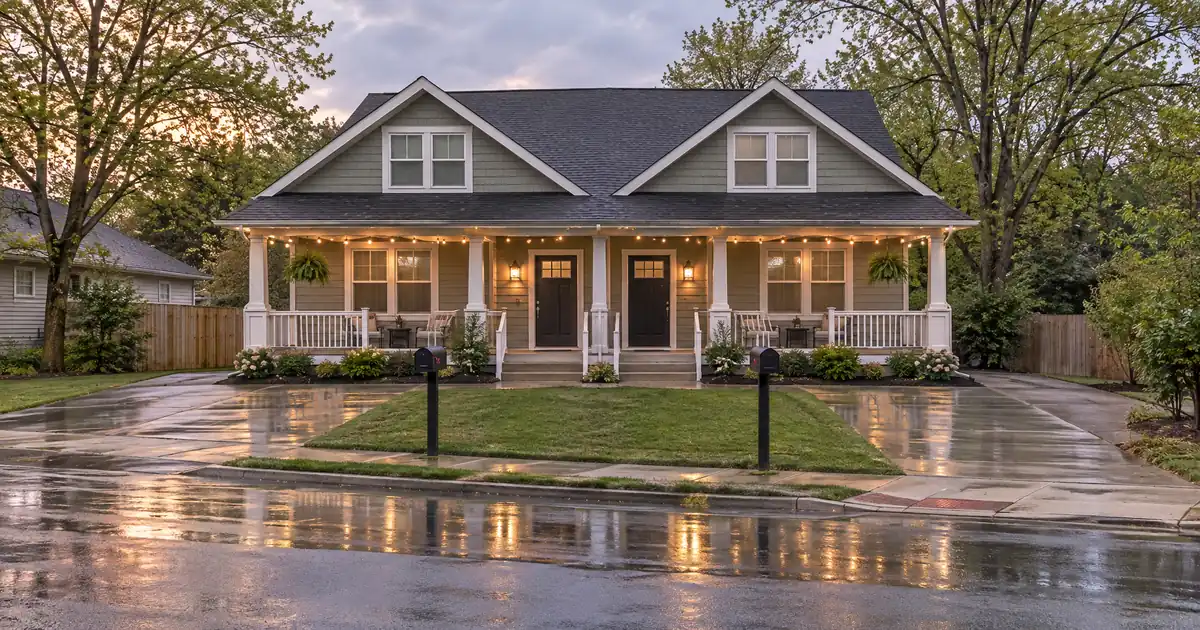
Picture an heir who inherits a triplex with an existing mortgage. She moves into one unit, leaves the other two vacant, and wants to buy out a brother’s share.
A buyout is a one-time lump sum. FHA cash-out fits that shape, and because she has not rented the home since inheriting it, the exception is intact. The lender would review her credit, income, and debts, appraise the home, size the loan to the 80% cap, and run the three-to-four-unit rent test. A HELOC could also fund the buyout, but a draw-style line on a multi-unit property is a harder sell, and a variable payment on top of her existing mortgage adds risk.
Now change one fact. She rents the two other units the month after inheriting. The inheritance exception no longer helps her. She would need 12 months of occupancy before FHA cash-out is open. In the meantime, a HELOC might be the only route, subject to the lender’s rules and its stance on rentals.
Same home, different path. The order in which you do things matters.
Mistakes That Cost Heirs the Exception
- Renting before refinancing. It forfeits the exception.
- Never moving in. FHA cash-out is a primary-residence program.
- Leaving siblings on title. Everyone who holds title typically has to be part of the transaction, so clean up ownership first.
- Assuming the exception waives everything. It only addresses the occupancy period. Appraisal, the 80% cap, and full underwriting still apply.
- Believing a HELOC gets you past 80%. A second lien that stays on the home counts toward the combined cap on an FHA cash-out.
- Relying on a 210-day rule. Some lender materials mention it. That waiting test belongs to the FHA Streamline program, not cash-out. Check against HUD’s handbook.
Your Rights at Closing
Either product on your primary residence generally carries a right to cancel. The CFPB explains that most non-purchase mortgages, including refinances and home equity loans, can be cancelled within three business days. Saturdays count as business days. Sundays and legal public holidays do not. If you cancel a refinance, you still owe the original loan.
Key Terms Defined
Cash-out refinance: A new mortgage that pays off the old one and gives you part of your equity as cash.
HELOC: A home equity line of credit, which lets you borrow against your equity as needed.
LTV: Loan-to-value, the loan amount as a percentage of the home’s value.
Subordinate lien: A loan, such as a HELOC, that sits behind the first mortgage in repayment priority.
Rescission: Your right to cancel certain loans within three business days of closing.
The Balanced Verdict
If you live in the home, have kept it out of rental use, and need a large one-time sum, FHA cash-out is the cleaner fit. It gives you one loan, a defined structure, and the heir exception on occupancy. The costs are mortgage insurance, full documentation, a lower leverage cap, and extra tests on three- and four-unit homes.
If you want to keep an existing mortgage, need money in stages, or have already rented units, a HELOC may be the practical path. The costs are variable payments, a second lien, fine print on rentals, and lender-by-lender rules on multi-unit homes.
If you are weighing a cash-out refinance against keeping the loan you have, Lendmire can help you compare the programs and the equity each one reaches.
Frequently Asked Questions
Does an heir have to wait 12 months before an FHA cash-out?
Not if the home has never been treated as an investment property since the inheritance. HUD’s handbook carves out this exception for heirs. Renting the home after inheriting it removes the exception, and you would then need 12 months of living there as your principal residence.
Can I rent the other units in an inherited 2-4 unit and still use FHA cash-out?
It depends on the lender’s reading. HUD’s text is not clear on how renting only the units you do not occupy is treated. Ask the lender before you sign any lease, because a rental history can end the exception.
Does a paid-off inherited home still count as a cash-out?
Yes. Taking equity out of a home with no mortgage is still a cash-out refinance. The 80% cap applies, and full underwriting and an appraisal are still part of the file.
Can a HELOC and an FHA cash-out coexist on the same home?
Only if the HELOC is paid off or subordinated to the new FHA first loan. Any second lien that stays counts toward the combined 80% cap. Paying the line off completely is generally the cleaner approach.
Which option handles a sibling buyout better?
FHA cash-out usually suits it, because a buyout is a one-time lump sum. A HELOC can work if your lender offers one on a multi-unit home, but variable payments and a second lien add risk. Everyone who holds title typically needs to sign, so settle ownership first.
For your own numbers, request a scenario review with Lendmire.
About Lendmire
Lendmire, NMLS# 2371349, is a mortgage brokerage with consumer lending licenses in 16 states. FHA, VA, conventional and jumbo purchase and refinance loans are arranged through wholesale lending partners, and each application is reviewed individually by the lender. Scotsman Guide named Lendmire a Top Mortgage Workplace in both 2025 and 2026.
Get Started
Ready to find the right loan for you?
See your offer in seconds. No credit pull, no obligation.
Informational only. Not a Loan Estimate, approval, or commitment to lend. Program availability and eligibility are subject to lender guidelines, credit approval, property review, and underwriting.
References
1. HUD FHA Single Family Housing Policy Handbook 4000.1
4. CFPB: Right of rescission on a second mortgage or refinance
This article is part of Lendmire’s FHA cash-out refinance program — full qualification details, guidelines, and scenarios live on the program page.
Related reading: How an FHA Cash-Out Appraisal Treats Acreage on a Rural Home · FHA Cash-Out Refinance Requirements With a HELOC Still Open · FHA Cash-Out vs Selling an Inherited Home as a Retiree
Brandon Miller
Founder & CEO, Mortgage Loan Originator, Lendmire LLC
- Mortgage Loan Originator · NMLS# 1129696 · Verify on NMLS Consumer Access
- North Carolina Real Estate Broker · License# 343312 · Verify on NCREC
- North Carolina Insurance Producer · License# 19053198 · Property, Casualty, Life, Health · Verify on NAIC SBS
- Lendmire LLC · Firm NMLS# 2371349 · Verify firm licensure
Legal disclosures. Lendmire (NMLS# 2371349) is a state-licensed mortgage brokerage that arranges financing through wholesale lender relationships. Lendmire is not a direct lender, depository institution, or registered financial advisor. The discussion above is general informational content about real estate financing — it is not financial, legal, or tax advice, and readers should consult licensed professionals for guidance on their individual circumstances. Loan inquiries are subject to lender underwriting; this article does not represent a commitment to lend. Loan terms, rates, and qualification standards vary by borrower, property, and state, and are subject to change at any time. Equal Housing Opportunity. NMLS Consumer Access: nmlsconsumeraccess.org.