
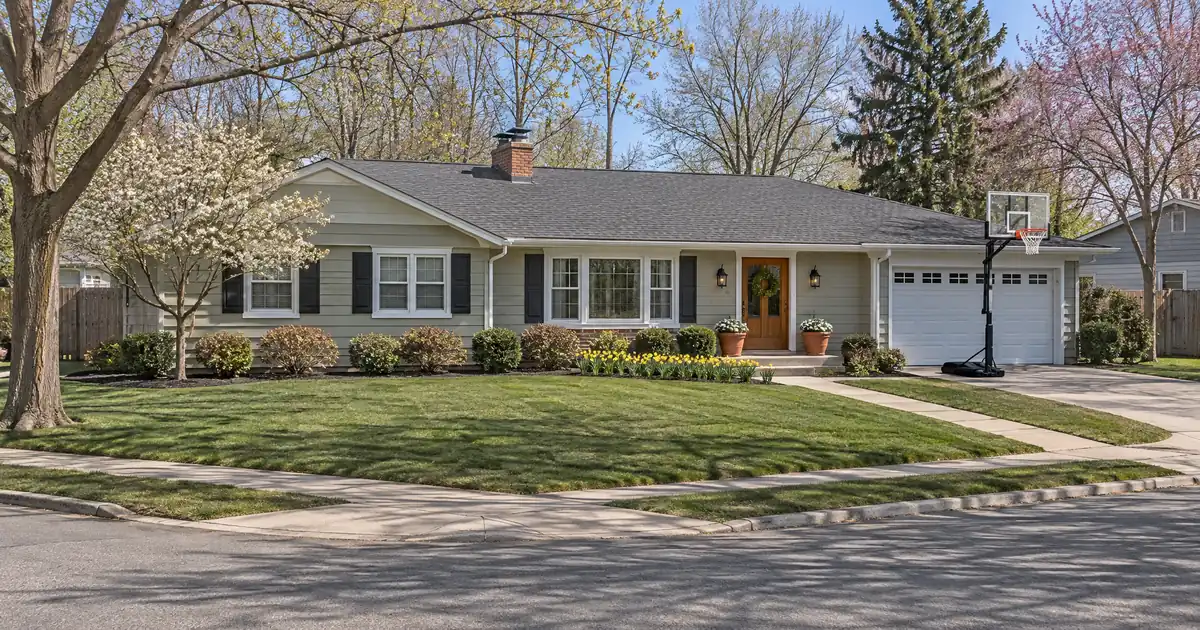
The Quick Read: It depends on how you plan to use the money and how much monthly change your pension can absorb. An FHA cash-out refinance replaces your whole first mortgage with one new, larger loan. A home equity line of credit (HELOC) leaves your first mortgage alone and adds a second loan on top. If you need one lump sum and want a steady payment, the cash-out usually fits better. If you need small amounts over time and your first mortgage is worth keeping, the line may fit better.
Here is the honest answer for a retiree. Pension income counts for both products, and a lender cannot discount it just because it is a pension. What differs is the risk to a fixed budget. A pension does not rise to absorb a payment jump, so the way each product behaves over time matters more than the day you sign.
FHA cash-out estimate
Seeded with an example value, a balance to match, and a round cash request; change any field.
Editable benchmark: 7.18% as of November 5, 2026 · Freddie Mac 30-year average via FRED®. A conventional market reference, not an FHA cash-out refinance quote.
Illustrative starting assumptions: a $350,000 home value, a $193,000 current balance, the FHA cap on a principal residence with the upfront premium financed, a thirty-year term at the current Freddie Mac benchmark, and property taxes and insurance estimated at typical national rates. Every field is editable.
An illustration, not a Loan Estimate, an approval, a quote, or a commitment to lend. The rate shown is the weekly Freddie Mac thirty-year conventional benchmark, used as a market reference; an FHA cash-out is priced by the lender at lock, and this is not an FHA cash-out refinance quote. HUD’s cap limits the base loan; the upfront premium is financed on top of the capped base loan; the monthly premium for the first year follows the snapshot’s schedule. Cash available means the base loan the cap permits less the balances retired, before closing costs, which this calculator leaves out. The line figure applies the line program’s combined loan-to-value ceiling to the same value and balance. Taxes and insurance are estimates you can edit. Licensed in sixteen states for consumer mortgages.
This article compares the two the way a broker who has arranged both would. It covers who each option is for, what a lender asks a retiree to document, and where each one can hurt.
Side-by-Side
The table below puts the two products next to each other. It leaves out pricing on purpose, because that depends on your file and the lender.
| Factor | FHA Cash-Out Refinance | Home Equity Line (HELOC) |
|---|---|---|
| Structure | New first mortgage replaces old | Second loan added on top |
| Your current mortgage | Paid off and replaced | Stays in place |
| How you get funds | One lump sum at closing | Draw as needed, then repay |
| Maximum leverage | Up to 80% LTV | Lender sets; equity cushion required |
| Occupancy | Primary residence you’ve lived in 12 months | Set by the lender |
| Mortgage insurance | Upfront and annual FHA premium | None under FHA rules |
| Payment behavior | Set by the new loan’s terms | Usually adjustable; varies with balance |
| Documentation | Pension letter, bank statement or tax return | Set by the lender; income still reviewed |
| Main risk on a fixed income | Bigger balance and a restarted term | Payment can climb after the draw period |
A few of those rows deserve a plain-English explanation. LTV means loan-to-value: your total loan balance divided by your home’s appraised value. Leverage is how much of the home’s value you borrow against.
What Is Being Compared Here?
FHA does not offer a line of credit. That surprises people. The Federal Housing Administration insures mortgages, and its cash-out refinance is a one-time loan. A HELOC comes from a private lender and has nothing to do with FHA insurance.
So the real question is not “which FHA product.” It is whether you want to replace your first mortgage with an FHA-insured loan, or keep your first mortgage and add a separate line.
An FHA cash-out is a refinance where the new loan is bigger than what you owe, and you keep the difference in cash. The cash can go to anything. HUD defines it as a refinance where proceeds are not limited to specific purposes. Across the wholesale programs placed through Lendmire, the FHA cash-out reaches up to 80% LTV on a home you have owned and lived in as your primary residence for 12 months before the case number is assigned. These specifics are subject to lender guidelines and a full review of property, leverage, and credit.
A HELOC works like a credit line secured by your house. The CFPB explains that you borrow against your equity during a draw period, then move into a repayment period. It also warns that if you fall behind, you could lose your home. That warning belongs on the table for either product, but it hits harder when income is fixed.
How a Lender Treats Pension Income
Pension income qualifies. That is the first thing a retiree should hear, because many people assume they are out of the game once they stop working.
The federal rule behind this is Regulation B, which implements the Equal Credit Opportunity Act. It bars a lender from discounting or excluding income because it comes from an annuity, pension or other retirement benefit. The lender may still look at the amount and whether the income will probably continue. That distinction matters. A lender can’t ignore your pension, but it can ask whether the payments will last.
HUD’s Handbook 4000.1 glossary defines a pension as income from a former employer. It also covers “expected income,” which is retirement income you have not started receiving but will begin receiving shortly after closing, with the exact timing depending on the file and the lender. So a pension about to begin can still count in the right situation.
Here is what a retiree should expect to hand over for an FHA cash-out:
- A pension award or retirement letter showing the amount.
- A recent bank statement showing the deposit from the former employer.
- Tax returns, when the lender wants a longer picture.
- Documents for any other income, such as Social Security.
- Your current mortgage statement and homeowners insurance information.
Lenders use the current amount you actually receive. Annuity-type income can be treated differently from a pension, and a payout with a fixed end date may not be usable. Ask the lender early which of your income streams it will count.
On the numbers, the FHA base ratios are 31% for housing costs and 43% for total debts, measured against income, with no compensating factors. With documented compensating factors, the limits can reach 40% for housing and 50% for total debts at the top tier, and the automated underwriting finding governs most files. These figures are subject to lender guidelines and full file review. They are not a commitment to lend.
When the FHA Cash-Out Is the Better Fit
Choose the cash-out when a stable payment and one lump sum matter more than keeping your current loan. It tends to suit three situations.
You need a big sum once. A roof, a major medical bill, paying off higher-cost debt, or helping a family member. You take the money at closing, and the loan then behaves like any other first mortgage. There is no draw period and no repayment cliff.
Your current first mortgage is not worth protecting. If your existing loan has an unfavorable term or structure, replacing it costs you nothing you value. A cash-out lets you fold everything into one loan.
You want your budget to stay predictable. A new first mortgage with set terms is easier to plan around than a line whose payment moves. For a pension with no raises, predictability is worth real money. The loan details come from your Loan Estimate, so read the structure there before you commit.
Now the costs, stated mechanically. FHA charges an upfront mortgage insurance premium of 1.75% of the base loan, which is usually financed into the balance. It also charges an annual premium that runs between 0.15% and 0.75% of the balance, depending on term, loan amount and LTV. On a thirty-year loan above 90% LTV, the annual premium lasts for the term. At or below 90% LTV, it ends after eleven years.
That is the trade. You get a replacement loan and lump sum, and you take on mortgage insurance and a bigger balance. There are the usual refinance closing costs too. And you restart your loan term, which matters if you are already well into paying off the home.
Occupancy is a firm rule. A standard FHA cash-out applies to your principal residence only. HUD’s refinance reference confirms the property must be owner-occupied, and that a home with no mortgage can still be refinanced for cash. It also confirms that an FHA streamline gives no cash back. (That page is older and shows an outdated leverage cap, so rely on 80% as the current figure.)
A first mortgage with a low balance that you’ve nearly paid off? Think twice before replacing it. The cash-out wipes out that progress.
Once you sign a refinance on your primary home, you generally get a three-business-day right to cancel. If you rescind, your original loan stays in place.
When the Home Equity Line Is the Better Fit
Choose the line when your existing mortgage is worth keeping and your needs are small, staged or uncertain. It tends to suit a few situations.
Your first mortgage is one you want to protect. If it has a balance and terms you like, a line leaves it untouched. You add a second loan and keep the first as it is. A cash-out would force you to replace it.
You need money in pieces. Ongoing home repairs, a staged project, or a cushion for the unexpected. You draw what you need and pay interest only on what you have borrowed. A lump sum from a cash-out would leave you holding cash you might not use.
You want to avoid FHA mortgage insurance. A HELOC carries no FHA premium, because it is not an FHA loan.
The costs and cautions matter for a retiree. The CFPB notes that HELOCs usually have adjustable rates and that the payment varies with the outstanding balance. After the draw period ends, you enter repayment, and the lender may set a schedule to pay the whole balance. The CFPB’s example is a 10-year draw period, with repayment often stretching across ten or twenty years.
Think about what that looks like at age 70 or 75. A payment that was small during the draw period can grow when repayment starts. A pension that stays flat has to carry that jump. That payment-shock risk is the main reason to be careful with a line on a fixed income.
A few other points from the CFPB’s HELOC booklet:
- The line is generally payable in full if you sell the home.
- The lender may reduce your credit line if your home’s value drops.
- Fees can include an appraisal fee, an application fee and closing costs.
- Lenders typically want you to keep 10% to 20% of your home’s value as equity. That is a general statement, not a program rule.
Because the line is secured by your house, missing payments puts the home at risk. This is also true of the cash-out. The difference is how likely a payment surprise is.
Three Retiree Scenarios
These scenarios use percentages and plain words, not dollar figures.
Scenario one: a first mortgage worth keeping. Say you own a home with a low balance and terms you like. You want a modest amount for repairs over the next few years. A line leaves the first mortgage alone. A cash-out would replace it and add FHA insurance. The line wins, as long as you can handle an adjustable payment.
Scenario two: a first mortgage that no longer helps you. Say your current loan has a balance and terms you would happily replace, and you need a one-time sum. A cash-out folds both needs into one loan with a steady payment. It wins, provided the numbers fit your pension.
Scenario three: an existing HELOC. You already carry a line and a first mortgage. A cash-out can roll both into one loan, which ends the variable payment. That can steady a retiree’s budget. The tradeoff is that you restart the term and add FHA premiums. This one is a toss-up and depends on how much the variable payment worries you.
Stress-Testing the Payment on a Fixed Pension
Run this test before you choose. It does not need exact figures.
1. Write down your monthly pension and other steady income.
2. List every monthly obligation you have now.
3. Add the new payment under each option.
4. Ask: if the line’s payment rose meaningfully, would the budget still hold?
If the answer to the last question is “barely,” a cash-out’s steadier payment may be safer. If you are comfortable with some swing, the line gives you flexibility. Also ask what happens if one spouse’s pension drops or stops. A surviving spouse may live on less, and the payment should still work then.
Think about heirs too. Either product leaves a lien on the home. A bigger balance means less equity passes on.
Is a Reverse Mortgage Worth a Look?
Sometimes. A reverse mortgage converts only part of your equity into cash, depending on age, home value and rates. A reverse mortgage is a different product with its own rules, and it is outside what this article covers. It is worth asking about if neither product here fits your budget.
Key Terms Defined
Cash-out refinance: a new first mortgage that pays off the old one and gives you the extra amount as cash.
HELOC: a revolving credit line secured by your home, with a draw period followed by repayment.
Draw period: the stretch when you can borrow from the line.
Mortgage insurance premium (MIP): the FHA charge that protects the lender, paid upfront and annually.
Expected income: retirement income you have not yet received but will within 60 days of closing.
Right of rescission: a three-business-day window to cancel certain loans on your home after signing.
A Balanced Verdict
Neither option wins for every retiree. The cash-out is built for a one-time need and a predictable payment, at the cost of FHA insurance and a restarted loan. The line is built for staged needs and keeping a good first mortgage, at the cost of payment variability that a fixed pension handles poorly.
If you can’t say how much you will need or when, the line’s flexibility is tempting, but be honest about repayment. If you know the amount and want certainty, the cash-out is usually the calmer choice. When your pension is the main income, lean toward the option whose worst month you can still afford.
If you are weighing a cash-out refinance against keeping the loan you have, Lendmire can help you compare the programs and the equity each one reaches. Tax treatment can depend on your situation; borrowers should speak with a qualified tax professional before relying on any deduction or credit.
Frequently Asked Questions
Can I get an FHA cash-out refinance if my only income is a pension?
Yes, pension income counts, and a lender cannot discount it because it is a pension. The lender will document the current amount you receive and may ask whether it will continue. Approval still depends on your ratios, credit, appraisal and full file review, and nothing here is a commitment to lend.
Does FHA offer a home equity line of credit?
No. FHA insures mortgages, including the cash-out refinance, but it does not offer a line of credit. A HELOC comes from a private lender and is a separate second loan on your home.
How much of my home’s value can I borrow with an FHA cash-out?
Up to 80% LTV on a home you have owned and lived in as your primary residence for 12 months before the case number. Older pages that show a higher percentage are out of date. Eligibility is subject to lender guidelines and an appraisal.
What happens to a HELOC when the draw period ends?
Borrowing stops, and repayment begins. The lender may set a schedule to repay the full balance, and the payment can rise. On a fixed pension, plan for that change before you open the line.
Can I cancel after I sign?
On a refinance of your primary home, you generally have three business days to cancel. Saturdays count as business days. Sundays and legal public holidays do not. If you cancel a refinance, your original loan remains.
For your own numbers, request a scenario review with Lendmire.
For current guidelines and terms, see Lendmire’s FHA loan programs page.
About Lendmire
Lendmire, NMLS# 2371349, is a mortgage brokerage with consumer lending licenses in 16 states. FHA, VA, conventional and jumbo purchase and refinance loans are arranged through wholesale lending partners, and each application is reviewed individually by the lender. Scotsman Guide named Lendmire a Top Mortgage Workplace in both 2025 and 2026.
Get Started
Ready to find the right loan for you?
See your offer in seconds. No credit pull, no obligation.
Informational only. Not a Loan Estimate, approval, or commitment to lend. Program availability and eligibility are subject to lender guidelines, credit approval, property review, and underwriting.
References
1. CFPB: What Is a Home Equity Line of Credit HELOC
2. HUD Handbook 4000.1 Update 15 Glossary
3. HUD Archives HOC Reference Guide, Refinances
This article is part of Lendmire’s FHA cash-out refinance program — full qualification details, guidelines, and scenarios live on the program page.
Related reading: Can You Get Approved for an FHA Cash-Out Refinance as a Retiree Living on Assets? · FHA Cash-Out Refinance Requirements for Consolidating Debt by Pulling Out Home Equity · How an FHA Cash-Out Lender Reads an Inherited 2-4 Unit Home
Brandon Miller
Founder & CEO, Mortgage Loan Originator, Lendmire LLC
- Mortgage Loan Originator · NMLS# 1129696 · Verify on NMLS Consumer Access
- North Carolina Real Estate Broker · License# 343312 · Verify on NCREC
- North Carolina Insurance Producer · License# 19053198 · Property, Casualty, Life, Health · Verify on NAIC SBS
- Lendmire LLC · Firm NMLS# 2371349 · Verify firm licensure
Compliance and disclosures. Lendmire (NMLS# 2371349) is a licensed mortgage broker and is not a direct lender, depository institution, financial advisor, or tax professional. Content in this article is general market analysis and educational information — not financial, legal, or tax advice for any specific situation. Lendmire does not guarantee loan approval; every transaction is subject to underwriting by the funding lender. Mortgage pricing and loan program guidelines are subject to change at any time without notice and vary by borrower characteristics, property type, and state regulations. Lendmire complies with Equal Housing Opportunity. Licensure verification: NMLS Consumer Access.