
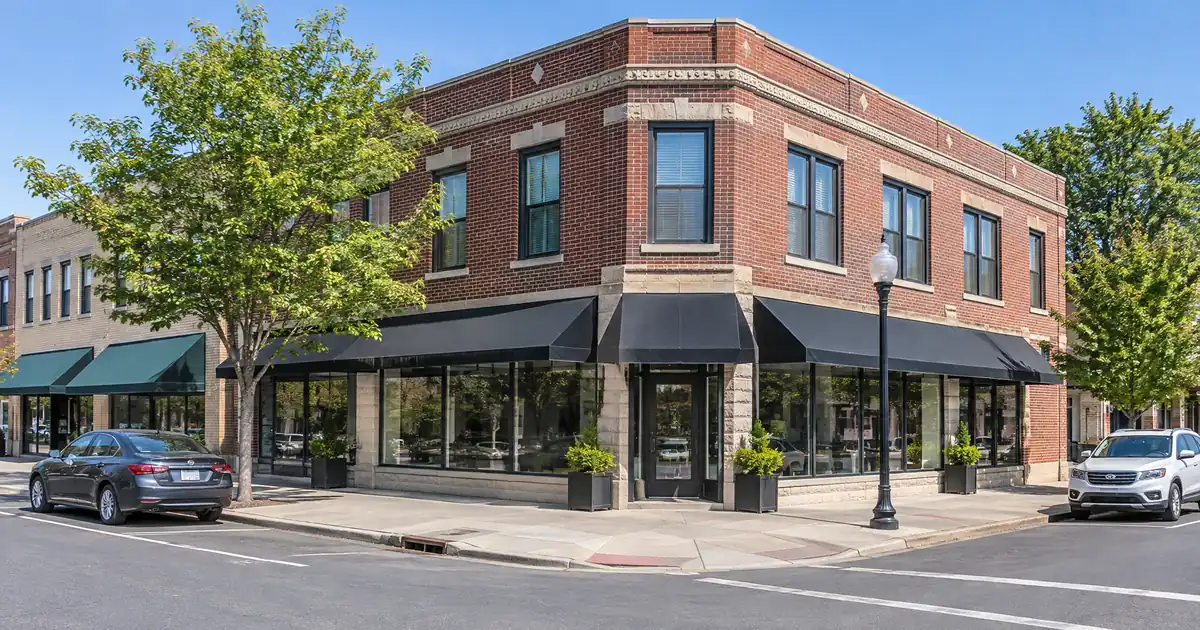
The Quick Read: The VA sets the ceiling at 100% of the reasonable value on the VA appraisal, and the financed funding fee counts inside that number. A commercial floor does not change that cap. It can change the value the appraiser reaches, and it can stop the whole building from being accepted. Three separate tests decide the outcome: the loan ceiling, the building’s project approval, and the appraisal.
Three Tests, Kept Apart
A VA cash-out on a condo with a commercial floor fails or passes on three different questions. Files get tangled when borrowers and agents treat them as one.
VA cash-out estimate
Seeded with an example value, a typical balance, and a round cash request at the first-use fee; change any field.
Editable benchmark: 7.18% as of November 5, 2026 · Freddie Mac 30-year average via FRED®. A conventional market reference, not a VA cash-out refinance quote.
Illustrative starting assumptions: a $350,000 home value, a $193,000 current balance, the full-value VA cap with the first-use funding fee financed, a thirty-year term at the current Freddie Mac benchmark, and property taxes and insurance estimated at typical national rates. Every field is editable.
Illustrative estimate only — not a Loan Estimate, approval, quote, or commitment to lend. The rate field carries the weekly Freddie Mac thirty-year conventional benchmark, a market reference and not a VA cash-out refinance quote; a VA loan is priced by the lender at lock. The total loan, funding fee included, is capped at the program leverage on the reasonable value; the fee follows the tier chosen. The cash available is what the cap allows less the balances paid off and the fee, before closing costs, which are not included. The HELOC line is the line program’s combined loan-to-value ceiling applied to the same value and balance. Taxes and insurance are editable estimates. The debt-to-income figure is a guideline; residual income decides a VA file. Licensed in sixteen states for consumer mortgages.
1. The loan ceiling. The new loan may not exceed 100 percent of the reasonable value of the home, as the VA determines it. The federal rule is in 38 CFR 36.4306 on eCFR.
2. Project eligibility. The condo project has to be VA-accepted before any unit in it can carry a VA loan.
3. The appraisal. The commercial space has to be reflected in the value of the residential unit.
The ceiling is math. Project approval is a yes or no on the building. The appraisal is a judgment call that moves the dollar figure the ceiling is applied to.
Lendmire’s VA cash-out refinance program page covers the program basics.
What the 100% Ceiling Actually Means
The cash-out loan can reach 100% of the value on the Notice of Value (NOV), and the funding fee can be financed inside it. The VA Lenders Handbook, Chapter 6 states the maximum against the NOV. If part of the fee would push the loan above 100%, that part is paid in cash at closing.
The old 90% number still floats around. Congress set a 90% limit in 1989. VA’s 2018 rulemaking in the Federal Register removed it as a cap and folded 90% into the net tangible benefit test. Today, 90% of value survives as one of the eight listed benefits. It also appears in one narrow fixed-to-ARM case with more than one discount point.
Across the wholesale programs placed through Lendmire’s network, the VA cash-out reaches 100% of the appraised value including the financed fee. It refinances any loan type into VA. There is no mortgage insurance, and with full entitlement there is no VA loan limit. Those figures are subject to lender guidelines and full file review.
Two things people mix up:
- The cap is on the loan, not on the cash you receive. Cash to you is the new loan minus the payoff, closing costs, and any lender-set limit.
- The funding fee is financed inside the cap. When the loan sits at the cap, a financed fee reduces your proceeds dollar for dollar.
Does a Commercial Floor Lower the Loan Amount?
Not by rule. By appraisal, sometimes. No VA percentage reduces your loan because the building has ground-floor retail or office space. The 100% ceiling applies to whatever value the appraiser determines for your unit.
Where the commercial floor shows up is in that value. The VA handbook’s condo chapter says that if the project has commercial or other non-residential ownership interests, the appraisal report must include them and address their effect on the value of the residential units.
In practice, that means:
- A busy, leased commercial floor can be neutral or even supportive of the building’s value.
- A vacant or struggling commercial floor can thin out comparable sales and pull the unit’s value down.
- A lower value means a lower ceiling, which means less cash.
Same borrower, same unit, same payoff. Two different buildings can produce two different NOVs. That is why the appraisal is the real variable on these files.
The Building Test: Project Approval
The whole project has to be VA-accepted. Per Chapter 16 of the VA Lenders Handbook, condominiums, but not PUDs, must be approved by VA before any unit is eligible for the guaranty. A refinance does not bypass this. If the project is not on the approved list, the lender can submit the whole project for approval, and that has to come first.
For mixed-use developments, the attorney’s opinion submitted for approval has to state the percentage of multi-family or non-residential units and uses. The handbook asks for the disclosure. The handbook does not set a specific percentage cap for condos, so confirm any limit with the lender.
Approval can stall a file even when the borrower, the equity, and the unit are all fine, because the building itself may not be accepted. Checking the VA approved list before paying for an appraisal avoids spending that money on a building that cannot move forward.
Where the “25% Commercial” Rule Comes From
Many lenders and websites repeat a 25% commercial-space limit, yet the VA handbook chapter on condominiums does not set a specific percentage cap. The figure reads as a lender overlay, meaning a rule a lender adds on top of VA minimums.
That distinction matters for the borrower:
- A building that fails one lender’s commercial-space overlay may pass another’s.
- Some lenders set a stricter or looser line than others, so ask each lender for its line before the appraisal is ordered.
- Other agencies draw their own lines. Freddie Mac’s conventional guide, for example, defines a project with more than 35% commercial space as having “excessive” commercial space. That is a conventional rule, shown here only as contrast.
Commercial-space limits on VA condo files are therefore a matter of lender practice rather than a VA-set number. Ask any lender you talk to what their overlay is, in writing, before you commit.
Condo With a Commercial Floor vs. a Mixed-Use Property
These two get confused, and VA treats them differently.
| Property | Main VA rule | What decides it |
|---|---|---|
| Condo unit in a mixed-use building | Chapter 16 project approval plus the appraisal rule | Whether the project is accepted, and how the appraiser values the unit |
| Single-family mixed-use property | Chapter 12 minimum property requirements | Whether it is primarily residential and legal under zoning |
If you own a residential unit above a retail floor in a condo building, you are in the first row. The building has to be accepted, and the appraisal has to account for the commercial interests. The second row covers a house with a business use attached, which is a different test.
How a Lender Works Out the Maximum Cash
Here is the sequence on a file, in order.
1. Eligibility. The certificate of eligibility (COE) from VA decides entitlement. The home must be your primary residence.
2. Project check. Is the building on VA’s approved list? If not, can the lender submit it?
3. Mixed-use documentation. The project documents state the non-residential percentage.
4. VA appraisal and NOV. The appraiser determines reasonable value, accounting for the commercial interests. That NOV value is the base for the 100% ceiling.
5. Net tangible benefit. The new loan has to meet at least one of VA’s eight listed benefits. For the VA cash-out, the half-percent rate-reduction and fee-recoupment tests belong to the IRRRL and do not apply.
6. Seasoning. If you are refinancing an existing VA loan, the cash-out carries the same seasoning as the IRRRL: the later of 210 days from the first payment and the sixth payment. The regulation governs, at 38 CFR 36.4306(b)(2).
7. Loan math. Maximum loan is 100% of the NOV value, with the financed funding fee inside it. Cash to you is that loan minus payoff, closing costs, and any lender cap.
Underwriting is separate from the loan math. Residual income is the controlling test. The 41% debt-to-income figure is a guideline, not a cap. A ratio above it needs residual income well above the table. HOA dues in a mixed-use building can run higher, and they feed into both measures. Across the programs Lendmire places, the decision-score floor starts at 580, though each lender can set its own overlays.
A Worked Example, in Percentages
Take a veteran with full entitlement who owns a condo above a ground-floor retail space. The building is on the approved list. The VA appraisal comes back and the appraiser has accounted for the commercial floor in the unit’s value.
- The ceiling is 100% of that appraised value.
- The funding fee for a first-use cash-out is 2.15%, financed inside the loan, unless the veteran is exempt for a service-connected disability. A subsequent-use cash-out carries 3.3%.
- The payoff and closing costs come out of the loan first. What remains is the cash.
Now change one fact. The retail floor is vacant and the appraiser finds weak comparables. The value comes in lower. The same payoff and fees now eat a bigger share of a smaller loan, and the cash drops. Nothing about the veteran changed. The value changed.
That is the whole sensitivity. Value drives the ceiling, the fee reduces proceeds at the cap, and the payoff comes first.
What to Ask Before Paying for an Appraisal
These questions save money and surprise.
- Is the building on VA’s approved list today?
- If it is not, will the lender submit the project, and who gathers the attorney’s opinion and project documents?
- What does the lender’s commercial-space overlay say, and is it in writing?
- Is the commercial floor leased or vacant?
- What are the HOA dues, and do they run higher because of the commercial use?
- Does my state limit cash-out regardless of VA? Some states do. Check your state’s rules.
If the Building Does Not Pass
Several paths exist, none of them guaranteed.
- Try a different lender. Overlays vary, and a stricter overlay at one lender does not bind another.
- Ask whether the project can be submitted for approval, and whether the HOA will cooperate.
- Wait for the building’s approval status to change.
- Look at a different loan type.
If the cash is meant for work on the unit, the appraisal question changes shape too.
Key Terms Defined
Reasonable value. The value the VA determines for the home, shown on the Notice of Value, and the base for the loan ceiling.
Notice of Value (NOV). The document the VA appraisal produces, stating the reasonable value.
Project approval. VA acceptance of the whole condo building, required before any unit can carry a VA loan.
Mixed-use. A building or property with both residential and non-residential uses, such as ground-floor retail.
Net tangible benefit. The requirement that a refinance meet at least one of VA’s eight listed benefits.
Lender overlay. A rule a lender adds on top of VA’s minimums, such as a commercial-space cap or a higher credit score.
Frequently Asked Questions
Is there a VA rule capping commercial space in a condo building?
VA’s handbook does not set a commercial-space percentage for condos. The commonly repeated 25% figure appears to be lender practice. VA’s handbook requires the project documents to state the percentage of non-residential use and requires the appraisal to account for commercial interests. Ask your lender for its overlay.
Can I do a VA cash-out if my condo project is not approved?
No. The whole project has to be VA-accepted before any unit is eligible. VA does not approve individual units on their own. If the building is not on the list, the lender can submit the project, and that approval has to come first.
Is the maximum loan 90% of value?
No. That was the historical cap. The current ceiling is 100% of reasonable value, and the financed funding fee counts inside it. Ninety percent survives only as one of the eight net tangible benefit options and in a narrow fixed-to-ARM case.
Does the commercial floor reduce how much cash I get?
Only through value. The ceiling is still 100% of what the appraiser determines. A weak or vacant commercial floor can pull down the unit’s value, and a lower value means a lower ceiling and less cash. The financed funding fee also reduces proceeds when the loan is at the cap.
What does the funding fee look like on a cash-out?
Across the programs Lendmire places, it is 2.15% for first use and 3.3% for subsequent use. It can be financed, and it is waived for veterans receiving compensation for a service-connected disability and other exempt groups. All figures are subject to lender guidelines and full file review.
If you are weighing a cash-out refinance against keeping the loan you have, Lendmire can help you compare the programs and the equity each one reaches.
For your own numbers, request a scenario review with Lendmire.
About Lendmire
Lendmire (NMLS# 2371349) is a mortgage broker licensed for consumer lending in 16 states. Lendmire arranges FHA, VA, conventional and jumbo purchase and refinance loans through wholesale lenders; every file is underwritten by the lender under the applicable program guidelines. Scotsman Guide named Lendmire a Top Mortgage Workplace in both 2025 and 2026.
Get Started
Ready to find the right loan for you?
See your offer in seconds. No credit pull, no obligation.
Informational only. Not a Loan Estimate, approval, or commitment to lend. Program availability and eligibility are subject to lender guidelines, credit approval, property review, and underwriting.
References
1. eCFR, 38 CFR Part 36 (§36.4306)
2. VA Lenders Handbook, Chapter 6, Refinancing Loans
3. Federal Register, VA cash-out refinance revisions
4. VA Lenders Handbook, Chapter 16, Condominiums and PUDs
This article is part of Lendmire’s VA cash-out refinance program — full qualification details, guidelines, and scenarios live on the program page.
Related reading: How Much Cash Comes Out of a VA Cash-Out Refinance on a Home You Own? · VA Cash-Out vs Jumbo Cash-Out to Buy Out an Ex Who Is on Title · VA Cash-Out vs Conventional on a Condo With a Commercial Floor
Brandon Miller
Founder & CEO, Mortgage Loan Originator, Lendmire LLC
- Mortgage Loan Originator · NMLS# 1129696 · Verify on NMLS Consumer Access
- North Carolina Real Estate Broker · License# 343312 · Verify on NCREC
- North Carolina Insurance Producer · License# 19053198 · Property, Casualty, Life, Health · Verify on NAIC SBS
- Lendmire LLC · Firm NMLS# 2371349 · Verify firm licensure
Compliance and disclosures. Lendmire (NMLS# 2371349) is a licensed mortgage broker and is not a direct lender, depository institution, financial advisor, or tax professional. Content in this article is general market analysis and educational information — not financial, legal, or tax advice for any specific situation. Lendmire does not guarantee loan approval; every transaction is subject to underwriting by the funding lender. Mortgage pricing and loan program guidelines are subject to change at any time without notice and vary by borrower characteristics, property type, and state regulations. Lendmire complies with Equal Housing Opportunity. Licensure verification: NMLS Consumer Access.