
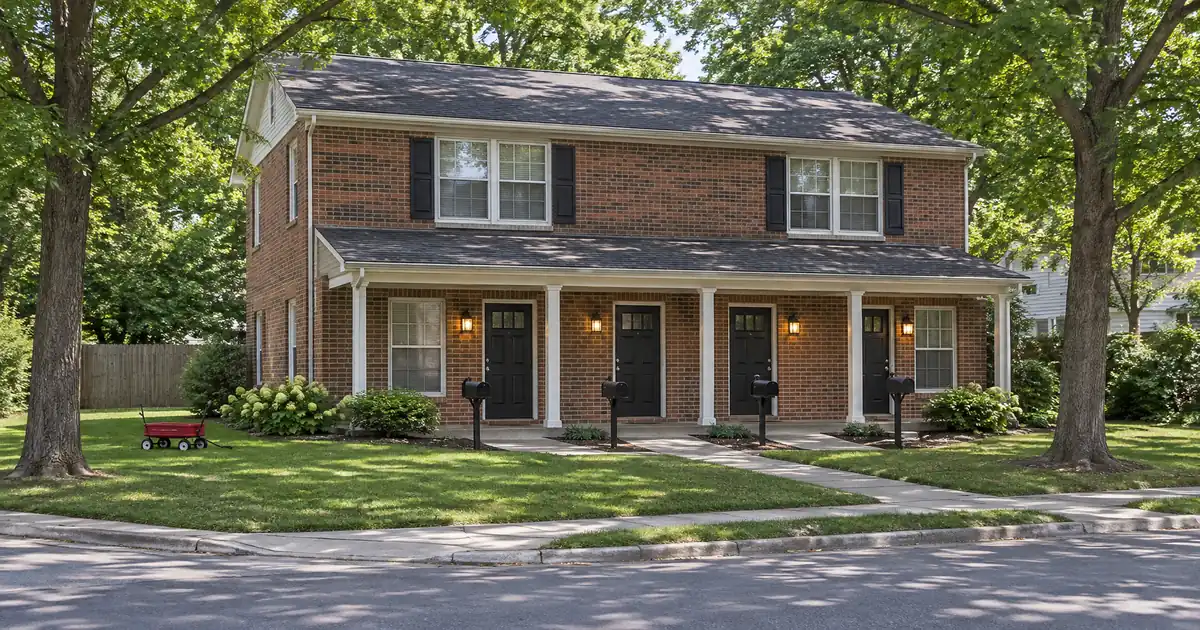
The Quick Read: No agency publishes a percentage or a dollar-per-square-foot figure for it. The appraiser decides the value from what buyers in your market actually pay for finished lower levels, and the cash-out ceiling then applies to that number. On a 2–4 unit home you live in, conventional cash-out tops out at 75% of the appraised value. Each dollar of basement value an appraiser credits therefore raises the loan ceiling by only 75 cents.
Key Takeaways
- A finished basement is reported as below-grade finished area. It never counts as above-grade living area, no matter how nice the finish is.
- The basement’s value is capped twice: first by the appraiser’s market comparisons, then by the program’s loan-to-value limit.
- On a 2–4 unit principal residence, conventional cash-out is 75% of value. A one-unit home is 80%.
- If the lower level is a separate, legal apartment, it may be a unit in its own right. That changes the unit count, the cap and the appraisal form.
- Cash in hand is the new loan minus the payoff, any liens that stay and financed costs. It is not the cap times the value.
What Does “Finished Basement” Mean to an Appraiser?
To an appraiser, a finished basement is below-grade finished area. It is measured, labeled and valued separately from the floors above ground.
Cash-out refinance estimate
The starting figures are an example value with a balance and a cash request in proportion. Replace them with yours.
Editable benchmark: 7.18% as of November 5, 2026 · Freddie Mac 30-year average via FRED®. A conventional market reference, not a cash-out refinance quote.
Illustrative starting assumptions: a $350,000 home value, a $193,000 current balance, the agency cap on a one-unit principal residence, a thirty-year term at the current Freddie Mac benchmark, and property taxes and insurance estimated at typical national rates. Every field is editable.
Illustrative estimate only — not a Loan Estimate, approval, quote, or commitment to lend. The rate field carries the weekly Freddie Mac thirty-year conventional benchmark, a market reference and not a cash-out refinance quote; a cash-out loan is priced by the lender at lock. The cash available is the loan the program cap allows less the balances paid off, before closing costs, which are not included. The HELOC line is the program’s combined loan-to-value ceiling applied to the same value and balance. Taxes and insurance are editable estimates. Licensed in sixteen states for consumer mortgages.
The standard for measuring is ANSI Z765. Under Fannie Mae’s Selling Guide on the improvements section of the appraisal, a level counts as below-grade if any portion of it sits below grade. Finish quality doesn’t change that. Neither does the number of windows.
That surprises many owners. A walk-out lower level with big windows still lands on the below-grade line. Listing sheets and tax records often fold basement space into one square-footage number. The appraisal does not.
Fannie Mae now uses the terms “above-grade finished area” and “below-grade finished area” in place of the older “gross living area” and “basement” wording. Finished space with interior access that misses the ceiling-height rules goes on its own line, called “nonstandard finished area.”
For 2–4 unit properties, the guide names Gross Building Area as the most common comparison. It includes finished area plus interior common spaces like stairways and hallways. Other comparison methods are accepted when applied consistently.
How Is the Value of a Finished Basement Determined?
The value comes from the sales comparison. The appraiser finds recent sales of similar properties and adjusts for differences. A finished lower level is one of those differences.
Fannie Mae’s rule on adjustments to comparable sales says adjustments must reflect how the market reacts to differences between the subject and the comparables. The guide doesn’t give a formula. It doesn’t set a percentage of cost or a rate per square foot either.
Be wary of any “50 to 75 percent of above-grade value” rule of thumb. It isn’t in the agency guidance. It shows up in appraiser-tool marketing, and real adjustments vary with the market.
In practice, the appraiser will:
1. Measure the space to the ANSI standard.
2. Report finished below-grade area on its own line.
3. Compare above-grade area to above-grade area, and below-grade to below-grade.
4. Look for comparable sales that also have finished lower levels.
5. Adjust for the difference, keeping the final value within the range of the adjusted sales.
The best-supported basement is one where several nearby sales had similar finished space. If few neighbors have one, the market may pay little for yours. The work still cost what it cost.
Why the Basement’s Contribution Gets Capped Twice
The basement’s value is limited by the appraiser first. The loan program then limits how much of that value you can borrow against.
Say the appraiser credits the finished lower level with a few percent of the home’s value. At 75% leverage, only three-quarters of that credit becomes borrowing room. The rest stays as your equity. Terms vary by lender guidelines, property type, leverage, credit profile, and full file review.
Here is a labeled illustration using index numbers instead of dollars. Treat the home’s appraised value as 100 points and the payoff plus costs as 60 points.
| Step | Without basement credit | With 4-point credit |
|---|---|---|
| Appraised value | 100 | 104 |
| Loan ceiling at 75% | 75 | 78 |
| Payoff and costs | 60 | 60 |
| Cash to you | 15 | 18 |
The 4-point credit lifted cash by 3 points. It didn’t lift it by 4. Leverage did that.
The same math cuts the other way. If the appraisal comes in 5% lower than expected, the ceiling drops to 71.25 points. Cash falls from 15 to about 11. That’s a 25% drop in cash from a 5% drop in value. Cash moves faster than value because the payoff stays fixed.
What Are the Cash-Out Limits on a 2–4 Unit Home You Live In?
The conventional limit is 75% of value on a 2–4 unit principal residence. A one-unit principal residence is 80%. The Fannie Mae Eligibility Matrix is the agency reference for caps by unit count. Lendmire is a mortgage broker, and its team arranges these loans through wholesale lenders.
Seasoning rules apply as well:
- The existing first mortgage you’re paying off must be at least 12 months old, counted note date to note date.
- At least one borrower must have been on title for 6 months. There are narrow exceptions for delayed financing, inheritance and legal awards.
- A property listed for sale has to come off the market by disbursement.
FHA has its own cash-out cap for owner-occupied homes, measured against an “adjusted value” rather than the raw appraisal. FHA has also applied extra tests to 3–4 unit properties. The current HUD handbook controls the details, so confirm them before planning around FHA.
Occupancy matters here. This article covers the home you live in. A second home or rental of the same size follows its own leverage, so occupancy sets the cap before the appraisal ever does.
Lendmire’s cash-out refinance programs page lays out how the equity limits compare across conventional lanes. All program figures are subject to lender guidelines and full file review, and none of this is a commitment to lend.
Where the General Rule Breaks
The rule that “basements add modest, market-driven value” has real exceptions. Here are the ones that change the outcome.
The basement is really an apartment
If the lower level is a separate dwelling, it may count as one of the units instead of a finished basement. Fannie Mae looks at features like separate utility meters, a unique postal address, and whether the unit can legally be rented. The unit count then drives the 75% cap and the appraisal form.
Form 1025 is built for 2–4 unit properties and collects rent and operating-income data. It’s the standard form for traditional appraisals of these homes.
Fannie Mae also allows accessory dwelling units on some 2–3 unit properties, as long as the total doesn’t exceed four. That matters if you already have two or three units and are weighing a basement unit.
The unit isn’t legal under zoning
Fannie Mae won’t buy loans on properties with an illegal use under zoning. A legal nonconforming use can work if the appraisal reflects any adverse effect. A zoning-illegal accessory unit is allowed only in narrow cases. The use must conform to the neighborhood, the appraisal must label it illegal, and the appraiser must support the value with comparable sales that share the same non-compliant use. The Fannie Mae appraisal FAQ covers how legal nonconforming use and unpermitted additions are handled.
In plain terms, an unpermitted basement apartment is not simply an extra unit. Expect little or no credit for it, and expect the appraiser to say so in writing.
The work was done without a permit
An appraiser must comment on an addition that lacks a required permit and on how that affects value. Finished space without permits can draw a reduced adjustment, extra conditions, or a request to resolve the issue first. Keep permit records and final inspections with the file.
The ceiling is too low
Finished area has to meet ceiling-height rules to count as standard. The ANSI standard calls for 7 feet in general, with a sloped-ceiling rule for partial areas. Space that misses the mark goes to the nonstandard line. Check the exact thresholds in Fannie Mae’s ANSI FAQ before you rely on a measurement.
You want to use the rent to qualify
Rental income from your own principal residence generally can’t be used to qualify, with exceptions for accessory units and boarder income. Fannie Mae requires you to report gross monthly rent for each unit of a 2–4 unit principal residence even if it isn’t used to qualify. A lender may count positive rental income only with 12 months of property-management experience, per the guide’s rental income rules.
Income, debt-to-income ratio and reserves are checked separately from the appraisal. Finishing a basement doesn’t change them unless it creates a unit that meets the rules above.
You’re on a streamline
The FHA Streamline and the VA IRRRL are rate-and-term products for existing government loans. They skip the appraisal-driven value test and pay out no cash. Finishing a basement earns no credit through either.
Legal Unit or Finished Rec Space: How They Compare
| Factor | Finished rec space | Legal basement unit |
|---|---|---|
| Appraisal label | Below-grade finished | May count as a unit |
| Unit count | Unchanged | Can raise it, up to four |
| Permits | Should be on file | Required |
| Rent for qualifying | Generally not counted | Subject to rental rules |
| Main risk | Little market credit | Zoning and legality |
What Should You Do Before You Apply?
Prepare the property so the appraiser can credit what you built. Cash-out proceeds depend on that credit.
- Gather permits and final inspection sign-offs. Have them ready on day one.
- Pull recent sales with finished lower levels. Comparable sales are the evidence an appraiser weighs most. Your lender’s team can tell you what the appraisal will need.
- Photograph the space and measure ceiling height. Make sure every finished area has interior access.
- Document any leases. If you rent a legal unit, the appraiser needs the unit-level rent data.
- Decide on sequencing. Waiting until the work is complete and permitted gives the appraiser something firm to value, so the cash-out can reflect what you built. Borrowing first to fund the work would be a separate, earlier loan, and its appraisal would value the home as it stands today, without the basement finish.
If you’ve owned the home less than a year or recently refinanced, check seasoning first. The 12-month and 6-month rules can decide timing before the basement ever comes up.
You are also entitled to a copy of the appraisal. Under the CFPB’s ECOA Valuations Rule factsheet, the lender must notify you of that right, with timing set by the rule and varying by file and lender. Read how the basement was reported and adjusted. If a comparable looks wrong, tell your loan officer, and ask what documentation the lender needs to review it.
When Does the Basement Not Pay Off?
Sometimes it won’t, and it’s better to know before spending.
- No comparable support. If neighbors’ homes don’t have finished lower levels, the market may pay little for yours.
- Over-improving. Finish quality beyond the neighborhood norm rarely earns extra credit.
- Unpermitted or low-ceilinged space. These can earn little or no credit.
- Tight leverage. At 75%, three-quarters of whatever the appraiser credits is all you can borrow against.
- A higher loan balance. Borrowing more raises the payment. Rolling costs into the loan trims your cash.
This is a genuine toss-up for some owners. The equity is real, but the appraisal may not recognize all of it. If the numbers feel thin, it can make more sense to keep the loan you have and treat the finished space as a place to live.
Key Terms Defined
Below-grade finished area: Finished living space where any part of the level sits below ground. It is reported separately from above-grade area.
Above-grade finished area: Finished living space on levels entirely above ground. This is what the appraisal treats as the home’s main living area.
Gross Building Area: A measure of a 2–4 unit building that includes finished area and interior common spaces like hallways and stairs.
Loan-to-value (LTV): The new loan divided by the appraised value. Conventional cash-out on a 2–4 unit residence stops at 75%.
Sales comparison approach: The method where an appraiser values a home by adjusting recent sales of similar properties.
Nonstandard finished area: Finished space with interior access that doesn’t meet the ceiling-height rules. It is reported on its own line.
Frequently Asked Questions
Does a finished basement count as square footage on the appraisal?
It counts, but as below-grade finished area, not as above-grade living area. A walk-out level with plenty of light is still below-grade if any part sits under grade. Ask the appraiser to confirm how your listing’s total lines up with the report.
Is there a standard percentage a finished basement adds?
No. No agency sets one. Appraisers must adjust based on what the market pays, so the credit swings with local sales. A neighborhood full of finished lower levels may support a meaningful adjustment, while one without them may support very little.
How much can I borrow against a 2–4 unit home I live in?
Conventional cash-out on a 2–4 unit principal residence goes to 75% of the appraised value, compared with 80% on one unit. That limit applies to the whole new loan. Your payoff, any liens that remain and financed costs come out of it first, and the remainder is your cash. Everything is subject to lender guidelines and file review.
Can the rent from a basement apartment help me qualify?
Sometimes, but not simply. Rent from your own principal residence generally can’t be used to qualify, with exceptions like accessory units and boarder income. Lenders also look for 12 months of property-management experience before using positive rental income. The unit usually has to be legal and permitted as well.
What if the appraisal gives me no credit for the basement?
Your loan ceiling is set by the lower value, and cash falls faster than value because the payoff doesn’t change. You can review your appraisal copy to see how the space was reported and adjusted. Fixing a permit gap or supplying better comparable sales sometimes helps. Otherwise it may make sense to wait or to keep the current loan.
Next Step
If you are weighing a cash-out refinance against keeping the loan you have, Lendmire can help you compare the programs and the equity each one reaches. Call 828-256-2183 to talk through how a 2–4 unit with a finished lower level might appraise.
For your own numbers, request a scenario review with Lendmire.
For current guidelines and terms, see Lendmire’s refinance programs page.
About Lendmire
Lendmire — NMLS# 2371349 — is a mortgage broker that arranges FHA, VA, conventional and jumbo home purchase and refinance financing in 16 states through wholesale lenders. Every option is subject to the lender’s guidelines and full underwriting. Scotsman Guide named Lendmire a Top Mortgage Workplace in both 2025 and 2026.
Get Started
Ready to find the right loan for you?
See your offer in seconds. No credit pull, no obligation.
Informational only. Not a Loan Estimate, approval, or commitment to lend. Program availability and eligibility are subject to lender guidelines, credit approval, property review, and underwriting.
References
1. Fannie Mae Selling Guide B4-1.3-05, Improvements Section
2. Fannie Mae Selling Guide B4-1.3-09, Adjustments to Comparable Sales
3. Fannie Mae Eligibility Matrix
4. HUD
7. CFPB ECOA Valuations Rule coverage factsheet
This article is part of Lendmire’s cash-out refinance program — full qualification details, guidelines, and scenarios live on the program page.
Related reading: How to Get a Finished Basement Counted on a 2–4 Unit Cash-Out · How Much a Cash-Out Refinance Gives an S-Corp Owner · How Much Overtime Income a Cash-Out Refinance Lender Will Count
Brandon Miller
Founder & CEO, Mortgage Loan Originator, Lendmire LLC
- Mortgage Loan Originator · NMLS# 1129696 · Verify on NMLS Consumer Access
- North Carolina Real Estate Broker · License# 343312 · Verify on NCREC
- North Carolina Insurance Producer · License# 19053198 · Property, Casualty, Life, Health · Verify on NAIC SBS
- Lendmire LLC · Firm NMLS# 2371349 · Verify firm licensure
Important disclosures. Lendmire (NMLS# 2371349) is a licensed mortgage brokerage. Lendmire is not a direct lender, depository institution, or financial advisor. All loan inquiries are subject to lender underwriting; this article does not constitute a commitment to lend. Rates, terms, and program guidelines are subject to change without notice and vary by borrower profile, property type, and state. Information in this article is general in nature and is not financial, legal, or tax advice. Equal Housing Opportunity. NMLS Consumer Access: nmlsconsumeraccess.org.