
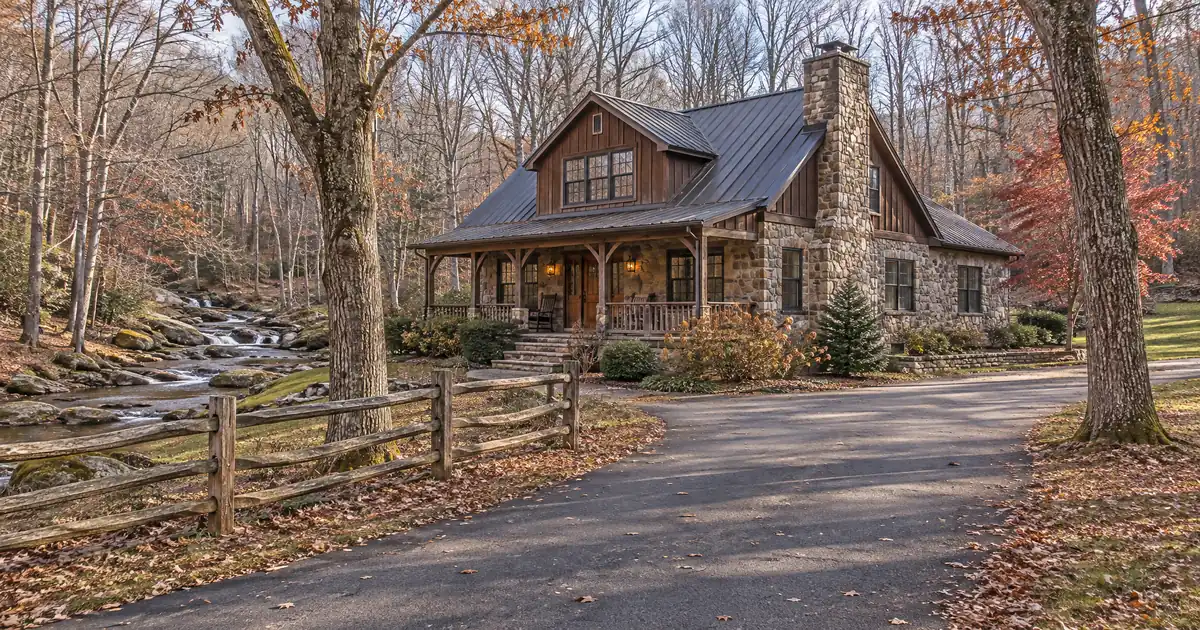
The Quick Read: Banks, credit unions and mortgage companies all write cash-out loans on country homes. What changes the answer is the loan program and how the property reads on paper, not the zip code. A house on acreage with usable comparable sales is a normal file. Land used for farming, or a USDA loan, is a different story.
Key Takeaways
- Conventional, FHA and VA loans can return cash on a rural home. A USDA loan cannot.
- On a conventional loan, the leverage limit depends on how the home is used. Acreage alone does not set it.
- The appraisal is the pressure point. Thin comparable sales can shrink the value, and that shrinks the cash.
- The best program for your situation depends on property type, credit, leverage need and documents. A broker shops several wholesale lenders to match the file to the program.
What Is a Cash-Out Refinance on a Rural Home?
A cash-out refinance replaces your current mortgage with a new, larger one. The new loan pays off the old balance and the closing costs. You keep the difference.
Cash-out refinance estimate
The starting figures are an example value with a balance and a cash request in proportion. Replace them with yours.
Editable benchmark: 7.18% as of November 5, 2026 · Freddie Mac 30-year average via FRED®. A conventional market reference, not a cash-out refinance quote.
Illustrative starting assumptions: a $350,000 home value, a $193,000 current balance, the agency cap on a one-unit principal residence, a thirty-year term at the current Freddie Mac benchmark, and property taxes and insurance estimated at typical national rates. Every field is editable.
Illustrative estimate only — not a Loan Estimate, approval, quote, or commitment to lend. The rate field carries the weekly Freddie Mac thirty-year conventional benchmark, a market reference and not a cash-out refinance quote; a cash-out loan is priced by the lender at lock. The cash available is the loan the program cap allows less the balances paid off, before closing costs, which are not included. The HELOC line is the program’s combined loan-to-value ceiling applied to the same value and balance. Taxes and insurance are editable estimates. Licensed in sixteen states for consumer mortgages.
Rural homes work the same way. You still need equity, and the lender still looks at value, credit and income. Your monthly payment generally rises, because the new balance is bigger than the old one.
Lendmire is a mortgage broker, not a lender. It arranges these loans through wholesale lenders in 16 states. This is how Lendmire’s cash-out refinance programs page frames the product. Which lender fits depends on the file.
Who Offers These Loans?
Several kinds of institutions write rural cash-out loans. Large banks and community banks sell conventional and FHA loans. Credit unions often write loans for their members. Mortgage companies work through the same agency programs. Some farm-credit lenders handle land-heavy properties, though agency programs do not buy loans on property used primarily for agriculture, so those lenders often keep such loans or place them elsewhere.
Most other lenders sell their loans into the same agency programs. That means the agency rules set the baseline. Each lender then adds its own limits, called overlays. Acreage is the usual overlay.
This article does not rank or name institutions, because the right lender depends on the file. A lender that suits a three-acre home with a clean appraisal may not suit a forty-acre property with a working barn. A broker that shops multiple wholesale lenders can match the scenario to the program, which is the main reason to use one.
How Does the Loan Work, Step by Step?
Here is the sequence on a typical rural file.
1. Pick the program. Conventional and FHA are the usual choices. VA applies only with a Certificate of Eligibility. USDA cannot return cash.
2. Check your clocks. Conventional cash-out generally needs the first mortgage you are paying off to be at least 12 months old, counted note date to note date. You also need to have been on title for at least six months. Delayed financing, inheritance and legal-award exceptions exist. The Fannie Mae Selling Guide covers cash-out eligibility and exceptions.
3. Pre-check overlays before you pay for an appraisal. Ask about acreage, outbuildings and property type up front.
4. Gather documents. Expect income, assets, credit and your current loan statement. VA adds the Certificate of Eligibility.
5. Appraisal. Value sets the maximum loan. Rural appraisals lean on comparable sales, and those can be sparse.
6. Underwriting. The lender confirms the property is residential, that credit and income fit, and that the loan stays within the program’s leverage limit.
7. Closing. The new loan pays off the old one and the closing costs. What remains is your cash.
Everything above is subject to lender guidelines and full file review. None of it is a commitment to lend.
Does Acreage Disqualify a Rural Property?
No. Acreage alone does not disqualify a home on the agency conventional path. Freddie Mac’s Guide FAQ says it sets no site size or acreage limits. What matters is whether the property is residential.
The same FAQ adds a condition. On a large parcel in an area where commercial farms or ranches are typical, the lender must do extra analysis. The lender has to confirm the property is residential, not a working farm.
A given lender can still set a stricter acreage cap of its own. That is the gap between the agency rule and the lender’s rule. It is also why one decline does not end the search. A different lender may read the same property differently.
Residential or agricultural?
Think about how an underwriter reads the file. These points tend to matter:
- Primary use. Is it a home with land around it, or a farm with a house on it?
- Zoning and land use. Does the zoning fit a residence?
- Outbuildings. A garage or small barn is routine. A commercial operation is not.
- Income from the land. Farming or business use pushes the file toward a different type of lender.
- Comparable sales. Are there recent sales of similar homes nearby?
Vacant or undeveloped land does not work for a cash-out refinance on the agency path. A house on acreage is a home. A farm with a house is a farm.
How Do the Programs Compare on a Rural Home?
This table compares programs, not companies.
| Program | Cash out on rural home? | What to know |
|---|---|---|
| Conventional | Yes | 80% LTV on one unit; property must read as residential |
| FHA | Yes | Own rules and limits; lender overlays vary |
| VA | Yes, with eligibility | Certificate of Eligibility; you must live in the home |
| USDA | No | Cash out not permitted on a refinance |
For conventional loans, a cash-out refinance on a one-unit principal residence reaches 80% loan-to-value (LTV). LTV is the new loan balance divided by the home’s appraised value. Two- to four-unit principal residences, second homes and investment properties top out at 75%. Occupancy sets the leverage. A cash-out is not limited to a primary residence, but a primary home gets the highest limit.
Credit matters too. The wholesale conventional programs generally start at a 620 decision score, and the automated finding governs most files. Total debt ratios can reach 50% on those files. Manually underwritten loans use tighter ratios. Every figure here is subject to lender guidelines.
The no-mortgage-insurance lane
Mortgage insurance protects the lender when you borrow above 80% of value. On the agency path it is required above 80% LTV. The one exception is a wholesale lane that reaches 89.99% LTV with no mortgage insurance. That lane is narrow. It requires a 680 score, a 50% ratio ceiling, a 30-year fixed loan, a primary residence, a conforming balance and its own six months of seasoning. Final terms depend on lender guidelines, property type, leverage, and the borrower’s complete credit picture.
Note two limits. That lane is not written on a Texas homestead. In Texas, a cash-out on a homestead (a Section 50(a)(6) loan) is capped at 80% of the home’s value by the state constitution.
Where mortgage insurance does apply, you can request cancellation at 80% of the original value, with good payment history, no second liens and no decline in value. The servicer must end it automatically at 78%.
Can You Take Cash Out of a USDA Loan?
No. USDA refinances do not return cash. The federal rule in 7 CFR Part 3555 lists streamlined, non-streamlined and streamlined-assist options. None of them is built to pay out equity as cash.
So what is the path if you hold a USDA loan and want cash? You leave USDA. You refinance into a conventional, FHA or VA loan that allows cash out, if your equity, credit and property fit.
A related myth is that your home must sit in a USDA-eligible area to get a cash-out. That requirement belongs to USDA purchase loans. A conventional or FHA cash-out does not use it.
What About VA Cash-Out on a Rural Home?
VA cash-out works on rural property if you have the eligibility. VA’s cash-out page says the loan replaces your current mortgage. It can take cash from equity, or convert a non-VA loan into a VA loan. You need a Certificate of Eligibility, and you must live in the home.
A private bank, mortgage company or credit union makes the loan. VA does not lend the money.
The main program cost is the funding fee. VA’s funding fee circular lists 2.15% on first use and 3.3% on later use for cash-out loans. It also says the reduced fee tiers do not apply to refinances. The fee can be financed into the loan.
The VA IRRRL is a different product. It is a reduced-documentation streamline for an existing VA loan, with no cash out. Lenders also add their own score and leverage limits on VA cash-out, so the file matters.
How Does the Appraisal Change the Cash You Receive?
The appraisal is where rural files are won or lost. Value times the program’s LTV limit sets the ceiling on the new loan. A lower value means less cash.
Rural appraisals have a built-in problem: comparable sales can be few and far apart. An appraiser may stretch the search area or adjust for differences. A cautious number can shrink your cash.
Two practical points help:
- Home and site. The appraiser values the home and its usable site. Excess land can add less value than owners expect.
- Waivers. Some files qualify for an appraisal waiver, depending on the automated findings. Do not count on one for a rural property.
An experienced broker raises these issues before you order the appraisal. Many borrowers learn about acreage overlays only after paying for it.
Where the General Rule Breaks
- USDA borrower who wants cash. Staying in USDA means no cash. The route is a refinance out of USDA.
- Home outside a USDA area. Location does not block a conventional or FHA cash-out, since the eligible-area rule belongs to USDA purchase loans.
- Farm or business use. Freddie Mac does not buy loans on property used primarily for agriculture. A different type of lender may be needed.
- Large parcel in farm country. Expect the lender to do extra residential-use analysis.
- Small cash need. If you only want closing costs and a little back, a limited cash-out (rate-and-term) refinance may fit. It has separate rules.
- Student loan payoff. Some cash-out refinances that pay off student loans receive different loan-level price adjustment treatment. Ask your broker whether your file qualifies.
- Manufactured homes on land. Agency matrices treat these separately. Ask your broker about the specifics.
- Second home or rental. Occupancy sets the leverage. Conventional cash-out on a second home is written to 75% LTV.
If a lender declines because of the property type, ask whether the issue is the agency rule or the lender’s own overlay. If it is an overlay, a different wholesale lender may read the file differently.
What Does It Cost You?
A cash-out refinance has real costs. Origination fees, appraisal fees, title insurance and taxes can be substantial. Paying closing costs is also a frequent use of proceeds.
Costs paid from proceeds reduce the cash you take home. Costs rolled into the loan raise the balance you owe. Your Loan Estimate shows both the amount financed and the estimated cash to close, so compare those lines across offers.
Beware of “no closing cost” marketing. The costs are still there. They are built into the interest rate or the loan balance.
A cash-out also resets your mortgage. You trade a possibly lower-balance loan for a larger one. Ask yourself whether the cash is worth that trade.
Key Terms Defined
Cash-out refinance: A new mortgage larger than your current one, with the difference paid to you.
LTV (loan-to-value): The loan balance divided by the home’s appraised value.
Seasoning: The time a loan or ownership must exist before a refinance qualifies.
Overlay: A lender rule stricter than the agency baseline.
Delayed financing: An exception that lets a recent cash buyer take cash out before the usual waiting period ends.
Limited cash-out refinance: A refinance that pays off the loan and costs, with only small cash back.
Questions to Ask Before You Pay for an Appraisal
- Does your acreage limit apply to my property?
- How do you treat outbuildings and extra land?
- Which program fits my leverage and credit?
- How do you handle thin comparable sales?
- Is my existing loan seasoned enough?
- What will the Loan Estimate show for costs financed and cash to close?
These questions save money. A “no” on any of them is easier to hear before the appraisal fee than after.
Frequently Asked Questions
Do banks give cash-out refinances on rural homes?
Yes, many do, on conventional, FHA and VA programs. The property must read as a residence and appraise well. Each institution sets its own overlays, so the same home can get different answers from different lenders.
How much can I borrow on a rural home with a conventional cash-out?
On a one-unit principal residence, the limit is 80% LTV. Two- to four-unit homes, second homes and investment property are limited to 75%. A narrow wholesale lane reaches 89.99% with no mortgage insurance for qualifying primary residences. Figures are subject to lender guidelines and full file review.
Will a lender decline me for owning too much land?
Not by agency rule. Freddie Mac sets no acreage limit, but a lender may. Large parcels in farm country draw extra scrutiny. Primary agricultural use is the bigger obstacle.
Can I get cash out if I have a USDA loan?
Not while it stays a USDA loan. You would refinance into a conventional, FHA or VA loan that allows cash out. Equity, credit and property fit all come into play.
How do I find a lender that fits a rural property?
The right fit depends on your property type, credit, leverage need and documents. A broker shops multiple wholesale lenders and matches your scenario to the program. Ask each option about acreage overlays before ordering an appraisal.
Your Next Step
If you are weighing a cash-out refinance against keeping the loan you have, Lendmire can help you compare the programs and the equity each one reaches.
For your own numbers, request a scenario review with Lendmire.
For current guidelines and terms, see Lendmire’s refinance programs page.
About Lendmire
As a mortgage broker (NMLS# 2371349), Lendmire helps homeowners and home buyers in 16 states with FHA, VA, conventional and jumbo purchase and refinance loans arranged through wholesale lenders. Lendmire is never the lender; program terms are set by the lender and the agency guidelines. Scotsman Guide named Lendmire a Top Mortgage Workplace in both 2025 and 2026.
Get Started
Ready to find the right loan for you?
See your offer in seconds. No credit pull, no obligation.
Informational only. Not a Loan Estimate, approval, or commitment to lend. Program availability and eligibility are subject to lender guidelines, credit approval, property review, and underwriting.
References
1. Fannie Mae Selling Guide B2-1.3-03, Cash-Out Refinance Transactions
2. Freddie Mac Guide FAQ on site size and acreage
5. VA Circular 26-23-06, Exhibit B
This article is part of Lendmire’s cash-out refinance program — full qualification details, guidelines, and scenarios live on the program page.
Related reading: How to Qualify and Apply for a Cash-Out Refinance After Taking the Property Off the Market · How to Qualify and Apply for a Cash-Out Refinance in Six Months · How to Qualify and Apply for a Cash-Out Refinance on a Rural Property With Few Comparables
Brandon Miller
Founder & CEO, Mortgage Loan Originator, Lendmire LLC
- Mortgage Loan Originator · NMLS# 1129696 · Verify on NMLS Consumer Access
- North Carolina Real Estate Broker · License# 343312 · Verify on NCREC
- North Carolina Insurance Producer · License# 19053198 · Property, Casualty, Life, Health · Verify on NAIC SBS
- Lendmire LLC · Firm NMLS# 2371349 · Verify firm licensure
Important disclosures. Lendmire (NMLS# 2371349) is a licensed mortgage brokerage. Lendmire is not a direct lender, depository institution, or financial advisor. All loan inquiries are subject to lender underwriting; this article does not constitute a commitment to lend. Rates, terms, and program guidelines are subject to change without notice and vary by borrower profile, property type, and state. Information in this article is general in nature and is not financial, legal, or tax advice. Equal Housing Opportunity. NMLS Consumer Access: nmlsconsumeraccess.org.