
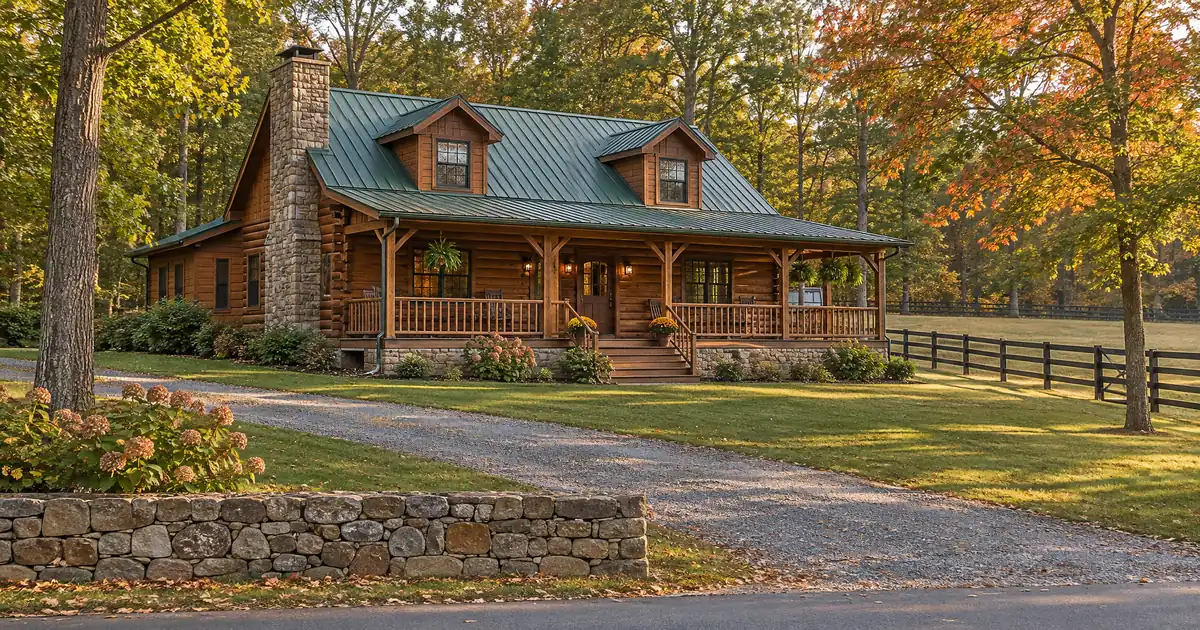
The Quick Read: No single provider tops every farm file, because the property decides eligibility before income does: a hobby farm on residential zoning with a standard home can fit a bank statement HELOC, while agricultural zoning, commercial or mixed use, log homes and manufactured homes fall outside the programs Lendmire places files with.
- Zoning and use are the first test. Agricultural zoning is not eligible on the network’s HELOC programs.
- Occupancy sets the ceiling. An investment-property line tops out at 70% CLTV, and 90% CLTV exists only on a primary residence or second home with a 720-or-better credit profile.
- Lines of $500,000 or less ordinarily use an automated valuation. Acreage and outbuildings make that valuation less reliable.
- Bank statements replace tax returns as the income test. They do not replace the credit, title, or property review.
- The best provider for your file depends on property type, credit profile, leverage need, and how the farm deposits look.
Why There Is No Ranked List of Providers
A ranked list would not help you, because the best program for your situation depends on the property before it depends on you. Terms vary by lender, borrower profile, and collateral. A list that names companies goes stale, and it cannot see your acreage, your zoning, or your deposits.
How large a line the equity supports.
An equity line is sized by combined loan-to-value, occupancy, and credit — not by rental coverage. Switch the occupancy or the credit band and the ceiling moves with it.
Investment-property lines require a 700 minimum credit score; second-home lines start at a 640 minimum and primary-residence lines at 600, and the combined-LTV ceiling steps down as the credit band drops on primary-residence and second-home lines and holds on investment-property lines; the line cap steps down on primary-residence lines and holds at every tier on investment-property and second-home lines.
A debt-to-income ratio above 45% requires 680+ credit. Profiles under 640 are limited to single-family homes. At least 75% of the approved line is drawn at closing. Ceilings, floors, and caps update from Lendmire’s centralized guideline source.
Line estimate
Illustrative estimate only — not a quote, Loan Estimate, approval, or commitment to lend. The rate is an editable assumption; equity-line pricing is variable through both the draw and repayment periods and never converts to fixed. Occupancy and credit drive the ceiling together: an investment property tops out at 70% combined LTV (minimum credit 700, line cap $500,000); a second home tops out at 90% combined LTV (minimum credit 640, line cap $500,000), with the ceiling stepping down as the credit band drops (the cap holds at every tier); a primary residence tops out at 90% combined LTV (minimum credit 600), and its $750,000 maximum line is available only at 75% combined LTV or below with a 700-or-better credit profile (720 on the longer-runway program) and a full appraisal. Lines above $500,000 require a full appraisal. Credit, debt-to-income, property type, and full underwriting review all affect the final line.
Lendmire is a mortgage broker. It works with a network of wholesale HELOC lenders and matches a scenario to the program that fits. It is never the lender. So this article skips the lender roundup and does what a broker does: it shows what these programs look for, where farm files break, and how to screen any provider yourself.
The Three Tests, in Order
A farm or hobby farm file passes three tests in sequence. Income is the last one, not the first.
Test one is the property. Lenders sort rural collateral into two groups. One group is a residence with land: a single-family home, a 2-4 unit, or a PUD that happens to sit on acreage. The other group is agricultural or commercial collateral. The network’s HELOC programs exclude agricultural zoning, commercial property, and mixed-use property. They also exclude manufactured homes, co-ops, condotels, and log homes. A barndominium is not offered on the DSCR side of the network, so confirm how a line would treat one before you plan around it.
Test two is valuation and leverage. The line sits in first or second lien position. Combined loan-to-value (CLTV) is all the debt on the property divided by its value. Value comes from an automated model on lines of $500,000 or less. A full appraisal is required above that, and you can request one at any size.
Test three is income. Bank statements show deposits over a look-back period instead of tax returns. The program still reviews credit and debt-to-income (DTI). The maximum DTI is 50%, but profiles with a credit score from 600 to 679 are held to 45%. Going above 45% therefore requires a score of at least 680. Qualification runs on the interest-only payment calculated on the maximum draw, not on the payment you plan to make.
What Makes a Property a Hobby Farm to an Underwriter
A hobby farm is a smallholding kept without the expectation that it will be a primary source of income, as the general definition of a hobby farm puts it. Underwriters read that as a home first. The land serves personal use, and the income that carries the loan comes from somewhere else.
A working farm is a business. If the land earns your living, or its highest and best use is agricultural, the deal works toward agricultural or commercial lending. A residential bank statement HELOC is the wrong tool there.
The line between the two shows up in specific facts:
- Zoning. Agricultural zoning is a hard stop on these programs. Residential or rural-residential zoning is where the file starts.
- Livestock and crops. A few animals for personal use read differently than a herd sold for revenue.
- Leased pasture. Rent from a neighbor’s cattle is income from the land. Expect questions about how it is documented.
- Parcel size. A home with a modest lot reads as residential. As acreage grows, the appraisal and the use question both get harder.
How Property Situations Usually Sort
This table shows how each situation is typically reviewed. Confirm the specifics with the program, because every file is underwritten individually.
| Situation | Typically reviewed as | Main friction |
|---|---|---|
| Home on rural residential land, off-farm income | Residence | Acreage value on valuation |
| Hobby farm with barn or arena | Residence | Outbuilding credit in value |
| Land zoned agricultural | Not eligible | Zoning stops the file |
| Farm with commercial or mixed use | Not eligible | Use stops the file |
| Log home or manufactured home | Not eligible | Property type stops the file |
| Farmhouse rented to a tenant | Investment property | 70% CLTV ceiling, 700 minimum credit |
How Bank Statement Income Handles Farm Deposits
Bank statement income works from deposits. A lender reviewing a self-employed owner looks at what actually lands in the account, then applies its own treatment to business deposits. The income test is the part of a bank statement line that differs from a standard line. Everything else works the same way.
Farm deposits complicate this in two ways. First, a farm deposit is a business deposit. Money from selling hay, eggs, or livestock gets treated like any other business receipt, and lenders usually handle new or thinly documented farm income cautiously. Second, mixing farm receipts with personal deposits makes the statements harder to read.
Clean files separate the streams. Keep farm receipts in a business account, keep personal deposits apart, and be ready to explain any large irregular deposit. If the farm does not produce meaningful income, the statements may show only your off-farm business, which is fine. The farm is simply the collateral.
Where Rural Valuation Gets Difficult
Equity is only as large as the valuation supports. An automated model leans on comparable sales, and rural comps are scarce, spread out, and often different from your property.
Barns, arenas, stalls, and detached shops do not add their construction cost to value. Appraisers work from comparable sales. An improvement that is atypical for the area may add less than it cost. Value that rests on acreage and outbuildings is where a line comes in smaller than the owner expects.
Consider a worked example using only percentages. A primary residence on rural land belongs to an owner with a 700 credit profile. On a primary residence, a 700 profile reaches 85% CLTV on lines up to $500,000. If the first mortgage already sits at 60% of the estimated value, the line has room for at most 25% of value. If the valuation comes in low because the comps are thin, that room shrinks. The line is sized on valuation, not on what you think the barn is worth.
When the automated valuation looks wrong, ask for a full appraisal. A higher CLTV may also trigger a secondary valuation.
Key Terms Defined
Bank statement HELOC: A home equity line that is reviewed on documented deposits instead of tax returns.
CLTV: Combined loan-to-value, meaning all liens on the property divided by its value.
Draw period: The stretch when you can borrow against the line, usually with interest-only payments.
Repayment period: The stretch after the draw period when the balance is paid down on a set schedule.
Hobby farm: A property kept for personal use without a plan to earn a living from it.
Agricultural zoning: A local land-use designation for farming, which is not eligible on these programs.
How the Line Works After Closing
Once the file clears, the product behaves like any other home equity line. The CFPB describes a HELOC as an open-end line you can borrow against repeatedly, and notes that you can generally spend up to your limit during a draw period that could last 10 years before repayment begins. The same page warns that a lender may stop allowing additional credit if your home’s value drops.
The network offers two draw structures on a primary residence or second home. One is a 3-year interest-only draw followed by a 17-year repayment. The other is a 5-year interest-only draw followed by a 25-year repayment. An investment line runs the 5-year draw and 25-year repayment structure only. At least 75% of the line is drawn at closing on both, and pricing floats through both the draw and repayment periods and never converts to fixed.
The CFPB HELOC booklet adds that the lender sets your limit as a percentage of the home’s appraised value and also considers your ability to repay. Both ideas show up on a farm file. A low appraised value cuts the limit, and a thin income picture cuts the approval.
Occupancy Sets the Ceiling
Occupancy matters more than the word farm. The ceilings differ sharply by how you use the property, so state the one that matches your file.
On a primary residence, the program ceiling is 90% CLTV, and it exists only at 720 or better on lines up to $500,000. At 700 the cap is 85% CLTV up to $500,000, and at 640 it is 80% up to $500,000. Lines up to $750,000 are available, but on a primary residence only, with at least a 700 profile (720 on the longer 5-year draw structure), a 75% CLTV cap, and a full appraisal.
On a second home, the ceiling is also 90% CLTV at 720 or better, with the line capped at $500,000 and a 640 minimum credit profile.
On an investment property, the ceiling is 70% CLTV with a 700 minimum credit profile and a $500,000 maximum line. There is no higher tier. A farmhouse you rent to a tenant is an investment property, not a hobby farm homestead.
Title is a sharper edge. The individual borrower or a revocable living trust must hold title. LLCs, corporations, partnerships, and irrevocable, blind, or land trusts cannot. If your farm sits in an LLC, the HELOC route needs a vesting change, or a different product fits better.
When the Property Is Not a Fit
If zoning, use, or property type stops the file, the answer is a different structure, not a workaround. Here are the usual alternatives.
| Situation | Typical alternative | What changes |
|---|---|---|
| Farm held in an LLC | DSCR cash-out refinance | Rent-based test, entity can hold title |
| Agricultural zoning | Ag or commercial lender | Farm financials decide |
| Parcel mixes home and land | Splitting off the residence | Home may fit residential rules |
| Log or manufactured home | Not offered in these programs | Needs different collateral |
A DSCR cash-out is worth a look when the property produces rent. A DSCR loan compares rent to the full monthly obligation of principal, interest, taxes, insurance, and any HOA dues. Across most of the network, cash-out refinance tops out around 75% LTV, with about 6 months of seasoning as the common expectation. A 1.00 coverage ratio is where select programs start, and stronger ratios open better terms. Clearing 1.00 is not the same as positive cash flow, because repairs, vacancy, management, and utilities sit outside the calculation. Coverage below 1.00 is available through select lenders in the network, with leverage and terms adjusted. Final terms depend on the lender’s guidelines, the property type, and the borrower’s complete credit picture.
DSCR loans are designed for non-owner-occupied investment properties. Because they are business-purpose investor loans, they are reviewed differently from a standard owner-occupied mortgage. Rural eligibility, acreage rules, and property types still apply, so the complete DSCR loans guide is the place to check structure before you assume it works. Manufactured homes, log homes, and barndominiums are not offered on the network’s DSCR programs.
If you own rentals but cannot show a salary, Lendmire also covers how an investment property owner without a salary can approach a bank statement HELOC.
How to Screen Any Provider
Since no neutral ranking exists, screen providers with questions. A broker shopping multiple wholesale lenders can ask these for you, but you can also use them on your own.
- Does the program allow my zoning, and how does it define agricultural use?
- What is the CLTV ceiling for my occupancy and credit tier, and is the line size inside it?
- Will valuation be automated or a full appraisal, and how are outbuildings handled?
- How many months of statements are reviewed, and how are business deposits treated?
- Can the borrower of record hold title, or does an entity need to be restructured?
- Is my state in the program’s footprint?
On that last point, the HELOC programs run in Lendmire’s 16 full-service states, which is narrower than the 41-market DSCR footprint. Some states add their own rules. For example, Texas properties are limited to 10 acres, and a Texas primary residence is a homestead that caps at 80% combined loan-to-value. A property listed for sale, or listed within the past 60 days, is ineligible in several states. Check the state before you plan the draw.
What to Gather Before the File Goes In
A clean file gives the lender fewer gaps to chase. Prepare these:
- Bank statements for the full look-back period, with farm and personal deposits separated.
- Proof of title and vesting, including any trust documents.
- A current first-mortgage statement showing the lien balance.
- Insurance and tax information for the property.
- A plain description of how the land is used, including any livestock, crops, or leased pasture.
- A credit report no more than 90 days old at closing, since the program does not allow rescores.
Borrowers who own more than 15 financed properties are not eligible, and a borrower is limited to three lines in total. A bankruptcy needs 4 years of seasoning from discharge or dismissal.
Next Step
If you are considering a home equity line and want to see how the numbers work, Lendmire can help you compare HELOC options based on the property, the equity available, credit profile, combined leverage, and your goals. Every figure here is subject to lender guidelines and full file review, and nothing here is a commitment to lend.
Frequently Asked Questions
Can I get a bank statement HELOC on a hobby farm?
It can work when the property is a residence on residential or rural-residential zoning and the income test is met with bank statements. Agricultural zoning, commercial or mixed use, log homes, and manufactured homes are not eligible on the network’s programs. Valuation of acreage and outbuildings is the usual constraint.
Does farm income count toward qualifying?
Farm receipts are business deposits, and lenders usually treat new or thinly documented agricultural income cautiously. Many hobby farm files qualify on off-farm business deposits alone. If farm money is part of the picture, keeping it in a separate account makes the statements easier to read.
How much equity can I use on a farm property?
It depends on occupancy, credit, and valuation. On a primary residence the ceiling reaches 90% CLTV only at 720 or better on lines up to $500,000. On an investment property the ceiling is 70% CLTV with a 700 minimum credit profile. A low valuation on rural comps can shrink the line below those ceilings.
Can an LLC borrow on a farm HELOC?
No. Title must be held by the individual borrower or a revocable living trust, and LLCs cannot hold title on these programs. A farm already deeded to an LLC needs a vesting change, or a DSCR cash-out refinance may fit better, subject to program terms.
What if the valuation comes in too low?
You can ask for a full appraisal on any line, even though lines at or below $500,000 ordinarily use an automated model. A full appraisal is required above $500,000. Documenting recent nearby sales and the condition of the improvements gives the appraiser more to work with.
About Lendmire
As a mortgage broker (NMLS# 2371349), Lendmire helps homeowners and real estate investors in its 16 full-service states open home equity lines of credit arranged through wholesale lenders. Lendmire is never the lender; line amounts, ceilings and terms are set by the lender under its guidelines. Scotsman Guide named Lendmire a Top Mortgage Workplace in both 2025 and 2026.
Get Started
Ready to find the right loan for you?
See your offer in seconds. No credit pull, no obligation.
Informational only. Not a Loan Estimate, approval, or commitment to lend. Program availability and eligibility are subject to lender guidelines, credit approval, property review, and underwriting.
References
2. CFPB
This article is part of Lendmire’s bank statement HELOC program — full qualification details, guidelines, and scenarios live on the program page.
Related reading: Can You Get a Bank Statement HELOC Qualified on Property Income Alone? · Bank Statement HELOC vs Bank Statement Cash-Out Refinance on Investment Property in NJ · How Much Can You Borrow on a Bank Statement HELOC After a Bank Denial?
Brandon Miller
Founder & CEO, Mortgage Loan Originator, Lendmire LLC
- Mortgage Loan Originator · NMLS# 1129696 · Verify on NMLS Consumer Access
- North Carolina Real Estate Broker · License# 343312 · Verify on NCREC
- North Carolina Insurance Producer · License# 19053198 · Property, Casualty, Life, Health · Verify on NAIC SBS
- Lendmire LLC · Firm NMLS# 2371349 · Verify firm licensure
Important disclosures. Lendmire (NMLS# 2371349) is a licensed mortgage brokerage. Lendmire is not a direct lender, depository institution, or financial advisor. All loan inquiries are subject to lender underwriting; this article does not constitute a commitment to lend. Rates, terms, and program guidelines are subject to change without notice and vary by borrower profile, property type, and state. Information in this article is general in nature and is not financial, legal, or tax advice. Equal Housing Opportunity. NMLS Consumer Access: nmlsconsumeraccess.org.