
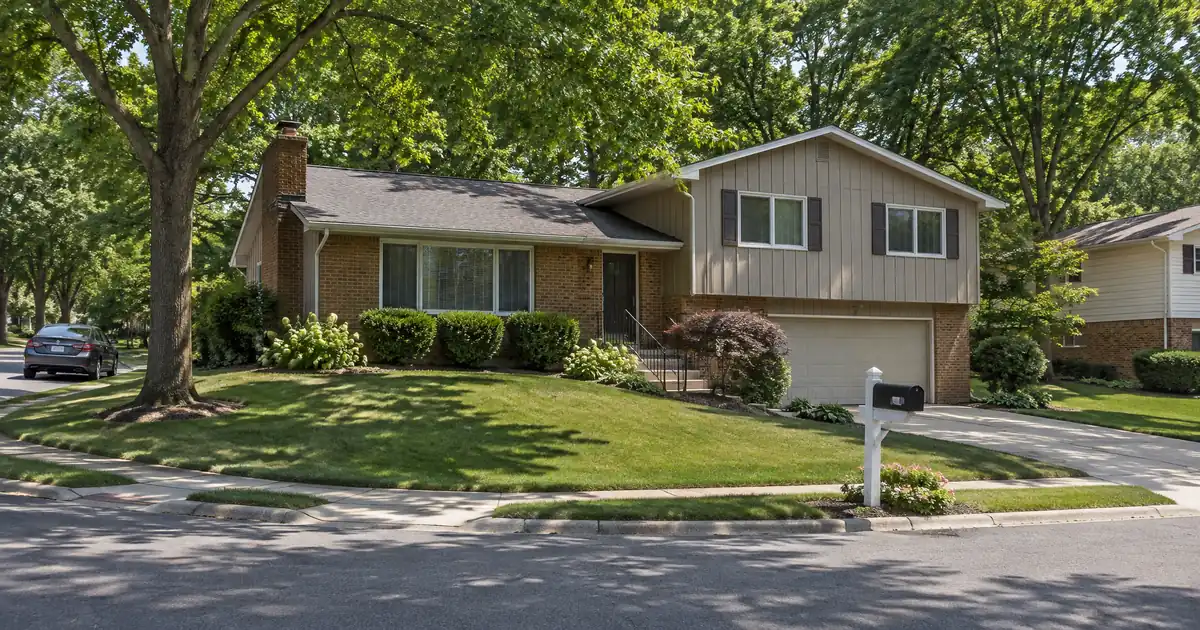
A parent hands you the deed to a house. Now you wonder whether that gifted equity can fund your next move. It can, and the way the home came to you matters less than a few mechanical checks.
The Quick Read: Usually yes, once the gift deed is recorded and title sits in your name or a revocable living trust. The lender values the home at market value, measures combined leverage against it, and reads your deposits as income. It does not care that the home was a gift. Occupancy changes the ceiling, and the gift itself never counts as income.
- Title must be held by you individually or by a revocable living trust. LLCs cannot hold title on these lines.
- Gifted equity is still equity. The lender sizes it by market value and combined leverage.
- An investment property line tops out at 70% CLTV on this network. Primary residences and second homes have a higher ceiling, but only for borrowers with a 720-or-better credit profile.
- Deposits stand in for tax returns as proof of income, nothing more.
- If title, credit, or occupancy rules block the line, a DSCR cash-out refinance is the usual alternative.
How large a line the equity supports.
An equity line is sized by combined loan-to-value, occupancy, and credit — not by rental coverage. Switch the occupancy or the credit band and the ceiling moves with it.
Investment-property lines require a 700 minimum credit score; second-home lines start at a 640 minimum and primary-residence lines at 600, and the combined-LTV ceiling steps down as the credit band drops on primary-residence and second-home lines and holds on investment-property lines; the line cap steps down on primary-residence lines and holds at every tier on investment-property and second-home lines.
A debt-to-income ratio above 45% requires 680+ credit. Profiles under 640 are limited to single-family homes. At least 75% of the approved line is drawn at closing. Ceilings, floors, and caps update from Lendmire’s centralized guideline source.
Line estimate
Illustrative estimate only — not a quote, Loan Estimate, approval, or commitment to lend. The rate is an editable assumption; equity-line pricing is variable through both the draw and repayment periods and never converts to fixed. Occupancy and credit drive the ceiling together: an investment property tops out at 70% combined LTV (minimum credit 700, line cap $500,000); a second home tops out at 90% combined LTV (minimum credit 640, line cap $500,000), with the ceiling stepping down as the credit band drops (the cap holds at every tier); a primary residence tops out at 90% combined LTV (minimum credit 600), and its $750,000 maximum line is available only at 75% combined LTV or below with a 700-or-better credit profile (720 on the longer-runway program) and a full appraisal. Lines above $500,000 require a full appraisal. Credit, debt-to-income, property type, and full underwriting review all affect the final line.
Key Terms Defined
HELOC: A home equity line of credit. You borrow against the home’s equity, usually in a first or second lien position.
Bank statement income: Qualifying income calculated from 12 or 24 months of deposits instead of tax returns.
Gift deed: The recorded document that moves title from your parent to you without a sale.
CLTV: Combined loan-to-value. All liens on the home added together, divided by its market value.
Vesting: How title is held, such as in your own name or in a revocable trust.
DSCR: Debt service coverage ratio. A loan type that compares a property’s rent to its full monthly obligation.
Does the Gift Change How a Lender Sees the Home?
No. Gifted equity counts the same as equity you bought. The lender orders a valuation, adds up the liens, and compares them to market value. The price your parent paid decades ago does not enter the math.
What changes is the paper trail. The lender wants proof that the deed is recorded, that you hold title, and that no unexpected liens sit on the property. If your parent still has a mortgage on it, that balance goes into the lien stack and eats into your available CLTV.
Four questions drive the file:
1. Is title in your name, or in a revocable trust you control?
2. Will you live in the home, use it as a second home, or rent it out?
3. Does a parent’s mortgage or other lien remain?
4. Has the deed been recorded long enough to satisfy the lender’s vesting seasoning?
Vesting seasoning is the waiting period after a title change, such as a quitclaim or gift deed. It runs on a separate clock from how long you have owned the property, and the length varies by lender. No single number applies across the board, so ask early.
What Counts as Income When the Home Was a Gift?
Your deposits count. The gift does not. A gift deed makes you the owner, but it creates no revenue. Neither the home’s value nor any family transfer into your account is business income.
On a bank statement program, the lender reviews 12 or 24 months of personal or business statements and applies an expense factor or business-use percentage. That figure becomes your qualifying income. It works for self-employed borrowers whose tax returns show low income because of deductions. Finder’s overview of no-doc and bank statement HELOCs notes these lines come mostly from non-bank lenders and brokers, which matches how they are placed.
This is not a no-paperwork product. A bank statement program reviews the file on documented income under the applicable program, subject to lender guidelines. Debt-to-income tops out at 50% on this network. For credit profiles from 600 to 679 the limit drops to 45%, and any ratio above 45% requires at least a 680 score.
A practical tip: if a parent moved money into your account around the time of the gift, keep a clear paper trail. Large unexplained deposits invite questions, and gifted funds are normally excluded from income.
What Does Occupancy Do to the Numbers?
Occupancy sets the ceiling, and it is the biggest fork in the road. Rent the gifted home out and you are underwriting an investment property line, which is tighter than a primary-home line. Bankrate’s coverage of HELOCs on investment property makes the same point: investment lines demand more equity and more documentation.
Here is how the occupancy tiers compare on the wholesale programs Lendmire brokers, subject to lender guidelines:
| Factor | Primary residence | Second home | Investment property |
|---|---|---|---|
| Top CLTV | 90% at 720+ | 90% at 720+ | 70% |
| Minimum credit | 600 | 640 | 700 |
| Maximum line | $750,000 | $500,000 | $500,000 |
| Draw structure | 3-yr or 5-yr draw | 3-yr or 5-yr draw | 5-yr draw only |
The 90% ceiling exists only at a 720-or-better credit profile on a primary residence or second home. It is not generally available. On an investment property, 70% is the ceiling with no tier above it.
Two structures exist. One runs a 3-year interest-only draw followed by a 17-year repayment. The other, which we will call the longer-runway program, runs a 5-year draw followed by a 25-year repayment. Investment lines use the 5-year structure only. Pricing floats rather than converting to fixed.
A line above $500,000 is primary residence only. It requires a 700 credit profile or better (720 on the longer-runway program), caps at 75% CLTV, and needs a full appraisal.
What About the Parent’s Existing Mortgage?
If your parent still owes money on the home, the loan stays in the lien stack. It counts against your CLTV, and you will need to account for it.
Many parents worry that gifting the home will trigger the due-on-sale clause. Federal law gives real protection here. The Garn-St Germain Act bars lenders from enforcing that clause on certain transfers, including a lifetime transfer where a spouse or child becomes an owner. LLK Law’s explainer on the Act describes the child-transfer exemption and notes the transfer can be full or partial. Coverage has limits, and law-firm explainers differ on the details, so a parent with a mortgage should confirm with an attorney before deeding anything.
Opening a HELOC on top of the first mortgage is a separate event. It does not by itself trigger the due-on-sale clause. It does add a lien that must fit under the combined leverage ceiling.
Which Family-Transfer Setups Fit the Product?
Some transfers fit cleanly and others do not.
| Scenario | Title situation | Fit |
|---|---|---|
| Outright gift to you | Individual title | Fits, after any vesting seasoning |
| Gift to your revocable trust | Revocable living trust | Fits |
| Gift with parent’s mortgage left in place | Individual title plus lien | Fits if CLTV works with that lien counted |
| Added your name as a co-owner | Partial interest, multiple owners | Usually all owners of record must sign |
| Gift deeded to your LLC | Entity title | Not eligible. Needs a vesting change or a DSCR cash-out |
| Sale at a discount (gift of equity) | Treated as a purchase | Purchase seasoning rules may apply |
Irrevocable, blind, and land trusts also cannot hold title on these lines. If the property is already in an LLC, you either re-vest it or move to a DSCR structure, subject to program eligibility.
Also note the property type. Single-family, 2-4 units, PUDs, townhomes, and condos, including non-warrantable condos, are eligible. Manufactured homes, co-ops, condotels, log homes, and commercial, mixed-use, or agricultural zoning are not.
Do Gift Tax and Basis Affect Borrowing?
Not for the lender. A lender does not underwrite your tax basis and does not need the donor’s gift tax filing. Still, you should know the basics, since they affect whether you keep the home or sell it.
The donor, not you, generally owes any gift tax. The IRS lists the annual exclusion at $19,000 per recipient, and a house will usually exceed that, so your parent likely files a return. That is the donor’s filing, not part of your loan file.
Your basis in a gifted home is generally your parent’s adjusted basis, not today’s value. That can mean a large taxable gain if you sell. It is one reason investors borrow against a gifted home rather than sell it. Tax treatment varies; consult a qualified professional.
A Walk-Through: Gifted Home to Funded Line
Picture a self-employed contractor whose parent deeds over a paid-off single-family home. The contractor plans to rent it out.
First, the deed gets recorded in the contractor’s individual name. Second, the contractor declares investment occupancy, so the line falls under the 70% CLTV ceiling and the 700 credit minimum. Third, the lender reviews 12 or 24 months of deposits to set qualifying income. Fourth, the lender sets the value, which on a line of $500,000 or less ordinarily means an automated valuation, though a borrower can request a full appraisal. Finally, title confirms there is no remaining lien.
On a home with no mortgage, the whole 70% of value is available, up to the $500,000 line cap. If a parent’s mortgage remained, that balance would be subtracted first. At least 75% of the line is drawn at closing, so the plan should account for that.
Where a DSCR Cash-Out Fits Instead
Sometimes the HELOC is the wrong tool. Personal credit below 700 shuts the door on an investment line. LLC title does the same. A borrower with strong rents but thin personal income may also hit the 50% debt-to-income limit.
A DSCR cash-out refinance qualifies primarily on property-level rental income covering the payment, subject to lender guidelines. Across most of the network, cash-out tops out around 75% LTV on a standard rental, with about 6 months of seasoning as the common expectation. Leverage differs for short-term rentals: cash-out is 70% on STR collateral. Coverage of 1.00 is where select programs start, and a separate select-lender path goes below 1.00 with leverage and terms adjusted. Clearing 1.00 is not the same as positive cash flow, because repairs, vacancy, and management sit outside the calculation.
Lendmire’s complete DSCR loans guide covers how those programs work.
What Should You Do Before You Apply?
Before applying, line up a short checklist:
- Confirm the gift deed is recorded and ask how long the lender wants it seasoned.
- Decide how the home will be used, because occupancy sets the ceiling.
- Check that title is in your name or a revocable trust.
- Gather 12 or 24 months of statements and explain any large deposits.
- Get a payoff figure on any parent’s mortgage.
- Pull your credit, since 700 is the investment floor on this network.
Lendmire’s wholesale partners vary in tradelines, housing history, and derogatory seasoning. A broker can match your file to the program that fits, which beats applying one lender at a time. Availability for these home equity lines is limited to Lendmire’s 16 full-service states, narrower than the broader DSCR footprint.
Frequently Asked Questions
Can a gift from my parent count as income on a bank statement HELOC?
No. The gift deed makes you the owner but produces no revenue. Qualifying income comes from your documented deposits over 12 or 24 months. Gifted funds moved into your account are normally excluded.
Do I have to wait before applying after the deed is recorded?
It depends on the lender. Many apply vesting seasoning after a title change, and it runs separately from ownership time. The length varies, so ask before you apply rather than after a denial.
Does the parent’s existing mortgage block the line?
Not necessarily. The mortgage becomes part of the lien stack, and combined leverage must still fit the ceiling. The Garn-St Germain Act protects many lifetime transfers to a child from the due-on-sale clause, but a parent should confirm the details with counsel.
Can I put the gifted home in an LLC and still use this line?
No. LLCs, corporations, partnerships, and irrevocable, blind, or land trusts cannot hold title. Re-vest the property in your name or a revocable trust, or look at a DSCR cash-out instead, subject to program eligibility.
What is the maximum I can borrow on a gifted rental?
On an investment property, the ceiling is 70% CLTV with a maximum line of $500,000 and a 700 credit minimum, subject to lender guidelines and full file review.
If you are considering a home equity line and want to see how the numbers work, Lendmire can help you compare HELOC options based on the property, the equity available, credit profile, combined leverage, and your goals. The brokerage is not a lender, and nothing here is a commitment to lend.
About Lendmire
Lendmire is a mortgage brokerage (NMLS# 2371349) arranging home equity lines of credit — primary-residence, second-home and investment-property lines — through a wholesale lending network in its 16 full-service states. Eligibility is determined by the lender on each file. Scotsman Guide named Lendmire a Top Mortgage Workplace in both 2025 and 2026.
Get Started
Ready to find the right loan for you?
See your offer in seconds. No credit pull, no obligation.
Informational only. Not a Loan Estimate, approval, or commitment to lend. Program availability and eligibility are subject to lender guidelines, credit approval, property review, and underwriting.
References
2. Bankrate – HELOC on investment property
3. LLK Law – The Garn-St Germain Act and estate planning
4. IRS – Frequently asked questions on gift taxes (annual exclusion)
This article is part of Lendmire’s bank statement HELOC program — full qualification details, guidelines, and scenarios live on the program page.
Related reading: Can You Get a Bank Statement HELOC Before the Home Appraisal Step? · Can You Get a Bank Statement HELOC When You Plan to Sell the Home Soon? · Can You Get a Bank Statement HELOC Quickly?
Brandon Miller
Founder & CEO, Mortgage Loan Originator, Lendmire LLC
- Mortgage Loan Originator · NMLS# 1129696 · Verify on NMLS Consumer Access
- North Carolina Real Estate Broker · License# 343312 · Verify on NCREC
- North Carolina Insurance Producer · License# 19053198 · Property, Casualty, Life, Health · Verify on NAIC SBS
- Lendmire LLC · Firm NMLS# 2371349 · Verify firm licensure
Disclosures. The information presented in this article is general market commentary, not financial, legal, or tax advice. Lendmire is a mortgage brokerage (NMLS# 2371349) — not a direct lender or depository institution — and loan placement is subject to lender underwriting. Nothing in this content represents a commitment to lend. Loan terms, pricing, and program availability vary based on borrower qualifications, property characteristics, and state of subject property, and are subject to change at any time. Lendmire complies with Equal Housing Opportunity requirements. Consumer access: nmlsconsumeraccess.org.