
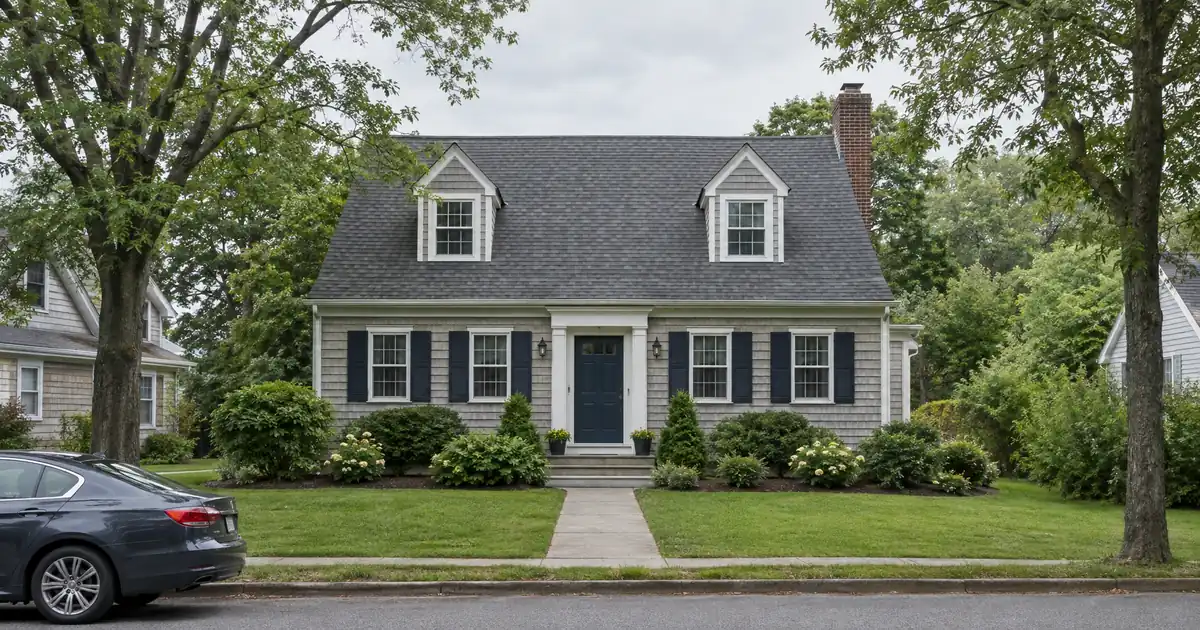
Approval For HELOC Requirements When Self Employed — The Quick Read: Getting approved isn’t about finding a lender who “does HELOCs for self-employed borrowers.” It’s about picking the right paperwork path. There are three: full tax-return review, bank-statement/alt-doc, or asset-based. The right path depends on how the borrower’s income actually shows up on paper. Three other things matter too, and they move on their own: who lives in the property, how the title is held, and the credit-tier leverage table a given wholesale program uses. Any one of these three can stall a file that otherwise looks clean.
Key Takeaways
- Self-employed HELOC underwriting runs on lender-specific policy, not one federal rulebook. HELOCs fall under the federal truth-in-lending rulebook’s open-end credit rules, not the closed-end repayment-capacity rule that governs a standard purchase mortgage.
- Investment-property HELOC lines run a much tighter leverage ceiling than owner-occupied lines across most wholesale programs.
- LLC-titled rental property is the single most common reason a HELOC application gets redirected to a different loan product entirely.
- Bank-statement income review doesn’t take deposits at face value. An expense factor turns gross deposits into a usable qualifying-income number.
- Where a HELOC won’t work because of title, income paperwork, or leverage, a DSCR cash-out refinance usually will. That’s because it gets reviewed on the property’s rent, not the owner’s traditional personal-income paperwork.
What Counts as “Self-Employed” for HELOC Purposes
Anyone who owns roughly 25% or more of a business is generally treated as self-employed for lending purposes. This applies whether it’s a sole proprietorship, a single-member LLC, an S-corp, or a partnership. 1099 contractors and gig-economy earners with irregular deposits usually land in the same bucket, even without a formal business entity. The income pattern triggers the extra paperwork — not the entity paperwork itself.
How large a line the equity supports in your market.
An equity line is sized by combined loan-to-value, occupancy, and credit — not by rental coverage. Switch the occupancy or the credit band and the ceiling moves with it.
Investment-property lines require a 700 minimum credit score. Second-home tiers reach 640; primary-residence tiers reach 600.
A debt-to-income ratio above 45% requires 680+ credit. Profiles under 640 are limited to single-family homes. At least 75% of the approved line is drawn at closing. Ceilings, floors, and caps update from Lendmire’s centralized guideline source.
Line estimate
Illustrative estimate only — not a quote, Loan Estimate, approval, or commitment to lend. The rate is an editable assumption; equity-line pricing is variable through both the draw and repayment periods and never converts to fixed. Occupancy and credit drive the ceiling together: investment property runs to 70% combined LTV with a 700 credit floor and a $500,000 cap; a second home runs to 90% at a 640 floor with a $500,000 cap; a primary residence reaches up to 90% at a 600 floor, and its $750,000 maximum line applies only at 75% combined LTV or below with 720+ credit and a full appraisal. Lines above $500,000 require a full appraisal. Credit, debt-to-income, property type, and full underwriting review all affect the final line.
That distinction matters at scale. The Bureau of Labor Statistics counts roughly 9.1 million unincorporated self-employed workers. That’s about 5.7% of all nonagricultural workers. This figure leaves out incorporated business owners, who show up as employees of their own companies in federal labor statistics. This isn’t a fringe case. It’s a large, permanent slice of the borrower pool.
A W-2 employee’s income gets checked against a pay stub. A self-employed borrower’s income has to get rebuilt from personal-income paperwork, bank deposits, or business records. Those three documents can tell three different stories about the same person’s actual earning power.
How a Self-Employed HELOC File Actually Gets Approved
Six things happen, roughly in this order, on almost every self-employed HELOC file.
1. Occupancy gets classified first. A HELOC on an owner-occupied home moves through consumer-credit underwriting. A HELOC on a rental property is typically treated as a business-purpose transaction. That’s a different review track with a different leverage ceiling from the start.
2. A documentation lane gets picked. Full documentation reviews two years of personal and business income paperwork plus a year-to-date profit-and-loss statement. Bank-statement/alt-doc underwriting works differently. It reviews a run of deposits and applies a standard expense factor to estimate real income, rather than net Schedule C profit. Scotsman Guide has flagged a problem here: a flat expense assumption applied evenly across different types of businesses — say, an asset-light consultant against an equipment-heavy contractor — can misjudge a borrower’s real cash flow in either direction.
3. Deposits get converted into usable income. Gross business deposits are never counted dollar-for-dollar. The expense factor knocks a percentage off the top before the remaining number reaches the debt-to-income calculation.
4. DTI gets built against the fully-drawn line, not the current balance. A HELOC is open-end, revolving credit. Because of that, most wholesale programs qualify the borrower against the interest-only payment on the line’s maximum available draw — not what’s actually owed today. Debt-to-income caps commonly run at 50%. That tightens to 45% for credit profiles between 600 and 679. A borrower needs at least a 680 score to use a ratio above that 45% mark.
5. Valuation and CLTV set the ceiling — and the ceiling depends entirely on occupancy. On most wholesale programs, an investment-property HELOC caps at 70% CLTV. That generally requires a 700 or better credit profile, and the line itself typically tops out around $500,000. A primary-residence line can run much higher — up to 90% CLTV — but only for borrowers with a 720 or better credit profile and a line at or under $500,000. Other credit tiers on a primary residence generally land between 60% and 85% CLTV, depending on score and loan size. Lines at or below $500,000 commonly get reviewed with an automated valuation and no traditional appraisal. Anything larger, or a request above the standard ceiling, typically triggers a full appraisal.
6. Title and entity structure get checked last — and it’s the step that ends the most files. Is the property in the borrower’s individual name? A revocable living trust? An LLC? That answer decides which products are even available, before income comes back into the conversation.
Full-Doc, Bank-Statement, or Asset-Based: The Lanes Compared
| Documentation Path | What Gets Reviewed | Fits Best For |
|---|---|---|
| Full documentation | Two years personal/business returns, YTD P&L | Borrowers whose returns show strong net income |
| Bank-statement / alt-doc | 12-24 months of statements, expense factor applied | Borrowers whose deductions shrink taxable income below true cash flow |
| Asset-based | Liquid reserves and asset schedule, minimal income review | Borrowers with strong liquidity but thin or recent income history |
Each lane produces a different qualifying-income figure for the exact same borrower. That’s the single biggest reason two reviewers can look at the same personal-income paperwork and bank statements — and land on two different decisions.
Key Terms Defined
CLTV (combined loan-to-value): the HELOC’s credit limit plus any existing mortgage balance, shown as a percentage of the property’s value.
Expense factor: a standard percentage subtracted from gross business deposits to estimate real take-home income during bank-statement underwriting.
Business-purpose loan: a loan made to buy, improve, or maintain a non-owner-occupied rental property. It’s generally reviewed outside the consumer-credit protections that apply to an owner-occupied mortgage.
DTI (debt-to-income ratio): total monthly debt obligations, including the HELOC’s fully-drawn payment, divided by gross qualifying income.
Where the General Rule Breaks
Three edge cases change the answer entirely.
The property is titled to an LLC. Most standalone HELOC programs require title in the borrower’s individual name or an inter vivos revocable living trust. Not an LLC. Not a corporation, partnership, or irrevocable trust. That’s not a pricing adjustment. It’s a wall. Say an investor titled a rental in an LLC for liability protection, then goes looking for a HELOC on that same property. That borrower typically hits an eligibility wall before income paperwork ever gets reviewed. The fix is usually a vesting change back to the individual borrower, or a pivot to financing built to lend to entities in the first place. Lendmire’s page on improving approval odds for a self-employed HELOC walks through this specific fork.
Non-QM credit quality isn’t what people assume.scotsmanguide.com/residential/datadecoded-a-decade-later-non-qm-loans-prove-a-stable-crucial-option/ put the average non-QM borrower credit score at 776, against 781 for conventional borrowers — roughly a five-point gap. Self-employed borrowers landing in bank-statement or alt-doc underwriting are a documentation-mismatch population. They aren’t a weaker-credit one. Every figure here varies by lender and program — guidelines, property type, leverage, and credit profile all apply.
Depreciation and deductions cut the wrong way. Real estate investors who legitimately lower taxable income through depreciation and cost segregation often show qualifying income on a full-doc HELOC review far below their actual cash flow. That mismatch is the entire reason bank-statement and asset-based lanes exist. It’s also why many investors end up qualifying a property on its own rent instead of a personal return.
Sole Prop, LLC, S-Corp, or Partnership — Which Document Shows Up
| Entity Type | Income Typically Documented Via |
|---|---|
| Sole proprietor | Schedule C on the personal return |
| Single-member LLC | Schedule C or business return, depending on election |
| S-corporation | K-1 plus corporate return (1120-S) |
| Partnership | K-1 plus partnership return (1065) |
The document changes. The underwriting question doesn’t. A lender still needs to separate what the business earned from what the owner can actually count as personal income for DTI purposes.
When a HELOC Doesn’t Fit — and a DSCR Loan Usually Does
A HELOC on rental property is generally reviewed under Regulation Z’s exemption for non-owner-occupied rental property. Because it’s a loan against a property the borrower doesn’t occupy, it sits outside the consumer-credit disclosures that apply to a standard owner-occupied mortgage. That business-purpose framing is exactly why title on that HELOC has to sit in the borrower’s individual name or a revocable trust rather than an LLC.
Picture an investor who’s already run into one of the walls above — entity titling, income that doesn’t match cash flow, or a leverage ceiling that’s too tight. For that investor, a DSCR loan usually solves it. It qualifies mainly on property-level rental income covering the payment, subject to lender guidelines, rather than on the owner’s traditional income paperwork. Purchase leverage on most DSCR files across Lendmire’s wholesale network lands around 75%-80% LTV. Select high-leverage programs reach 85% LTV for borrowers carrying a 700 or better credit profile. Cash-out refinances on standard rental collateral typically top out near 75% LTV, generally after about six months of seasoning. A 1.00 DSCR is a floor on select programs, not a universal standard — stronger coverage tends to open better leverage. Credit floors run as low as 620 on parts of the network, though most programs look for something closer to 660. The strongest leverage tiers generally want 700 or above. Sub-1.00 coverage is available through select lenders in the network, with leverage and terms adjusted accordingly. No-ratio qualification is available only through select lenders, generally for borrowers who already own a primary residence. Loan sizes across the network run roughly up to $3,000,000 on standard programs, with smaller balances available through select lenders. Reserve requirements — commonly around six months of PITIA — vary by lender, leverage, and loan size. Waivers are possible on conservative rate-and-term files under $1,500,000, with step-ups to roughly nine months above that. And because DSCR loans can be made to entities, subject to lender program eligibility, an LLC-titled rental doesn’t have to move to get to closing.
HELOC availability through Lendmire’s own channel runs across 16 full-service states. That’s a narrower footprint than the DSCR platform its wholesale network places loans through in 39 states plus Washington, D.C. Say a HELOC is held on a rental property outside those 16 states. That geography gap is often the reason a DSCR cash-out refinance ends up on the table before entity titling even becomes a question. Lendmire’s DSCR loan for self-employed real estate investors page and its complete DSCR loans guide cover the program mechanics in more depth.
Tax treatment can depend on how the funds are used and how the property is held. Investors should keep clear records and speak with a qualified tax professional before relying on any deduction.
HELOC vs. DSCR Cash-Out, Side by Side
| Factor | Investment-Property HELOC | DSCR Cash-Out Refinance |
|---|---|---|
| Income basis | Borrower’s personal/business income | Property’s rental income |
| Title eligibility | Individual name or revocable trust only | Entities eligible, subject to lender program eligibility |
| Typical leverage ceiling | Around 70% CLTV | Around 75% LTV on standard rentals |
| Payment structure | Draw period, floats through repayment | Fixed or adjustable, set at closing |
Getting a File Ready
Every one of the six approval steps gets easier when the borrower’s own paperwork is clean going in. Separate business and personal bank accounts before applying. That keeps the deposit review simple. Confirm how title is currently held — individual name, trust, or LLC — before submitting an application. That avoids a mid-file surprise. Figure out which documentation lane actually fits the tax-return picture, rather than defaulting to full documentation because it sounds more thorough. That saves a round of resubmission. Lendmire’s guide on what documentation self-employed applicants need for a HELOC, and its piece on HELOC approval timelines for self-employed applicants, both go deeper on this prep.
Investors weighing a HELOC against a DSCR cash-out on a rental property can call Lendmire at 828-256-2183 or request a quote. That call can show how leverage, credit profile, and entity structure line up against both paths. Review details are subject to lender overlays. Every figure above reflects select wholesale-network guidelines, not a guaranteed term.
Frequently Asked Questions
Can a self-employed borrower get a HELOC on a rental property they own personally? Yes, subject to credit, equity, and income review. But the leverage ceiling on an investment-property HELOC runs much tighter than on an owner-occupied line, and most programs want a stronger credit profile to approve it in the first place.
Does two years of self-employment always have to be documented? Most programs look for a two-year self-employment history. Some wholesale programs make exceptions for a shorter operating history when the rest of the file — credit, reserves, income trend — is strong. Exact treatment depends on the lender and the overall file.
What happens if the rental property is titled to an LLC? Most standalone HELOC programs require the property to be titled in the borrower’s individual name or a revocable living trust, not an LLC. An LLC-titled rental typically needs a vesting change or a different structure, such as a DSCR cash-out refinance built to lend directly to entities, subject to lender program eligibility.
Are bank-statement HELOCs the same as old “stated income” loans? No. A bank-statement HELOC still requires the lender to review actual deposits and apply an expense factor to estimate real income. It’s an alternative documentation method, not a no-verification product.
If a HELOC application gets denied for income reasons, is a DSCR loan the next step? Often, yes. A DSCR loan is reviewed mainly on the subject property’s rental income covering the payment, rather than the owner’s conventional personal-income paperwork, subject to lender guidelines and full underwriting review.
About Lendmire
As a DSCR and non-QM mortgage broker, Lendmire — NMLS# 2371349 — connects investors with wholesale lending channels across 40 markets, including Washington, D.C. The property’s rental income drives lender review, not the borrower’s tax returns. This works well for self-employed operators and portfolios beyond four financed properties. Scotsman Guide named Lendmire a Top Mortgage Workplace in both 2025 and 2026.
Get Started
Ready to find the right loan for you?
In about 30 seconds you can review financing options available for your home or investment property. No commitment required.
Informational only. Not a Loan Estimate, approval, or commitment to lend. Program availability and eligibility are subject to lender guidelines, credit approval, property review, and underwriting.
References
1. Bureau of Labor Statistics — Nonagricultural Self-Employment Rate
2. Scotsman Guide — Don’t Shut the Door on Quality Borrowers
3. CFPB — Official Interpretations, Regulation Z § 1026.3
Brandon Miller
Founder & CEO, Mortgage Loan Originator, Lendmire LLC
- Mortgage Loan Originator · NMLS# 1129696 · Verify on NMLS Consumer Access
- North Carolina Real Estate Broker · License# 343312 · Verify on NCREC
- North Carolina Insurance Producer · License# 19053198 · Property, Casualty, Life, Health · Verify on NAIC SBS
- Lendmire LLC · Firm NMLS# 2371349 · Verify firm licensure
Legal disclosures. Lendmire (NMLS# 2371349) is a state-licensed mortgage brokerage that arranges financing through wholesale lender relationships. Lendmire is not a direct lender, depository institution, or registered financial advisor. The discussion above is general informational content about real estate financing — it is not financial, legal, or tax advice, and readers should consult licensed professionals for guidance on their individual circumstances. Loan inquiries are subject to lender underwriting; this article does not represent a commitment to lend. Loan terms, rates, and qualification standards vary by borrower, property, and state, and are subject to change at any time. Equal Housing Opportunity. NMLS Consumer Access: nmlsconsumeraccess.org.


