
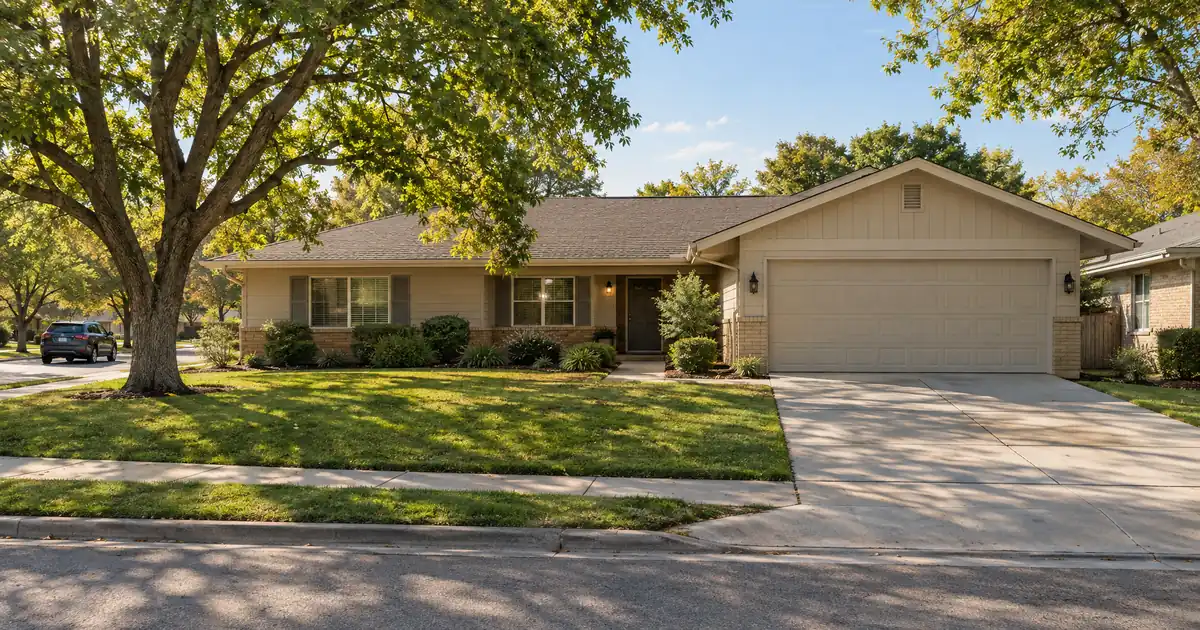
The Quick Read: To get one, record the deed in your own name, document 12 or 24 months of deposits as your income, and keep the first mortgage plus the new line under the leverage cap for how the home is used, which is 70% combined loan-to-value on an investment property.
- Title comes first. A will or a probate order is not title. Lenders want a recorded deed in your name, or in the name of your revocable living trust.
- Occupancy sets the leverage. On an investment property, the network ceiling is 70% CLTV with a 700 minimum credit score. Primary residences and second homes reach 90% CLTV only at 720 or better.
- Inherited cash is not income. Underwriters generally strip it out of the deposit history or ask you to source it.
- LLCs cannot hold title. An inherited home deeded to an LLC needs a vesting change first, or a different loan.
- A rental plan may point elsewhere. If the house will be a rental, a DSCR cash-out refinance often fits better than a line.
Most heirs who ask about this loan are self-employed. Their traditional personal-income documentation shows heavy write-offs, so the paper income looks smaller than the real income. A bank statement line lets the deposits tell the story. The catch is that an inherited house adds a layer most lines never face: who legally owns it today.
How large a line the equity supports.
An equity line is sized by combined loan-to-value, occupancy, and credit — not by rental coverage. Switch the occupancy or the credit band and the ceiling moves with it.
Investment-property lines require a 700 minimum credit score; second-home lines start at a 640 minimum and primary-residence lines at 600, and the combined-LTV ceiling steps down as the credit band drops on primary-residence and second-home lines and holds on investment-property lines; the line cap steps down on primary-residence lines and holds at every tier on investment-property and second-home lines.
A debt-to-income ratio above 45% requires 680+ credit. Profiles under 640 are limited to single-family homes. At least 75% of the approved line is drawn at closing. Ceilings, floors, and caps update from Lendmire’s centralized guideline source.
Line estimate
Illustrative estimate only — not a quote, Loan Estimate, approval, or commitment to lend. The rate is an editable assumption; equity-line pricing is variable through both the draw and repayment periods and never converts to fixed. Occupancy and credit drive the ceiling together: an investment property tops out at 70% combined LTV (minimum credit 700, line cap $500,000); a second home tops out at 90% combined LTV (minimum credit 640, line cap $500,000), with the ceiling stepping down as the credit band drops (the cap holds at every tier); a primary residence tops out at 90% combined LTV (minimum credit 600), and its $750,000 maximum line is available only at 75% combined LTV or below with a 700-or-better credit profile (720 on the longer-runway program) and a full appraisal. Lines above $500,000 require a full appraisal. Credit, debt-to-income, property type, and full underwriting review all affect the final line.
Key Terms Defined
Bank statement HELOC. A home equity line of credit that is reviewed around documented deposits in your bank accounts instead of tax-return income. It is a non-QM product, meaning it follows lender guidelines outside the standard “qualified mortgage” box.
Title. Legal ownership of the property, shown by a deed recorded in the county records.
Probate. The court process that settles a deceased person’s estate and passes assets to heirs.
CLTV (combined loan-to-value). All loans against the home, first mortgage plus the new line, divided by the home’s value.
Lien position. Where a loan stands in line for repayment. A first lien is paid before a second lien.
Draw period. The window when you can borrow from the line, typically interest-only, before repayment begins.
Successor in interest. An heir who has taken over a home carrying a mortgage and is recognized by the servicer. This status gives servicing rights but does not make you a borrower on a new loan.
Why Title Comes Before Income
A lender cannot take a lien on a house you do not legally own. The deed, recorded where your county keeps deed records, is what proves you own it. A probate court record alone does not do that job. Until the deed is signed and recorded, the home can still sit in the decedent’s name or in the estate.
Where the home sits changes what is realistic:
| Ownership stage | Who can borrow | Realistic path |
|---|---|---|
| Estate, probate open | Executor only | Short-term estate loan or wait |
| Revocable trust, grantor living | Trustee/borrower | Line fits if vesting rules are met |
| Trust now irrevocable | Successor trustee | Deed to heir first, then apply |
| Deed recorded to you | You | Standard file review |
| Deed to several heirs | All owners | Everyone signs, or a buyout first |
Specialty estate loans do exist for estate-titled homes. They are short-term products, and they are not bank statement lines. The practical rule across the wholesale network is simple: finish the title work, then apply.
Vesting matters here. These programs allow title held by an individual or by an inter vivos revocable living trust (a trust you can change during your lifetime). Irrevocable, blind, and land trusts cannot hold title. Many family trusts become irrevocable when the grantor dies, so a trustee often needs to deed the home to the heir before a line is possible.
Step by Step: Underwriting a Bank Statement HELOC on an Inherited Home
Here is the order of operations that keeps files from stalling.
1. Settle ownership. Finish probate or the trust transfer, record the deed in the borrower’s name, and order a title report.
2. Map every lien. An inherited first mortgage or old line stays attached to the home regardless of how it passed. Get payoff or balance statements.
3. Decide who is borrowing. If several heirs hold title, each owner generally must sign or transfer their interest first.
4. Pick the occupancy. Will the home be your residence, a second home, or a rental? Occupancy drives the leverage table below.
5. Pull 12 or 24 months of statements. Choose personal or business accounts, whichever best reflects how you actually earn.
6. Check credit. One bureau score is used, tied to the primary wage earner. The credit report must be no more than 90 days old at closing, and rescores are not used.
7. Value the home. Value means today’s fair market value, not the value on the date of death.
8. Submit the file. Underwriting then reviews deposits, debts, credit, CLTV, reserves, and title together.
Valuation is usually light. Lines at or below $500,000 ordinarily run on an automated valuation instead of a traditional appraisal. A higher CLTV may call for a second valuation. Every line above $500,000 requires a full appraisal, and you can request one on any line.
Documents You Will Actually Need
Split the paperwork into two piles: proof you own the house and proof you earn the income.
Inheritance documents:
- Certified death certificate
- Letters testamentary or letters of administration, or a trust certification
- The recorded deed in your name
- Title evidence from a title company
- Statements for any first mortgage or existing line on the home
- Written agreement and signatures from co-heirs where more than one holds title
Income and credit documents:
- 12 or 24 months of consecutive bank statements
- Proof of self-employment history, such as a business license or CPA letter
- Government ID and a current credit report
- A written explanation for any large, unusual deposit
Organize the deposit explanations before you apply. A one-page note beside a flagged deposit is far cheaper than a conditions list later.
How Deposits Become Income (and Where Inheritance Cash Goes)
Bank statement programs generally review 12 or 24 months of personal or business statements, and business accounts usually carry an expense factor, according to HousingWire’s non-QM guide. Scotsman Guide describes the same basic idea: practitioners review deposits to reach true income and a debt-to-income figure.
“Bank statement” does not mean undocumented. The file still is reviewed on documented income under the applicable program, subject to lender guidelines. It is just a different document than a tax return.
Picture a self-employed contractor with a steady deposit pattern. The underwriter removes transfers between her own accounts and any loan proceeds. A business account gets an expense factor applied before the remainder counts as income. Anything left is measured against her debts. The program’s maximum DTI (debt-to-income ratio) is 50%, and 45% for credit profiles from 600 to 679. A ratio above 45% requires a 680 minimum. The line is qualified on the interest-only payment calculated on the maximum draw, which is stricter than it sounds.
Now add the inheritance. Suppose a lump sum from the estate lands in her checking account. Underwriters generally treat that as a one-time item. They source it or exclude it, and it does not lift qualifying income. Underwriter discretion applies here, so keep estate distributions in a separate account when you can. If cash from the estate is already mixed into your business account, expect a letter of explanation.
Other things that draw attention on any file:
- Overdrafts and commingled personal and business funds
- A declining deposit trend over 24 months
- Large deposits with no paper trail
Seasonal or lumpy income can still work. It just needs a longer, cleaner statement history to show the pattern.
What Leverage to Expect by Occupancy
Occupancy decides leverage more than income does, and an inherited home can fit any of three categories. These figures come from the select wholesale programs Lendmire places files with. Two programs exist, and each figure applies only within its own terms. All of it is subject to lender guidelines and full file review.
| Use | Top CLTV | Credit | Max line |
|---|---|---|---|
| Primary residence | 90% at 720+ | 600 floor | $750,000 |
| Second home | 90% at 720+ | 640 floor | $500,000 |
| Investment property | 70% | 700 floor | $500,000 |
Lower credit tiers step the ceiling down. On a primary residence, 700 or better reaches 85% CLTV on lines up to $500,000. Second homes also reach 85% at 700. At 640 on a primary, expect around 80%.
A line above $500,000 is primary residence only. It requires a credit profile of 700 or better (720 on the longer-runway program), caps at 75% CLTV, and needs a full appraisal. Investment lines never go above $500,000 and never above 70% CLTV.
Here is what that means in practice. Say an inherited rental carries a first mortgage worth 40% of its value. On an investment property, the CLTV ceiling is 70%. That leaves room for a line of up to roughly 30% of the value, before any other limit applies.
Two structural facts catch heirs off guard. At least 75% of the line is drawn at closing, so this is not a dormant safety net. Pricing floats during both the draw and repayment periods and never converts to fixed. Investment lines run a 5-year interest-only draw followed by a 25-year repayment. Primary and second-home lines also offer a 3-year draw with a 17-year repayment.
Availability is narrower than Lendmire’s DSCR footprint. Bank statement lines are offered in Lendmire’s 16 full-service states, versus 41 markets for DSCR investor loans.
When the Inherited Home Already Has a Mortgage
An existing mortgage does not disappear at death, and the lender generally cannot demand payoff just because the home passed to a relative. Nolo explains that the federal Garn-St Germain Act bars enforcing a due-on-sale clause on certain transfers, including a transfer to a relative on the borrower’s death. Servicers also treat a confirmed successor in interest as a borrower for servicing purposes.
That protection is about the old loan only. A new line is a new credit decision with its own underwriting, so successor status does not carry over.
The line itself can sit in first or second lien position. That flexibility helps when the heir wants to leave the existing first mortgage alone. In that case the new line sits behind it, and CLTV counts both loans together. If the old debt must go, the alternative is a refinance that pays it off.
A trust does not erase liens either. It avoids probate, not debt.
Several Heirs, One House
Co-ownership can slow an inherited-home file down. Intestate succession can hand siblings equal shares, which makes them co-owners. A lender needs to know who holds title and who can pledge it.
Expect three paths:
- One heir buys out the others. The buyout is often funded with a refinance or a line, and it needs a current appraisal and a written agreement on value and terms.
- All heirs sign. Every owner on title joins the transaction, and the line’s risk is shared.
- Sell. Sometimes the cleanest answer.
If the estate is still in formal probate, the executor generally needs court authorization for a buyout. Without it, title companies often will not insure the deal. Line up financing before you negotiate the buyout, not after.
Exposure limits apply to experienced investors. A borrower is limited to three lines in total, and anyone owning more than 15 financed properties is not eligible.
Where the Rules Break
Several inherited-home situations fall outside the general pattern.
Probate not finished. A standard line cannot close until title is clear. Estate loans exist for that gap, but they are short-term and separate.
Property deeded to an LLC. LLCs, corporations, and partnerships cannot hold title on these lines. This is the sharpest difference from a DSCR loan. A home already in an LLC needs a vesting change or a DSCR cash-out instead. Moving an inherited home into an LLC before borrowing can break eligibility.
Ineligible property types. Manufactured homes, co-ops, condotels, log homes, and commercial, mixed-use, or agriculturally zoned properties are not offered. Family land often carries one of these labels. A farmhouse on agricultural zoning is a common example.
Recently listed homes. In several of the network’s states, a property listed for sale, or listed within the past 60 days, is ineligible. Heirs who test the market before deciding to keep the house can trip this.
Credit history. Bankruptcy seasons in 4 years from discharge or dismissal. Foreclosure history splits by program: one seasons a foreclosure at 7 years and a short sale or deed-in-lieu at 4, while the other declines the history entirely on primary residences and second homes.
Not a qualified mortgage. These are guideline products. The federal ability-to-repay rule’s scope text expressly excludes home equity lines, so being outside the “QM” box is normal here and not a red flag.
Is a HELOC the Right Tool?
If the inherited house will be a rental, a bank statement line is often the wrong first choice. Investment lines top out at 70% CLTV and $500,000. They also qualify on your personal deposits, not the rent.
A DSCR cash-out refinance qualifies primarily on property-level rental income covering the payment, subject to lender guidelines. On most files it reaches about 75% LTV, and about six months of seasoning is the common expectation. How a lender counts inherited title toward seasoning varies, so ask early. Loan sizes run up to $3,000,000 on standard programs (smaller balances available through select lenders). Credit around 660 is typical, with a floor near 620 in parts of the network. Coverage of 1.00 is where select programs start, and stronger ratios open better leverage. A separate select-lender path takes coverage below 1.00, with leverage and terms adjusted. For the full picture, read the complete DSCR loans guide.
| Option | Income test | Leverage | Existing first mortgage |
|---|---|---|---|
| Bank statement HELOC | Personal deposits | 70% CLTV (investment) | Stays in place |
| DSCR cash-out refinance | Property rent vs. payment | About 75% LTV | Paid off |
| Sell | None | n/a | Paid at closing |
The tradeoff is practical. A line keeps an existing first mortgage intact and works for an heir with strong deposits but little rental history. A DSCR refinance replaces the first mortgage, but it ignores personal income. Clearing 1.00 coverage is also not the same as positive cash flow, since repairs, vacancy, and management sit outside the ratio.
For background on how the line itself works, see Lendmire’s explanation of what a bank statement HELOC is.
Why Files Get Delayed or Denied
- Deed not recorded. Fix: finish the transfer first.
- Credit under the floor. Investment lines need 700. Fix: lift the score, or consider another structure.
- DTI above 50%. Fix: pay down debts before applying.
- Unexplained inheritance deposits. Fix: a clear sourcing letter and separate accounts.
- Wrong vesting. Fix: deed to an individual or revocable trust.
- Missing co-heir signatures. Fix: complete a buyout or get consent before applying.
- Ineligible property type or recent listing. Fix: choose a different property or loan.
What the Risk Looks Like
The house secures the line. If you cannot repay, the lender can foreclose on it. After the interest-only draw ends, the payment resets into full amortization, so the monthly cost typically steps up. With co-heirs, the risk is shared and so is the argument when something goes wrong.
Tax treatment can depend on how the funds are used and how the property is held; investors should keep clear records and speak with a qualified tax professional before relying on any deduction. An estate attorney is the right call on title questions.
Frequently Asked Questions
Can I get a HELOC on an inherited home before probate ends?
Usually not. A standard line needs title in the borrower’s name, and during probate that authority sits with the executor. Estate-level short-term loans exist, but they work differently and are not bank statement lines. The cleaner route is to finish the transfer, record the deed, and then apply.
Does inherited money in my account count as income?
Generally no. Underwriters treat a one-time inheritance deposit as a non-recurring item and source it or exclude it. Your qualifying income comes from your regular business or personal deposits. Keep estate funds in a separate account and be ready to explain any large transfer.
How many months of bank statements are required?
Programs of this type generally use 12 or 24 months. You choose personal or business accounts depending on which reflects your income best. Business accounts typically carry an expense factor before the remaining deposits count as income.
Can I use the line if I plan to rent the inherited home?
Yes, if you meet the investment-property terms. That means a 700 minimum credit score, a 70% CLTV ceiling, and a $500,000 maximum line. If you want to qualify on the rent instead of your deposits, a DSCR cash-out refinance may fit better.
What if my inherited home is held by an LLC?
It cannot be financed with this line as titled. LLCs cannot hold title on these programs. You would need to deed the property out of the LLC into your name or revocable trust, or look at a DSCR cash-out refinance, subject to program terms.
Next Step
If you are considering a home equity line and want to see how the numbers work, Lendmire can help you compare HELOC options based on the property, the equity available, credit profile, combined leverage, and your goals. Lendmire is a broker arranging financing through select lenders in its wholesale network, and nothing here is a commitment to lend.
About Lendmire
Lendmire (NMLS# 2371349) is a mortgage broker. Home equity lines of credit — on a primary residence, a second home or an investment property — are arranged through wholesale lenders in Lendmire’s 16 full-service states, and every line is underwritten by the lender under its program guidelines. Scotsman Guide named Lendmire a Top Mortgage Workplace in both 2025 and 2026.
Get Started
Ready to find the right loan for you?
In about 30 seconds you can review financing options available for your home or investment property. No commitment required.
Informational only. Not a Loan Estimate, approval, or commitment to lend. Program availability and eligibility are subject to lender guidelines, credit approval, property review, and underwriting.
References
1. HousingWire, a plain-English guide to non-QM loans
2. Scotsman Guide, Don’t Shut the Door on Quality Borrowers
3. Nolo, successor in interest and Garn-St Germain
This article is part of Lendmire’s bank statement HELOC program — full qualification details, guidelines, and scenarios live on the program page.
Related reading: Bank Statement HELOC Underwriting Rules for a Kept First Mortgage · How Much a Bank Statement HELOC Lends at Each Credit Tier · How to Show S-Corp Distributions on a Bank Statement HELOC
Brandon Miller
Founder & CEO, Mortgage Loan Originator, Lendmire LLC
- Mortgage Loan Originator · NMLS# 1129696 · Verify on NMLS Consumer Access
- North Carolina Real Estate Broker · License# 343312 · Verify on NCREC
- North Carolina Insurance Producer · License# 19053198 · Property, Casualty, Life, Health · Verify on NAIC SBS
- Lendmire LLC · Firm NMLS# 2371349 · Verify firm licensure
Important disclosures. Lendmire (NMLS# 2371349) is a licensed mortgage brokerage. Lendmire is not a direct lender, depository institution, or financial advisor. All loan inquiries are subject to lender underwriting; this article does not constitute a commitment to lend. Rates, terms, and program guidelines are subject to change without notice and vary by borrower profile, property type, and state. Information in this article is general in nature and is not financial, legal, or tax advice. Equal Housing Opportunity. NMLS Consumer Access: nmlsconsumeraccess.org.