
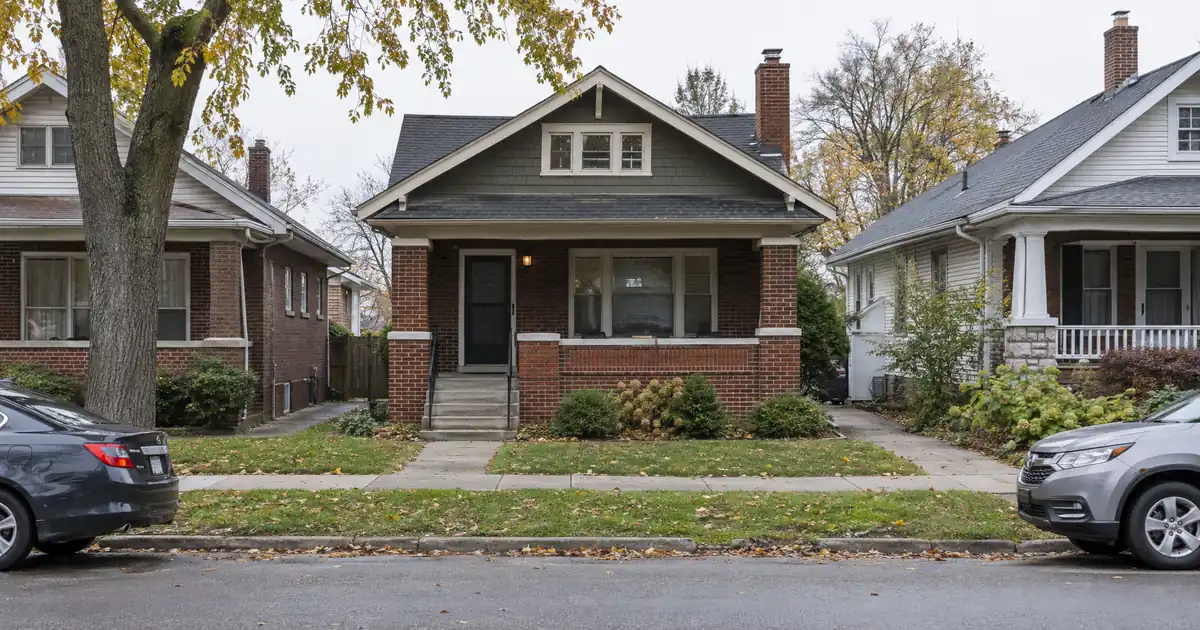
The Quick Read: Usually, yes, when the cottage is a year-round-capable house that you happen to use seasonally, because an asset-based mortgage solves the borrower’s income question but does not fix a property that lacks heat, insulation, freeze-protected plumbing, or dependable access. Summer-only camps that were never winterized often fail on the property, not on your balances.
- Your statements are tested on one side, and the building is tested on the other.
- Through select programs, a second-home purchase can reach 80% loan-to-value on either path, subject to underwriting.
- Plans to rent the cottage change the occupancy class, and that changes the path and the leverage.
- A winterized cottage on a plowed, maintained road is the profile that fits best.
Two Tests, Not One
Every cottage file faces a borrower test and a property test. Most buyers worry about the first and get surprised by the second.
The borrower test asks whether your assets can carry the loan. That is where an asset-based mortgage helps, because it is reviewed around balances instead of paychecks. It suits retirees, people who sold a business, heirs, and households living off a portfolio.
The property test asks whether the building is suitable collateral for a loan that runs for decades. Lenders want a home that works as housing in every season.
Lendmire is a broker. It arranges asset-based mortgages through select lenders in its network, and those lenders underwrite each file individually. Lendmire’s consumer mortgage operation is licensed in 16 states, and Michigan is one of them.
How Your Assets Pay for the Cottage
There are two paths, and a borrower is reviewed on one at a time. Both are subject to underwriting and change with lender guidelines.
The asset qualifier path covers the entire loan with eligible assets. No employment or income is documented. Brokerage accounts, certificates of deposit, money market, and savings count at 100%. Retirement accounts count at 90% if you are under 59½ and 100% once you are older. Accounts combine.
Here is the illustrative math. Say you want an $800,000 loan. You hold $330,000 in brokerage accounts (100% counts, so $330,000), $300,000 in a 401(k) under 59½ (90% counts, so $270,000), and $200,000 in savings (100%, so $200,000). That is $800,000 of usable assets, which is reviewed on assets alone. The lender’s own calculation governs.
On this path, through select programs, a second home can reach 80% loan-to-value on a purchase and 75% on a refinance. Loans go up to $4,000,000. The credit floor is 600. Seasoning is 60 days, with two months of statements for each qualifying account. No reserves are required at or below 75% loan-to-value, and above that the lender sets them.
The asset depletion path turns assets into monthly income. The lender divides usable assets by 60 months. That income then runs through a debt-to-income test along with the housing payment and your other debts.
Cash and certificates of deposit count at 100%. Securities count at 80%, private stock at 75%, retirement accounts at 70% at any age, and real-estate equity at 60%. Take $1,500,000 in securities (80% counts, so $1,200,000) plus $300,000 in cash (100%). That is $1,500,000 usable, or $25,000 of monthly qualifying income after dividing by 60.
On this path, a second home can reach 80% on a purchase or rate-and-term refinance and 60% on a cash-out refinance. Loans run from $125,000 to $3,500,000. The credit score follows the lender’s matrix. Assets must be at least the lesser of $1,000,000 or 1.25 times the loan, and never below $250,000 liquid when depletion is your only income. Statements must be at least 120 days old, plus one within 45 days.
Both paths document your assets. The only thing skipped on the qualifier path is income documentation.
What Does Seasonal Mean to a Lender?
Seasonal means two different things, and only one is a problem. A cottage used seasonally is fine. A cottage built for seasonal use only is a different story.
The first is a year-round-capable house that sits empty from November to April. Lenders generally treat it as housing, and many second homes look exactly like this. The second is a structure with no permanent heat, thin or no insulation, and plumbing that must be drained for winter. Some lenders expect year-round habitability, and non-winterized plumbing can affect approval. Michigan lake country has the same issue.
| Property condition | Likely lender view | Common obstacle |
|---|---|---|
| Four-season home, used seasonally | Treated like any second home | Little beyond standard review |
| Winterized cottage, maintained road | Usually workable | Records proving heat and insulation |
| Partly winterized | Case by case | Appraiser flags, possible repairs first |
| Unwinterized camp or seasonal road | Often outside normal programs | Heat, plumbing, access |
If your cottage sits in the bottom row, the loan structure will not rescue it. Winterizing the building, choosing a different property, or paying cash are the realistic fixes.
Michigan Property Issues That Decide the File
Before you make an offer, check these items. Each one has stopped a loan that looked fine on the borrower side.
- Heat and insulation. Keep any records of the heating system and insulation. Appraisers and underwriters want proof, not a seller’s description.
- Plumbing. Look for freeze-protected lines. Many lakefront cottages run on a shore well or a holding tank, and those setups can raise a not-suited-to-permanent-use flag.
- Well and septic. A shared or aging system can limit financing, and some buyers need a septic inspection before the lender is comfortable.
- Road access. A public, maintained road reads very differently from a private two-track that nobody plows. Emergency access counts, too.
- County classification. Records may list the building as a cabin or seasonal dwelling even if it functions as a house. Confirm the classification before you offer.
Great Lakes shoreline and inland lakes can add flood and erosion questions on top of these. Treat them as separate checks, not as afterthoughts.
Here is a small practitioner note. Files with a clean evidence packet tend to move through review with fewer surprises than files built on a seller’s verbal description. Gather the heating records, a well-and-septic report, and the road maintenance arrangement before the appraisal is ordered.
Which Path Fits Which Cottage Buyer?
The qualifier path suits a buyer who holds large balances and wants no income conversion at all. If your eligible assets cover the whole loan after the credit percentages, this is usually the cleaner route.
The depletion path suits a buyer whose assets are large but who prefers to borrow against a smaller share of them. It also fits someone who holds assets that count only at a haircut, such as securities or real-estate equity. Remember that cash-out proceeds never count as qualifying assets there.
Crypto, precious metals, collectibles, and pledged or borrowed funds are not published as eligible on either path. The documented route is converting them to a seasoned cash balance in a regulated account. The lender reviews the source of those funds.
Credit still matters. A 600 score is the published qualifier-path floor. A first-time investor on the depletion path needs 700. Housing history is typically 0x30x12, though one 30-day late in the last twelve months is considered case by case. Multiple bankruptcies are not eligible.
What If You Plan to Rent the Cottage?
Renting changes the answer, because the occupancy class changes with it. A second home is for your own use. An investment property is held to produce rent.
The qualifier path is for principal residences and second homes only. Investment property is available only on the depletion path, where leverage drops to 65% on a purchase or rate-and-term refinance and 60% on a cash-out refinance. A first-time investor there needs a 700 score.
If you plan to rent the cottage and want the loan to rest on the property’s income rather than your balances, a different product applies. DSCR loans are designed for non-owner-occupied investment properties. Because they are business-purpose investor loans, they are reviewed differently from a standard owner-occupied mortgage. Lendmire’s complete DSCR loans guide explains how that product works.
Seasonal income is a weak spot for any rent-driven approach. Rabbu, a short-term-rental data vendor, says a property earning heavily in summer and little in winter is judged on annualized average income, not on its best month. Stress-test the cottage at a shoulder-season figure, not July.
Rental rules deserve a separate check. BNBCalc reports that Michigan has no statewide short-term rental law and that cities and townships set their own rules. Short-term rental rules can vary by city, county, HOA, and property type, so investors should confirm local rules before relying on projected rental income.
One more detail on appraisals. The rent schedule form many lenders order, Form 1007, was described by Fannie Mae as a tool for estimating market rent on single-family investment properties. It was built around long-term rent. It is not a stamp of approval for nightly rental income. If you only use the cottage yourself and a qualifying path rests on your assets, no rent schedule is involved.
Heavy personal use with occasional rental is a gray area. Tell your loan officer the true plan up front, because misstated occupancy causes far bigger problems later than an honest second-home label.
Risks and Tradeoffs
Asset-based qualifying has real costs, and a cottage amplifies them.
- You tie up liquidity. Eligible assets must sit seasoned in your accounts. On the qualifier path, that means 60 days with two months of statements per account.
- A cottage is a thinner market. Seasonal and rural properties can take longer to sell and may have fewer comparable sales for the appraiser.
- Depletion math shrinks your assets. A securities-heavy portfolio counts at 80%, retirement accounts at 70%, and equity at 60%, so usable assets run well below the headline balance.
- Property failures are not curable by assets. A strong portfolio cannot offset a missing heat source.
- Ongoing costs continue. Taxes, insurance, and upkeep on a second property add up.
Reserves are worth understanding before you commit. Our guide on extra reserves for a seasonal rental covers them in more detail.
What to Gather Before You Apply
Start with the property, then the borrower file.
1. Heating, insulation, and plumbing records for the cottage.
2. Well and septic reports, and the road maintenance arrangement.
3. The county’s classification of the building.
4. Statements for every qualifying account, matching the seasoning rules of your path.
5. A clear account of how you will use the cottage, including any rental plans.
6. Documents showing the source of any large recent deposits.
If a property fails, you have a choice. Fix it, find another one, or change the loan structure. Walking away from a cottage that cannot be winterized is a legitimate outcome, not a failure.
Key Terms Defined
Asset qualifier path: The program route where eligible assets, after credit percentages, must equal or exceed the entire loan, and no income is documented.
Asset depletion path: The route that divides usable assets by 60 months to create monthly qualifying income for the debt-to-income test.
Seasoning: The required time that funds have sat in your accounts, proven by statements.
Debt-to-income ratio: Your monthly debts, including the new housing payment, compared with your monthly qualifying income.
Winterized: Built or upgraded to be livable in freezing weather, with heat, insulation, and freeze-protected plumbing.
Second home: A property you occupy part of the year for your own use, as opposed to one held for rent.
Frequently Asked Questions
Can I use retirement accounts to qualify?
Yes, on both paths, though retirement assets are counted differently on each. On the asset qualifier path, 401(k) and IRA balances count at 90% under age 59½ and 100% after. On the depletion path, retirement accounts count at 70% at any age. All of this is subject to underwriting through select programs.
Do I have to sell my investments to buy the cottage?
No. The program counts the balances without requiring you to liquidate them, though funds used for the down payment and closing costs leave your usable total. Cash-out proceeds never count as qualifying assets on the depletion path.
Can I finance a cottage that is not winterized?
Rarely. A building without permanent heat, insulation, or freeze-protected plumbing usually fails the property test regardless of your balances. Winterizing it first, or buying a different property, is the typical path. Some local banks and credit unions run niche camp products, but those vary by institution.
Do I need a Michigan lender?
Not necessarily. Lendmire arranges loans through select lenders in its network, and the program figures do not change by state. State facts such as local taxes and insurance are context, not program parameters. Lendmire’s consumer mortgage operation is licensed in Michigan, among 16 states.
What if I rent the cottage out some of the year?
It depends on how much you rent. Occasional rental alongside real personal use may still fit a second-home plan, while a rental-driven plan moves toward the investment-property rules or a DSCR loan. Confirm local short-term rental rules before counting any rental income.
If you are qualifying on assets rather than income and want to see how the numbers work, Lendmire can help you compare asset-based mortgage options based on your statements, the property, credit profile, leverage, and your goals. You can reach the team at 828-256-2183.
Lendmire’s asset-based mortgage in Michigan page presents the program for Michigan borrowers.
About Lendmire
Lendmire, NMLS# 2371349, is a mortgage brokerage with consumer lending licenses in 16 states. Bank statement, P&L-only, 1099-only and asset-based mortgages are arranged through wholesale lending partners for borrowers whose tax returns understate their income, and each application is reviewed individually by the lender. Scotsman Guide named Lendmire a Top Mortgage Workplace in both 2025 and 2026.
Get Started
Ready to find the right loan for you?
In about 30 seconds you can review financing options available for your home or investment property. No commitment required.
Informational only. Not a Loan Estimate, approval, or commitment to lend. Program availability and eligibility are subject to lender guidelines, credit approval, property review, and underwriting.
References
1. Rabbu: DSCR Loans for Short-Term Rentals
2. BNBCalc: Michigan Short-Term Rental Regulation Guide
3. Fannie Mae Appraiser Update
This article is part of Lendmire’s asset-based mortgage program — full qualification details, guidelines, and scenarios live on the program page.
Related reading: Can Equity in a Rental Property Help You Qualify for an Asset-Based Mortgage? · Asset Qualifier Mortgage vs Bank Statement Mortgage · Is an Asset Qualifier Mortgage Harder to Get Than an Asset Depletion Loan?
Guides: Asset-Based Mortgage in Michigan
Brandon Miller
Founder & CEO, Mortgage Loan Originator, Lendmire LLC
- Mortgage Loan Originator · NMLS# 1129696 · Verify on NMLS Consumer Access
- North Carolina Real Estate Broker · License# 343312 · Verify on NCREC
- North Carolina Insurance Producer · License# 19053198 · Property, Casualty, Life, Health · Verify on NAIC SBS
- Lendmire LLC · Firm NMLS# 2371349 · Verify firm licensure
Disclosure information. Lendmire is a state-licensed mortgage brokerage under NMLS# 2371349. Lendmire is not a depository institution, direct lender, or financial advisor — all loans referenced are placed through wholesale lender partners and are subject to each lender's underwriting standards. This article is provided for general informational purposes and is not a commitment to lend, nor does it constitute financial, legal, or tax advice. Loan programs, terms, rates, and qualification standards change without notice and depend on borrower profile, property type, and the state in which the subject property is located. Equal Housing Opportunity provider. NMLS Consumer Access: nmlsconsumeraccess.org.