
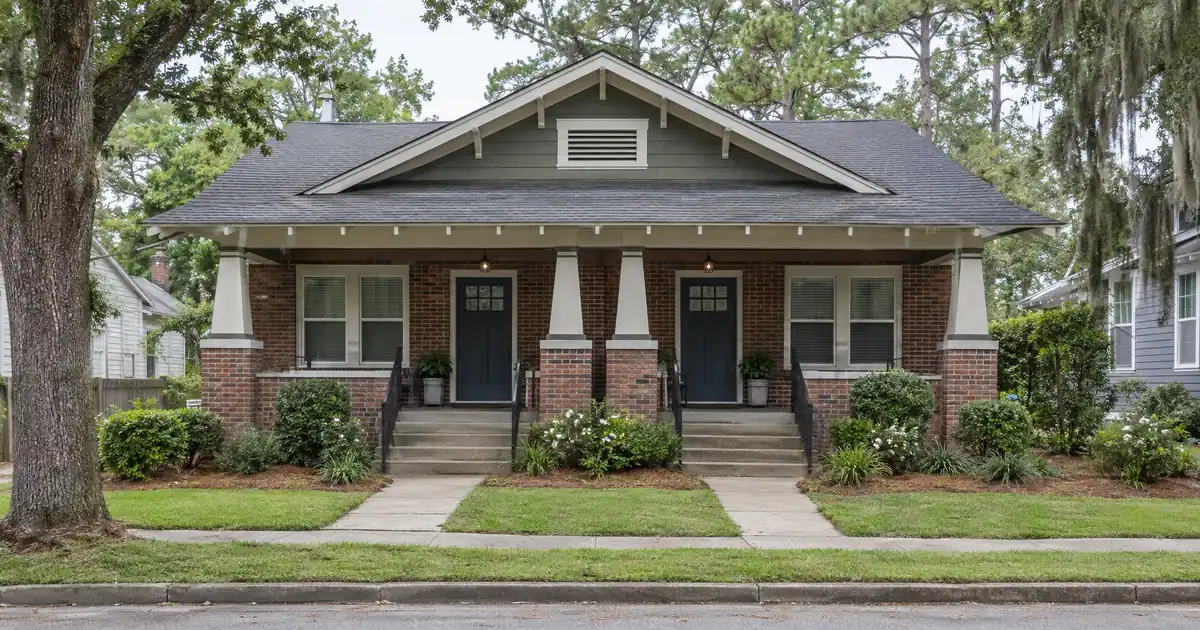
The Quick Read: Asset depletion tests your balance sheet and DSCR tests the rental’s rent, so the better fit for a Georgia rental purchase depends on whether your strength is the property’s cash flow or the size of your liquid assets; a rental bought for its rent usually fits DSCR better. Both can work on a rental, but they answer different questions. Pick the one whose question your file answers best.
- DSCR asks whether the property’s rent covers the property’s monthly obligation. Your personal income is not the test.
- Asset depletion turns eligible assets into a notional monthly income. That income then runs through a debt-to-income test.
- For a rental, the asset depletion path is capped at lower leverage than DSCR programs often allow. DSCR is the product built for non-owner-occupied investment property.
- Neither path skips paperwork. Both require account statements, credit review and underwriting, subject to lender guidelines.
Here is the honest answer on who each is for. Asset depletion suits a borrower with a large pile of liquid assets and thin documented income. Think of a retiree, someone who just sold a business, or a household living off a portfolio. DSCR suits an investor whose rental pencils on its own rent, whatever the personal income looks like. Some borrowers fit both. A few fit neither.
Side-by-Side
The asset depletion column reflects the path Lendmire’s wholesale network uses for investment property. The DSCR column reflects published industry norms, which vary by program.
| Factor | Asset Depletion (depletion path) | DSCR (industry norms) |
|---|---|---|
| What gets tested | Your assets, converted to income | The property’s rent vs. its payment |
| Income documented | Derived from assets, run through DTI | Personal income typically not reviewed |
| Property fit | Includes investment property, at lower leverage | Non-owner-occupied investment property |
| Vesting | Typically your personal name | Often an LLC, subject to program terms |
| Documents | Asset statements, credit, property review | Lease or rent schedule, appraisal, credit |
| Reserves | No published reserve months | Commonly required, varies by program |
| Scaling | Each new loan adds to your DTI | Each file stands on its own property |
How the Two Calculations Work
Asset depletion converts what you own into pretend income. DSCR divides the rent by the payment. That is the whole difference, and everything else follows from it.
On the asset depletion path, Lendmire’s network applies a haircut to each asset type and divides the usable total by 60 months. Cash and certificates of deposit count at 100%. Securities count at 80%, private stock at 75%, retirement accounts at 70% at any age, and real-estate equity at 60%. Here is the shape of the math. Say you hold $1,500,000 in securities, which counts at 80% for $1,200,000. Add $300,000 in cash at 100%. That is $1,500,000 of usable assets, divided by 60 months, for $25,000 of monthly qualifying income. That figure then has to carry the new housing payment and your other debts through the debt-to-income test. The lender’s own calculation governs, and every file is underwritten individually.
The divisor matters more than most borrowers expect. As Zeitro’s explainer on asset depletion income notes, the depletion period is program-specific, so a longer period shrinks the income figure from the same balance. Always check which divisor a program uses before comparing results.
DSCR works in one line: monthly rent divided by principal, interest, taxes, insurance and any HOA dues. A result of 1.00x means break-even. At 1.25x, the rent covers the full monthly obligation with a cushion. The rent comes from a lease or from the appraiser’s market rent schedule. Credit, reserves, the property and the borrower or entity are still reviewed. Qualification runs primarily on property-level rental income covering the payment, subject to lender guidelines.
The Occupancy Gate
For a rental purchase, this is the first filter. Asset-based mortgages were built mostly for people buying a home to live in.
Across Lendmire’s wholesale network, the asset qualifier path, where eligible assets cover the entire loan, applies to principal residences and second homes only. The asset depletion path is the one that reaches investment property. Through select programs, it allows up to 65% loan-to-value on an investment-property purchase or rate-and-term refinance, and 60% on an investment-property cash-out refinance. For comparison, that same path allows up to 80% on a purchase of a principal residence or second home. Loans on the depletion path run from $125,000 to $3,500,000, subject to underwriting.
So you can use assets to buy a rental. You just give up leverage compared with a program built for rentals. And the agencies are a different world. As Statements Ready’s comparison of agency policies points out, asset depletion is a market label, not an agency term. Each agency files its own policy under its own name and conditions. Treat those as separate programs that do not govern either product here.
When Asset Depletion Is the Better Fit
Asset depletion wins when your assets are big, your documented income is small, and the rent on the property is weak or unusual. It ignores the rent entirely. A Georgia property whose rent falls short of its payment is not penalized by the qualifying math.
Picture a recently retired professional with a large brokerage balance and little reportable income. A DSCR file leans on the rent, so a luxury rental with a thin rent-to-price ratio can score poorly. Asset depletion looks at the portfolio instead. Another fit is a buyer who plans to blend personal use and rental use, where the property does not read cleanly as a business-purpose rental. Planned personal use can push a property out of business-purpose financing, so be honest about how you will use it.
The requirements to know on the depletion path, all subject to underwriting:
- Minimum assets: the lesser of $1,000,000 or 1.25 times the loan balance, and never below $250,000 liquid when asset depletion is the only income source.
- Seasoning: statements at least 120 days old at application, plus the most recent statement within 45 days. Funds from a business sale, inheritance or legal settlement are excused from that seasoning.
- Credit: the lender’s score and loan-amount matrix applies. A first-time investor on this path needs a 700 score.
- Housing history: 0x30x12, with one 30-day late in the last twelve months considered case by case.
- Not eligible: custodial accounts, deferred compensation, escrow accounts, foreign funds, cash on hand, stock options, non-vested restricted stock units, and funds from non-regulated financial companies.
Crypto, precious metals and collectibles are not published as eligible. The documented route is converting them to a seasoned cash balance in a regulated account, with the source reviewed by the lender.
The tradeoff is real. Asset depletion is a consumer-style loan in your personal name, so every new purchase stacks on your debt-to-income. It also converts a large balance into a modest income figure. Lendmire’s piece How an STR Investor Qualifies on Asset Depletion vs Rental Income goes deeper on that tension.
When DSCR Is the Better Fit
DSCR wins when the rent does the work. If the property cash-flows on its own, the file stands without leaning on your income or your balance sheet. That is also why it scales: each purchase is judged on its own rent, not stacked on your personal debt ratio.
Run the numbers on a typical Georgia scenario. Assume a duplex whose market rent comfortably covers the full monthly obligation, clearing roughly 1.2x. A DSCR file reads that cleanly. Add an HOA to a townhome and the dues go into the denominator, which pulls the number down, so include them from the start. In a short-term-rental setup, rent may be underwritten from market-data projections instead of long-term leases. Short-term rental rules can vary by city, county, HOA, and property type, so investors should confirm local rules before relying on projected rental income.
Now the thin-rent case. Say the same duplex comes in around 0.85x. Programs below 1.00 coverage are available through select lenders in the network, but leverage and terms adjust. Beyond that, the usual levers are more cash down, lower leverage, or a different structure. Qualification stays subject to lender guidelines, credit approval and property review. (Honestly, this is where a large asset base becomes useful, which brings up the hybrid question below.)
DSCR is commonly closed in an LLC, subject to lender program eligibility. Some programs and lenders require an entity, and others allow personal-name closings. Do not assume Georgia law forces one or the other; ask the lender what its program requires. An LLC also does not erase personal exposure, because DSCR loans generally carry a personal guarantee from the members. Talk to your attorney about structure.
Here is the experience note. In DSCR files, the portfolio shows up as reserves, not income. A borrower with a large balance sheet often gets more out of a DSCR file by using assets to cover reserves and cash to close than by trying to convert them into income. That is the quiet way the two products overlap.
DSCR loans are designed for non-owner-occupied investment properties. Because they are business-purpose investor loans, they are reviewed differently from a standard owner-occupied mortgage. The federal business-purpose exemption in Regulation Z is why. The CFPB’s commentary adds that the creditor decides, case by case, whether a loan is primarily for a business purpose. An asset-based consumer mortgage is different: it is a consumer loan, and consumer mortgage disclosures apply. DSCR loans are exempt from those disclosures.
Can You Combine Them? (And What to Do When Rent Falls Short)
Not on one loan. A borrower is qualified on one path at a time. But the two can complement each other across a portfolio, or inside a single purchase decision.
Consider the marginal case: a large portfolio and a rent that barely misses. You have a few moves:
- Switch the method. Let the asset depletion path carry the file, accepting the 65% investment-property purchase ceiling.
- Stay on DSCR and adjust. Put more down, lower leverage, or accept sub-1.00 terms through a select lender.
- Supplement instead. Asset-derived income may supplement documented income up to a 45% debt-to-income ratio on the depletion path. When it supplements, the minimum-assets rule is waived.
A weighing note: for a buyer planning several rentals, the stronger play is usually DSCR for the portfolio and assets held back as reserves. For a single trophy rental with weak rent, asset depletion may win.
Key Terms Defined
DSCR (debt service coverage ratio): monthly rent divided by the property’s full monthly obligation. A 1.00x result is break-even.
Asset depletion: a method that divides usable assets by a set number of months to produce a qualifying monthly income.
Haircut: the share of an account’s balance a lender refuses to count, because the asset can lose value or carry penalties.
Seasoning: how long funds must sit in your account before they count.
Debt-to-income (DTI): your monthly debts divided by your monthly income. Asset depletion runs its derived income through this test.
Vesting: the name that holds title to the property, either you personally or an entity such as an LLC.
DSCR vs. conventional financing
There are two common ways to finance an investment property, and they qualify you differently — here’s how investors weigh them.
Why investors choose it
- Qualifies on the property’s rental income — no personal tax returns, W-2s, or pay stubs needed to document income.
- No personal debt-to-income ceiling to clear, so existing mortgages and obligations don’t cap your borrowing the same way.
- Can be closed in an LLC, keeping the property inside a business entity.
- Built for scaling — not held to the limit on number of financed properties that conventional financing applies.
- Underwriting centers on the deal: generally qualifies when the rent covers the payment, a 1.00x coverage ratio being a common baseline (confirmed in underwriting).
- Designed specifically for investment property, including long-term and, where the program allows, short-term rentals.
Where it’s strong
- Often the lowest ongoing financing cost for a buyer who fully qualifies on personal income — a fit for a first property or a cost-first purchase.
Trade-offs for investors
- Requires full personal income documentation and must fit within a debt-to-income limit — salary, existing debts, and other mortgages all count.
- Typically held in your personal name rather than a business entity.
- Caps how many financed properties you can carry, which can become a ceiling as a portfolio grows.
- Evaluates you as a borrower as much as the property, which usually means more paperwork.
How investors usually choose: a first or single property often optimizes for the lowest financing cost; portfolio builders often optimize for leverage, vesting in an LLC, and scaling past conventional caps. The right answer depends on your goals, the property, and current guidelines — both paths run through select lenders in Lendmire’s wholesale network, with eligibility and terms confirmed in underwriting.
Where Buyers Get Both Products Wrong
A few myths cause most of the bad decisions.
- Asset depletion is DSCR for wealthy people. It is not. One tests the property, the other tests you.
- A big portfolio means a big loan. Haircuts, the divisor, and the money set aside for the down payment and closing shrink the figure.
- Asset depletion skips documents. Skip that thought. Statements, sourced deposits and ownership are all verified.
- DSCR skips underwriting of the borrower. Credit, reserves, the property and the entity are all reviewed. A ratio above 1.00 does not establish approval.
- Georgia requires an LLC. Treat that as unverified. Some programs require an entity, and that is a program rule, not a state mandate.
A Balanced Verdict
Choose DSCR if the rent carries the property, you want to buy in an entity, or you plan to keep adding rentals. Choose asset depletion if your assets are large, your documented income is small, and the rent is too thin or the use too mixed for a rent-based test. Lean on both ideas if you are close: use assets for reserves and cash to close while the property’s rent drives lender review.
Tax treatment varies; consult a qualified professional. For the full picture on how the rent-based side works, see Lendmire’s complete DSCR loans guide. If you are qualifying on assets rather than income and want to see how the numbers work, Lendmire can help you compare asset-based mortgage options based on your statements, the property, credit profile, leverage, and your goals. For Georgia buyers, Georgia is one of 16 states where Lendmire arranges consumer mortgages through select lenders in its network.
Frequently Asked Questions
Are asset depletion and DSCR the same loan?
No. Asset depletion converts your assets into monthly income and tests it against your debts. DSCR compares the property’s rent to its payment. They answer different questions and are underwritten differently.
Do I have to sell my assets to use asset depletion?
No. The assets are documented and counted, not liquidated. Depletion is a formula, not a withdrawal. Cash-out proceeds from the new loan never count as qualifying assets on the depletion path, and funds needed for the down payment and closing come out of the usable total first.
Can I use retirement accounts?
On the depletion path, retirement accounts count at 70% at any age, through select programs. On the separate qualifier path, which covers principal residences and second homes, 401(k) and IRA balances count at 90% under age 59½ and 100% at 59½ or older. Both are subject to underwriting.
Can I buy a Georgia rental in an LLC with asset depletion?
Typically not. Asset depletion is a consumer-style loan generally closed in your personal name, with limited entity flexibility. DSCR files are commonly closed in an LLC, subject to lender program eligibility.
What if the rent is too low for DSCR?
You have options, but none is guaranteed. Select lenders in the network offer sub-1.00 programs, with adjusted leverage and terms. You can also add cash down or consider the depletion path, which ignores rent but caps investment-property leverage at 65% on a purchase. Every figure here varies by lender and program — guidelines, property type, leverage, and credit profile all apply.
For current guidelines and terms, see Lendmire’s asset-based mortgage programs page.
Lendmire’s asset-based mortgage in Georgia page presents the program for Georgia borrowers.
About Lendmire
Lendmire is a mortgage brokerage (NMLS# 2371349) licensed for consumer mortgage lending in 16 states, arranging bank statement and other alternative-documentation mortgages — P&L-only, 1099-only and asset-based paths — through a wholesale lending network. Eligibility is determined by the lender on each file. Scotsman Guide named Lendmire a Top Mortgage Workplace in both 2025 and 2026.
Get Started
Ready to find the right loan for you?
In about 30 seconds you can review financing options available for your home or investment property. No commitment required.
Informational only. Not a Loan Estimate, approval, or commitment to lend. Program availability and eligibility are subject to lender guidelines, credit approval, property review, and underwriting.
References
1. Zeitro – Using asset depletion income for a mortgage
2. Statements Ready – Asset depletion, Fannie Mae vs. Freddie Mac
3. eCFR – 12 CFR 1026.3, business-purpose credit exemption
4. CFPB – Official comment for 1026.3
This article is part of Lendmire’s asset-based mortgage program — full qualification details, guidelines, and scenarios live on the program page.
Related reading: DSCR vs Asset Depletion Loan for a First-Time Airbnb Host in Retirement · Asset Depletion vs DSCR in a Trust or LLC for a Super Jumbo Luxury Rental · How to Qualify for a Bank Statement or Asset Depletion Loan as a Rental Investor
Guides: Asset-Based Mortgage in Georgia
Brandon Miller
Founder & CEO, Mortgage Loan Originator, Lendmire LLC
- Mortgage Loan Originator · NMLS# 1129696 · Verify on NMLS Consumer Access
- North Carolina Real Estate Broker · License# 343312 · Verify on NCREC
- North Carolina Insurance Producer · License# 19053198 · Property, Casualty, Life, Health · Verify on NAIC SBS
- Lendmire LLC · Firm NMLS# 2371349 · Verify firm licensure
Compliance and disclosures. Lendmire (NMLS# 2371349) is a licensed mortgage broker and is not a direct lender, depository institution, financial advisor, or tax professional. Content in this article is general market analysis and educational information — not financial, legal, or tax advice for any specific situation. Lendmire does not guarantee loan approval; every transaction is subject to underwriting by the funding lender. Mortgage pricing and loan program guidelines are subject to change at any time without notice and vary by borrower characteristics, property type, and state regulations. Lendmire complies with Equal Housing Opportunity. Licensure verification: NMLS Consumer Access.