
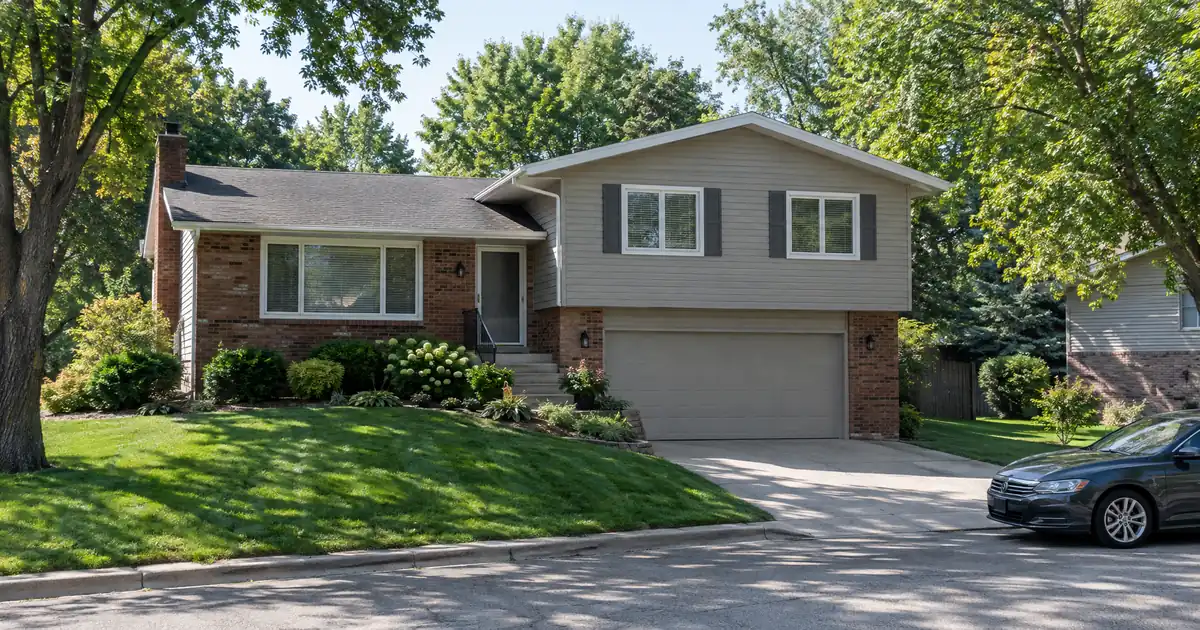
The Quick Read: A contractor who owns a home free and clear can pull cash out by documenting income with 12 months of bank statements instead of traditional personal-income documentation. The lender averages your deposits, screens out the ones that are not income, applies an expense factor, and sizes the loan to the lower of what your equity and your income support. Qualification runs on documented income under the applicable program, subject to lender guidelines.
- A paid-off home is still a cash-out refinance, so the cash-out leverage ceiling applies.
- On an owner-occupied home, cash-out typically tops out at 80% LTV (loan-to-value, the loan as a share of the home’s value), with a fixed expense ratio, or 75% with an accountant-prepared ratio.
- Your income, not your equity, is usually the limit that binds first.
- A new payment replaces a zero payment, so your deposits have to carry it.
- Clean, labeled statements make it easier for the lender to tell which deposits count as income.
Contractors get a raw deal from traditional personal-income documentation. Equipment, vehicles, subcontractors, materials, and depreciation all shrink taxable income. A year that moved a lot of money can look thin on a 1040. Bank statement underwriting reads the deposits instead. Here is how it works, start to finish.
What Is a Bank Statement Cash-Out?
A bank statement cash-out is a cash-out refinance where qualifying income comes from your account deposits. It sits in the non-QM category. Non-QM means the loan falls outside the standard Qualified Mortgage box, which is built around W-2 style documentation. Self-employed borrowers are the main reason the category exists, as Scotsman Guide’s non-QM coverage notes.
Two things are worth saying plainly. First, this is not a no-paperwork loan. The lender still verifies deposits, reviews trends, and checks credit and reserves. Second, the loan is reviewed on documented income under the applicable program, subject to lender guidelines. Across the wholesale network Lendmire works with, the standard documentation is 12 months of statements, business or personal.
Lendmire is a broker. It arranges these loans through select lenders in its wholesale network, and each lender reviews and decides on the file. Lendmire’s consumer mortgage licensing covers 16 states, so availability on this kind of loan depends on where the home sits.
Why a Paid-Off Home Is Still a Cash-Out
Any refinance that puts cash in your hands is a cash-out. A zero payoff does not change that. With no balance to retire, the whole new loan, less closing costs, goes to you.
The label matters because it sets the leverage tier. A purchase or rate-and-term refinance on a primary residence can reach up to 90% LTV through select lenders. That is not your ceiling here. On an owner-occupied cash-out, whether primary residence or second home, the typical ceiling is up to 80% LTV, by loan size and credit. Every figure here varies by lender and program — guidelines, property type, leverage, and credit profile all apply.
Plenty of contractors assume “no mortgage” means “no income test.” It does not. You are creating a payment where none existed, and the lender has to be satisfied your income carries it.
The Two-Limit Rule: Income and Equity
Your loan amount is the lower of two numbers.
- The equity limit. Appraised value times the program’s cash-out LTV cap.
- The income limit. The loan size your qualifying monthly income can support after the new payment and your other debts.
On a paid-off home, equity is usually generous. A home with no debt against it can sit far below the 80% cap. So income tends to be the binding limit. That surprises people. They look at a big equity number and assume the loan will match it.
Think of a contractor with a $600,000 home and strong equity. The cap may allow a large loan. But if the averaged deposits, after the expense factor, support a smaller payment, the smaller number wins. Loan sizes in the network run from roughly $125,000 to $3,500,000, and reserves are commonly around six months of the housing payment.
How Contractor Deposits Become Qualifying Income
The underwriter’s workflow runs in order. Here is the sequence on a typical file.
1. Pull the statements. Twelve months of business or personal account statements, covering the right owner and account.
2. Screen the deposits. Strip out transfers between your own accounts, loan proceeds, refunds, and one-off deposits that are not income.
3. Average what is left. Eligible deposits divided by the months in the window.
4. Apply the expense factor. On business accounts, the lender reduces the average to reflect the costs of running the business.
5. Adjust for ownership. If you own less than all of the business, only your share counts.
6. Test the new payment. Qualifying income is measured against the new housing payment plus your other monthly debts.
The deposit screen is not a lender quirk. Federal underwriting commentary says a lender that sees an unidentified deposit and does nothing to confirm it fails the verification requirement. The lender needs a basis to conclude the deposit is your income and not, say, loan proceeds. That is why the CFPB’s ability-to-repay compliance guide sits behind the questions your underwriter will ask about big deposits.
How the expense factor works
The expense factor is the share of business deposits the lender assumes goes to operating costs. Factors vary by lender and program, and nobody should promise you a universal formula. On an owner-occupied cash-out, the program uses a fixed expense ratio, or an expense ratio prepared by an accountant. A contractor with real, documentable costs can sometimes gain from that accountant-prepared route. A contractor with thin margins might not. Run both before you choose.
Contractor deposit triage
| Deposit type | Usual treatment |
|---|---|
| Customer progress draws | Counts, as business inflow |
| Final payments from jobs | Counts |
| Pass-throughs to subs or suppliers | Counts, but the expense factor absorbs them |
| Transfers between your accounts | Excluded |
| Loan proceeds or credit-line draws | Excluded |
| Supplier refunds, large one-offs | Questioned or excluded |
Exact treatment varies by lender. The pattern holds, though: recurring job income counts, and money that is not yours to keep does not.
Personal or Business Statements?
Both work, and the choice depends on where your money actually flows. Business statements go with proof of ownership, and the expense factor applies. Personal statements can be simpler if you deposit job income there, but a lender may ask for business-account support if the personal account looks mixed.
Commingled accounts can create friction on contractor files. When business receipts and grocery runs share a checking account, the underwriter has to untangle them. A tidy separation before you apply makes the file easier to read.
The Lookback Question: 12 Months or More?
The network standard is 12 months of statements. Some lenders will use a longer window. Which one helps you depends on the trend. Rising income favors the shorter window, because recent months pull the average up. Flat or seasonal income, like a roofer with a slow winter, may look better averaged over a longer period. Declining income can hurt under either one. Ask your broker to run the file both ways before you commit.
Which Path Fits Your Property?
Occupancy decides which regime and which program apply. This is where contractors with several properties get tangled.
| Property | Typical path | Cash-out ceiling |
|---|---|---|
| Your primary residence | Bank statement cash-out | Up to 80% LTV |
| Second home | Bank statement cash-out | Up to 80% LTV |
| Rental you hold | Bank statement or DSCR | Tops out around 75% LTV on investment cash-out |
| Rental in an LLC | DSCR cash-out, subject to program terms | Varies by program |
An owner-occupied cash-out is a consumer mortgage, so the consumer disclosure rules apply. A bank statement loan on a non-owner-occupied rental, including a short-term rental, is business-purpose and exempt from those rules. The federal regulation on exempt transactions deems credit for a rental property that is not owner-occupied to be for business purposes. It also says that if you expect to occupy the property more than 14 days in the coming year, it cannot be treated as non-owner-occupied. Keep the two kinds of file separate in your head.
A paid-off personal residence is usually the bank statement case. If the paid-off property is a rental, a DSCR loan (which compares the property’s rent to its monthly housing cost) may fit better, because the property carries the test instead of your deposits. Lendmire’s complete DSCR loans guide covers that side in full.
Cash-Out Refinance vs. HELOC vs. Home Equity Loan
| Option | What you get | Contractor consideration |
|---|---|---|
| Cash-out refinance | One new first-lien loan, lump sum | Income documented by statements |
| HELOC | Revolving line, draw as needed | Flexible, but terms can change with the lender |
| Home equity loan | Fixed second-lien lump sum | Needs a first lien in many cases |
On a home with no mortgage, a cash-out refinance creates the only lien. A second-lien product also puts a lien on a debt-free home. The better fit depends on whether you need all the money at once or in pieces. Lendmire’s piece How to Choose a Bank Statement HELOC or Cash-Out on a Paid-Off Home walks through that decision.
Step by Step: How to Apply
1. Decide the use of funds. A down payment on the next rental, equipment, or debt payoff each shapes how much you should borrow.
2. Gather 12 months of statements for every account you want counted.
3. Label the oddities. Note large deposits, transfers, and seasonal swings in a short written explanation.
4. Separate business from personal going forward, if you have not already.
5. Check your reserves. Around six months of the housing payment is common.
6. Talk to a broker who can compare lenders on expense factors, leverage, and loan size.
7. Order the appraisal when the lender requests it.
8. Respond to conditions with documents, not explanations alone.
Lendmire’s article How Much a Bank Statement Cash-Out Lends a Contractor on a Paid-Off Home goes deeper on sizing.
Broker Experience: What Stalls Contractor Files
Across the files that pass through a wholesale network, the same few issues recur. Large unexplained deposits. Accounts where business and personal money blend. Income that fell in the most recent months. And borrowers who assumed equity alone would set the loan size.
Most of these are fixable before submission. A short letter explaining a one-time deposit helps. So does a few months of clean separation. When a file still falls short, the fallbacks are a smaller loan, a different lookback window, an accountant-prepared expense ratio, or a different product altogether.
The Risk Side: A Lien on a Debt-Free Home
You are trading a home with no debt for one with a fixed payment. Contractor income moves. Jobs slip, payments lag, winters hurt. That mismatch is the real risk.
Ask yourself a few questions before you sign. Could you carry the payment through your slowest quarter? Does the cash earn a return, like a rental down payment, or does it only cover a gap? Do you hold enough reserves outside the home? If any answer is shaky, borrow less.
Non-QM loans generally cost more than standard agency loans. That is directional only, so compare full terms on the actual file. Tax treatment varies; consult a qualified professional before relying on any deduction.
Key Terms Defined
Cash-out refinance: A new loan that replaces or follows your existing debt and puts cash in your hands, even if the old balance is zero.
Non-QM: A mortgage outside the Qualified Mortgage standard, often used by self-employed borrowers.
Expense factor: The share of business deposits a lender assumes goes to operating costs before counting the rest as income.
LTV: Loan-to-value, the loan amount as a percentage of the home’s appraised value.
DSCR: Debt service coverage ratio, a rental property’s income compared to its monthly housing cost.
Reserves: Liquid funds you hold after closing, commonly measured in months of the housing payment.
Frequently Asked Questions
Does a contractor need to be self-employed for a set number of years?
Programs differ, and tenure requirements are set lender by lender. Most want evidence the business is established and stable, not a brand-new venture. Your broker can match your history to the lenders whose guidelines fit it.
Can I use personal statements if I am a 1099 contractor?
Often yes, when your job income lands in the personal account. Without a business account, the expense factor may be handled differently. Mixed accounts may prompt a request for extra business support.
How much cash can I take out?
The lower of the equity limit and the income limit. On an owner-occupied home, the cash-out ceiling is typically up to 80% LTV, or 75% with an accountant-prepared ratio, subject to loan size and credit. Income usually binds first on a paid-off home.
What can I use the money for?
Common uses include a down payment on a rental, equipment, business needs, renovations, and debt payoff. The lender reviews the file on documented income and the property, and tax treatment depends on use.
What if my income dipped recently?
A decline can shrink qualifying income under either window. A broker can test the file against different documentation paths, and a smaller loan or later application may fit better.
If you are self-employed and want to see how the numbers work, Lendmire can help you compare bank statement loan options based on your deposits, the property, credit profile, leverage, and your goals. A paid-off home gives a contractor real choices, and the best ones start with clean statements and a payment sized to your slowest quarter.
Investors weighing their equity options can start with Lendmire’s guide to cash-out refinance on an investment property.
About Lendmire
Lendmire (NMLS# 2371349) is a DSCR-focused mortgage broker that helps arrange investor financing across 41 markets, including Washington, D.C., through wholesale and investor-lending channels. DSCR eligibility is generally reviewed by the lender around the property’s rental income rather than personal income documentation, subject to lender guidelines — which works for self-employed investors, LLC operators, and portfolios above four financed properties. Scotsman Guide named Lendmire a Top Mortgage Workplace in both 2025 and 2026.
Get Started
Ready to find the right loan for you?
In about 30 seconds you can review financing options available for your home or investment property. No commitment required.
Informational only. Not a Loan Estimate, approval, or commitment to lend. Program availability and eligibility are subject to lender guidelines, credit approval, property review, and underwriting.
References
1. Scotsman Guide — Rev Up the Engine for Non-QM Lending
2. CFPB — ATR/QM Small Entity Compliance Guide
3. CFPB — Regulation Z § 1026.3 Exempt transactions
This article is part of Lendmire’s bank statement loan program — full qualification details, guidelines, and scenarios live on the program page.
Related reading: Full-Doc vs Bank Statement Jumbo Cash-Out When Returns Understate Income · How to Use a Bank Statement or DSCR HELOC for a Rental Cash-Out · Bank Statement HELOC vs Cash-Out Refinance on Understated Tax Returns
Brandon Miller
Founder & CEO, Mortgage Loan Originator, Lendmire LLC
- Mortgage Loan Originator · NMLS# 1129696 · Verify on NMLS Consumer Access
- North Carolina Real Estate Broker · License# 343312 · Verify on NCREC
- North Carolina Insurance Producer · License# 19053198 · Property, Casualty, Life, Health · Verify on NAIC SBS
- Lendmire LLC · Firm NMLS# 2371349 · Verify firm licensure
Legal disclosures. Lendmire (NMLS# 2371349) is a state-licensed mortgage brokerage that arranges financing through wholesale lender relationships. Lendmire is not a direct lender, depository institution, or registered financial advisor. The discussion above is general informational content about real estate financing — it is not financial, legal, or tax advice, and readers should consult licensed professionals for guidance on their individual circumstances. Loan inquiries are subject to lender underwriting; this article does not represent a commitment to lend. Loan terms, rates, and qualification standards vary by borrower, property, and state, and are subject to change at any time. Equal Housing Opportunity. NMLS Consumer Access: nmlsconsumeraccess.org.