
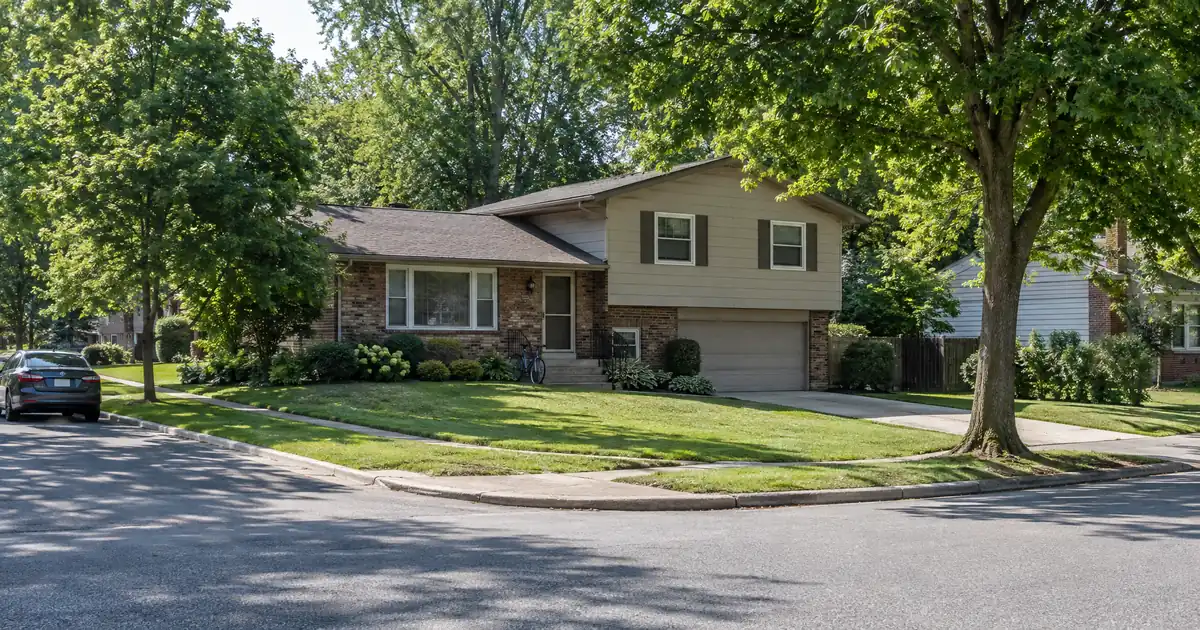
The Quick Read: A self-employed owner with a paid-off home can borrow against it by qualifying on documented bank deposits instead of tax-return income. The new loan becomes a first lien, and the whole amount counts as cash-out because no old mortgage is being paid off. Leverage depends on occupancy, and the lender reviews the file individually, subject to lender guidelines.
- Documentation: 12 months of business or personal bank statements, averaged into qualifying income.
- Primary residence cash-out: up to 80% LTV with a fixed expense ratio, or 75% with an accountant-prepared ratio.
- Second home cash-out: up to 75% LTV. Investment property cash-out tops out around 75% LTV.
- Loan size and reserves: roughly $125,000 to $3,500,000, with reserves commonly around 6 months of the housing payment.
- Title: the lender must confirm no liens, so “free and clear” gets proven, not assumed.
Owning a home outright feels like the easy case. In one way it is, because there is no payoff to wrap into the loan. In another way it is not, because the lender has to prove the home really is free of liens and that your deposits really support a new payment. This guide walks through how that works, step by step. For the bigger picture on Lendmire’s investor lending, see the complete DSCR loans guide.
Key Terms Defined
Free and clear: you own the property with no mortgage, HELOC, or other lien recorded against it.
Cash-out refinance: a new loan that pays you cash from the property’s equity. On a paid-off home, the entire loan is treated as cash-out.
Bank statement loan: a non-QM mortgage that is reviewed around deposits in your bank accounts rather than on tax returns or W-2s. Non-QM means the loan sits outside the standard qualified-mortgage box.
Expense factor: the percentage of business deposits a lender assumes goes to running costs. Lenders set their own, so no single formula applies.
LTV (loan-to-value): the loan amount divided by the property’s appraised value.
Seasoning: how long you have owned the property before borrowing against it.
What Does a Lender Mean by “Free and Clear”?
It means a clean title with no recorded liens. That sounds simple, yet this is where files stall most often.
The lender orders a title search. It confirms who owns the home and how the name is vested. It also looks for anything hiding in the record: an old second mortgage never released, a tax lien, a contractor’s lien, or a HELOC that was paid down but never formally closed.
A HELOC (home equity line of credit) that shows a zero balance can still be an open lien. If you have one, get it closed and recorded as released before you apply. The new loan must sit in first position, so every old claim has to be cleared.
Because there is no payoff, the whole new loan, less closing costs, comes to you. That is why lenders call it a cash-out even though you owe nothing today.
How Does Bank Statement Underwriting Treat a Paid-Off Home?
The lender reviews your file on your deposits, then tests whether that income supports a new payment on a home that had none. Here is the sequence on a typical file.
1. Choose the statement set. The programs we place files with use 12 months of statements. You can use business or personal accounts, depending on how your income flows.
2. Scrub the deposits. The underwriter pulls out items that are not income: transfers between your own accounts, loan proceeds, refunds, and one-time windfalls. Scotsman Guide notes that non-QM underwriters go through borrower bank statements, which makes this a hands-on, document-heavy review.
3. Average and adjust. Eligible deposits are averaged across the statement window. For business accounts, a lender applies an expense factor, or uses an expense ratio prepared by your accountant. Factors vary by lender, so never count on a specific number until a lender confirms it.
4. Test the new payment. The result is your qualifying income. The lender compares it with the new housing payment and your other monthly debts, a debt-to-income style test. This is the key difference from a DSCR loan, which reads the property’s rent rather than your personal income.
5. Appraise the home. Value sets the maximum loan. An appraisal drives the leverage cap for your occupancy type.
6. Verify reserves. Most programs ask for around 6 months of the housing payment in liquid reserves. Some lenders in the network will count cash-out proceeds toward that, but it varies by program.
Underwriters read this loan as fully documented. A bank statement loan is reviewed on documented income under the applicable program, subject to lender guidelines. It is not a low-paperwork shortcut.
What Leverage Can You Expect on Each Property Type?
Occupancy sets the ceiling. The 90% figure some borrowers have heard applies to purchases and rate-term refinances on a primary residence, not to cash-out.
| Property use | Cash-out ceiling | Notes |
|---|---|---|
| Primary residence | Up to 80% LTV | Fixed expense ratio; 75% with accountant-prepared ratio |
| Second home | Up to 75% LTV | Varies by loan size and credit |
| Investment property | Around 75% LTV | Business-purpose file |
Stronger credit and moderate loan size push you toward the top of each range. Larger loans and thinner credit pull you toward the bottom. These are typical network ranges, not promises.
There is also an asset-depletion alternative. If your liquid assets are large but your deposits are uneven, some programs review your file against those assets and allow up to 80% LTV on a primary residence. It can fit retirees or owners between businesses. Final terms depend on lender guidelines, property type, leverage, and the borrower’s complete credit picture.
Loan sizes generally run from about $125,000 to $3,500,000. Below the minimum, a home equity loan or HELOC from a depository lender often makes more sense.
Does Occupancy Change the Paperwork?
Yes, and it matters more than most borrowers expect. An owner-occupied home, whether a primary residence or second home, is a consumer mortgage. It carries the standard consumer disclosures, and the lender must verify that you can repay using reliable third-party records. Bank statements count as that kind of record, so a statement-based loan on your own home still fits the framework. It is simply not a qualified mortgage.
A rental you do not live in is different. Under Regulation Z’s business-purpose rule, credit to acquire, improve, or maintain non-owner-occupied rental property is treated as business-purpose. That deeming does not apply if you expect to occupy the property for more than 14 days in the coming year. Business-purpose files are exempt from the consumer disclosure regime, including TRID.
Purpose matters too. The exemption looks at why you are borrowing, not just what the property is. A paid-off home where the proceeds fund personal spending is consumer-purpose. Proceeds used to buy more rentals can be business-purpose. The lender decides and documents it, so be ready to state your plan plainly. The official text sits in 12 CFR 1026.3 on eCFR.
Consumer-purpose lending runs through our 16-state consumer footprint, so availability depends on where the property sits.
What Does a Worked Example Look Like?
Run the numbers on a paid-off primary residence valued at $600,000. You are self-employed, with 12 months of business statements.
- Leverage: at 80% LTV with a fixed expense ratio, the lender caps the new loan at 80% of appraised value. With an accountant-prepared ratio, the cap is 75%.
- Net proceeds: the loan, less closing costs, is your cash. There is no payoff to subtract.
- Income test: the underwriter averages your eligible deposits, applies the expense factor, and checks that the result supports the new payment alongside your other debts.
- Reserves: about 6 months of the housing payment must sit in liquid accounts. These specifics are subject to lender guidelines and a full review of property, leverage, and credit.
Notice what changes if the same home is a rental you own through personal name or entity. The ceiling drops to around 75% LTV, and a DSCR structure may fit better, since the property’s rent can carry the file. Entity vesting is program-specific, so confirm it before assuming it works. Terms depend on the lender’s guidelines, the property type, the leverage, and a full review of the credit profile.
The figures above are modeled assumptions, not a quote. Your appraisal and underwriting decide the real numbers.
Where Does the General Rule Break?
Four edge cases trip up paid-off homes more than any others.
A recent cash purchase. If you bought the home with cash months ago and want that money back, seasoning rules apply. Some lenders allow a delayed-financing approach tied to the documented purchase price. Treat that as anecdotal. Program terms vary, and your file will show what applies.
A long-held home. If you have owned it for years with no recent purchase in the record, seasoning rarely comes up. The questions shift to title, value, and income.
An inherited home. Ownership came through an estate, not a purchase. Lenders usually want the title properly transferred into your name first. Requirements differ by program.
Business under two years, partial ownership, or commingled accounts. Each can reduce usable income or force a different statement type. These are all program-specific. If your accounts mix personal and business deposits, separate them well before applying.
One more point. FHA does allow free-and-clear cash-out for owner-occupants. That is a government-backed path and a different product from this article’s subject. It can work for some borrowers with conventional income, but it does not use bank statements.
What Should You Prepare Before Applying?
A clean file moves through review with fewer questions. Gather these first.
- Twelve months of statements for every account you plan to use, with all pages included.
- A written explanation for any large or unusual deposit.
- Proof of how the business is owned and for how long.
- A plan for the cash and a clear statement of the loan’s purpose.
- Evidence the property is lien-free: recent tax bills, any released-lien paperwork, and closed-HELOC confirmation.
- Liquid reserves in a seasoned account, not freshly moved funds.
One practitioner-level habit helps most. Across our wholesale network, deposit scrubs are where income shrinks. Borrowers who shuffle money between accounts right before applying watch their qualifying income fall, because transfers get stripped out. Keep your accounts steady and your records tidy.
Is This the Right Move for You?
Sometimes. Pulling cash from a paid-off home swaps a payment-free asset for one with a new monthly obligation. Test that payment against your own cash flow, not only the lender’s ratio.
Bank statement documentation fits when tax returns understate real income because of write-offs. It is a poor fit when your deposits are irregular, your accounts are tangled, or you cannot say what the cash will do for you.
If the property is a rental, compare a DSCR cash-out too. It is reviewed on the property’s rent covering the payment, subject to lender guidelines, and ignores your personal deposits.
Not sure which fits? A broker shops several wholesale lenders and matches your deposits, property, credit, and leverage to a program. The best program for your situation depends on those inputs, and every file is underwritten individually.
Frequently Asked Questions
Does a free-and-clear home count as a cash-out refinance?
Yes. With no mortgage to pay off, the new loan is entirely cash-out. That is why cash-out leverage ceilings apply instead of the higher purchase or rate-term limits.
How many months of bank statements do I need?
Most programs we place files with use 12 months, from business or personal accounts. Some lenders ask for more depending on your history. Eligible deposits are averaged, and business accounts get an expense factor or an accountant-prepared ratio.
Can I use this on a rental property?
Yes, on investment property the ceiling is around 75% LTV, and it is treated as business-purpose when non-owner-occupied. A DSCR loan is often the better comparison since it reads the rent, not your deposits. Qualification stays subject to lender guidelines.
What if I just bought the home with cash?
Seasoning questions come up. Some programs allow recovering documented purchase funds, while others want a waiting period. Proceeds are usually tied to the documented purchase price, so keep your closing records handy.
Will reserves be required?
Yes, typically around 6 months of the housing payment. Some lenders count cash-out proceeds toward reserves, though that varies by program.
If you are self-employed and want to see how the numbers work, Lendmire can help you compare bank statement loan options based on your deposits, the property, credit profile, leverage, and your goals. A mortgage broker like Lendmire arranges financing through select lenders and does not make lending decisions itself.
About Lendmire
Lendmire (NMLS# 2371349) is a mortgage broker that arranges financing through select lenders in its wholesale network. Its DSCR investor programs cover 41 markets, including Washington, D.C., and its consumer bank statement lane covers 16 states. Loan approval, terms, and eligibility remain subject to lender guidelines, and nothing here is a commitment to lend. Scotsman Guide named Lendmire a Top Mortgage Workplace in both 2025 and 2026.
For the mechanics of pulling equity out of a rental property, see Lendmire’s guide to cash-out refinance on an investment property.
Get Started
Ready to find the right loan for you?
See your offer in seconds. No credit pull, no obligation.
Informational only. Not a Loan Estimate, approval, or commitment to lend. Program availability and eligibility are subject to lender guidelines, credit approval, property review, and underwriting.
References
This article is part of Lendmire’s bank statement loan program — full qualification details, guidelines, and scenarios live on the program page.
Related reading: Best Bank Statement HELOC Program for a Single-Family Home · Best Bank Statement HELOC Program to Purchase Investment Property in Cash · Best Bank Statement HELOC Program on an Inherited Home
Brandon Miller
Founder & CEO, Mortgage Loan Originator, Lendmire LLC
- Mortgage Loan Originator · NMLS# 1129696 · Verify on NMLS Consumer Access
- North Carolina Real Estate Broker · License# 343312 · Verify on NCREC
- North Carolina Insurance Producer · License# 19053198 · Property, Casualty, Life, Health · Verify on NAIC SBS
- Lendmire LLC · Firm NMLS# 2371349 · Verify firm licensure
Compliance and disclosures. Lendmire (NMLS# 2371349) is a licensed mortgage broker and is not a direct lender, depository institution, financial advisor, or tax professional. Content in this article is general market analysis and educational information — not financial, legal, or tax advice for any specific situation. Lendmire does not guarantee loan approval; every transaction is subject to underwriting by the funding lender. Mortgage pricing and loan program guidelines are subject to change at any time without notice and vary by borrower characteristics, property type, and state regulations. Lendmire complies with Equal Housing Opportunity. Licensure verification: NMLS Consumer Access.