
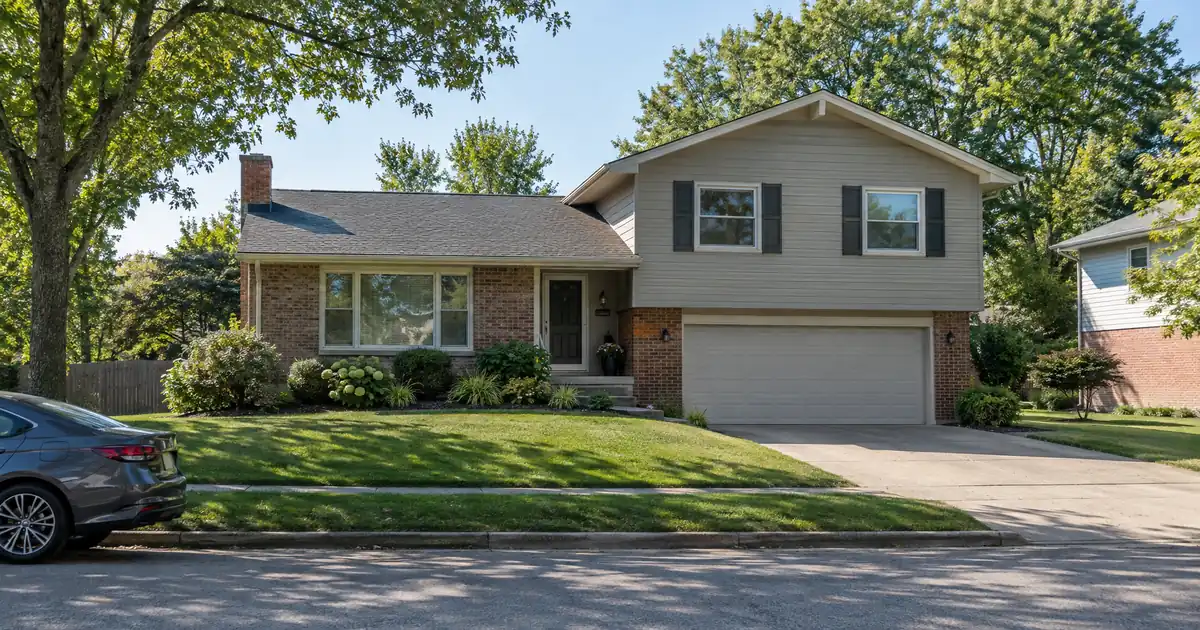
The Quick Read: A bank statement cash-out releases more on a primary residence than on an investment property because the leverage ceiling is higher, and an income cap built from deposits can hold either one below its equity limit.
- Owner-occupied cash-out (primary residence or second home) tops out around 80% LTV, or 75% LTV with an accountant-prepared expense ratio, through select lenders in Lendmire’s wholesale network.
- Investment-property cash-out tops out around 75% LTV, subject to lender guidelines.
- The 90% LTV figure applies to primary-residence purchase and rate-term files, not to cash-out.
- The smaller of the equity limit and the income limit sets the check.
- Payoff, closing costs and reserves come out of the gross release before you see cash.
The honest answer on who each option is for: the primary-residence path suits a self-employed owner who lives in the home and wants the most equity out. The investment path suits an owner of a rental who wants cash and has strong personal deposits. A pure rental with strong rent may fit a different loan, covered below.
DSCR Cash-Out Calculator
Run the cash-out numbers in your market
Rate source: Freddie Mac 30-yr average via FRED® — Federal Reserve Bank of St. Louis · effective Oct 8, 2026
Prefilled with starting assumptions — enter your property’s value, balance, taxes, and insurance for a more accurate picture.
Program parameters update from Lendmire’s centralized guideline source. Taxes and insurance are editable estimates.
As of Oct 8, 2026 · General Freddie Mac market benchmark, not a Lendmire loan offer. Property value, balance, taxes, and insurance are editable estimates. Maximum loan-to-value varies by lender, program, property type, and seasoning. Not a Loan Estimate, approval, or commitment to lend. Program availability and eligibility are subject to lender guidelines, credit approval, property review, and underwriting.
Key Terms Defined
Cash-out refinance: A new, larger loan that pays off the old one and hands you the difference in cash.
LTV (loan-to-value): The new loan balance divided by the appraised value of the property.
Expense factor: The share of business deposits a lender removes to estimate real income, since deposits are not profit.
Reserves: Liquid funds, commonly around 6 months of the housing payment, that you hold after closing.
Occupancy: How the property is used: primary residence, second home, or non-owner-occupied rental.
How the Release Is Calculated
Cash released equals the new loan, minus the payoff of existing liens, minus closing costs. Two limits cap the new loan. The first is equity: appraised value times the program’s maximum LTV. The second is income: qualifying income from your bank statements has to support the new debt. The lower of the two wins.
Equity is not cash. A borrower with a lot of equity can still net a small check if the income test binds first or if payoff and costs eat the gap.
On the income side, the file documents 12 months of business or personal bank statements. Qualifying income comes from deposit averages after the lender applies an expense factor. Factors differ by lender, so no one formula applies across the network. Transfers between your own accounts, loan proceeds and refunds come out. Only repeatable, earned deposits count. Loan sizes run roughly $125,000 to $3,500,000.
Side-by-Side
| Factor | Primary / Second Home | Investment Property |
|---|---|---|
| Cash-out LTV ceiling | Up to 80% (75% with accountant-prepared ratio) | Up to about 75% |
| Review basis | Documented income, 12 months of statements | Documented income, 12 months of statements |
| Documentation | Business or personal statements, expense factor | Same, plus lease or rent evidence on file |
| Appraisal | Standard residential appraisal | Appraisal that may add a rent schedule |
| Disclosure regime | Consumer mortgage: the federal consumer-mortgage disclosure regime applies | Business-purpose, TRID-exempt |
| Entity vesting | Generally an individual borrower | Program-dependent; varies by lender |
| Reserves | Commonly around 6 months | Commonly around 6 months |
| Timeline | Varies by file | Varies by file |
The table covers the Lendmire-network figures for the bank statement lane. Other options, such as a DSCR loan on a rental, follow different published industry norms.
Worked Example: Same Home, Two Occupancies
Say a self-employed owner holds a property with a $1,000,000 appraised value and an existing balance equal to 50% of value. These are modeled assumptions, not market data.
Run it as a primary residence at 80% LTV: the equity limit allows a new loan of 80% of value. After paying off the 50% balance, the gross release is 30% of value, before closing costs. Final terms depend on the lender’s guidelines, the property type, and the borrower’s complete credit picture.
Run it as an investment property at 75% LTV: the new loan is 75% of value. After the same payoff, the gross release is 25% of value. Each figure is subject to lender guidelines and a complete review of property type, leverage, and credit.
Same property, same balance, five points of leverage apart. That gap is the difference occupancy makes. On a primary with an accountant-prepared expense ratio, the ceiling is 75%, which lines up with the investment figure.
Now the second case, where income binds. Say the same borrower’s deposits, after the expense factor, support only a smaller loan than the 80% equity limit allows. The income cap wins, and the release shrinks no matter how much equity sits in the house. On a rental, this tends to show up when the owner runs heavy write-offs or when deposits are lumpy.
Two Limits, One Check
| Scenario | Which limit binds | What to do |
|---|---|---|
| High equity, strong deposits | Equity (LTV) | Expect the ceiling to set the check |
| High equity, thin deposits | Income | Add months of clean statements or use an accountant-prepared ratio |
| Low equity, strong deposits | Equity (LTV) | Cash may be small after payoff and costs |
| Rental with strong rent, thin personal income | Income | Consider a rent-qualified loan instead |
What Shrinks Your Number
Closing costs and prepaids come off the gross release. Reserves have to be documented, and lenders vary on whether cash-out proceeds can count toward them, so ask before assuming. Unidentified deposits get stripped from the income calculation. A heavier expense factor lowers qualifying income. A recent purchase can run into seasoning rules, which require a minimum ownership period before cash-out is available, documented by the settlement statement.
One more trap: borrowers quote the 90% figure they saw online. That ceiling belongs to primary-residence purchase and rate-term files. On a cash-out, the ceiling is lower. Files built on the wrong number get reworked.
When Primary-Residence Cash-Out Is the Better Fit
It fits when you live in the home and want the highest leverage the bank statement lane offers. It also fits when your documented deposits are strong and the equity is the limiting factor. If you have an accountant who can prepare an expense ratio, the 75% path may help the income side even though the ceiling is lower than 80%.
Expect consumer-mortgage treatment. Because the property is owner-occupied, it is a consumer-purpose loan. Under the CFPB’s Regulation Z commentary, an owner who expects to occupy a property more than 14 days in the coming year falls outside the business-purpose rule. A vacation home the owner uses can land on the consumer side even if it is rented part of the year. Ability-to-repay review applies, so lenders look hard at deposit quality.
When Investment Cash-Out Is the Better Fit
It fits when the property is a true non-owner-occupied rental and your personal deposits are the stronger story. Heavy write-offs on traditional personal-income documentation can hide income, and statements can show it. Leverage is lower, around 75% LTV on cash-out, so the check is smaller on the same equity. Leverage, reserves, and pricing vary by lender and program; the final terms follow the full file review.
Occupancy also changes the paperwork. Credit to acquire, improve or maintain non-owner-occupied rental property is treated as business-purpose, per the CFPB’s Regulation Z commentary, and the eCFR text of 12 CFR 1026.3 exempts credit extended primarily for business purposes. Purpose still gets reviewed case by case. A cash-out on a rental used to pay personal expenses can be a closer call, so state the use of funds plainly.
When the rental is the whole story, compare it against a DSCR loan, which qualifies primarily on property-level rental income covering the payment, subject to lender guidelines. A bigger cash-out loan lowers coverage, so coverage can bind before LTV does. If your rent is strong and your personal income is thin, the DSCR lane is often the cleaner fit. Lendmire’s complete DSCR loans guide walks through that comparison. For the broader choice of cash-out tools on owner-occupied collateral, see Lendmire’s piece How Much a Bank Statement Cash-Out Refinance Releases vs a HELOC.
Edge Cases That Move the Number
Short-term rentals and owner use. A property you use yourself more than 14 days can fail the business-purpose test. Short-term rental rules can vary by city, county, HOA, and property type, so investors should confirm local rules before relying on projected rental income.
Entity vesting. Bank statement income is documented for the individual or business owner. Whether an LLC can hold title on a bank statement file depends on the program, subject to lender program eligibility. Settle vesting before the appraisal is ordered.
Converting a rental to primary. Lenders want evidence you actually occupy the home. Misstating occupancy is a file killer. If the plan is to move in, the primary-residence rules apply from the start.
Asset depletion. Borrowers with liquid assets and little documented income can qualify from assets on a primary residence, up to about 80% LTV on select programs. It is an alternative to statements, not an add-on. Terms vary by lender guidelines, property type, leverage, credit profile, and full file review.
Non-QM is not no-doc. Lenders still verify ability to repay on consumer-purpose loans. Documented income under the applicable program, subject to lender guidelines, is the standard.
Tax treatment can depend on how the funds are used and how the property is held; investors should keep clear records and speak with a qualified tax professional before relying on any deduction.
What to Gather Before Asking for a Quote
- Twelve months of business or personal bank statements, with large or unusual deposits explained in writing.
- A current mortgage payoff statement.
- A realistic value estimate for the property.
- Proof of reserves, commonly around 6 months of the housing payment.
- For a rental, a lease or rent schedule and the vesting plan.
- For owner-occupied files, an accountant-prepared expense ratio if you want the 75% path.
Lendmire’s piece How Much a Bank Statement Cash-Out Releases on a High-Equity Home covers the equity-heavy case in more depth.
The Verdict
Occupancy sets the ceiling, and income can lower it. A primary residence gets the higher cash-out limit, an investment property sits lower, and either can be held back by deposits. Pick the lane by how the property is used and which limit binds on your file, not by the biggest number you saw online.
If you are self-employed and want to see how the numbers work, Lendmire can help you compare bank statement loan options based on your deposits, the property, credit profile, leverage, and your goals.
Frequently Asked Questions
Can I take out all my equity?
No. The equity limit stops the new loan at 80% LTV on an owner-occupied cash-out, or about 75% on an investment property. Payoff, closing costs and reserves come out of what is left, so net cash is lower than the equity you hold. Exact terms depend on the lender’s guidelines, property type, leverage, and a full review of the borrower’s file.
Is the limit the same on a rental?
No. A rental generally sits lower, around 75% LTV on cash-out, against up to 80% for a primary residence or second home. Exact figures depend on loan size, credit and the lender’s program sheet.
Why doesn’t the 90% number apply to my cash-out?
Because 90% describes primary-residence purchase and rate-term leverage through select lenders. Cash-out carries a lower ceiling. Quoting the purchase figure on a cash-out file leads to a reworked file.
Can cash-out proceeds count toward reserves?
It depends on the lender. Commonly, files need around 6 months of the housing payment documented, and some programs limit how much of that can come from the proceeds. Ask before relying on it.
Does an LLC change eligibility?
It can, because entity vesting depends on the program. Rental owners who want LLC title should raise it at the start, subject to program terms.
Investors weighing their equity options can start with Lendmire’s guide to cash-out refinance on an investment property.
About Lendmire
Lendmire — NMLS# 2371349 — is a mortgage brokerage specializing in DSCR investor loans, helping arrange financing across 41 markets, including Washington, D.C., through wholesale and investor-lending channels. The model centers on property-level rental income reviewed by the lender rather than W-2 documentation, subject to lender guidelines, suiting entity-owned and multi-property investors. Lendmire holds Scotsman Guide Top Mortgage Workplace recognition for 2025 and 2026.
Get Started
Ready to find the right loan for you?
In about 30 seconds you can review financing options available for your home or investment property. No commitment required.
Informational only. Not a Loan Estimate, approval, or commitment to lend. Program availability and eligibility are subject to lender guidelines, credit approval, property review, and underwriting.
References
1. CFPB, Regulation Z § 1026.3 and commentary
This article is part of Lendmire’s bank statement loan program — full qualification details, guidelines, and scenarios live on the program page.
Related reading: Super Jumbo Bank Statement Cash-Out Rules on Acreage Properties · Does Texas Restrict Bank Statement HELOCs on Primary Homes? · Bank Statement HELOC vs Cash-Out Refinance for a Lock-In Owner
Brandon Miller
Founder & CEO, Mortgage Loan Originator, Lendmire LLC
- Mortgage Loan Originator · NMLS# 1129696 · Verify on NMLS Consumer Access
- North Carolina Real Estate Broker · License# 343312 · Verify on NCREC
- North Carolina Insurance Producer · License# 19053198 · Property, Casualty, Life, Health · Verify on NAIC SBS
- Lendmire LLC · Firm NMLS# 2371349 · Verify firm licensure
Disclosures. The information presented in this article is general market commentary, not financial, legal, or tax advice. Lendmire is a mortgage brokerage (NMLS# 2371349) — not a direct lender or depository institution — and loan placement is subject to lender underwriting. Nothing in this content represents a commitment to lend. Loan terms, pricing, and program availability vary based on borrower qualifications, property characteristics, and state of subject property, and are subject to change at any time. Lendmire complies with Equal Housing Opportunity requirements. Consumer access: nmlsconsumeraccess.org.