
The Quick Read: You can apply for a home equity line of credit (HELOC) on a duplex you live in and use eligible bank deposits to document your income. The lender must accept both the two-unit property and the type of account you use. Renting the other unit does not, by itself, make the duplex an investment property.
- Ask about owner-occupied duplexes and business deposits together. A lender may accept one but not the other.
- Your existing mortgage can stay in place. Its balance limits how much equity you can borrow, and its payment still counts against your income.
- Rent from the other unit may help. The lender needs to identify it and count it once, not as both a bank deposit and separate lease income.
- Both wholesale programs discussed here require you to borrow at least 75% of the approved line at opening. Neither is a good match if you want the entire line untouched for emergencies.
Key Terms Defined
Home equity line of credit: A HELOC lets you borrow repeatedly against your home during an agreed borrowing period, up to a credit limit.
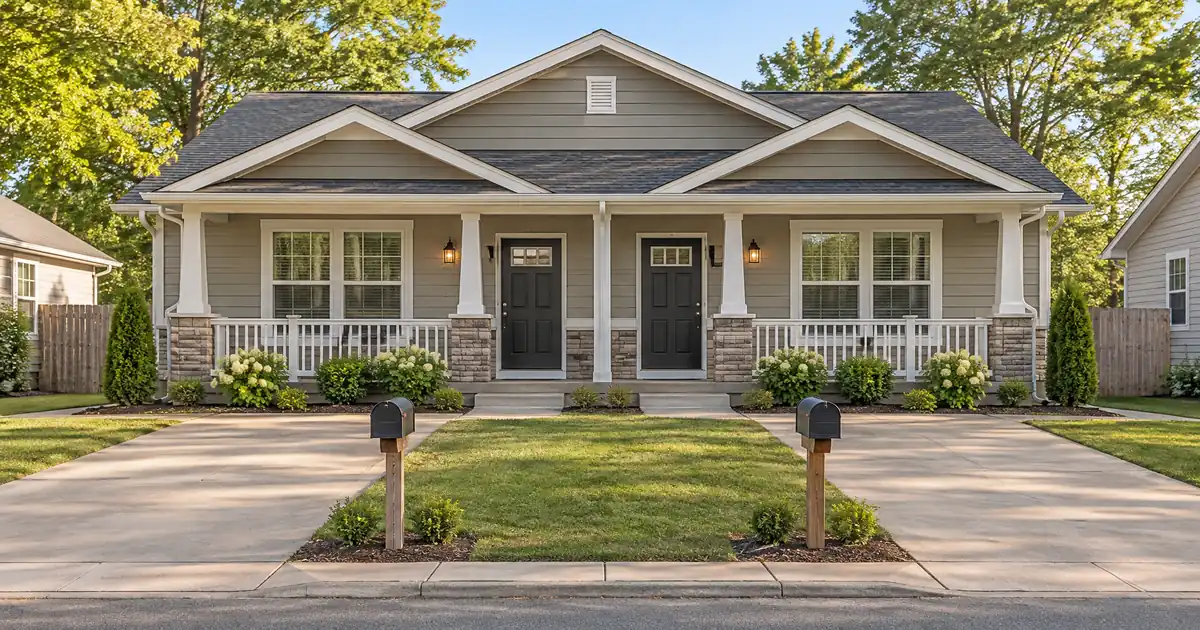
Owner-occupied duplex: You own a two-unit home and live in one of its units as your main residence.
Combined loan-to-value (CLTV): For this application, CLTV is your existing mortgage balance plus the proposed credit limit, divided by the lender’s accepted property value.
Debt-to-income ratio (DTI): DTI measures how much of your verified monthly income goes toward the debt obligations the lender counts.
Second lien: With a second lien, the HELOC lender has a claim against the property behind the existing mortgage lender’s claim.
How large a line the equity supports.
An equity line is sized by combined loan-to-value, occupancy, and credit — not by rental coverage. Switch the occupancy or the credit band and the ceiling moves with it.
Investment-property lines require a 700 minimum credit score; second-home lines start at a 640 minimum and primary-residence lines at 600, and the combined-LTV ceiling steps down as the credit band drops on primary-residence and second-home lines and holds on investment-property lines; the line cap steps down on primary-residence lines and holds at every tier on investment-property and second-home lines.
A debt-to-income ratio above 45% requires 680+ credit. On the longer-runway program, profiles under 640 are limited to single-family homes. At least 75% of the approved line is drawn at closing. Ceilings, floors, and caps update from Lendmire’s centralized guideline source.
Rate assumption as of November 23, 2026.
Line estimate
Illustrative estimate only — not a quote, Loan Estimate, approval, or commitment to lend. The rate is an editable assumption; equity-line pricing is variable through both the draw and repayment periods and never converts to fixed. Occupancy and credit drive the ceiling together: an investment property tops out at 70% combined LTV (minimum credit 700, line cap $500,000); a second home tops out at 90% combined LTV (minimum credit 640, line cap $500,000), with the ceiling stepping down as the credit band drops (the cap holds at every tier); a primary residence tops out at 90% combined LTV (minimum credit 600), and its $750,000 maximum line is available only at 75% combined LTV or below with a 700-or-better credit profile (720 on the longer-runway program) and a full appraisal. Lines above $500,000 require a full appraisal. Credit, debt-to-income, property type, and full underwriting review all affect the final line.
Estimate only, not a loan offer or a commitment to lend. The rate is variable and can go up. The payment shown is interest only. Full calculator disclaimer.
Which lenders consider a duplex you live in?
Look for a program that accepts owner-occupied two-unit homes and can verify income from your accounts. A bank or credit union that offers home equity lines on single-family homes may exclude duplexes. Another may accept the building but require income records that don’t reflect how you earn a living.
A retail bank or credit union can tell you whether your file fits its own program. A portfolio lender keeps loans on its own books, but that label tells you nothing about its deposit rules. A mortgage broker can compare multiple wholesale programs using the same facts about your property, income and credit.
Lendmire, LLC (NMLS# 2371349) is a mortgage broker that arranges these home equity lines through select wholesale lenders in its 16 full-service states. Its separate rental-property financing programs cover 41 markets, including Washington, D.C. That wider footprint does not apply to these HELOCs.
Two structures matter for an owner who wants a line behind an existing mortgage. The higher-leverage program pairs a three-year draw period with 17 years of repayment. The longer-runway program pairs a five-year draw period with 25 years of repayment. State-specific terms can shorten the repayment period.
Both programs accept eligible two- to four-unit homes. That puts a duplex, triplex and fourplex in the same unit-count category, but not necessarily on the same terms as a single-family home. For example, the longer-runway program requires at least a 640 credit score on a duplex. Its lower credit tiers are for single-family homes only. Exact terms depend on the lender’s guidelines, property type, leverage, and a full review of the borrower’s file.
How does a lender turn bank deposits into qualifying income?
The lender looks for money you earned, not every dollar that entered your accounts. Both programs start with electronic verification, using a payroll match or an account connection you authorize. For a self-employed borrower, the lender examines deposit history and income trends. It does not simply total a stack of printed statements.
Picture a duplex owner who runs a design business. Clients pay the business account. The owner transfers money into personal checking, where the tenant also deposits rent. Here’s how to read that file:
1. Identify the business receipts. Client payments are evidence of revenue. The lender averages eligible receipts over the period it reviews and accounts for business expenses. Gross sales are not the amount available to pay household debts.
2. Trace transfers between accounts. Moving earnings from business checking to personal checking does not create a second source of income. Showing both sides helps the reviewer distinguish a transfer from a new customer payment.
3. Match rent to the lease. Identify the tenant deposits and the unit they cover. The longer-runway program can consider rental income documented by a lease or tax return. Don’t assume it will count the full lease amount on top of the deposit average.
4. Check the result against your debts. The useful figure is the monthly income the lender accepts after that review. A large ending balance might mean you have savings. It doesn’t establish recurring earnings.
One credit-score distinction changes how a broker would place this file. At exactly 680, the longer-runway program can use business-account deposits and has a tax-return fallback if the electronic connection fails. The higher-leverage program requires a score above 680 for business deposits and requires a successful electronic connection for that income. Below 680, the relevant alternatives are personal deposits, payroll or other documented income.
That distinction matters more than a brochure’s maximum credit limit. A duplex owner with a 680 score might meet the higher-leverage program’s property and equity tests. If that owner needs business receipts to establish income, the longer-runway program is the one to examine.
How much room does your first mortgage leave?
The lender runs two separate tests. Your mortgage balance affects how much room the property has for a line. Your mortgage obligation affects how much new debt your income can support. A duplex with substantial equity can pass the first test and still come up short on the second.
For the equity test, multiply the accepted duplex value by the applicable CLTV ceiling, then subtract the existing mortgage balance. The result is room for the line, not an offer. Use the proposed full credit limit, not just the amount you intend to take out.
For primary-residence lines up to $500,000, the higher-leverage program can reach 90% CLTV only with a 720-or-better credit profile. State rules can lower that ceiling. Lines above $500,000, up to $750,000, are primary-residence only and require a score of 700 or better (720 on the longer-runway program). Those larger primary-residence lines cap at 75% CLTV and require a full appraisal.
For the income test, the lender considers your existing debts plus the interest-only obligation on the maximum draw. Under these guidelines, DTI can reach 50%, but a ratio above 45% requires a credit score of at least 680. A smaller requested line can help both tests. Planning to use less of a large line does not have the same effect.
What happens when you start using the line?
You borrow during the draw period. Once that period ends, you cannot take new draws and must repay the outstanding balance, as the Consumer Financial Protection Bureau explains. For these two programs, the important choices are how much you must borrow at opening and when you start paying down the amount borrowed.
| Owner-occupied second-lien feature | Higher-leverage program | Longer-runway program |
|---|---|---|
| Usual draw period | 3 years | 5 years |
| Usual repayment period | 17 years | 25 years |
Interest-only means the required draw-period payment covers interest without reducing principal, the amount you borrowed. Repayment then becomes fully amortizing: scheduled payments cover interest and pay off principal over the remaining term. Borrowing costs can change during both periods. They do not become fixed when repayment starts.
Suppose you need funds for work on the vacant unit and already know what the project requires. The initial draw may suit that expense. If you only want a backup for a future roof repair, the same rule has a different consequence: you start carrying debt before you need the money.
The duplex secures that debt, including the unit you call home. Failure to repay can put the whole property at risk. The Consumer Financial Protection Bureau’s HELOC brochure also explains that a significant decline in home value can lead a lender to reduce or freeze a line. Unused borrowing capacity is not the same as cash in a savings account.
What should you gather before a lender reviews the duplex?
Start with records that answer four questions: who owns the building, which unit you occupy, what you owe and which deposits are yours to spend. That gives the broker enough information to identify a property or documentation mismatch before comparing credit limits.
- Ownership and occupancy: Have your deed or trust documents, identification and an accurate statement of which unit is your principal residence. If requested, an insurance declarations page showing the occupancy can help document it.
- Existing financing: Gather your current mortgage statement and details of any other debt secured by the duplex. Include the balance and terms, not just the amount you pay.
- Income and rent: Identify the accounts you can connect. Have statements available to explain unusual deposits, along with the signed lease and matching rent receipts. If the unit is empty, describe it as vacant.
- Value: Lines at or below $500,000 ordinarily use an automated property valuation. A higher CLTV can require a second valuation, so don’t assume an online home-value estimate settles the equity question.
Check the deed before spending time organizing deposits. These programs accept individual ownership or an eligible revocable living trust, a trust its creator can change during life. Neither accepts title held by a limited liability company (LLC). Living there does not override that restriction.
What changes if you move out or buy a separate rental?
If you move out and rent both units, the duplex is no longer your primary residence. For an existing HELOC, check the occupancy terms before the move. For a new application, disclose the actual use. Claiming to live there to obtain owner-occupied terms misrepresents a fact the lender relies on.
On a new investment-property HELOC, only the longer-runway program applies. Investment-property lines have a 700 credit floor, a 70% CLTV ceiling and a $500,000 maximum line. A higher score does not raise that investment-property ceiling.
A separate rental purchase poses a different question: should you borrow against your home at all? A debt service coverage ratio (DSCR) compares the rental property’s income with its housing obligation. A DSCR loan is reviewed primarily on property-level rental income covering the payment, subject to lender guidelines. It is for a non-owner-occupied investment property, not the duplex you still live in. The complete guide to DSCR loans for rental properties explains that financing path.
If you want one lump sum from your current home, a cash-out refinance replaces the existing mortgage with a larger loan and gives you part of the difference in cash. A HELOC behind the mortgage leaves that first loan intact. The practical comparison is whether keeping its terms is worth carrying a separate debt tied to your home.
Frequently Asked Questions
Can you apply while the other unit is vacant?
Yes. Vacancy changes the rental income available to document; it does not turn an otherwise eligible duplex into an ineligible property type. Ask the lender to test your income without rent before relying on a future tenant.
Does the rent need to go into a separate account?
Not necessarily. What matters is whether the lender can identify the deposits, match them to the lease and avoid counting them twice. A separate account can simplify the records, but moving rent between accounts does not increase qualifying income.
Does a prior foreclosure rule out both programs?
No. The higher-leverage program excludes a prior foreclosure regardless of how long ago it occurred. The longer-runway program can consider the file once a foreclosure has seasoned for seven years.
What if the duplex was recently listed for sale?
A withdrawn listing can still affect eligibility. The higher-leverage program excludes properties currently for sale or listed within the past 60 days. The longer-runway program applies that restriction in certain states, so give the broker the property location and listing history.
What should you ask a broker to compare?
Ask for the income the lender can document, the line the duplex can support and the amount you must draw at opening. Those three answers tell you more than a maximum credit limit. Lendmire can compare the two structures at 828-256-2183 using your occupancy, credit profile, first-mortgage balance and account type.
The top bank statement HELOC providers on a duplex if you live in one unit can help you frame that conversation. Program terms can change, and a comparison is not a commitment to lend. Choose the line for the money you actually need, not simply for the equity the duplex has accumulated.
About Lendmire
Lendmire, LLC is a mortgage brokerage (NMLS# 2371349) arranging home equity lines of credit — primary-residence, second-home and investment-property lines — through a wholesale lending network in its 16 full-service states. Eligibility is determined by the lender on each file. Scotsman Guide named Lendmire a Top Mortgage Workplace in both 2025 and 2026.
Get Started
Ready to find the right loan for you?
See your offer in seconds. No credit pull, no obligation.
Informational only. Not a Loan Estimate, approval, or commitment to lend. Program availability and eligibility are subject to lender guidelines, credit approval, property review, and underwriting.
References
1. CFPB: What Is a Home Equity Line of Credit HELOC
2. Consumer Financial Protection Bureau: What you should know about home equity lines of credit
This article is part of Lendmire’s bank statement HELOC program — full qualification details, guidelines, and scenarios live on the program page.
Related reading: Best Bank Statement HELOC Program on a Duplex You Live In · Top Bank Statement HELOC Providers on a Duplex You Live In · Banks That Offer a Bank Statement HELOC on a Duplex You Live In · Bank Statement HELOC Requirements on a Duplex You Live In · How a Bank Statement HELOC Works on a Duplex You Live In
Brandon Miller
Founder & CEO, Mortgage Loan Originator, Lendmire, LLC
- Mortgage Loan Originator · NMLS# 1129696 · Verify on NMLS Consumer Access
- North Carolina Real Estate Broker · License# 343312 · Verify on NCREC
- North Carolina Insurance Producer · License# 19053198 · Property, Casualty, Life, Health · Verify on NAIC SBS
- Lendmire, LLC · Firm NMLS# 2371349 · Verify firm licensure
Important disclosures. Lendmire, LLC (NMLS# 2371349) is a licensed mortgage brokerage. Lendmire is not a direct lender, depository institution, or financial advisor. All loan inquiries are subject to lender underwriting; this article does not constitute a commitment to lend. Rates, terms, and program guidelines are subject to change without notice and vary by borrower profile, property type, and state. Information in this article is general in nature and is not financial, legal, or tax advice. Equal Housing Opportunity. NMLS Consumer Access: nmlsconsumeraccess.org.