
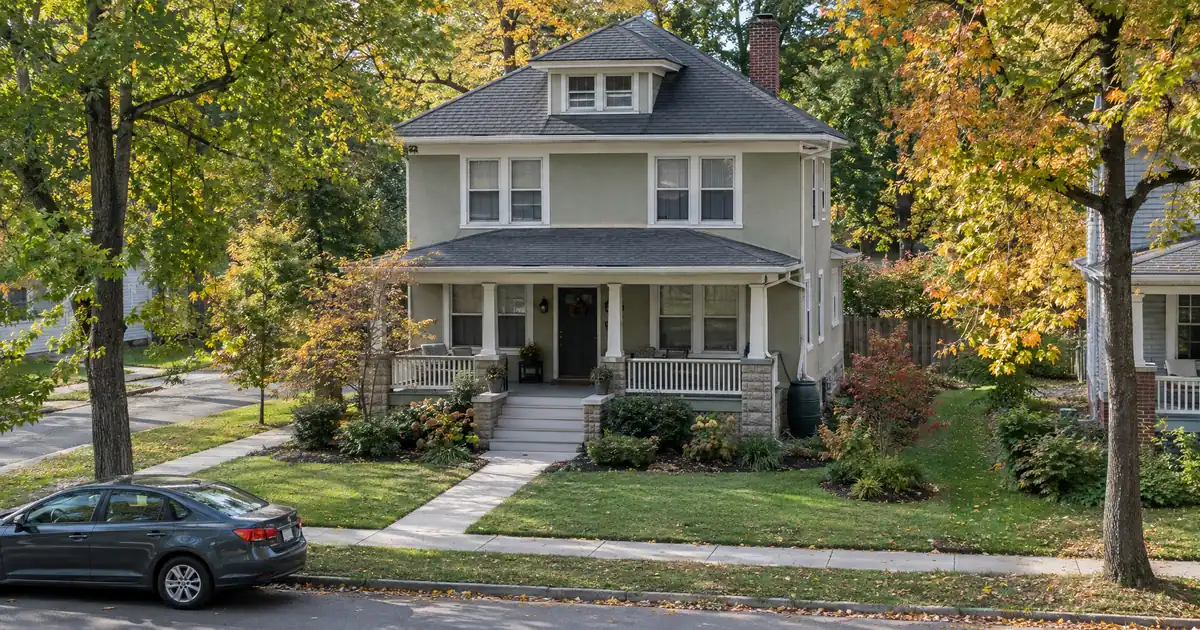
The Quick Read: A bank statement only changes how a self-employed borrower proves income, so it cannot solve the bigger problem during open probate, which is that the estate usually still holds title and a lender needs clean title before a line can be recorded against the house. In most cases the line becomes possible only after the deed records in the heir’s name. The wait is still useful, because it is when you build the income file.
- Title comes first. Bank statements answer how your income is counted. They do not answer who owns the house.
- Letters are not a deed. A court-issued letter proves an executor’s authority. It does not move ownership to you.
- Occupancy sets the ceiling. On an investment property, the network’s equity line tops out at 70% CLTV. Higher ceilings apply only to primary residences and second homes.
- Prepare now. Gather certified letters, a death certificate, payoff statements on any existing loan, and clean statements.
- A rental can have another route. Once you hold title, a DSCR cash-out refinance may fit better than a line.
What Does a Bank Statement HELOC Change?
A bank statement HELOC changes one thing: how the lender counts your income. Instead of tax returns, the lender reads a year or two of deposits and builds an income figure from them. Everything else on a standard line still applies. Credit, equity, existing debt, and the property all get reviewed.
How large a line the equity supports.
An equity line is sized by combined loan-to-value, occupancy, and credit — not by rental coverage. Switch the occupancy or the credit band and the ceiling moves with it.
Investment-property lines require a 700 minimum credit score; second-home lines start at a 640 minimum and primary-residence lines at 600, and the combined-LTV ceiling steps down as the credit band drops on primary-residence and second-home lines and holds on investment-property lines; the line cap steps down on primary-residence lines and holds at every tier on investment-property and second-home lines.
A debt-to-income ratio above 45% requires 680+ credit. Profiles under 640 are limited to single-family homes. At least 75% of the approved line is drawn at closing. Ceilings, floors, and caps update from Lendmire’s centralized guideline source.
Line estimate
Illustrative estimate only — not a quote, Loan Estimate, approval, or commitment to lend. The rate is an editable assumption; equity-line pricing is variable through both the draw and repayment periods and never converts to fixed. Occupancy and credit drive the ceiling together: an investment property tops out at 70% combined LTV (minimum credit 700, line cap $500,000); a second home tops out at 90% combined LTV (minimum credit 640, line cap $500,000), with the ceiling stepping down as the credit band drops (the cap holds at every tier); a primary residence tops out at 90% combined LTV (minimum credit 600), and its $750,000 maximum line is available only at 75% combined LTV or below with a 700-or-better credit profile (720 on the longer-runway program) and a full appraisal. Lines above $500,000 require a full appraisal. Credit, debt-to-income, property type, and full underwriting review all affect the final line.
Think of two gates in a row. The first gate is title and authority. The second gate is income and property underwriting. Strong deposits get you through the second gate only. They do not open the first.
This is where self-employed heirs get caught. They have the best documentation of their lives and assume the file is ready. It is not ready until the deed records.
Why Does Open Probate Block the Line?
Open probate blocks the line because the estate, not the heir, generally still holds title. A lender records its lien against the property. It needs a titled owner who can legally pledge it.
Probate is the court process that transfers clear title. Iowa State University Extension describes it as the procedure that establishes the will, pays debts, and passes assets to beneficiaries, with the exception of property held in joint tenancy. Rules differ by state, but the principle travels.
Now the executor. Being named in a will is not the same as being appointed. Cornell’s Legal Information Institute explains that letters testamentary are the probate-court documents proving the executor’s authority to administer the estate. Only the person formally appointed receives them. When there is no will, the court issues letters of administration instead.
Here is the catch. Even with letters, the executor acts for the estate. That is authority, not ownership. A title company typically wants certified letters before it will handle a transfer or refinance of property held in the decedent’s sole name, according to Afterkin, an estate-services publisher. The title insurer also has to be willing to insure the new lien. Many will not while the estate is still in active administration.
Three questions decide the outcome:
1. Who is on recorded title?
2. Does the signer have court-confirmed authority, and does the state require court approval to encumber real property?
3. Will a title insurer insure the new lien?
Income comes after all three.
Who Can Sign at Each Stage?
The answer changes as the estate moves forward. This table shows the realistic path at each stage. State rules vary, so treat it as a map, not legal advice.
| Stage | Who holds title | Realistic financing path |
|---|---|---|
| Death, no court case opened | Decedent’s name | None. Nobody can sign yet. |
| Executor named, no letters | Decedent’s name | None. A named executor is not yet appointed. |
| Letters issued | Estate | Estate-level loan, where the court allows it |
| Deed recorded to heir | Heir | Standard file review begins |
| Funded trust, survivorship, or TOD deed | Often the survivor or beneficiary | Possible, once title review is clean |
| Co-heirs on title | Several owners | Usually needs all owners’ participation |
Notice what is missing. There is no row where an heir borrows against the house in their own name while the estate still owns it.
Which Routes Skip Probate?
Some property never enters probate. Title form decides, not the will. A home in a funded living trust, held as joint tenants with survivorship, or covered by a transfer-on-death deed can pass without a court case. Joint-tenancy property passes automatically at death.
These routes help, but they have limits.
- Unfunded trusts do not count. A trust only avoids probate for assets actually retitled into it.
- TOD deeds vary by state. Some states do not allow them at all.
- No probate does not mean marketable title. Heirs who never opened a case may find the record still shows the decedent as owner.
- A trust may change character at death. A decedent’s revocable trust may become irrevocable. The network’s equity lines cannot be vested in irrevocable trusts, so a deed out to the individual heir may come first.
Whether a lender accepts the vesting is a title-review question. Ask early.
What Do the Network’s HELOC Programs Require Once Title Is Clean?
Once the deed records, the file looks like any other equity line request. Lendmire brokers these through select wholesale partners in 16 full-service states. That is narrower than its DSCR footprint. Every figure below is subject to lender guidelines and full file review.
Occupancy sets the ceiling, so the right number depends on what you plan to do with the house.
| Occupancy | Max CLTV | Credit and line size |
|---|---|---|
| Investment property | 70% | 700 minimum score; line up to $500,000 |
| Second home | Up to 90%, only at 720+ | 640 minimum score; line up to $500,000 |
| Primary residence | Up to 90%, only at 720+ | 600 minimum score; tiers step down by score |
CLTV means combined loan-to-value. It adds the existing first mortgage and the new line, then divides by the property’s value. If the decedent’s loan is still on the house, it counts.
A few more program facts matter for inherited homes:
- Investment lines use one structure. That is a five-year interest-only draw followed by a 25-year repayment. At least 75% of the line is drawn at closing.
- Debt-to-income tops out at 50%. It is 45% for scores from 600 to 679. The line is qualified on the interest-only payment at the maximum draw.
- Lines of $500,000 or less ordinarily use an automated valuation. You can still request a full appraisal. Anything above $500,000 requires one, and those larger lines are primary-residence only.
- LLCs cannot hold title. Only an individual or a revocable living trust can. This is the sharpest difference from a DSCR loan. A house already deeded to an LLC needs a vesting change or a different product.
- Some properties are not eligible. Manufactured homes, co-ops, condotels, log homes, and commercial or agricultural zoning are out.
Market-wide surveys report higher CLTV figures on some equity lines. Those describe the broader market. On an investment property, the network ceiling is 70%.
How Does the Bank Statement File Get Built?
Underwriters turn deposits into qualifying income through a screening process. They pull a year or two of statements, remove deposits that are not income, and apply an expense factor. The lender and program decide the exact window and factor. Income is then documented under the applicable program, subject to lender guidelines.
Deposit screening is where an estate can complicate things. These items usually get stripped or questioned:
- Transfers between your own accounts.
- Refunds and reimbursements.
- Estate-related inflows, such as a distribution or insurance proceeds.
- Funeral and probate costs that change spending patterns.
Picture a self-employed contractor handling a parent’s estate. For several months, business deposits slow because the contractor is tied up in court dates. The statement window now includes a dip. A longer window softens it. A shorter one may not. This is why a broker who sees many lenders’ guidelines matters. Windows and treatment differ across programs.
Keep business and personal deposits clearly separate. Keep income statements apart from the statements that show reserves. And note the plain fact that bank statement programs test your income. They do not test the rental income of the inherited house.
What Happens to an Existing Mortgage or HELOC on the House?
An existing loan stays on the house. Probate does not erase it. Taxes, insurance, and loan interest keep running while the estate waits, and the estate remains responsible for the debt. A trust that avoids probate does not remove it either.
Two federal protections get misread here. Both protect the heir’s position on an existing loan. Neither gives an heir a right to a new one.
First, servicing rules define a successor in interest. The CFPB’s Regulation X definitions cover a person who receives an ownership interest through a qualifying transfer. A confirmed successor is treated as a borrower for servicing purposes, per the eCFR text of Subpart C. That governs how a servicer must treat the heir. It is not a rule about originating a new lien.
Second, there is a catch for equity lines. The eCFR definition of mortgage loan for that subpart excludes open-end lines of credit. So those servicing protections may not reach a decedent’s existing HELOC. Confirm with counsel before you rely on them.
A federal law known as Garn-St Germain also limits due-on-sale enforcement on certain transfers to relatives after death. It protects an heir’s ability to keep an existing loan. It does not create a right to borrow more.
What If There Are Several Heirs?
Several heirs usually hold title together as tenants in common. One heir generally cannot pledge the whole house. Expect the lender to want every owner involved, either as borrowers or as consenting parties. This is general practice, and your state’s rules may differ.
One holdout can stall the file. So agree on the plan before you apply. Typical resolutions include a buyout, where one heir takes title and pays out the others, or a sale. A buyout is often where cash-out financing enters the picture.
When Does a DSCR Cash-Out Fit Better Than a Line?
If the inherited house will be a rental, a DSCR cash-out refinance often fits better than an equity line. Here is why. Investment equity lines top out at 70% CLTV with a $500,000 maximum, and the borrower must meet income and credit tests. A DSCR loan is reviewed primarily on property-level rental income covering the payment, subject to lender guidelines.
DSCR loans are designed for non-owner-occupied investment properties. Because they are business-purpose investor loans, they are reviewed differently from a standard owner-occupied mortgage.
The numbers differ from the line. On a cash-out refinance of a standard rental, most programs in the network top out around 75% LTV. About six months of seasoning is the common expectation, though inherited property and ownership clocks are lender-specific. Coverage of 1.00 is where select programs start. A separate select-lender path goes below 1.00, with leverage and terms adjusted. Stronger ratios open better leverage. Most programs want a score around 660, and 700 or better opens the strongest tiers. Subject to program terms, a deeded LLC can also hold title.
One honest warning. Clearing 1.00 does not mean positive cash flow. DSCR compares rent to the full housing payment only. Repairs, vacancy, management, and utilities sit outside it.
Either path starts the same way: the deed has to record first. The complete DSCR loans guide lays out how these loans work from start to finish.
What Can You Do While Probate Is Open?
Estate-level loans are the main product designed for the wait. An executor with letters, and court authority where the state requires it, may arrange a short-term loan borrowed by the estate. That is not a HELOC in the heir’s name. It is a different product with a different borrower.
| Option | Who borrows | What it needs |
|---|---|---|
| Wait for the deed | Heir | Recorded title, then standard review |
| Estate-level loan | The estate | Letters and any required court approval |
| Sell the house | The estate | Executor authority and a title company |
| DSCR cash-out after the deed | Heir or entity, per program | Recorded title, rent evidence, appraisal |
Use the time to build the file:
1. Order certified copies of the letters and the death certificate.
2. Ask the probate attorney whether court approval is needed to encumber the property.
3. Request payoff statements on any existing mortgage or HELOC.
4. Keep taxes and insurance current.
5. Align the co-heirs on a plan.
6. Collect a year or two of statements, and keep business and personal deposits apart.
Probate can run long in complex estates, so every clock that starts at title, including seasoning, starts late.
Two cautions on sequence. If you plan to hold the house in an LLC, the estate deed comes first, because the estate cannot deed to an entity that holds no interest. And if the decedent owned a rental in another state, a second probate there may be needed before that deed transfers.
Where Does State Law Change the Answer?
Probate rules, approval requirements, and TOD deed availability all vary by state. Some require court approval before real property can be encumbered. Others do not. Call a probate attorney before you sign anything, and treat this article as the lender-side view.
Key Terms Defined
HELOC: A home equity line of credit, which is a revolving line secured by a property you own.
Letters testamentary: Court documents proving a named executor has the authority to administer an estate.
Letters of administration: The equivalent document when the decedent left no will.
Ancillary probate: A second probate case in another state where the decedent owned real property.
TOD deed: A transfer-on-death deed that passes real property to a named beneficiary without probate, where the state allows it.
Bank statement income: Income calculated from account deposits after non-income deposits are removed, used instead of tax returns.
CLTV: Combined loan-to-value, which counts every loan against the property.
Frequently Asked Questions
Can I get a bank statement HELOC before probate ends?
Usually not in your own name. The estate generally holds title until the deed records, and a lender needs a titled owner. The exceptions are narrow, such as property that skipped probate through a funded trust, survivorship, or a TOD deed, and even those depend on title review.
Does being named executor let me sign for a line?
No. Naming an executor in a will is not an appointment. The court’s letters prove authority, and even then the executor acts for the estate, not for the heir. Some states also require court approval before real property can be encumbered.
Does a trust-held home avoid the wait?
Often, but only if the trust was funded, meaning the house was actually retitled into it. A trust that was never funded leaves the house in probate. A trust that turns irrevocable at death may also need a deed to an individual before an equity line can be considered.
Do funeral and estate costs hurt my qualifying income?
They can, if they distort the deposit pattern in the statement window. Underwriters remove non-income deposits like transfers and estate inflows. A dip in business deposits while you handle an estate can matter more in a short window than a long one.
Does it matter if the heir is not self-employed?
Yes, in the sense that a bank statement program is built for self-employed borrowers. A salaried heir would normally document income another way. The title and authority rules above apply either way.
Next Step
If you are considering a home equity line on inherited property and want to see how the numbers work, Lendmire can help you compare HELOC options based on the property, the equity available, credit profile, combined leverage, and your goals. Lendmire is a mortgage broker that works with a network of wholesale lenders, so the fit depends on your situation. If the house is a rental, the team can also show where a DSCR cash-out refinance may be a better match.
The cleanest files are built before the deed records, so the wait is the time to start.
About Lendmire
Lendmire, NMLS# 2371349, is a mortgage brokerage that arranges home equity lines of credit through wholesale lending partners in its 16 full-service states. Lines on primary residences, second homes and investment properties are each reviewed individually by the lender under the program’s occupancy, credit and combined-loan-to-value guidelines. Scotsman Guide named Lendmire a Top Mortgage Workplace in both 2025 and 2026.
Investors who want the broader program framework can review how DSCR loans work.
Get Started
Ready to find the right loan for you?
See your offer in seconds. No credit pull, no obligation.
Informational only. Not a Loan Estimate, approval, or commitment to lend. Program availability and eligibility are subject to lender guidelines, credit approval, property review, and underwriting.
References
1. Iowa State University Extension – Estate Settlement Process
2. Cornell LII Wex – letters testamentary
3. Afterkin
4. CFPB – 12 CFR 1024.31 (Regulation X definitions)
5. eCFR – 12 CFR Part 1024 Subpart C
This article is part of Lendmire’s bank statement HELOC program — full qualification details, guidelines, and scenarios live on the program page.
Related reading: How a Bank Statement HELOC Works for Storm Repairs · How a Bank Statement HELOC Works When You’re Not on the Mortgage · How a Bank Statement HELOC Works With Five or More Financed Rentals
Brandon Miller
Founder & CEO, Mortgage Loan Originator, Lendmire LLC
- Mortgage Loan Originator · NMLS# 1129696 · Verify on NMLS Consumer Access
- North Carolina Real Estate Broker · License# 343312 · Verify on NCREC
- North Carolina Insurance Producer · License# 19053198 · Property, Casualty, Life, Health · Verify on NAIC SBS
- Lendmire LLC · Firm NMLS# 2371349 · Verify firm licensure
Required disclosures. Lendmire (NMLS# 2371349) operates as a licensed mortgage broker, not a direct lender or depository. The discussion in this article is general in nature and should not be relied upon as financial, legal, or tax advice — every investment scenario is unique and should be reviewed by a qualified professional. Any loan inquiry is subject to lender underwriting, and this article is not a commitment to lend or a guarantee of approval. Mortgage rates, loan terms, and program guidelines vary by borrower, property, and state, and may change without notice. Equal Housing Opportunity. Verify licensure at NMLS Consumer Access.