
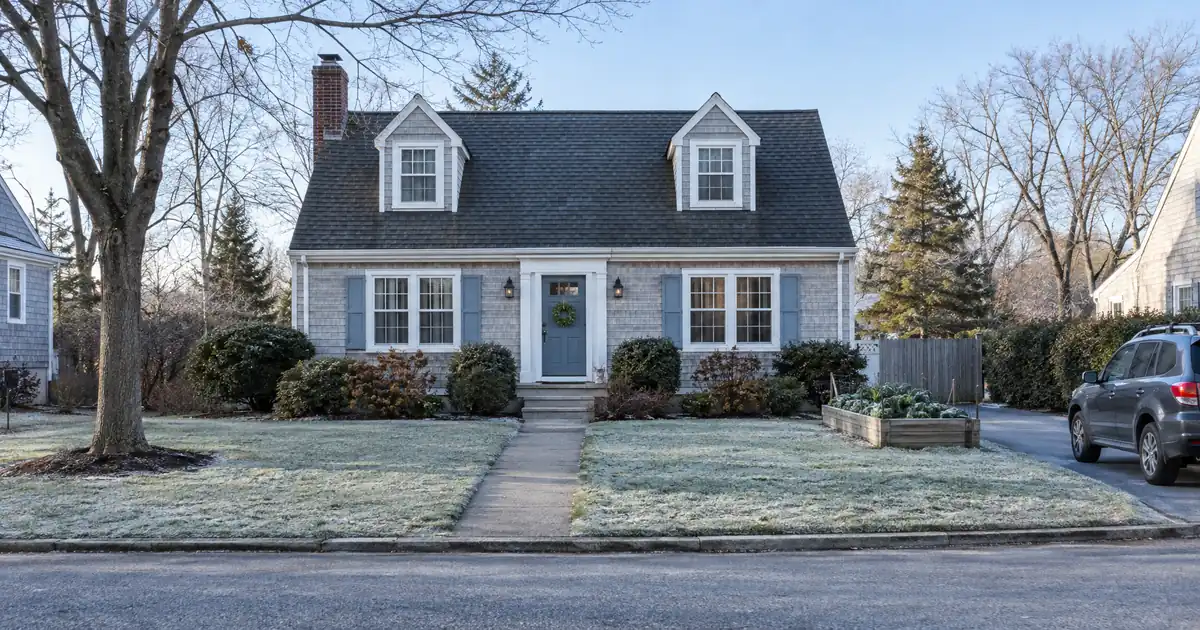
The Quick Read: A retiree can borrow against an inherited home only after title sits in the borrower’s name or in a revocable living trust, and then only if the lender can document income, credit and equity. Bank statements are one income route, but they were built for self-employed borrowers. Retirees often fit better on award letters, 1099-R forms and recurring deposits.
- Title comes first. No lender will place a lien until the borrower holds recorded title, or the home sits in an eligible revocable living trust.
- Statements are alternative documentation, not no documentation. Credit, equity, valuation and the property are all still reviewed.
- Inherited cash is not income. A large one-time deposit is sourced and set aside.
- Occupancy sets the ceiling. On an investment property, the network’s equity line tops out at 70% CLTV. Primary-residence and second-home lines reach higher at stronger credit tiers.
- A rented home may fit a different product. A DSCR cash-out qualifies primarily on property-level rental income covering the payment, subject to lender guidelines.
What Does a Bank Statement HELOC Actually Mean for a Retiree?
A bank statement HELOC is a home equity line where the lender reads deposits instead of tax returns to measure income. The term describes a documentation path. It is not a regulated product category.
How large a line the equity supports.
An equity line is sized by combined loan-to-value, occupancy, and credit — not by rental coverage. Switch the occupancy or the credit band and the ceiling moves with it.
Investment-property lines require a 700 minimum credit score; second-home lines start at a 640 minimum and primary-residence lines at 600, and the combined-LTV ceiling steps down as the credit band drops on primary-residence and second-home lines and holds on investment-property lines; the line cap steps down on primary-residence lines and holds at every tier on investment-property and second-home lines.
A debt-to-income ratio above 45% requires 680+ credit. Profiles under 640 are limited to single-family homes. At least 75% of the approved line is drawn at closing. Ceilings, floors, and caps update from Lendmire’s centralized guideline source.
Line estimate
Illustrative estimate only — not a quote, Loan Estimate, approval, or commitment to lend. The rate is an editable assumption; equity-line pricing is variable through both the draw and repayment periods and never converts to fixed. Occupancy and credit drive the ceiling together: an investment property tops out at 70% combined LTV (minimum credit 700, line cap $500,000); a second home tops out at 90% combined LTV (minimum credit 640, line cap $500,000), with the ceiling stepping down as the credit band drops (the cap holds at every tier); a primary residence tops out at 90% combined LTV (minimum credit 600), and its $750,000 maximum line is available only at 75% combined LTV or below with a 700-or-better credit profile (720 on the longer-runway program) and a full appraisal. Lines above $500,000 require a full appraisal. Credit, debt-to-income, property type, and full underwriting review all affect the final line.
Lendmire is a mortgage broker. It places these files with select wholesale lenders, and each lender sets its own paperwork rules. Across that network, the approach varies. One lender may want a window of statements. Another may accept an award letter plus two recent statements.
The deposit-averaging method came from business owners whose tax returns understate cash flow. A retiree’s income usually has a cleaner paper trail already: a Social Security award letter, a pension statement, 1099-R forms and deposits that repeat every month. That is why the first question for a retiree is not “can I use statements?” It is “which document proves my income most cleanly?”
Gate One: Who Can Sign on an Inherited Home?
No one can pledge the house until the right person holds authority over it. The stage of the estate decides who that is.
| Estate stage | Who can sign | Realistic path |
|---|---|---|
| No case opened | No one with authority | Wait or open the estate |
| Executor, no court letters | Generally no one | Obtain letters first |
| Letters issued, home not yet deeded | Executor, for estate purposes | Usually deed to heir before a line |
| Deed recorded to heir | The heir | Standard application |
| Funded revocable living trust | Trustee | Eligible vesting |
| Survivorship or transfer-on-death deed | Surviving owner or named heir | Record the transfer, then apply |
Vesting matters here. On the network’s equity-line programs, title must be held by the individual borrower or an inter vivos revocable living trust. LLCs, corporations, partnerships and irrevocable, blind or land trusts cannot hold title. If the inherited home already sits in an LLC, the fixes are a vesting change or a DSCR cash-out, which is a different product built for business-purpose rentals.
What if the home still has a mortgage?
An heir who inherits a mortgaged home is not automatically a borrower on it. Confirmed successors in interest gain servicing protections, meaning they can deal with the servicer, but that is a servicing right and not a new loan approval. Any new line sits behind or pays off the existing lien, and the combined balance counts toward CLTV.
What about co-heirs?
Every titleholder generally has to sign. One sibling cannot borrow against a shared house over the others’ objection. Where one heir wants to keep the home, the usual path is a buyout that leaves that heir holding sole title, then the line application.
Gate Two: Which Income Route Fits a Retiree?
Four routes exist, and the best program for your situation depends on which one your paperwork supports most cleanly.
| Route | How income is shown | Best fit | Trade-off |
|---|---|---|---|
| Statement deposits | Months of bank deposits | Irregular or mixed income | Transfers and one-offs get stripped out |
| Award-letter income | Letters, 1099-R, recent statements | Social Security, pension, annuity | Needs documented, recurring amounts |
| Asset-based income | Balances converted to income | Large savings, modest deposits | Not every lender offers it |
| Rent-based (DSCR) | Property rent versus payment | A rented inherited home | Different product, different rules |
For a retiree with steady Social Security and pension deposits, the award-letter route often does the same job as a statement review with less friction. For a retiree whose accounts are large but whose deposits are thin, a deposit-only file can look weaker than the person’s real wealth. Balances on a statement are not income on a statement.
How Are a Retiree’s Deposits Read?
Underwriters sort deposits into what repeats and what does not. Recurring items support income. Everything else is explained or excluded.
| Deposit type | Counted as income? | What to bring |
|---|---|---|
| Social Security | Yes, when recurring | Award letter, recent statements |
| Pension or annuity | Yes, when recurring | Award letter or 1099-R |
| Retirement withdrawals | Often, if steady and documented | 1099-R, account statements |
| Rent from the inherited home | Depends on program | Lease, deposit history |
| Transfers between own accounts | No | Matching statements |
| Inherited cash | No | Estate paperwork showing the source |
The inherited-cash row catches many retirees. A distribution from the estate lands as one large deposit. Lenders source it and treat it as a non-recurring deposit. It can help show reserves or a down-payment source in other contexts, but it does not raise monthly income.
Home equity is not income either. The Federal Register’s final ability-to-repay rule names retirement benefits among usable income types, and it excludes the value of the property securing the loan from the income-or-assets test. The principle carries over to how lenders think about HELOC files.
What Do the Network’s Equity-Line Programs Allow?
Occupancy decides the answer, so the figures below are split by use. All of them are subject to lender guidelines and full file review.
| Occupancy | Credit tier | Max CLTV | Line cap |
|---|---|---|---|
| Primary residence | 720+ | 90% | $500,000 |
| Primary residence | 700+ (720 on the longer-runway program) | 75% | $750,000 |
| Second home | 720+ | 90% | $500,000 |
| Investment property | 700+ | 70% | $500,000 |
The 90% ceiling exists only at a 720-or-better credit profile. On an investment property the network does not go above 70% CLTV, and the minimum credit score there is 700. A line above $500,000 is primary-residence only, requires a 700 profile or better (720 on the longer-runway structure), caps at 75% CLTV and needs a full appraisal.
Market surveys report that investment-property HELOCs commonly cap near 80% LTV, per Experian. That describes the broader market. On the network, an investment line stops at 70% CLTV.
Other points that shape a retiree’s file:
- Debt-to-income: 50% maximum, 45% for credit profiles from 600 to 679, qualified on the interest-only payment at the maximum draw.
- Draw structure: a 5-year interest-only draw with a 25-year amortizing repayment is the structure for investment lines. Primary and second-home lines also offer a 3-year draw with a 17-year repayment. At least 75% of the line is drawn at closing, and pricing floats rather than converting to fixed.
- Valuation: lines at or below $500,000 ordinarily use an automated valuation, though higher CLTV may require a secondary valuation. Above $500,000, a full appraisal is required.
- Exposure: a borrower is limited to three lines, and anyone owning more than 15 financed properties is not eligible.
- Availability: these equity-line programs are offered in Lendmire’s 16 full-service states only, narrower than its DSCR footprint.
What Changes if the Retiree Lives in the Home, Keeps It, or Rents It?
Occupancy is the fork that moves leverage the most.
| Use of the home | Ceiling | Income test |
|---|---|---|
| Retiree lives in it | Up to 90% CLTV at 720+ | Personal documented income |
| Kept as a second home | Up to 90% CLTV at 720+ | Personal documented income |
| Rented out | 70% CLTV, 700+ credit | Personal income on the line; rent on a DSCR cash-out |
A retiree who moves into the inherited home faces the friendliest terms. A retiree who rents it is on an investment-property line, where NerdWallet notes the lender pool is smaller and borrowing is limited compared with a primary home.
Here is where the investor decision turns. A HELOC tests the retiree’s own income. A DSCR cash-out tests the rental’s income. Picture a retiree with modest documented income who inherits a rented home with strong coverage. The DSCR route may fit better, since it qualifies primarily on property-level rental income covering the payment. Cash-out refinances on standard rentals generally top out around 75% LTV with about 6 months of seasoning, and a short-term-rental cash-out tops out at 70%. A 1.00 coverage ratio is where many select programs start, though stronger ratios open better leverage. Clearing 1.00 does not mean positive cash flow, since repairs, vacancy and management sit outside the calculation.
Lendmire’s complete DSCR loans guide walks through that alternative.
Where the General Rule Breaks
Federal rules do not dictate retiree paperwork. The ability-to-repay rule carves out home equity lines. The CFPB’s Regulation Z section 1026.43 excludes a HELOC subject to section 1026.40 from its scope, and the Cornell LII copy of 12 CFR 1026.43 says the same. So documentation is set by each lender’s program. That explains why one lender says yes and another says no on the same file. It does not mean lenders skip verification. They still review credit, equity, title and property.
Inherited cash masquerading as income. A file padded with estate distributions gets those deposits stripped out.
Income that drops. A surviving spouse may lose one pension or Social Security check. The line is qualified on the interest-only payment at the maximum draw, and pricing floats, so a retiree should plan a draw-down path before borrowing.
Listed properties. A property listed for sale, or listed within the past 60 days, is ineligible in NC, PA, TN, TX and WA.
Ineligible property types. Manufactured homes, co-ops, condotels, log homes, commercial, mixed-use and agricultural-zoned properties are not eligible.
Tax-side surprises. Tax treatment varies; consult a qualified professional. A stepped-up basis is a tax event separate from the loan, per Fidelity’s explanation of step-up in basis.
A Worked Walkthrough
Consider a retiree who inherits a paid-off home through a recorded deed. Credit sits above 720, and Social Security plus a pension arrive in the same account every month.
1. Title: the deed is recorded in the retiree’s name. Gate one is cleared.
2. Income: award letters and two recent statements show recurring deposits. The estate distribution in the account is sourced and excluded.
3. Occupancy: the retiree moves in, so the primary-residence table applies.
4. Valuation: a line at or below $500,000 ordinarily runs on an automated valuation.
5. Outcome: the lender reviews credit, DTI and CLTV. Approval is never assured.
Change one fact. The retiree rents the home instead. The ceiling drops to 70% CLTV on an investment line, and the credit floor rises to 700. Now compare a DSCR cash-out on the same house. If rent covers the payment with room to spare, that file may be the stronger path. Change another: the estate is still in probate with no deed recorded. Nothing proceeds until title is settled.
Key Terms Defined
CLTV: Combined loan-to-value, which adds every lien on the home and divides by its value.
Successor in interest: An heir confirmed by a servicer as having standing on an inherited mortgaged home.
Award letter: The official document from Social Security or a pension plan stating a recurring benefit.
Revocable living trust: A trust the grantor can change, and one of the two vesting types the equity-line programs accept.
DSCR: Debt service coverage ratio, which compares a rental’s monthly rent to its monthly payment on taxes, insurance and the loan.
Frequently Asked Questions
Can a retiree apply for a bank statement HELOC before probate finishes?
Generally no. A lender needs the borrower to hold or control title, so the deed or trust has to be in place first. An executor without court letters usually cannot pledge the home. Settle title, then apply.
Can a retiree qualify on Social Security alone?
It depends on the program, the amount and the other debts. Social Security counts as income when documented and recurring, so the award letter and recent deposits matter. The 50% DTI maximum applies, with lower limits at some credit tiers.
Does inherited cash count as income?
No. Lenders treat a large estate distribution as a non-recurring deposit, source it, and exclude it from monthly income.
What if the inherited home is rented out?
Then it is an investment-property line, capped at 70% CLTV with a 700 minimum credit profile on the network. A DSCR cash-out may fit better because it qualifies primarily on property-level rental income.
Can age be a reason for denial?
Age is not the issue lenders point to. File problems are, such as undocumented income, unsettled title or weak equity. Every file still goes through full review.
Next Steps
Settle title first. Then collect award letters, recent statements and estate paperwork, and decide how the home will be used. If you are considering a home equity line and want to see how the numbers work, Lendmire can help you compare HELOC options based on the property, the equity available, credit profile, combined leverage, and your goals. Reach the team at 828-256-2183.
About Lendmire
As a mortgage broker (NMLS# 2371349), Lendmire helps homeowners and real estate investors in its 16 full-service states open home equity lines of credit arranged through wholesale lenders. Lendmire is never the lender; line amounts, ceilings and terms are set by the lender under its guidelines. Scotsman Guide named Lendmire a Top Mortgage Workplace in both 2025 and 2026.
Investors who want the broader program framework can review how DSCR loans work.
Get Started
Ready to find the right loan for you?
See your offer in seconds. No credit pull, no obligation.
Informational only. Not a Loan Estimate, approval, or commitment to lend. Program availability and eligibility are subject to lender guidelines, credit approval, property review, and underwriting.
References
1. Federal Register – Ability-to-Repay and Qualified Mortgage Standards
2. Experian
3. NerdWallet – HELOC on an Investment Property
4. CFPB – Regulation Z § 1026.43
5. Cornell LII – 12 CFR 1026.43
6. Fidelity’s explanation of step-up in basis
This article is part of Lendmire’s bank statement HELOC program — full qualification details, guidelines, and scenarios live on the program page.
Related reading: How a Bank Statement HELOC Works for Applying Home Equity to a Rental Home Purchase · How a Bank Statement HELOC Works to Buy Before You Sell Your Home · How a Bank Statement HELOC Works for Funding a Wedding From Home Equity
Brandon Miller
Founder & CEO, Mortgage Loan Originator, Lendmire LLC
- Mortgage Loan Originator · NMLS# 1129696 · Verify on NMLS Consumer Access
- North Carolina Real Estate Broker · License# 343312 · Verify on NCREC
- North Carolina Insurance Producer · License# 19053198 · Property, Casualty, Life, Health · Verify on NAIC SBS
- Lendmire LLC · Firm NMLS# 2371349 · Verify firm licensure
Compliance and disclosures. Lendmire (NMLS# 2371349) is a licensed mortgage broker and is not a direct lender, depository institution, financial advisor, or tax professional. Content in this article is general market analysis and educational information — not financial, legal, or tax advice for any specific situation. Lendmire does not guarantee loan approval; every transaction is subject to underwriting by the funding lender. Mortgage pricing and loan program guidelines are subject to change at any time without notice and vary by borrower characteristics, property type, and state regulations. Lendmire complies with Equal Housing Opportunity. Licensure verification: NMLS Consumer Access.